




























Views
Downloads


Ready Autumn Weather Word Search | Grades 4–5 Science

Paste this activity's link or code into your existing LMS (Google Classroom, Canvas, Teams, Schoology, Moodle, etc.).
Students can open and work on the activity right away, with no student login required.
You'll still be able to track student progress and results from your teacher account.
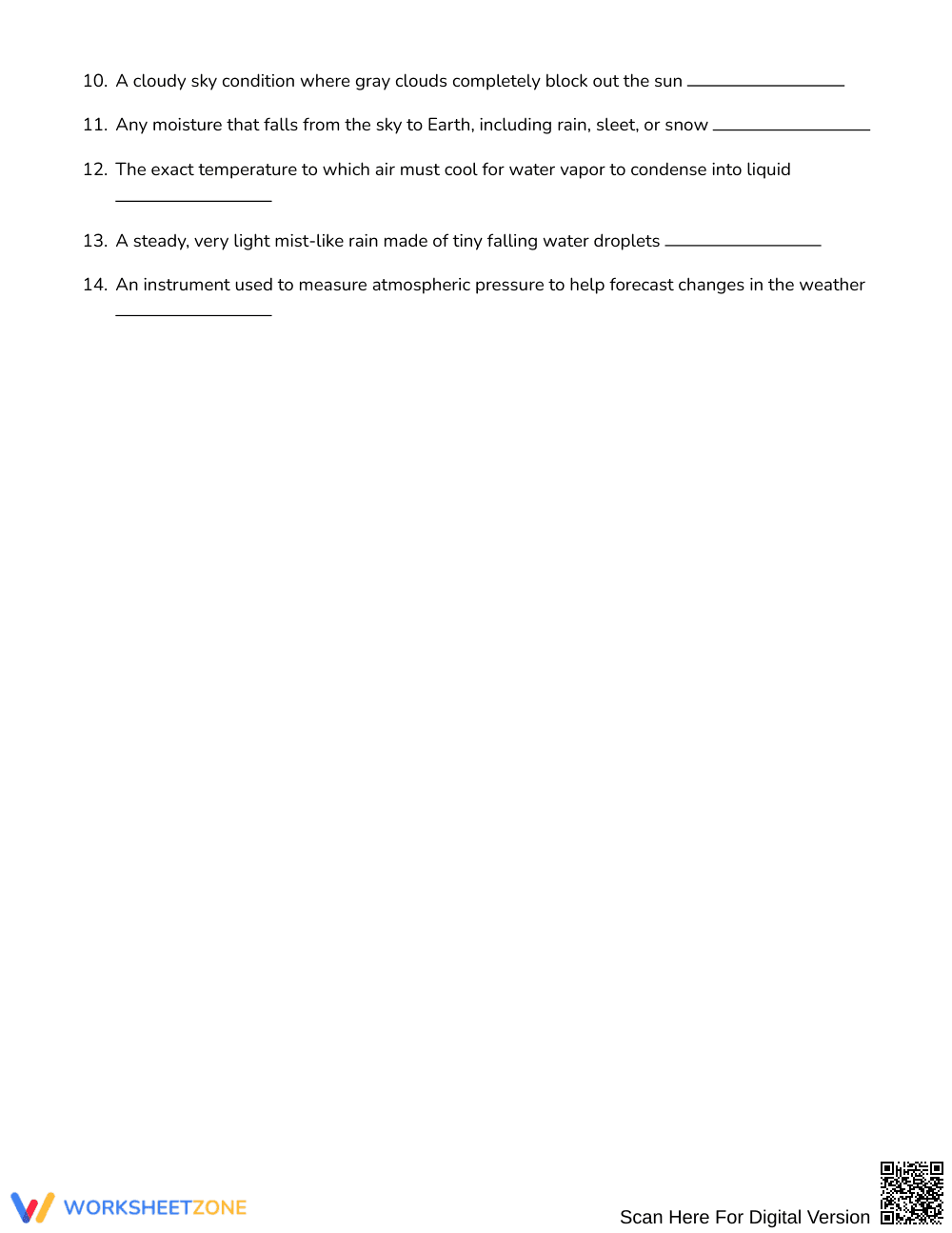
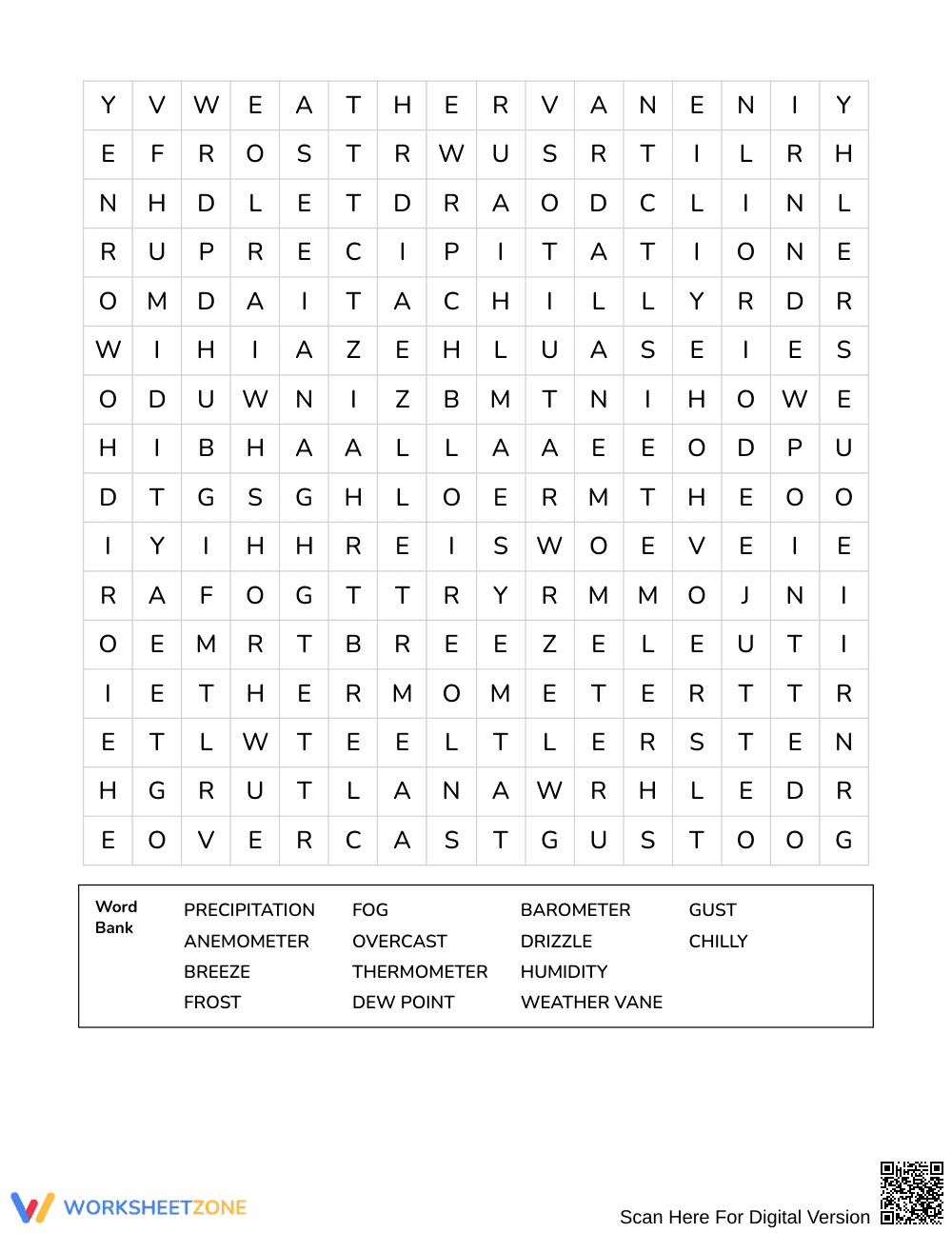
This autumn weather word search challenges upper elementary students to identify key seasonal meteorological terms by decoding descriptive clues. Learners read definitions for instruments and atmospheric conditions, match each concept to its scientific name, and locate all fourteen vocabulary terms across the puzzle grid, strengthening content retention and observation skills.
At a Glance
- Grade: Grades 4–5 · Subject: Science
- Standard: Not standards-assessed — vocabulary enrichment
- Skill Focus: Autumn weather observations
- Format: 3 pages · 14 words · Answer key included · PDF
- Best For: Science centers and seasonal enrichment
- Time: 20–30 minutes
What's Inside
This three-page printable packet features an engaging Clue Detective layout where students solve fourteen weather riddles before searching the letter field. Rather than relying on a simple word list, students read thorough scientific definitions for instruments like the anemometer and barometer alongside phenomena like frost and dew point, verifying their answers against a full-size solution key.
Puzzle Structure and Mechanics
The activity is built upon a 16 × 16 letter grid containing 14 hidden vocabulary words. Words are oriented in four distinct directions: northeast, east, southeast, and south. A shuffled word bank provides reference support, while the primary task requires students to read content clues and determine the corresponding autumn weather terms before scanning the grid.
Standards Alignment
This activity is designed for vocabulary enrichment and is not aligned to a specific state or national standard. It reinforces essential Earth science terminology related to atmosphere, moisture, and measurement tools, providing teachers with a valuable seasonal review tool that complements introductory weather units.
How to Use It
Introduce this puzzle after direct instruction on atmospheric properties to reinforce new science terms, or assign it during October as an independent morning work task. For formative assessment, observe whether students deduce terms like humidity and dew point directly from the clue descriptions or require scaffolding from the shuffled word bank. Most students complete the activity within 20 to 30 minutes.
Who It's For
This word search is designed for Grades 4–5 science classrooms, gifted enrichment clusters, and English language learners benefiting from contextual definitions. Pair this puzzle with an outdoor weather station observation log or a daily temperature charting exercise to connect classroom vocabulary with real-world weather patterns.
Integrating domain-specific vocabulary into puzzle-based activities reinforces conceptual retention and word retrieval during elementary science instruction. According to Fisher & Frey (2014), intentional exposure to technical terminology through contextual clues strengthens academic language acquisition across content areas. Rather than memorizing isolated definitions, students engage in active decoding as they analyze functional descriptions of weather instruments such as barometers and anemometers. This clue-driven search format requires learners to synthesize descriptive details about atmospheric pressure, condensation, and wind velocity before confirming spelling patterns within the 16 × 16 grid. Combining definitional clues with visual search strategies supports orthographic processing and solidifies foundational science terminology for upper elementary learners.


