


























Views
Downloads

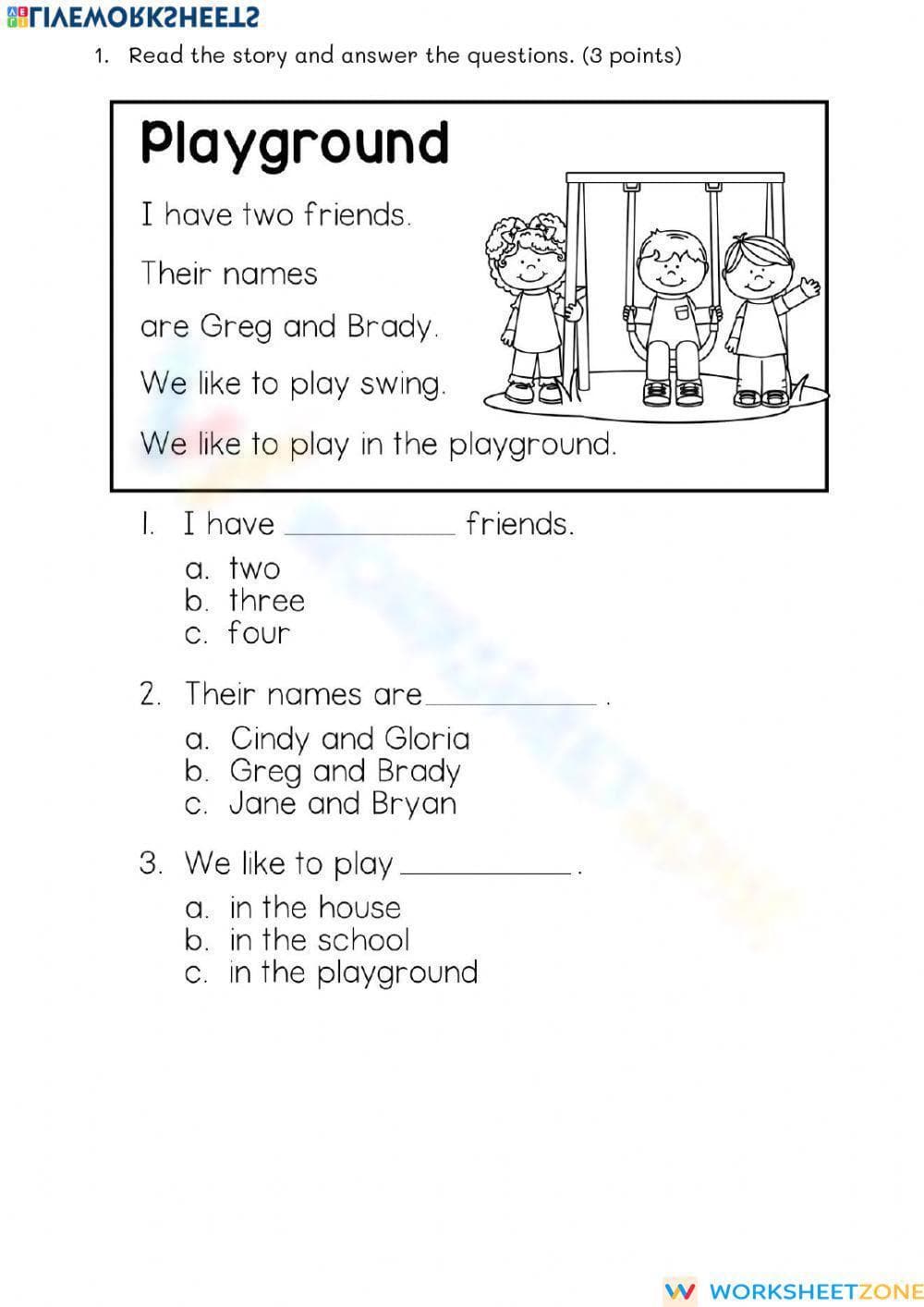


Grade 2 Reading Comprehension — Printable No-Prep Test
Paste this activity's link or code into your existing LMS (Google Classroom, Canvas, Teams, Schoology, Moodle, etc.).
Students can open and work on the activity right away, with no student login required.
You'll still be able to track student progress and results from your teacher account.
This comprehensive Grade 2 reading comprehension assessment evaluates a student's ability to extract key details from diverse literary formats, including letters and short stories. Learners demonstrate proficiency in identifying character actions, settings, and central events. This tool provides an immediate snapshot of reading fluency and interpretive accuracy for classroom teachers.
At a Glance
- Grade: 2 · Subject: English Language Arts
- Standard:
CCSS.ELA-LITERACY.RL.2.1— Ask and answer questions like who, what, where to show understanding of details.- Skill Focus: Key Detail Retrieval
- Format: 3 pages · 8 problems · Answer key included · PDF
- Best For: Quarterly assessment or progress monitoring
- Time: 20–30 minutes
This assessment pack contains 3 distinct pages with correspondence-style reading and narrative fiction. Students encounter a multi-paragraph letter with open-ended response lines, and two short stories with multiple-choice questions. Varied task formats ensure a rigorous check of independent recall and recognitional understanding. A full answer key is provided for rapid grading.
Zero-Prep Workflow
The "print-and-go" design minimizes teacher overhead with a simple three-step execution. Print the 3-page packet (30 seconds), distribute to students (1 minute), and review responses using the provided key (2 minutes per student). This workflow is perfectly suited for substitute plans or formal testing blocks.
Standards Alignment
The primary focus is CCSS.ELA-LITERACY.RL.2.1: "Ask and answer such questions as who, what, where, when, why, and how to demonstrate understanding of key details in a text." By requiring students to locate specific evidence within the "Playground" and "Library" stories, the material reinforces foundational literacy anchors. This standard code can be copied directly into lesson plans, IEP goals, or curriculum mapping tools.
How to Use It
Deploy this worksheet as a summative assessment at the end of a unit on identifying key details or during a mid-year progress check. Teachers should observe whether students return to the text to verify answers, a critical formative-assessment observation for reading strategy development. Expect students to complete the 3-page set within 25 minutes during a quiet testing window.
Who It's For
This resource is designed for Grade 2 students transitioning from basic decoding to deeper comprehension of short texts. It is also an effective remediation tool for Grade 3 learners needing additional support in text-based evidence retrieval. Pair this assessment with "wh-questions" or an anchor chart detailing strategies for finding information in a story.
The efficacy of structured detail-retrieval tasks is supported by the RAND AIRS 2024 analysis, emphasizing early literacy mastery depends on bridging the gap between decoding and active comprehension. This worksheet targets CCSS.ELA-LITERACY.RL.2.1 by providing scaffolded opportunities for students to identify who, what, and where within a narrative framework. Research indicates that frequent, low-stakes assessment of detail recall improves long-term reading stamina and prepares students for increased complexity. Utilizing multiple-choice and open-ended questions, this tool aligns with evidence-based practices for diverse learners, ensuring teachers can pinpoint specific comprehension gaps. The clear formatting and task count allow for precise data collection, enabling educators to make informed instructional pivots supporting grade-level literacy benchmarks and individual student growth.


