


























Views
Downloads
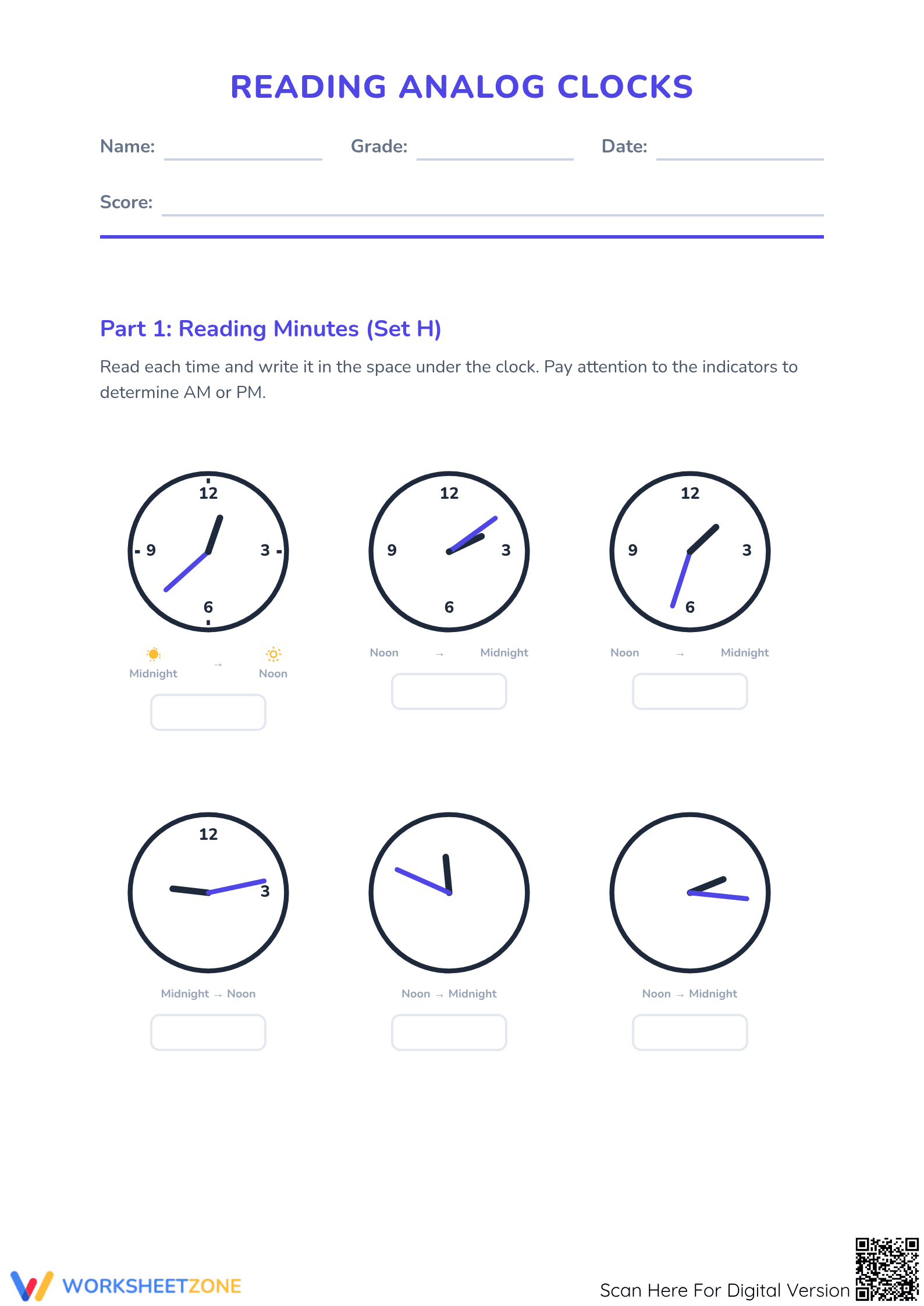
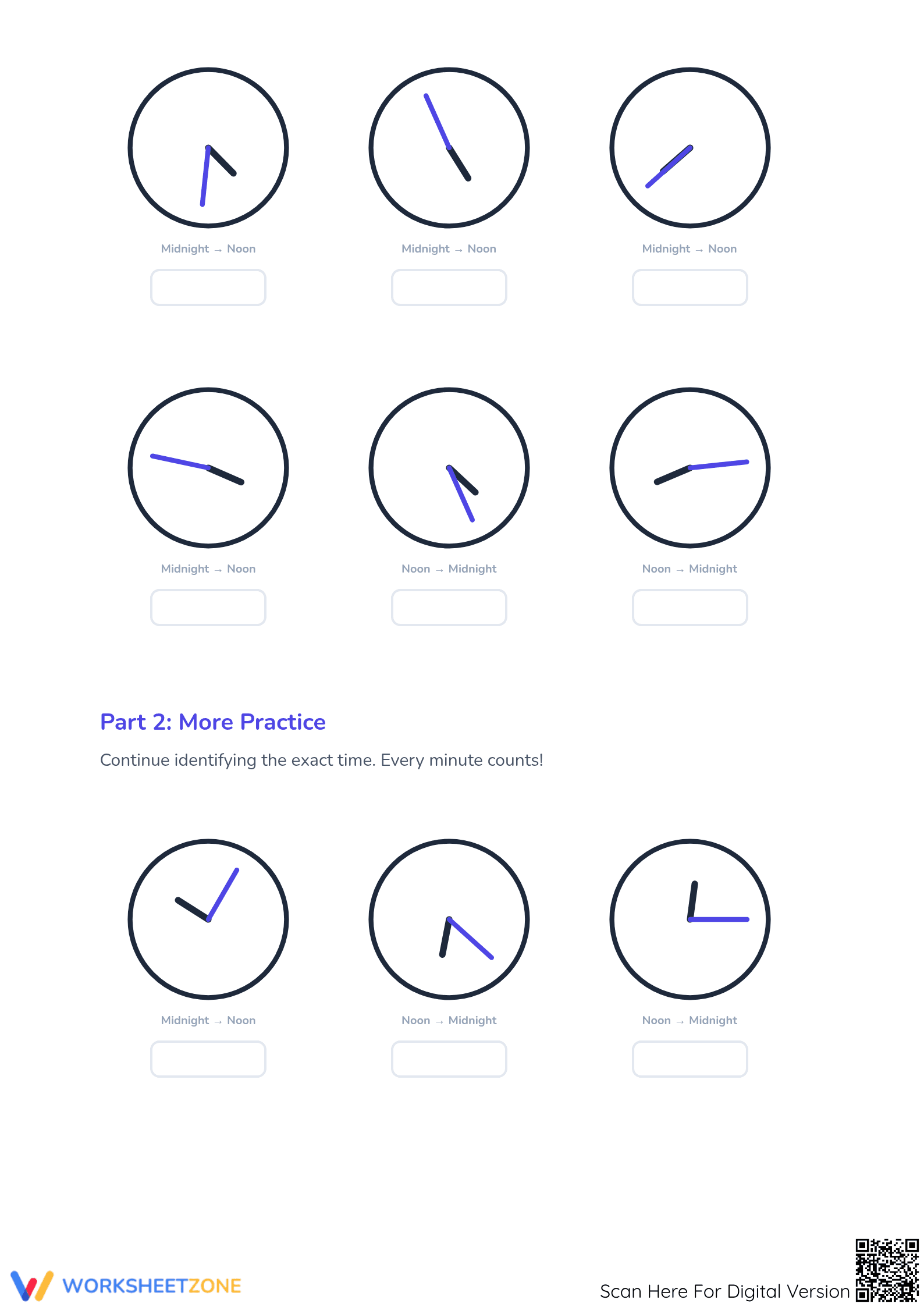
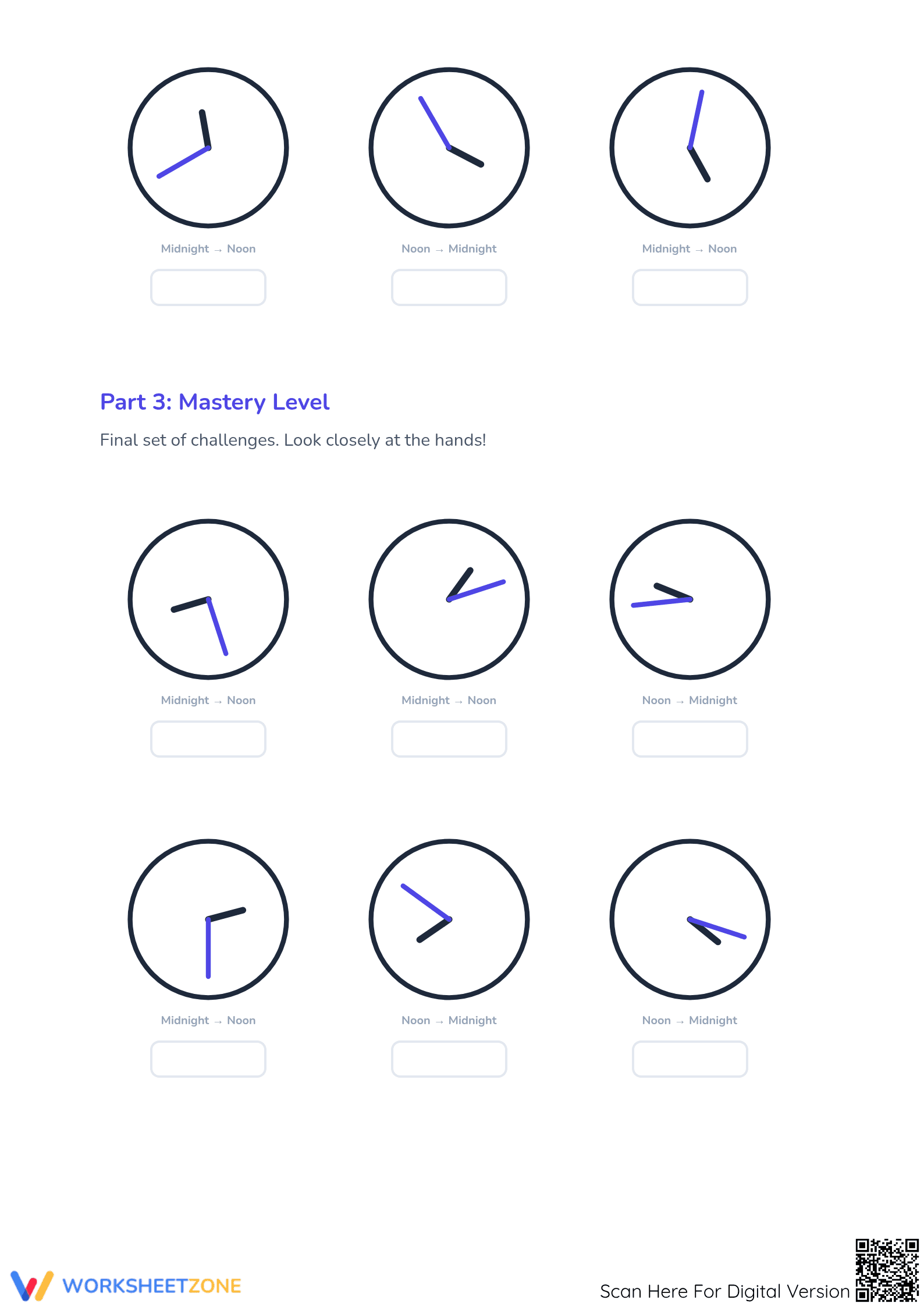
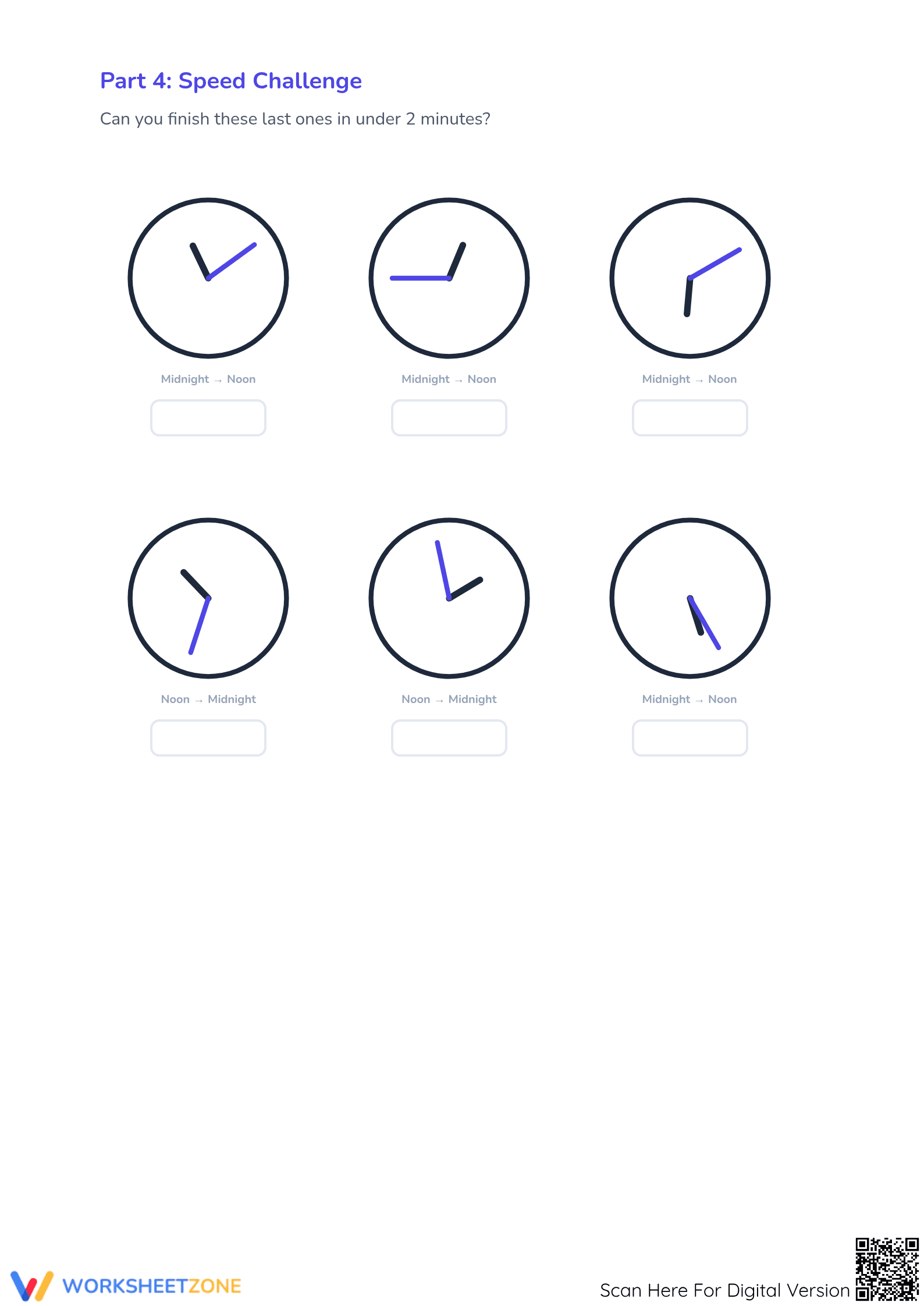

Printable Telling Time Worksheet | 1-Minute Analog Clocks
Paste this activity's link or code into your existing LMS (Google Classroom, Canvas, Teams, Schoology, Moodle, etc.).
Students can open and work on the activity right away, with no student login required.
You'll still be able to track student progress and results from your teacher account.
Students master the precision of analog timekeeping with this comprehensive practice set. This worksheet focuses on reading minutes with one-minute accuracy and correctly identifying AM/PM based on noon and midnight markers. By practicing across 30 distinct clock faces, learners build the visual fluency needed for real-world time management and standardized math assessments.
At a Glance
- Grade: 3 · Subject: Math
- Standard:
CCSS.3.MD.A.1— Tell and write time to the nearest minute and measure time intervals- Skill Focus: 1-Minute Analog Intervals
- Format: 4 pages · 30 problems · Answer key included · PDF
- Best For: Homework, sub plans, and mastery checks
- Time: 20–30 minutes
This expansive 4-page PDF contains four structured sections designed to move students from basic recognition to high-speed fluency. With 30 unique analog clock faces, the worksheet includes clear "Noon" and "Midnight" indicators to help students navigate the transition between morning and afternoon. A complete answer key is provided, allowing for quick grading or student-led self-correction during independent work periods.
The zero-prep design makes this resource a reliable tool for busy educators. First, print the four-page document (30 seconds). Next, distribute the packets to students for independent or small-group practice (2 minutes). Finally, use the provided answer key to review results with the class or record scores for formative assessment (5 minutes). This streamlined workflow ensures that students spend more time practicing and teachers spend less time preparing.
The primary alignment is CCSS.3.MD.A.1, which requires students to "Tell and write time to the nearest minute and measure time intervals in minutes." This worksheet also supports the foundational Grade 2 standard CCSS.2.MD.C.7 for those ready to move beyond five-minute increments. Both standard codes can be copied directly into lesson plans, IEP goals, or district curriculum mapping tools to ensure instructional compliance.
Use this worksheet as a culminating activity after direct instruction on the minute hand's precise movements. It serves as an excellent formative assessment to identify students who may struggle with the visual difference between the hour and minute hands. For a higher-order challenge, ask students to calculate the elapsed time between two consecutive clocks in the sequence. Expected completion time is approximately 25 minutes.
This resource is designed for Grade 3 students mastering core curriculum, though it provides essential reinforcement for Grade 4 learners and high-interest challenge for Grade 2. It is particularly effective for students who require visual scaffolds like the AM/PM markers provided. Naturally pair this practice with an interactive classroom clock or a digital-to-analog matching game.
According to the RAND AIRS 2024 report on elementary mathematics, visual representation and frequent retrieval practice are critical for developing internal time-awareness in young learners. This worksheet aligns with the Fisher & Frey (2014) model of gradual release, transitioning students from scaffolded practice in Part 1 to an unassisted "Speed Challenge" in Part 4. By mastering CCSS.3.MD.A.1 through these 30 distinct tasks, students secure the prerequisite skills needed for the more complex elapsed-time calculations required in upper elementary and middle school settings. This resource has been reviewed for technical accuracy and ensures that students encounter a representative variety of clock hand placements, effectively minimizing common misconceptions regarding the hour hand's drift between numerals.


