


























Views
Downloads
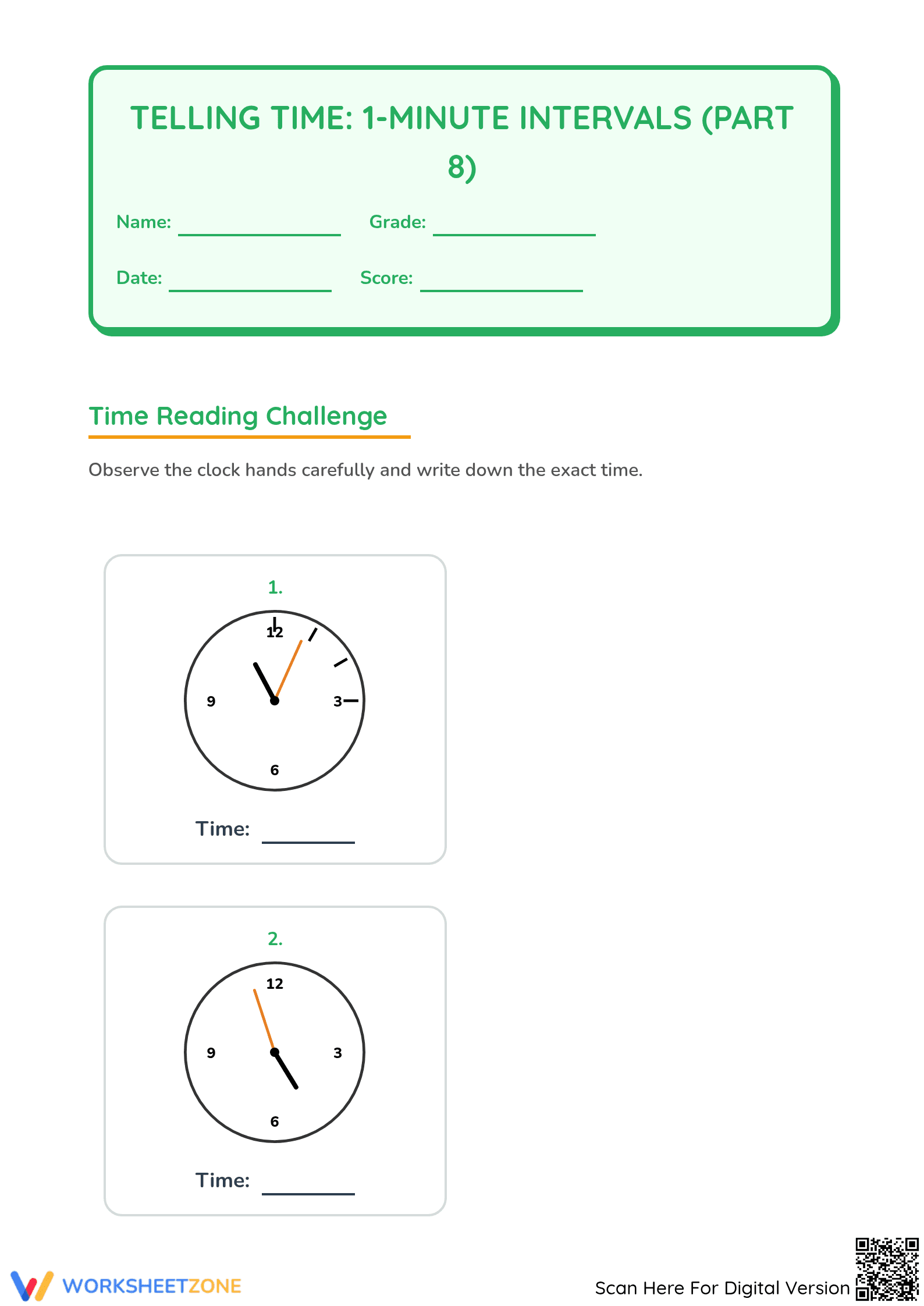
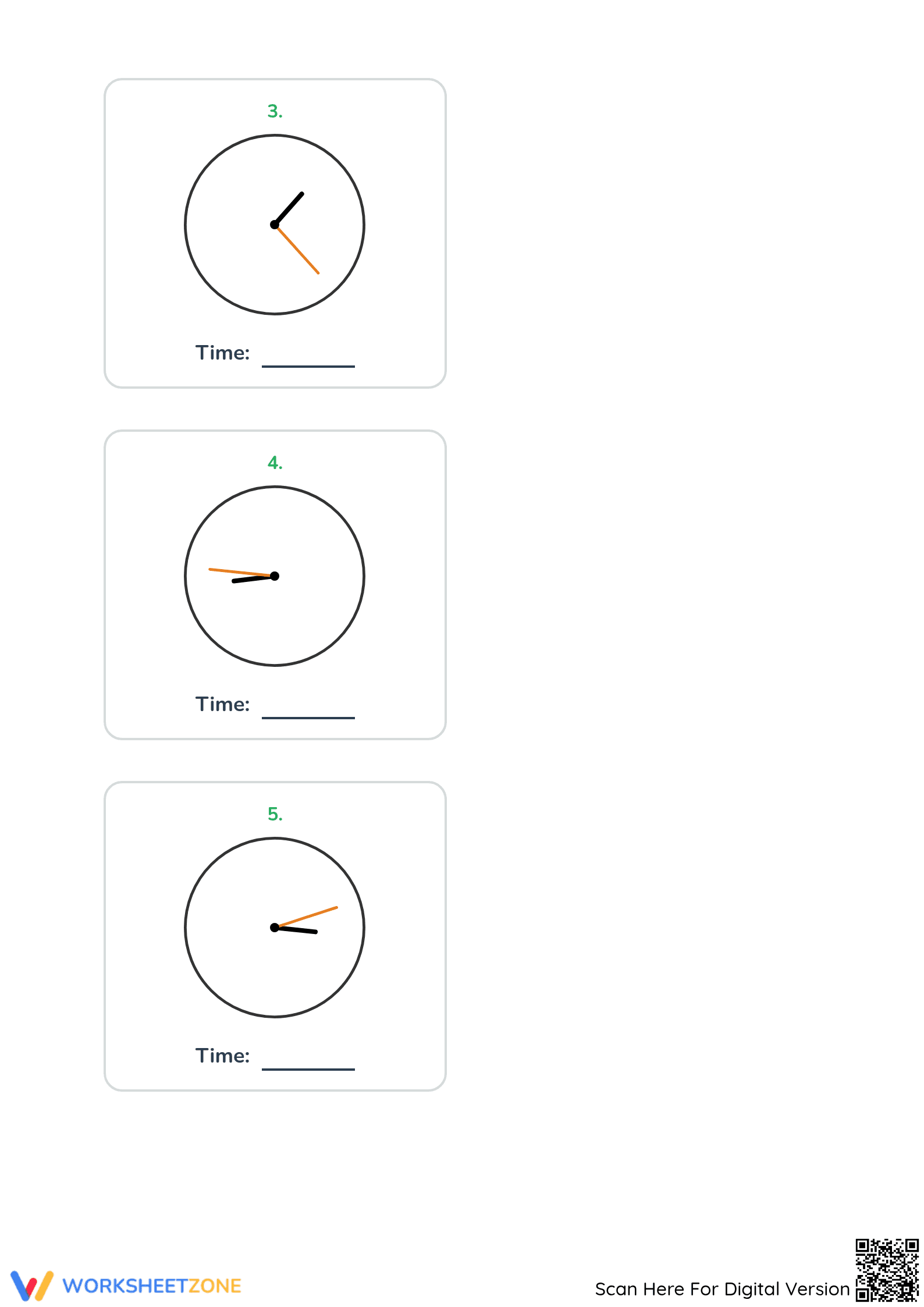
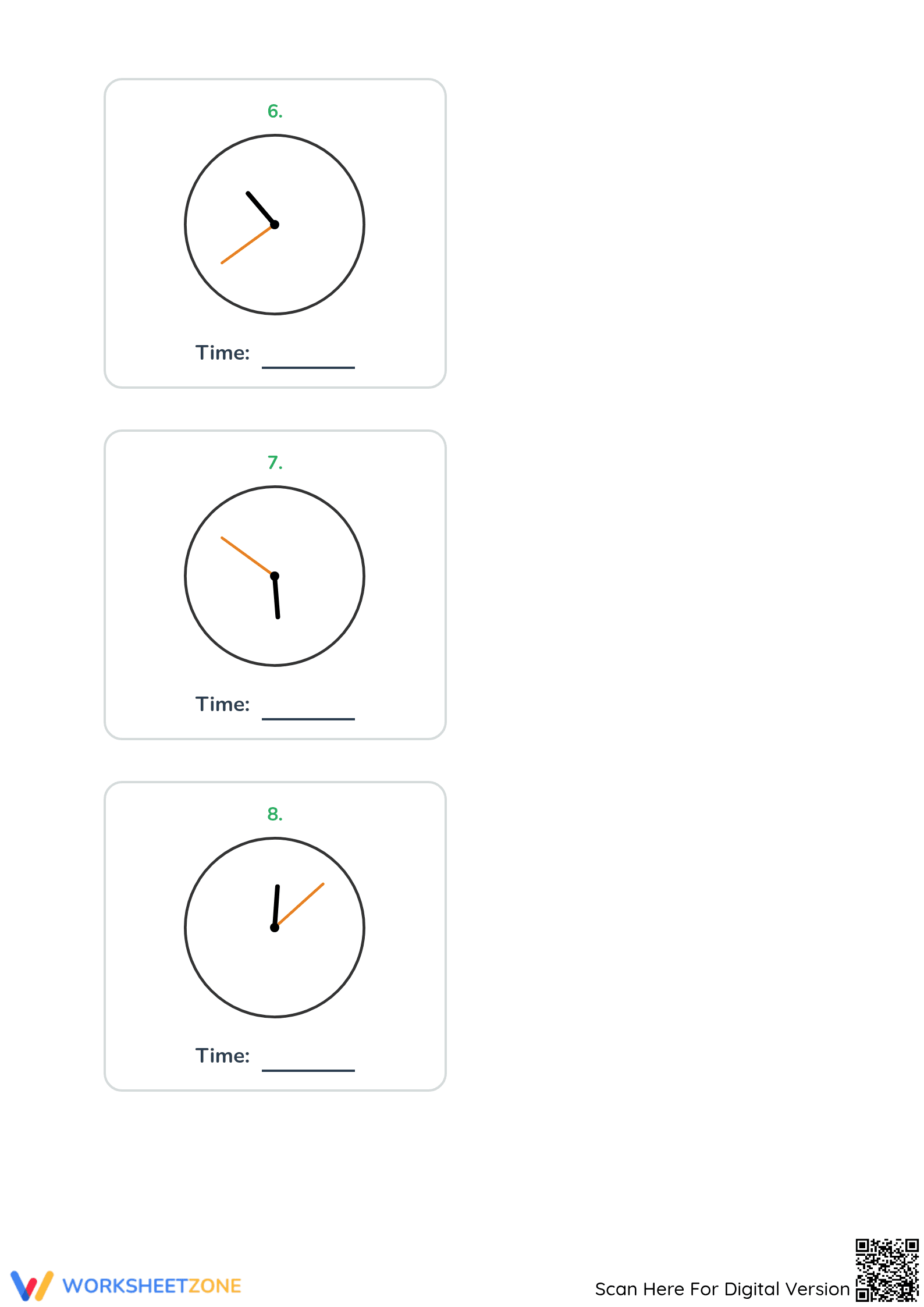
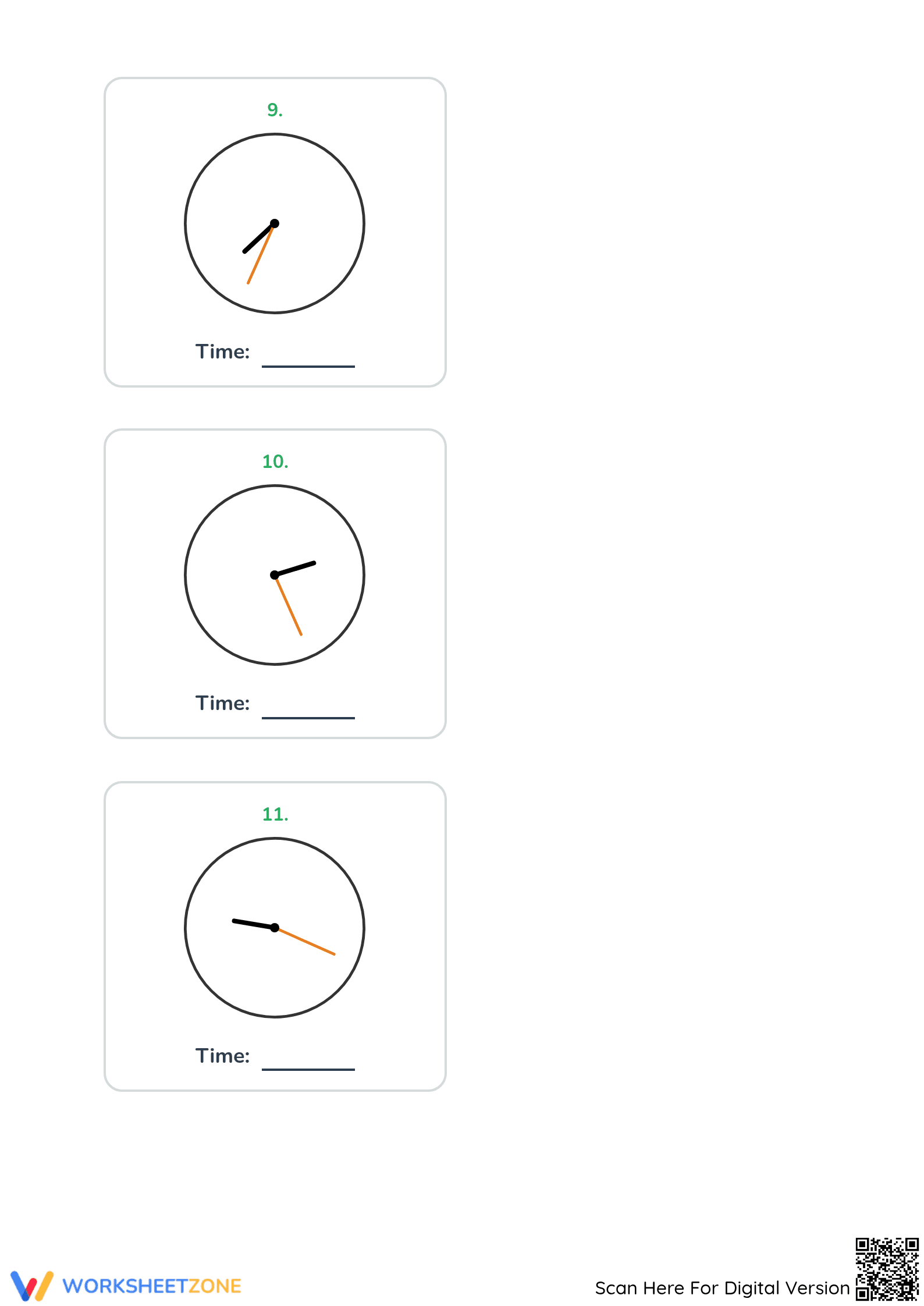


Printable Telling Time Worksheet: 1-Minute Intervals
Paste this activity's link or code into your existing LMS (Google Classroom, Canvas, Teams, Schoology, Moodle, etc.).
Students can open and work on the activity right away, with no student login required.
You'll still be able to track student progress and results from your teacher account.
This Grade 3 math worksheet focuses on the essential skill of telling time to the exact minute. By observing high-resolution analog clock faces, students develop the precision required for real-world time management. The structured layout ensures that learners transition from simple recognition to fluent time-telling across 14 rigorous practice problems.
At a Glance
- Grade: 3 · Subject: Math
- Standard:
CCSS.MATH.CONTENT.3.MD.A.1— Tell and write time to the nearest minute and measure intervals- Skill Focus: Telling time in 1-minute intervals
- Format: 5 pages · 14 problems · Answer key included · PDF
- Best For: Independent practice or morning bell work
- Time: 15–25 minutes
Inside this comprehensive five-page collection, you will find 14 distinct analog clock faces distributed across a clean, distraction-free layout. Each page contains two to three problems, providing ample white space for students to record their answers. The clocks use a two-color hand system (black for hours, orange for minutes) to help students visually differentiate between the two indices. A complete answer key is provided for rapid grading.
The zero-prep workflow for this resource is designed for busy educators. First, print the document directly from the PDF (under 1 minute). Second, distribute the five-page packet to students during independent work time (under 1 minute). Third, review the answers as a whole group using the provided key (under 5 minutes). This sequence allows for a high-impact lesson with less than two minutes of total teacher preparation.
This resource is strictly aligned to the primary standard `CCSS.MATH.CONTENT.3.MD.A.1`, which requires students to tell and write time to the nearest minute. It also supports Grade 2 review and Grade 4 fluency maintenance. The focus on 1-minute precision bridges the gap between basic five-minute intervals and complex elapsed time calculations. Both standard codes can be copied directly into lesson plans, IEP goals, or district curriculum mapping tools.
Use this worksheet as a summative assessment after a unit on time or as a recurring morning warm-up to build procedural fluency. During instruction, teachers can use these clocks for a "think-aloud" exercise, where students explain how they determined the minute hand's position. Observe whether students are counting by fives first or counting individual hash marks from the 12 o'clock position.
This material is ideal for third-grade students mastering time concepts, fourth graders requiring intervention, and second-grade advanced learners. It pairs naturally with a physical classroom manipulative clock or an interactive whiteboard demonstration. The clear visuals also make it an excellent choice for English Language Learners (ELL) who benefit from non-linguistic representations of mathematical concepts.
According to the ScienceDirect TpT Analysis, high-quality supplemental materials that focus on granular skill practice, such as 1-minute time intervals, significantly improve student retention of abstract measurement concepts. This worksheet addresses the common struggle students face when distinguishing between the hour and minute hands by utilizing high-contrast colors. By providing 14 distinct opportunities for practice, the resource adheres to the "spaced repetition" model of learning. The inclusion of an answer key further supports immediate feedback, which is a critical component of formative assessment. The alignment with CCSS.MATH.CONTENT.3.MD.A.1 ensures that the difficulty level is appropriate for the target grade range while providing enough complexity to challenge proficient students. Educators can rely on this resource as a stable component of their mathematics curriculum, knowing it meets the rigorous demands of state standards and research-backed pedagogical strategies for teaching measurement and data.


