




























Views
Downloads
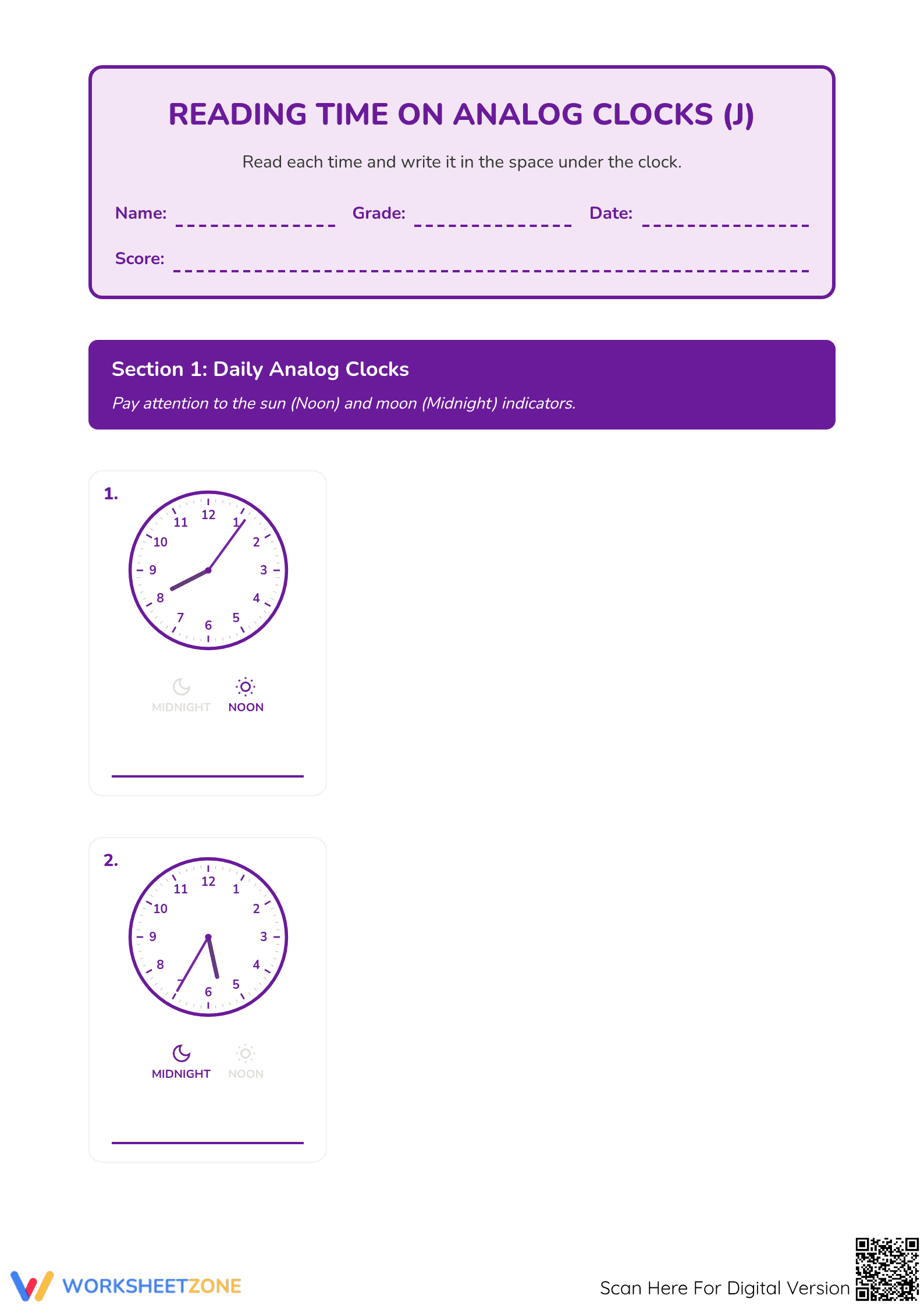
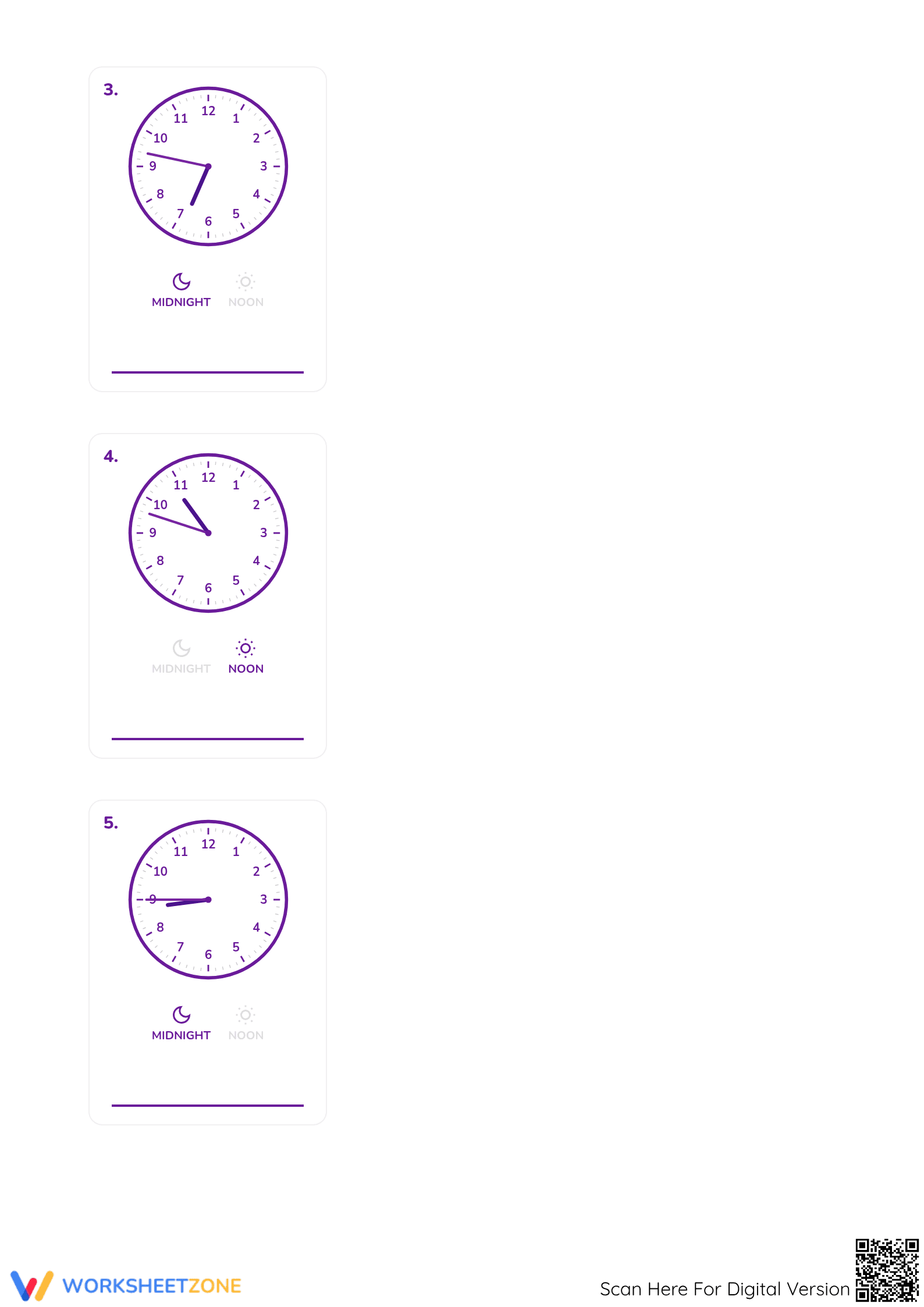
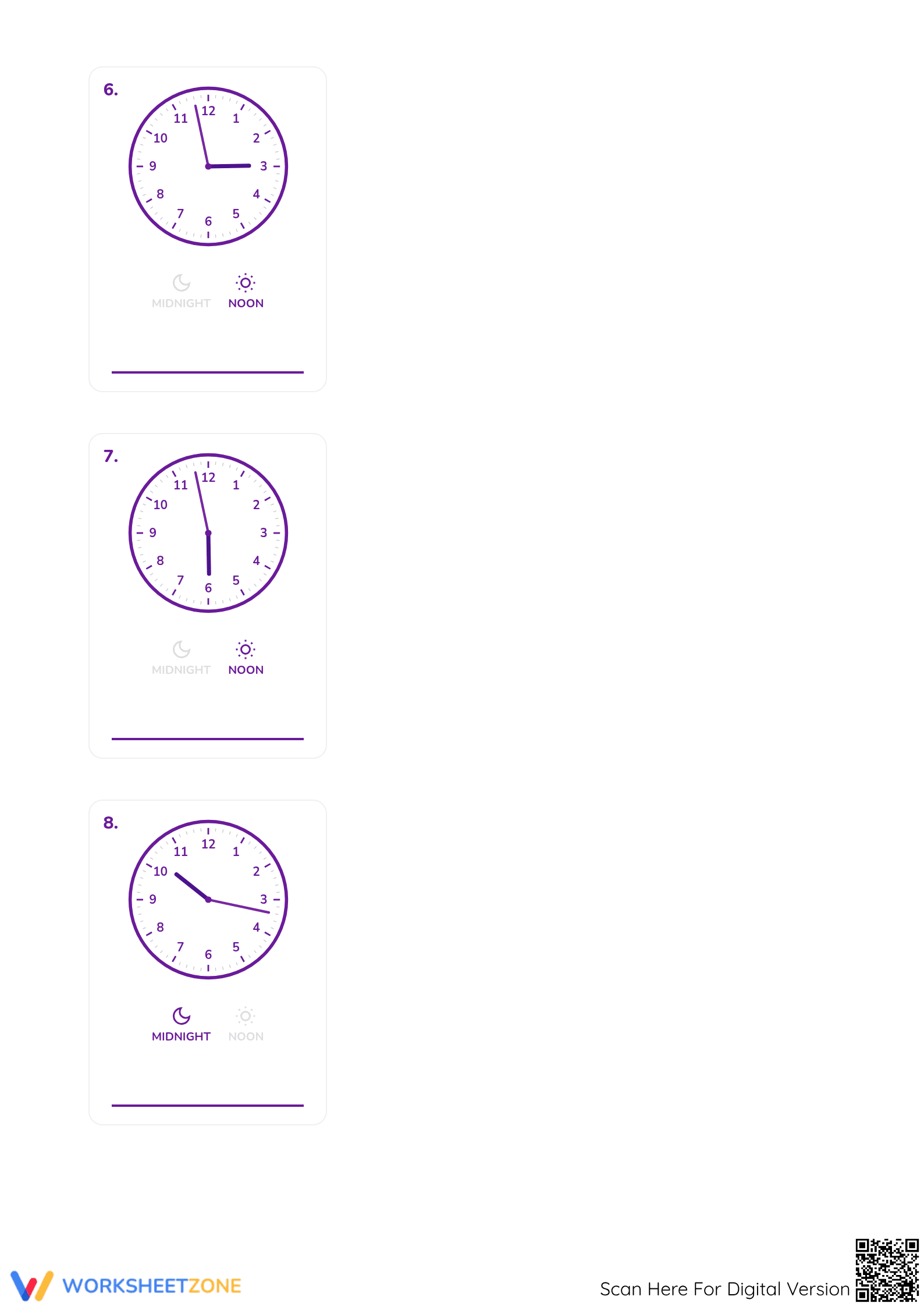
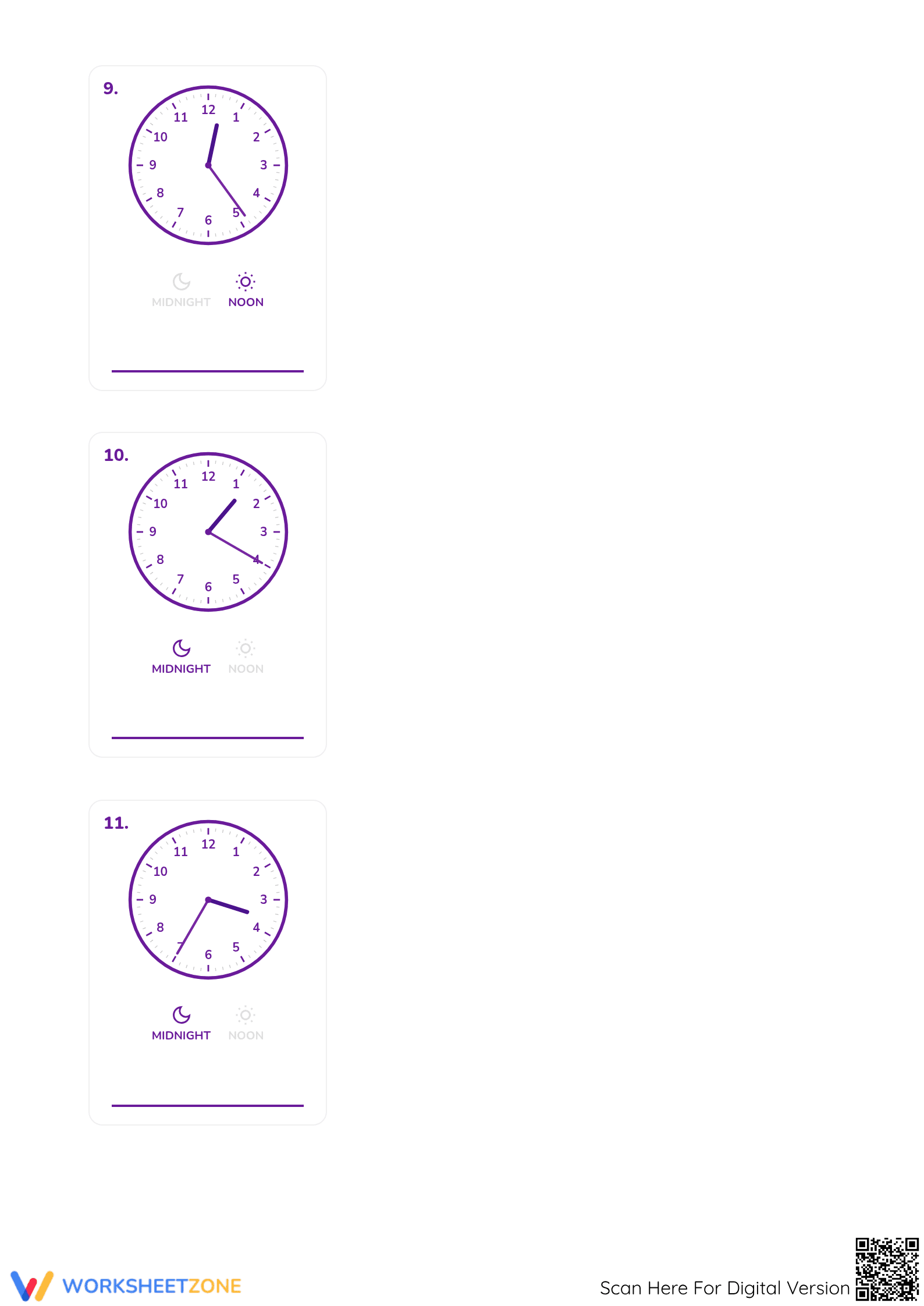

Printable Telling Time Worksheet: 1-Minute Intervals Grade 3

Paste this activity's link or code into your existing LMS (Google Classroom, Canvas, Teams, Schoology, Moodle, etc.).
Students can open and work on the activity right away, with no student login required.
You'll still be able to track student progress and results from your teacher account.
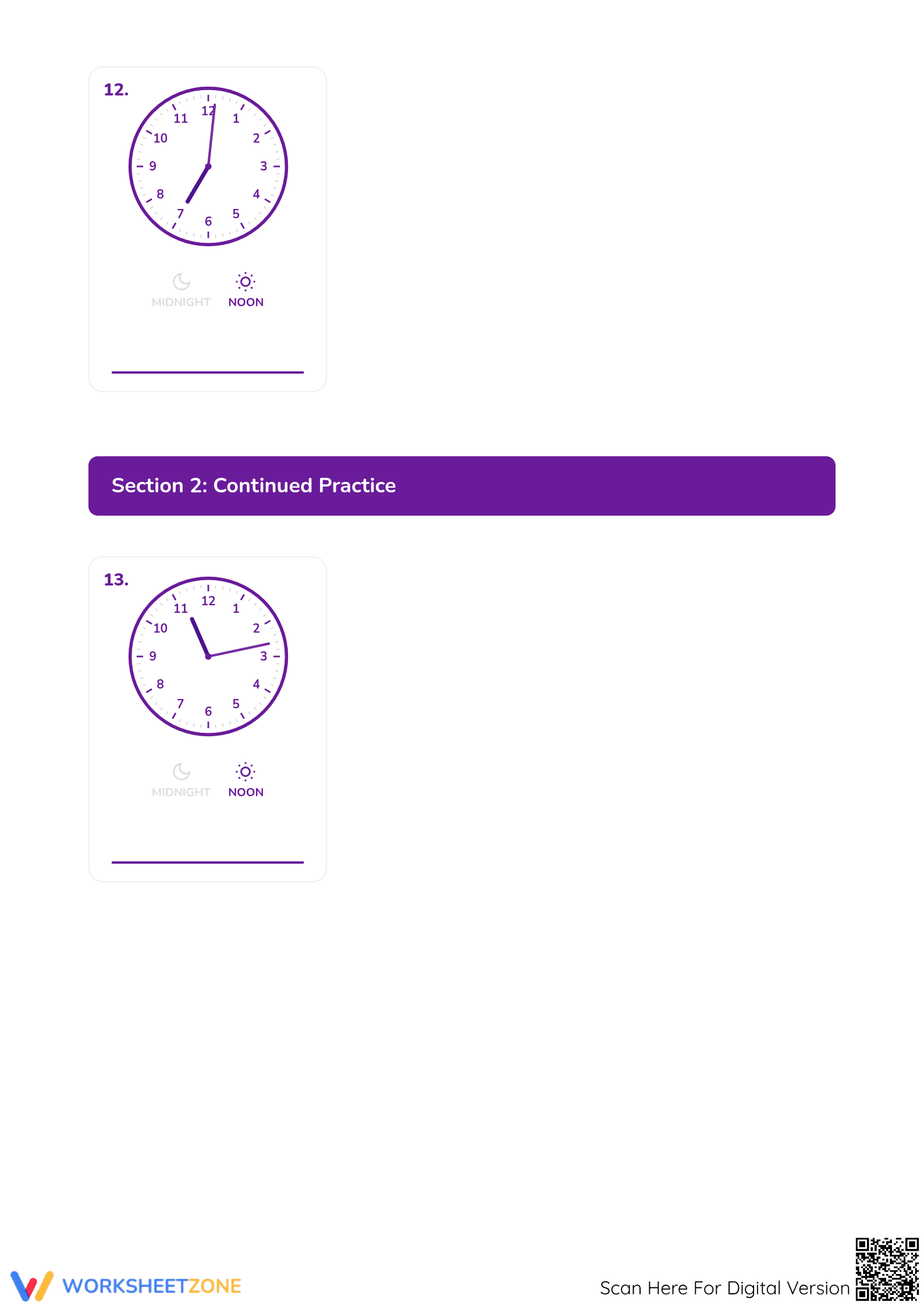
This Grade 3 math worksheet focuses on the essential skill of reading analog clocks to one-minute intervals. Students analyze various clock faces to determine the exact time, incorporating Noon and Midnight indicators to distinguish between morning and afternoon. This targeted practice ensures learners build the precision required for real-world time management and standardized testing success.
At a Glance
- Grade: 3 · Subject: Math
- Standard:
CCSS.3.MD.A.1— Tell and write time to the nearest minute and measure time intervals in minutes- Skill Focus: Analog Clock Reading (1-Minute Intervals)
- Format: 5 pages · 13 problems · Answer key included · PDF
- Best For: Independent practice or formative assessment
- Time: 15–20 minutes
What's Inside
This comprehensive PDF packet contains 5 pages featuring 13 distinct analog clock reading tasks. Each page presents clear, large clock faces with clearly defined minute marks. The worksheet includes "Noon" and "Midnight" icons for contextual time-telling practice. A complete answer key is provided at the end of the document to facilitate rapid grading and self-correction.
Zero-Prep Workflow
- Print: Teachers can simply print the 5-page PDF in less than 30 seconds for immediate use.
- Distribute: Handing out materials to a class of 25 students takes under one minute of class time.
- Review: The provided answer key allows for a full-class review or individual scoring in less than two minutes.
This resource is specifically designed for busy educators who need reliable, high-quality materials for sub plans, morning work, or last-minute homework assignments with zero teacher setup.
Standards Alignment
This resource is strictly aligned to the primary standard `CCSS.3.MD.A.1`: "Tell and write time to the nearest minute and measure time intervals in minutes." It also supports Grade 2 remediation for students working toward `CCSS.2.MD.C.7` who are ready for increased precision. Both standard codes can be copied directly into lesson plans, IEP goals, or district curriculum mapping tools.
How to Use It
Use this worksheet as a concluding activity during your direct instruction unit on time. Assign it to students for independent practice after they have mastered five-minute intervals. For a formative assessment observation, watch how students handle the transition between hours (e.g., 2:58) to check for common hand-placement misconceptions. Most students will complete the 13 tasks within 20 minutes.
Who It's For
This worksheet is tailored for Grade 3 students, though it serves as excellent enrichment for Grade 2 or remedial support for Grade 4. It is particularly effective for students requiring visual aids to understand minute-hand placement. Pair this resource with a physical geared classroom clock or a digital time-telling app to bridge the gap between abstract concepts and concrete manipulation.
Reading analog clocks to the nearest minute is a foundational numeracy skill that bridges geometry and algebraic thinking. According to the NAEP 2024 analysis, students who master high-precision clock reading early demonstrate stronger interval logic and fractional reasoning in subsequent grade levels. This worksheet targets the CCSS.3.MD.A.1 standard, requiring students to tell and write time to 1-minute intervals. The inclusion of Noon and Midnight indicators provides the necessary situational context for distinguishing between AM and PM, a critical component of chronological awareness. By focusing on analog faces, the resource reinforces the 60-minute circular cycle, which serves as a precursor to understanding degrees and angles. As noted in EdReports 2024, instructional materials that emphasize minute-level precision help mitigate the 'digital clock dependency' often observed in upper elementary grades. This PDF packet provides the structured repetition needed to move from procedural decoding to fluent time-telling mastery.


