


























Views
Downloads

Grade 3 Reading Analog Clocks — Printable No-Prep Worksheet
Paste this activity's link or code into your existing LMS (Google Classroom, Canvas, Teams, Schoology, Moodle, etc.).
Students can open and work on the activity right away, with no student login required.
You'll still be able to track student progress and results from your teacher account.
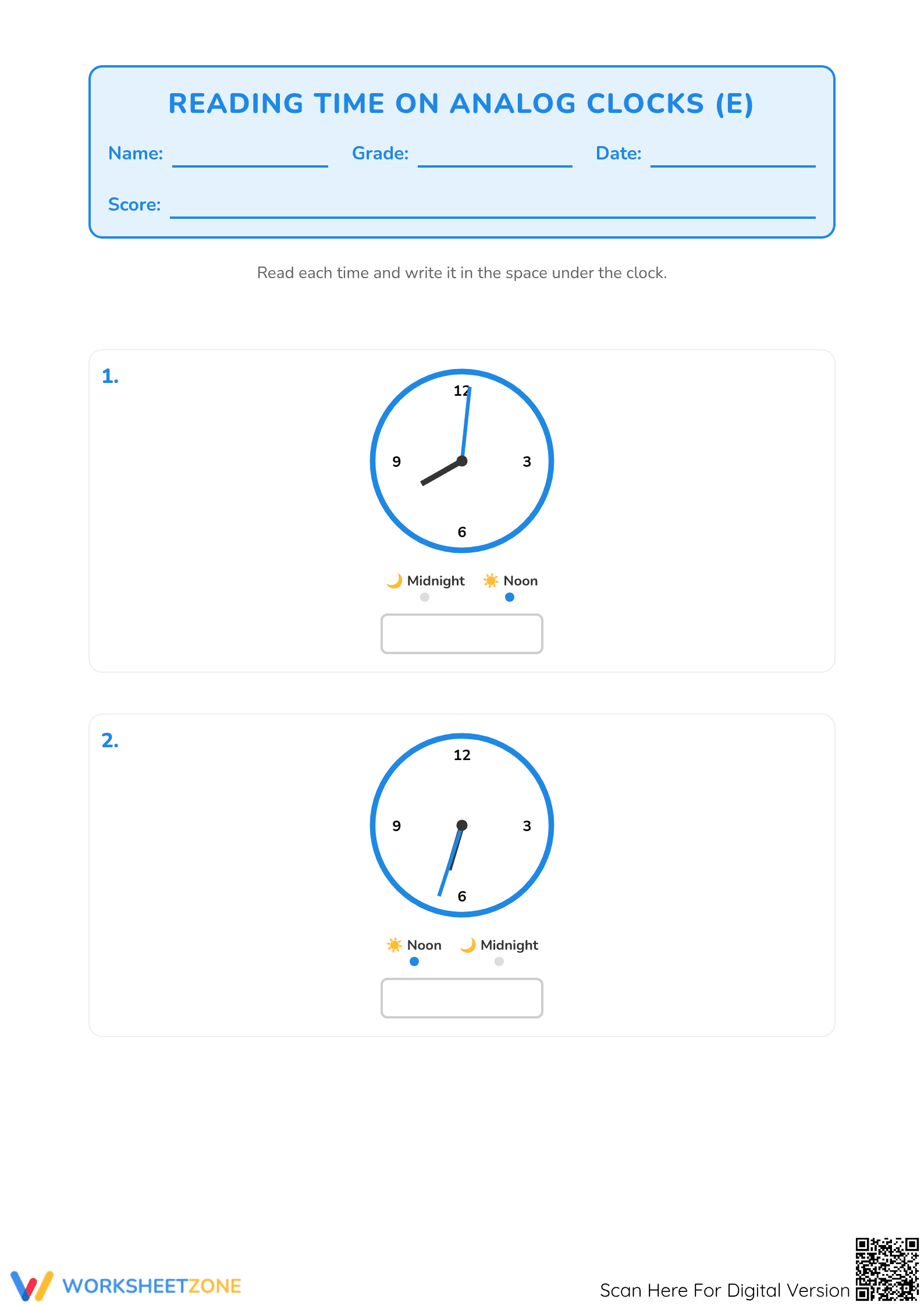
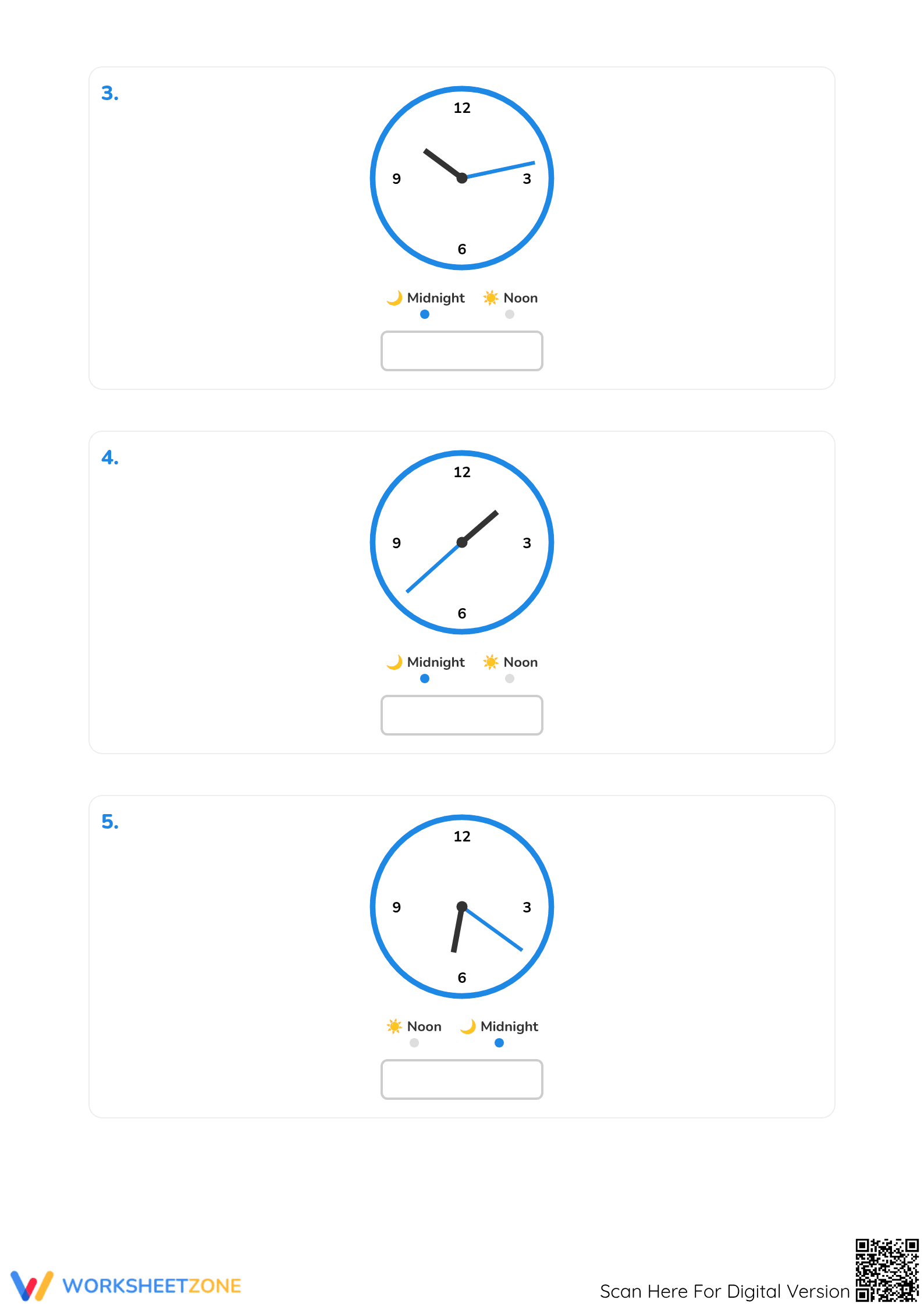
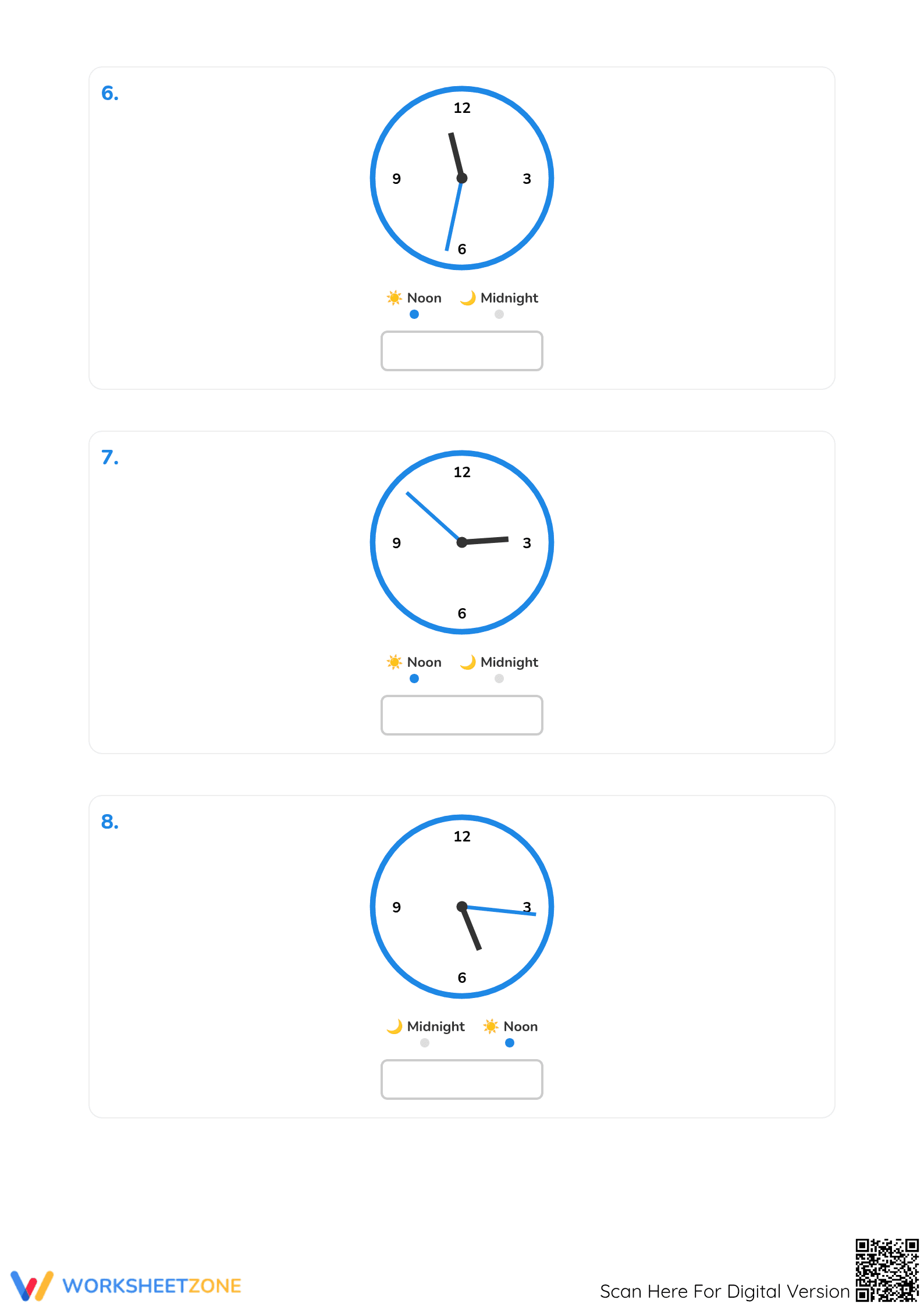
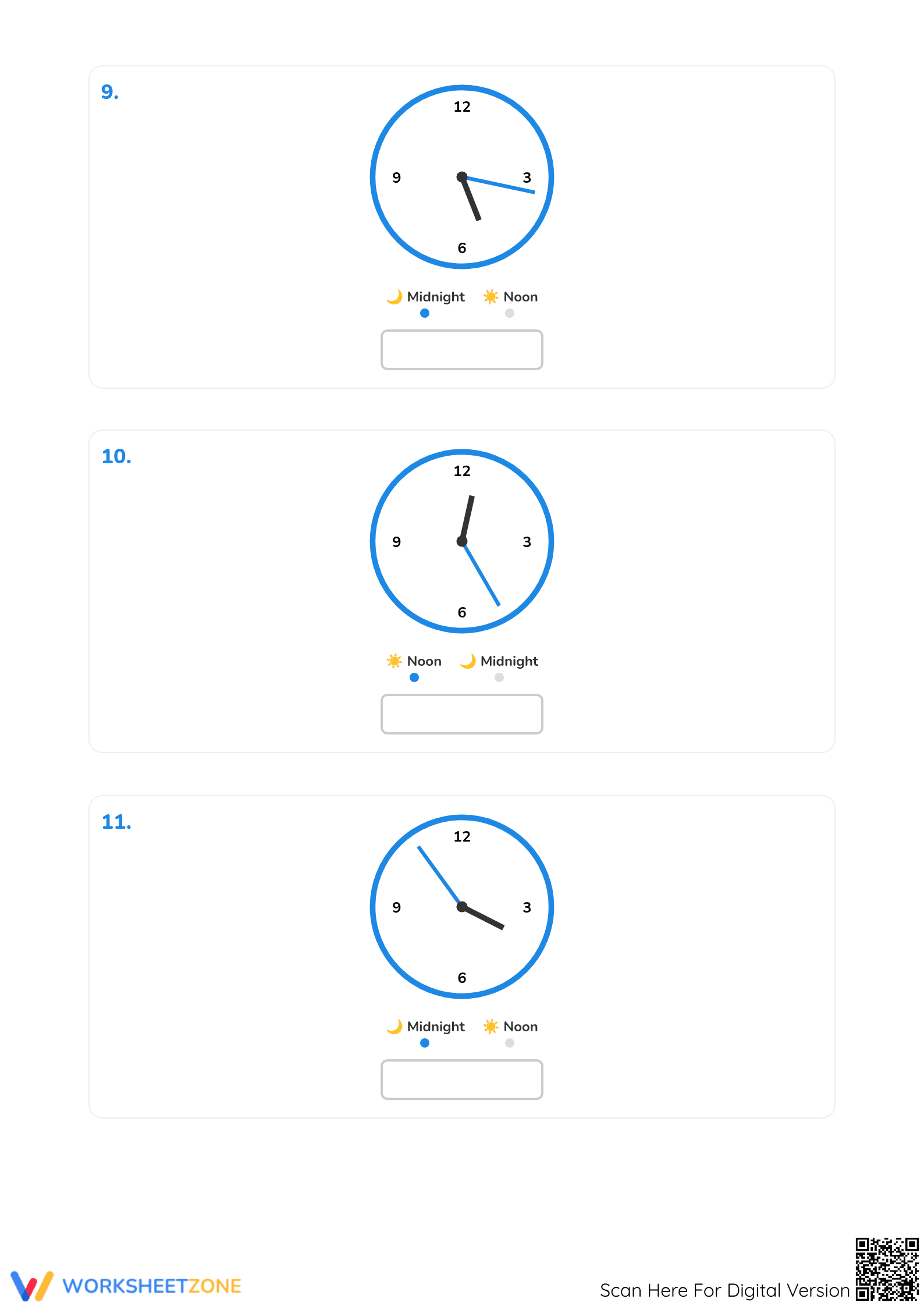
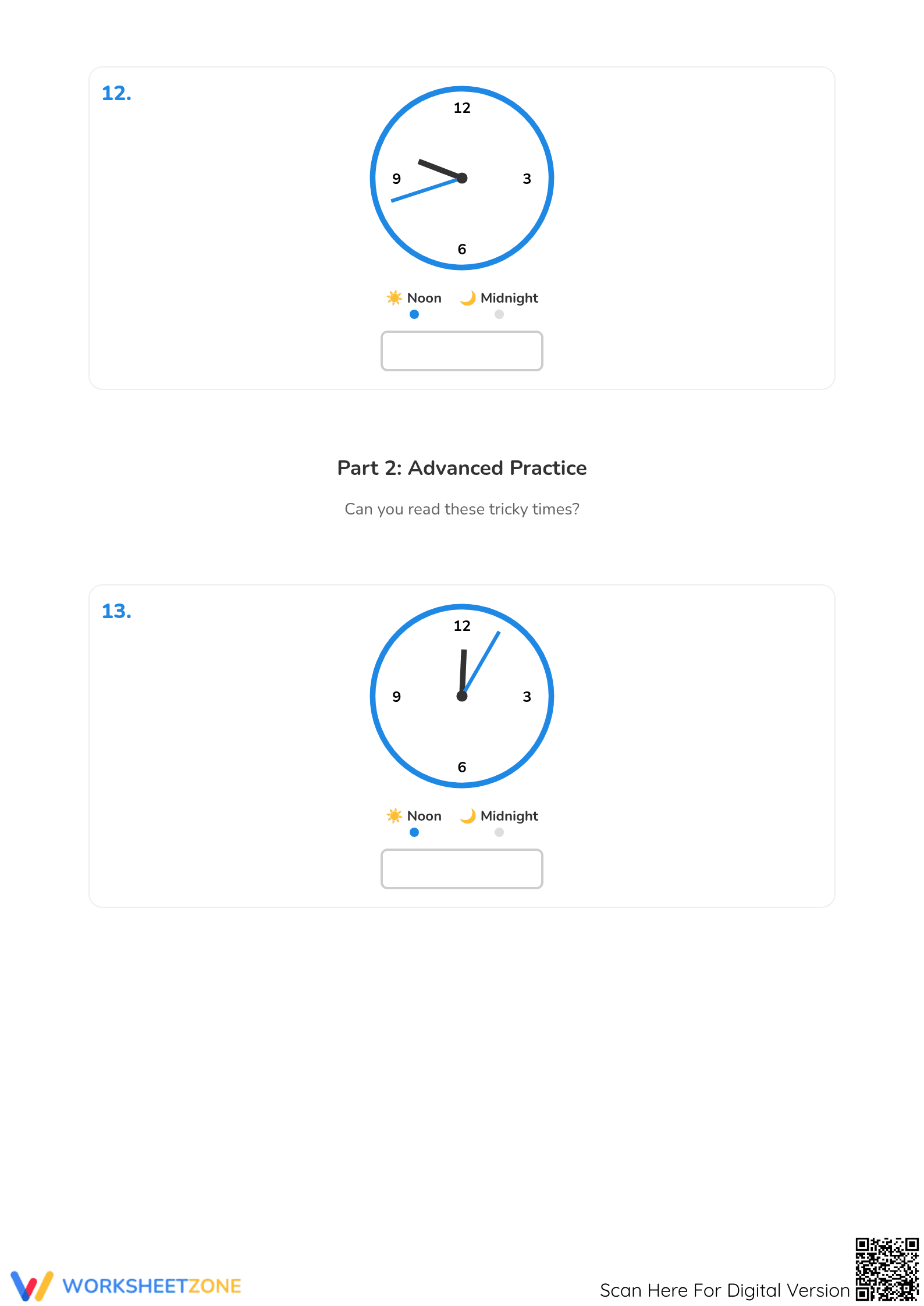
This Grade 3 math worksheet provides targeted practice for reading analog clocks to the exact minute. Students analyze 13 distinct clock faces to determine the precise time, including AM and PM distinctions via noon and midnight cues. This comprehensive set ensures students move beyond five-minute increments to achieve complete fluency in time-telling skills and real-world scheduling.
At a Glance
- Grade: 3 · Subject: Math
- Standard:
CCSS.MATH.CONTENT.3.MD.A.1— Tell and write time to the nearest minute using analog clocks- Skill Focus: Analog Clock Reading (1-Minute Intervals)
- Format: 5 pages · 13 problems · Answer key included · PDF
- Best For: Independent practice and formative assessment
- Time: 20–30 minutes
This 5-page PDF contains 13 high-quality analog clock illustrations with clear minute markings. Each problem includes a specific time-of-day indicator to help students contextualize their answers. The pack concludes with an Advanced Practice section featuring tricky times where hands are closely positioned, alongside a full answer key for immediate feedback and grading support.
The zero-prep workflow is designed for busy educators: simply print the 5-page PDF (30 seconds), distribute to students (1 minute), and use the included answer keys for rapid review or peer-grading (1 minute). This resource requires less than three minutes of total teacher preparation time, making it an ideal choice for substitute folders or unexpected schedule shifts.
This resource is strictly aligned to CCSS.MATH.CONTENT.3.MD.A.1, which requires students to tell and write time to the nearest minute. It also supports Grade 2 work with 5-minute intervals and Grade 4 review of elapsed time. These standard codes can be copied directly into lesson plans, IEP goals, or district curriculum mapping tools.
Use this worksheet as a focused exit ticket after a lesson on the minute hand's precision. Alternatively, assign it for morning work to reinforce time-telling fluency throughout the week. Teachers should observe students' ability to differentiate between the hour and minute hands when they are near the same digit, using this as a formative-assessment opportunity.
This pack is designed for Grade 3 students mastering time-telling, though it serves as excellent enrichment for Grade 2 or remedial support for Grade 4. It pairs naturally with physical manipulative clocks or interactive whiteboards. The clear, uncluttered design is particularly effective for students who benefit from high-contrast visuals and structured response areas.
According to the NAEP 2024 framework, mastery of measurement and data standards like CCSS.MATH.CONTENT.3.MD.A.1 is a critical precursor to advanced mathematical reasoning and proportional thinking. Reading analog clocks to the nearest minute requires students to integrate spatial awareness with numerical sequences, a complex cognitive task highlighted in the Fisher & Frey (2014) gradual release model. Research from EdReports (2024) indicates that high-quality, standards-aligned practice materials significantly reduce the translation gap between abstract concepts and concrete application. This worksheet provides the exact scaffold needed to move students from 5-minute estimations to 1-minute precision. By isolating the reading task across 13 varied instances, the resource allows educators to pinpoint specific errors in hand identification or scale interpretation. This data-driven approach ensures that students develop a robust, durable understanding of time measurement that serves as a foundation for subsequent lessons on elapsed time and duration calculation.


