




























Views
Downloads

Printable Telling Time to the Minute Worksheet | Grades 2-4

Paste this activity's link or code into your existing LMS (Google Classroom, Canvas, Teams, Schoology, Moodle, etc.).
Students can open and work on the activity right away, with no student login required.
You'll still be able to track student progress and results from your teacher account.
Mastering precision time-reading is a foundational mathematical milestone. This comprehensive worksheet provides structured practice for elementary students to identify hours and minutes on analog clocks with 1-minute accuracy, developing fluency for real-world time management and temporal reasoning.
At a Glance
- Grade: 3 · Subject: Math
- Standard:
CCSS.MATH.CONTENT.3.MD.A.1— Tell and write time to the nearest minute and measure time intervals- Skill Focus: Analog Clock Precision
- Format: 5 pages · 13 problems · Answer key included · PDF
- Best For: Small group instruction or independent practice
- Time: 20–30 minutes
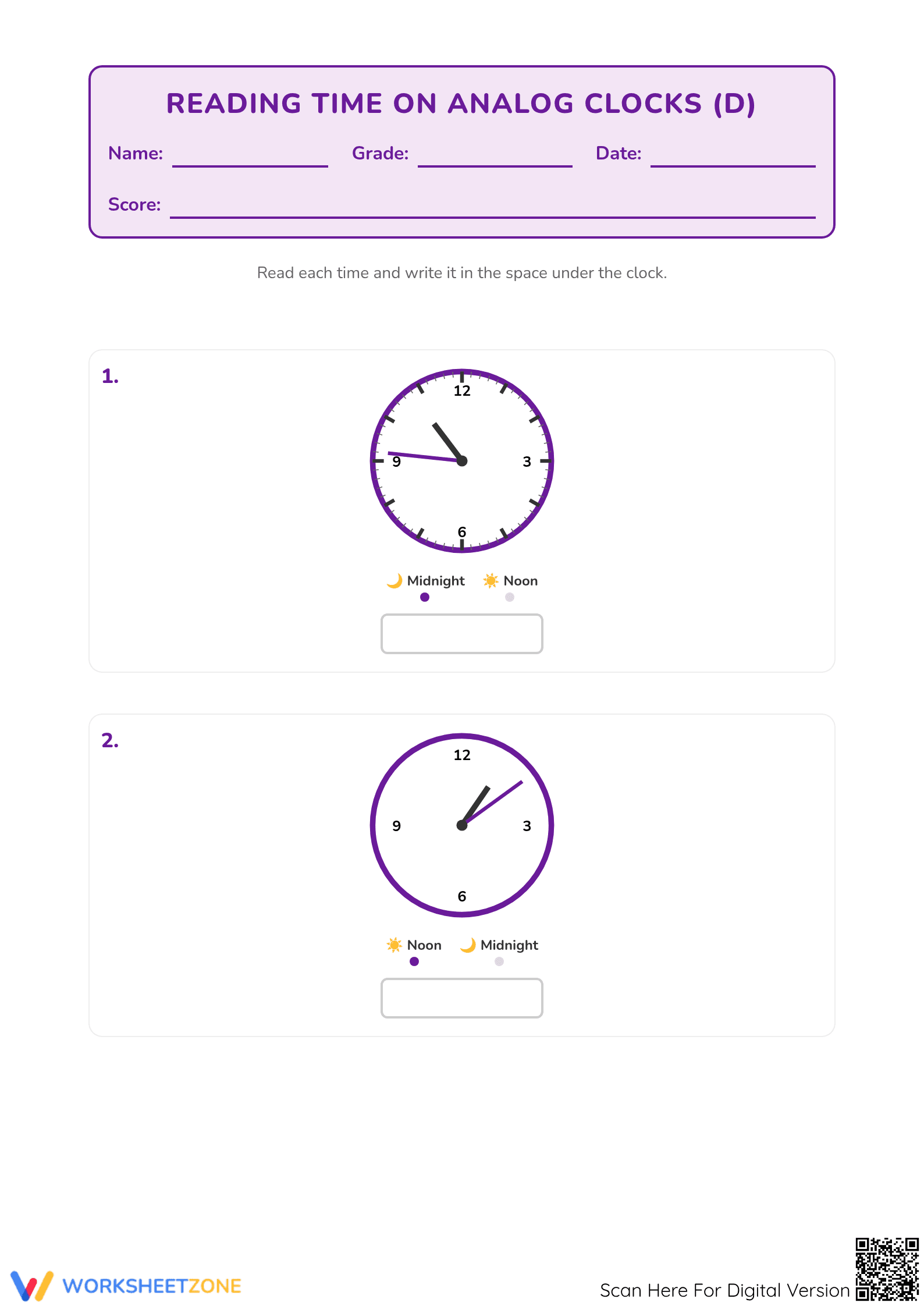
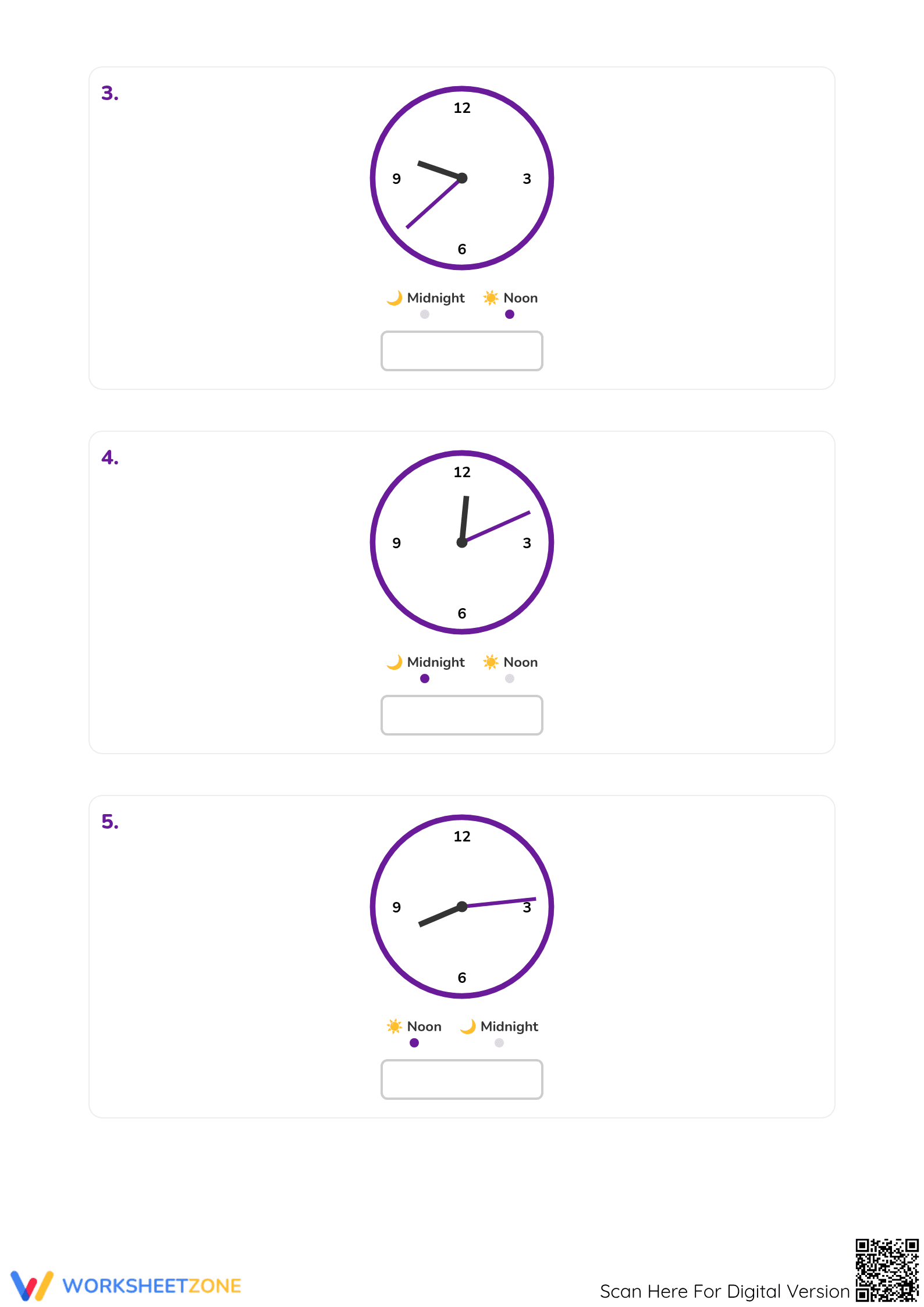
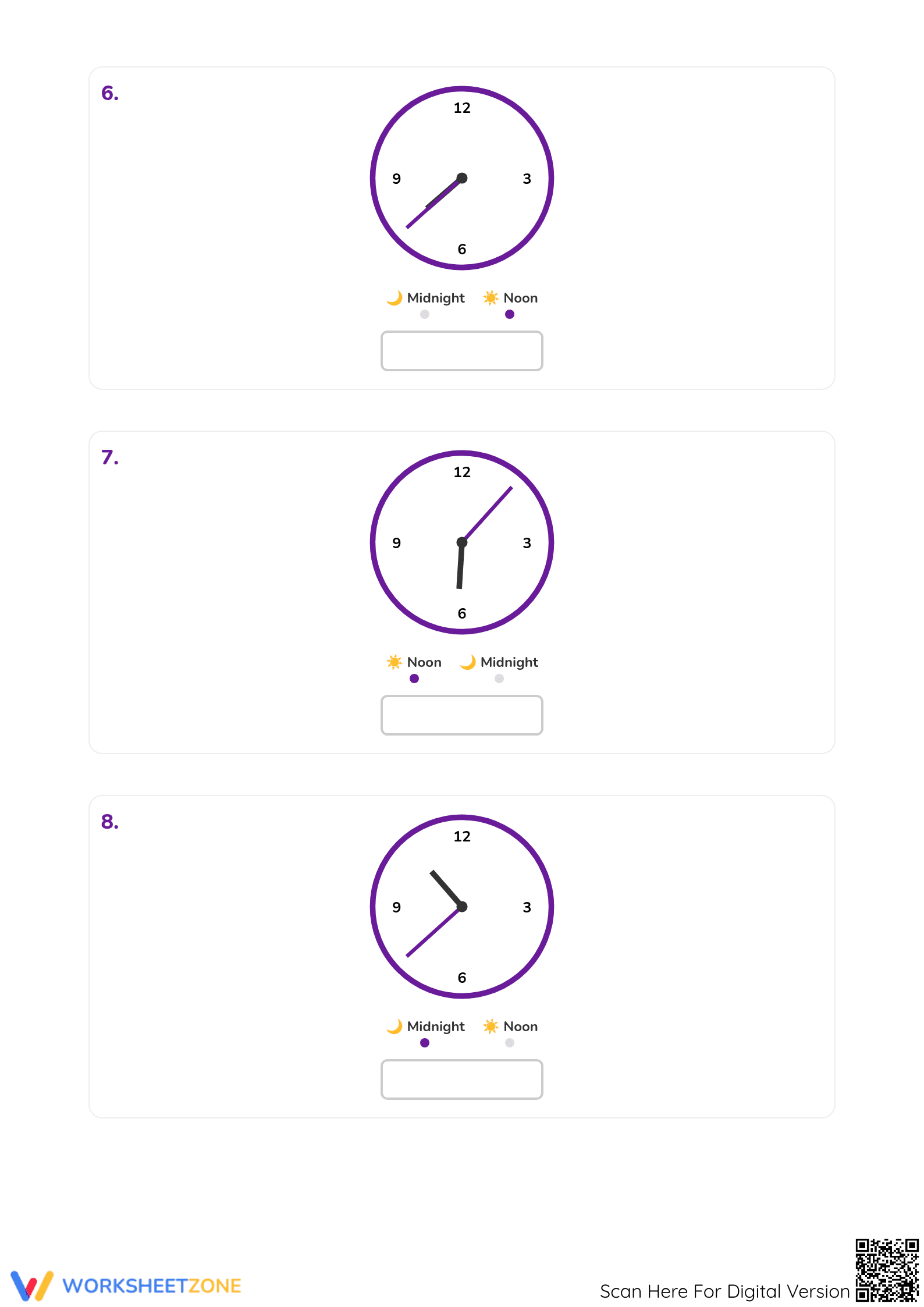
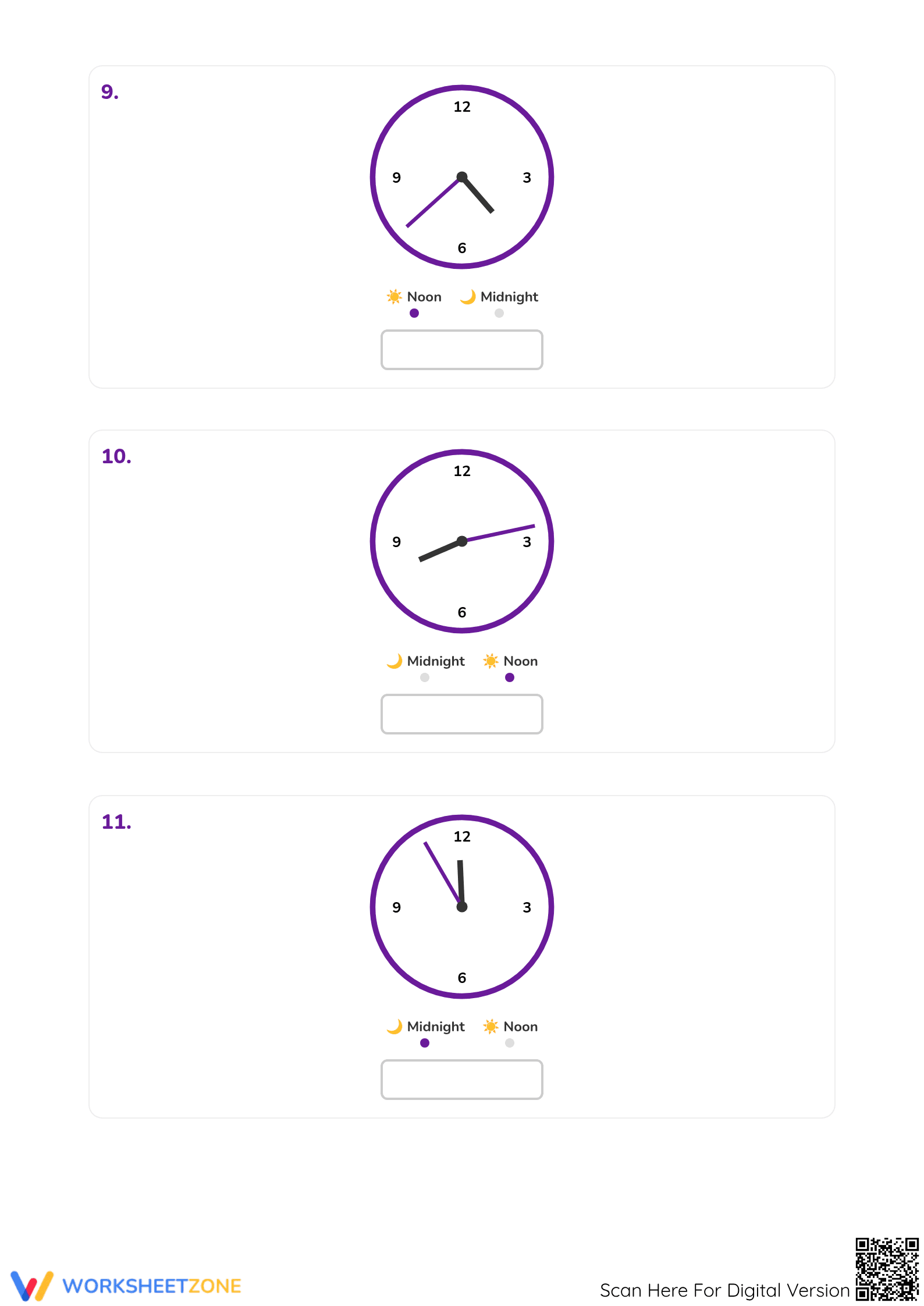
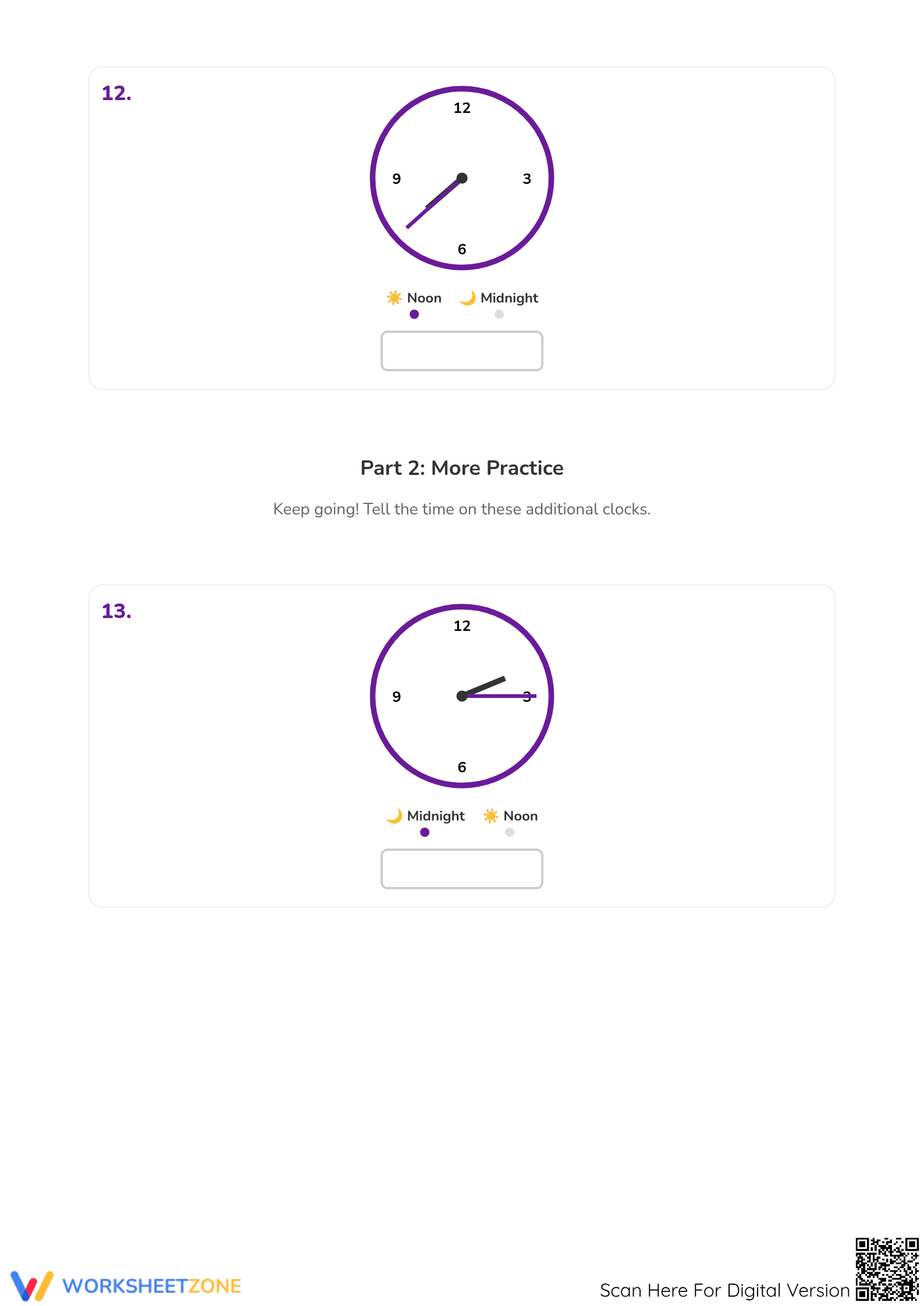
This 5-page PDF features 13 distinct analog clock faces. Each requires students to interpret hour and minute hand positions. The layout includes clear, large diagrams with high-contrast markings for visibility. A dedicated space beneath each clock is provided for numeric answers. A complete answer key facilitates rapid grading or self-correction.
Skill Progression
- Guided Practice: Initial 4 problems present clocks with clear hour-minute differentiation, allowing teachers to model identifying the nearest five-minute mark before counting individual tick marks.
- Supported Practice: Middle 7 tasks introduce varying hand placements, challenging students to distinguish hour and minute hands when in close proximity or complex intervals.
- Independent Practice: The final 2 tasks provide unassisted opportunities for students to demonstrate mastery of 1-minute intervals across a full 12-hour range, ensuring competency before elapsed time.
This gradual release model follows the I Do, We Do, You Do instructional framework, ensuring learners transition from basic recognition to high-precision accuracy with confidence.
Standards Alignment
Directly aligned with CCSS.MATH.CONTENT.3.MD.A.1: "Tell and write time to the nearest minute and measure time intervals in minutes." It also supports Grade 2 measurement standards and serves as a Grade 4 review for time-based word problems. Standard codes can be copied into lesson plans, IEP goals, or curriculum mapping tools.
How to Use It
Use this worksheet during the independent practice phase of a math lesson after direct instruction on clock components. It serves as an excellent formative assessment; observe if students correctly identify the minute hand's side to avoid common hour-counting errors. Completion time ranges from 20 to 30 minutes.
Who It's For
Designed for third-grade students working toward standard mastery, this resource also provides intervention for second graders and review for fourth-grade learners. It pairs naturally with classroom geared student clocks or a digital interactive clock display for whole-class modeling.
Effective math instruction for time integrates visual-spatial models and numerical interpretation. This resource meets the critical need for repeated, focused practice in telling time to the minute, a skill EdReports (2024) identifies as essential for early quantitative literacy. With 13 structured opportunities, it supports the transition from discrete five-minute counting to continuous interval measurement. Aligned with CCSS.MATH.CONTENT.3.MD.A.1, tasks build fluency for complex scheduling and elapsed-time calculations. Clear, uncluttered clock faces minimize cognitive load, allowing focus on minute and hour hand spatial relationships. This evidence-based approach ensures deeper understanding of temporal measurement.


