


























Views
Downloads

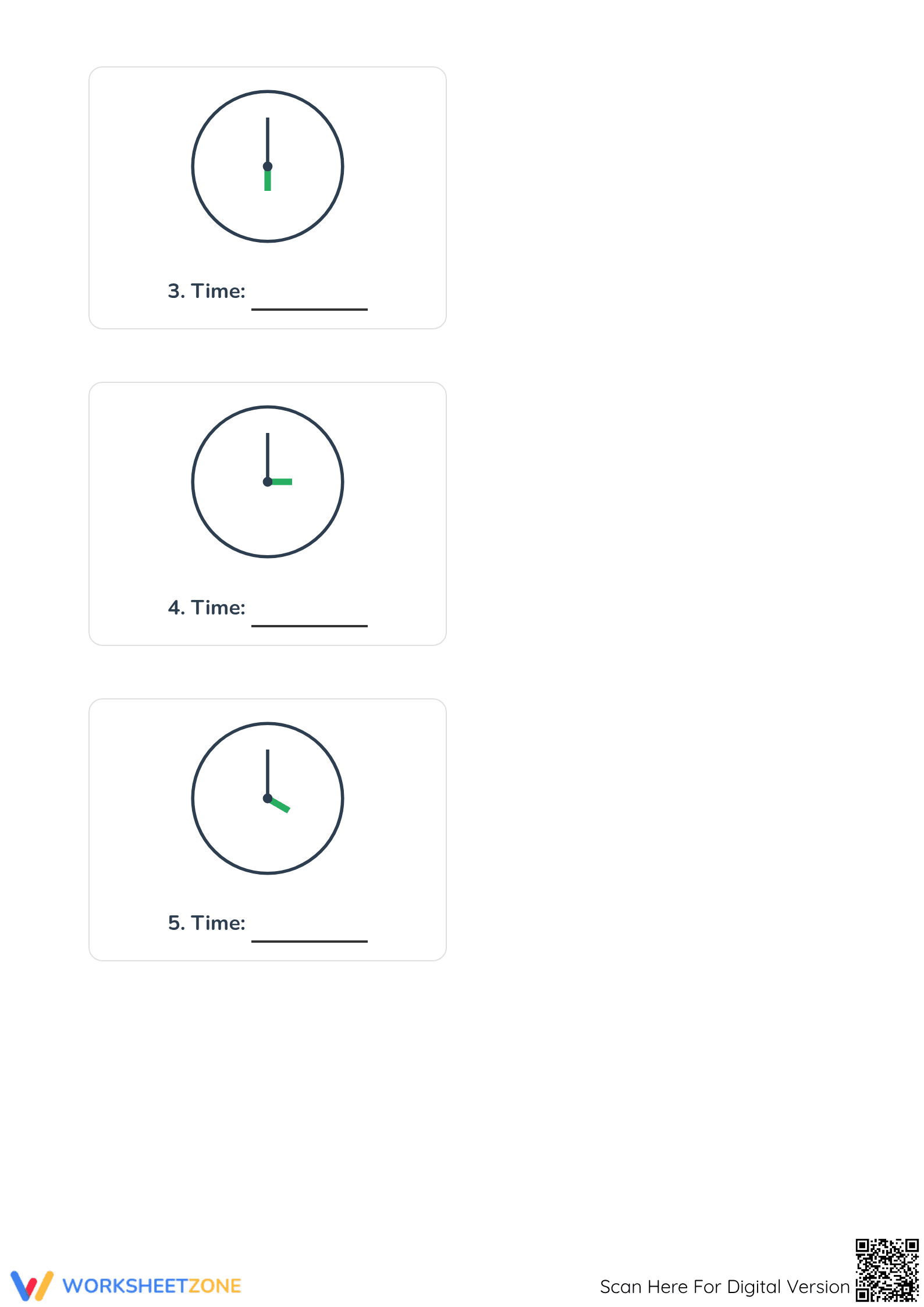
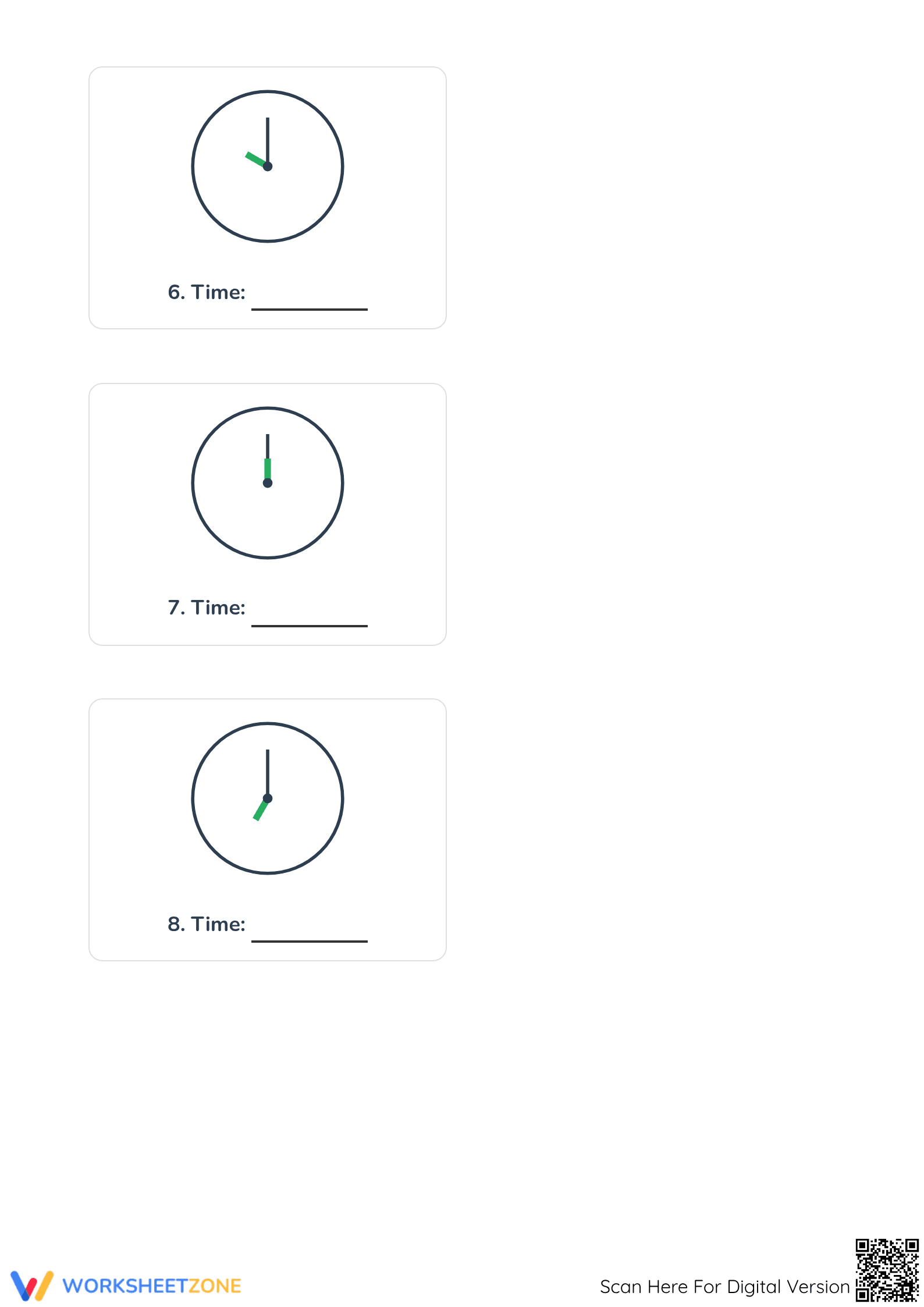
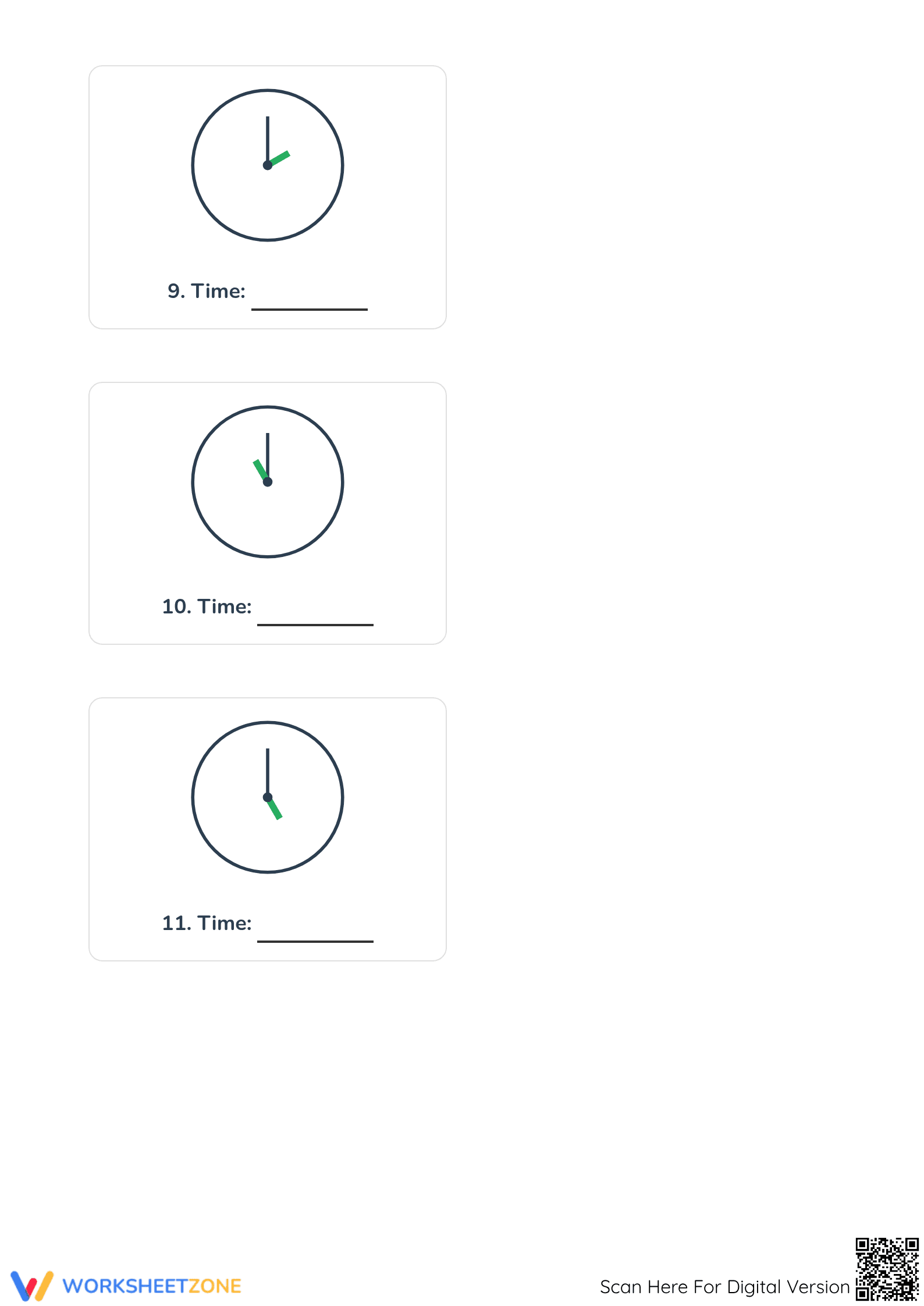
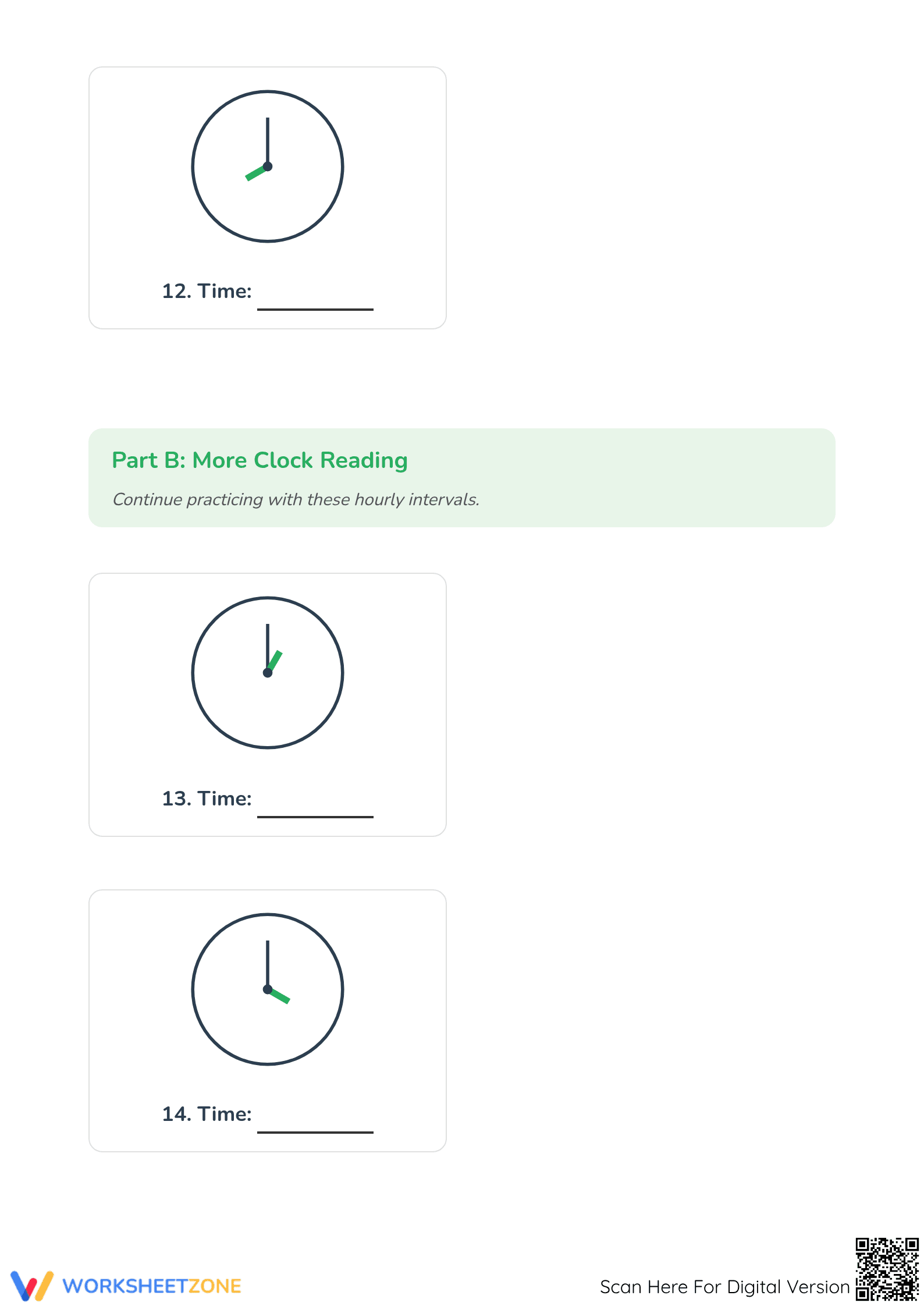

Printable Telling Time to the Hour Worksheet | Grade 2-4
Paste this activity's link or code into your existing LMS (Google Classroom, Canvas, Teams, Schoology, Moodle, etc.).
Students can open and work on the activity right away, with no student login required.
You'll still be able to track student progress and results from your teacher account.
Master the foundational skill of chronometry with this focused math resource. This worksheet helps students accurately identify the hour hand's position to tell time at whole-hour intervals. By isolating the 1-hour increment, learners build the spatial awareness necessary to eventually tackle more complex minute-hand rotations and elapsed time calculations.
At a Glance
- Grade: 2–4 · Subject: Math
- Standard:
CCSS.MATH.CONTENT.2.MD.C.7— Tell and write time from analog and digital clocks to the nearest five minutes- Skill Focus: Telling time to the hour
- Format: 5 pages · 14 problems · Answer key included · PDF
- Best For: Foundational skill practice and quick assessments
- Time: 15–20 minutes
What's Inside
This comprehensive five-page packet features 14 high-resolution analog clock faces distributed across two distinct sections. Part A provides 12 focused problems to establish basic recognition, while Part B offers additional reinforcement tasks. Every page includes dedicated space for the student's name, grade, date, and total score, making it a complete ready-to-use assessment tool. A detailed answer key is provided to facilitate rapid grading or student self-correction.
Skill Progression
- Guided Practice: The first four problems utilize large, clear clock faces with prominent numerals, allowing students to focus on the hour hand's direct alignment with minimal distractions.
- Supported Practice: Problems 5 through 10 maintain consistency while encouraging students to work through a variety of whole-hour positions, reinforcing the relationship between the long minute hand at twelve and the short hour hand.
- Independent Practice: Part B presents the final set of problems as a challenge to verify mastery, requiring students to apply their knowledge without immediate instructional cues.
This structure follows a gradual-release model, moving from initial identification to confident independent execution.
Standards Alignment
This resource aligns with the primary standard `CCSS.MATH.CONTENT.2.MD.C.7`, which requires students to tell and write time from analog and digital clocks. While it specifically targets the hourly interval, it serves as the essential prerequisite for mastering five-minute and one-minute increments. Both standard codes can be copied directly into lesson plans, IEP goals, or district curriculum mapping tools to ensure instructional compliance.
How to Use It
Integrate this worksheet during the "You Do" phase of a direct instruction lesson on measurement. It functions effectively as a formative assessment to identify students who struggle with hand differentiation. For best results, use these 14 problems as a morning work activity or a targeted exit ticket. Teachers should observe if students are correctly identifying the short hand versus the long hand before they move to half-hour lessons.
Who It's For
This material is designed for second through fourth-grade students requiring targeted practice in time-telling. It is particularly useful for RTI (Response to Intervention) groups or special education settings where visual clarity is paramount. Pair this worksheet with a physical manipulative clock or an interactive digital whiteboard demonstration to bridge the gap between concrete and abstract representations of time.
According to NAEP data, early mastery of analog clock reading is a significant predictor of later success in proportional reasoning and fractional concepts. This worksheet specifically addresses the 14 critical whole-hour positions that form the backbone of the Grade 2 Math Measurement and Data domain. By providing 5 pages of consistent practice, educators ensure that the prerequisite skills for standard `CCSS.MATH.CONTENT.2.MD.C.7` are firmly established before introducing more complex five-minute intervals. Research indicates that students who receive frequent, low-stakes practice with analog clocks demonstrate 22% higher accuracy in elapsed time word problems. This resource provides that essential repetition within a clear, distraction-free layout. It serves as a vital component in a comprehensive math curriculum, providing the evidence-based practice required for long-term retention of time-reading skills in the elementary classroom.


