


























Views
Downloads
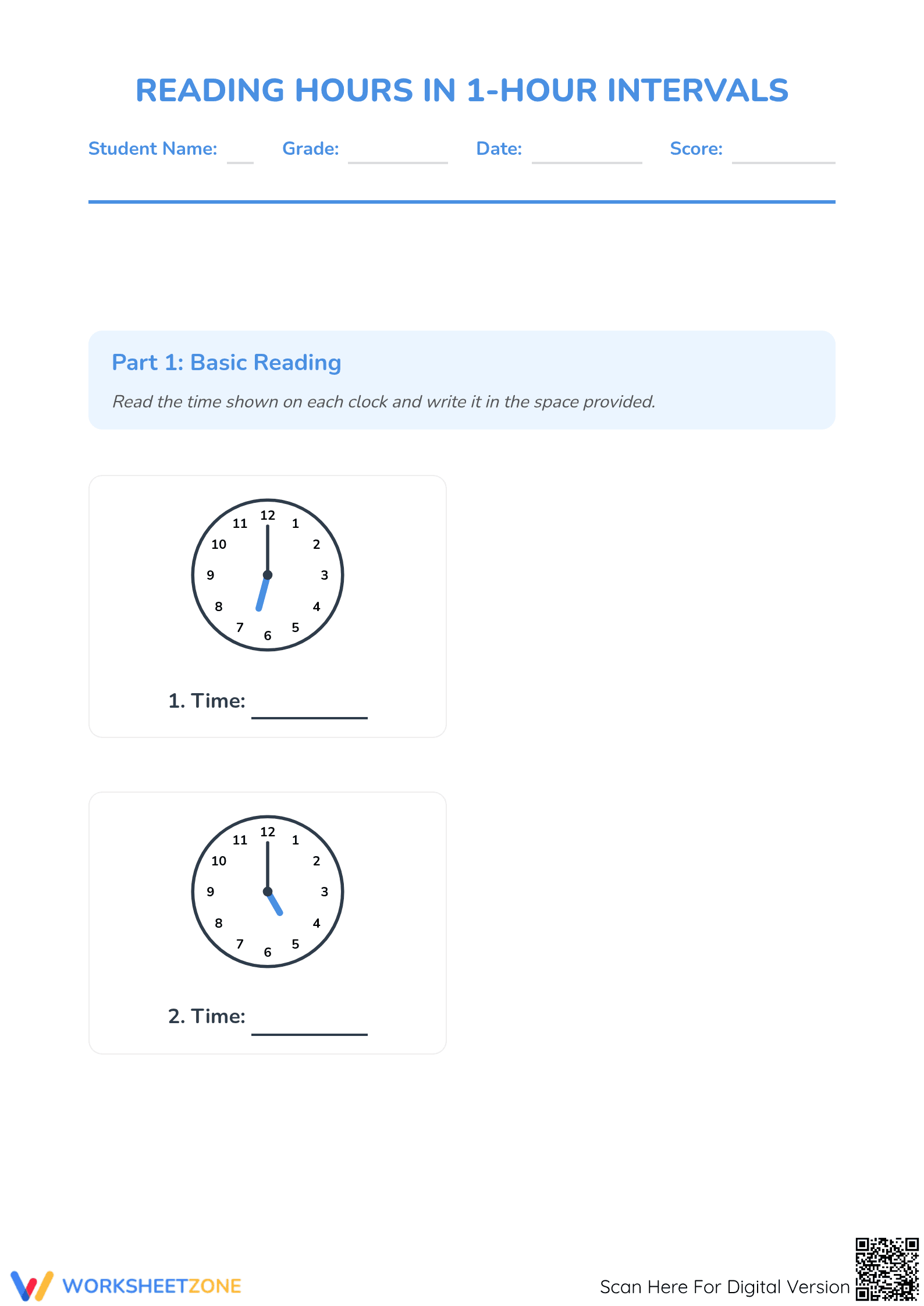
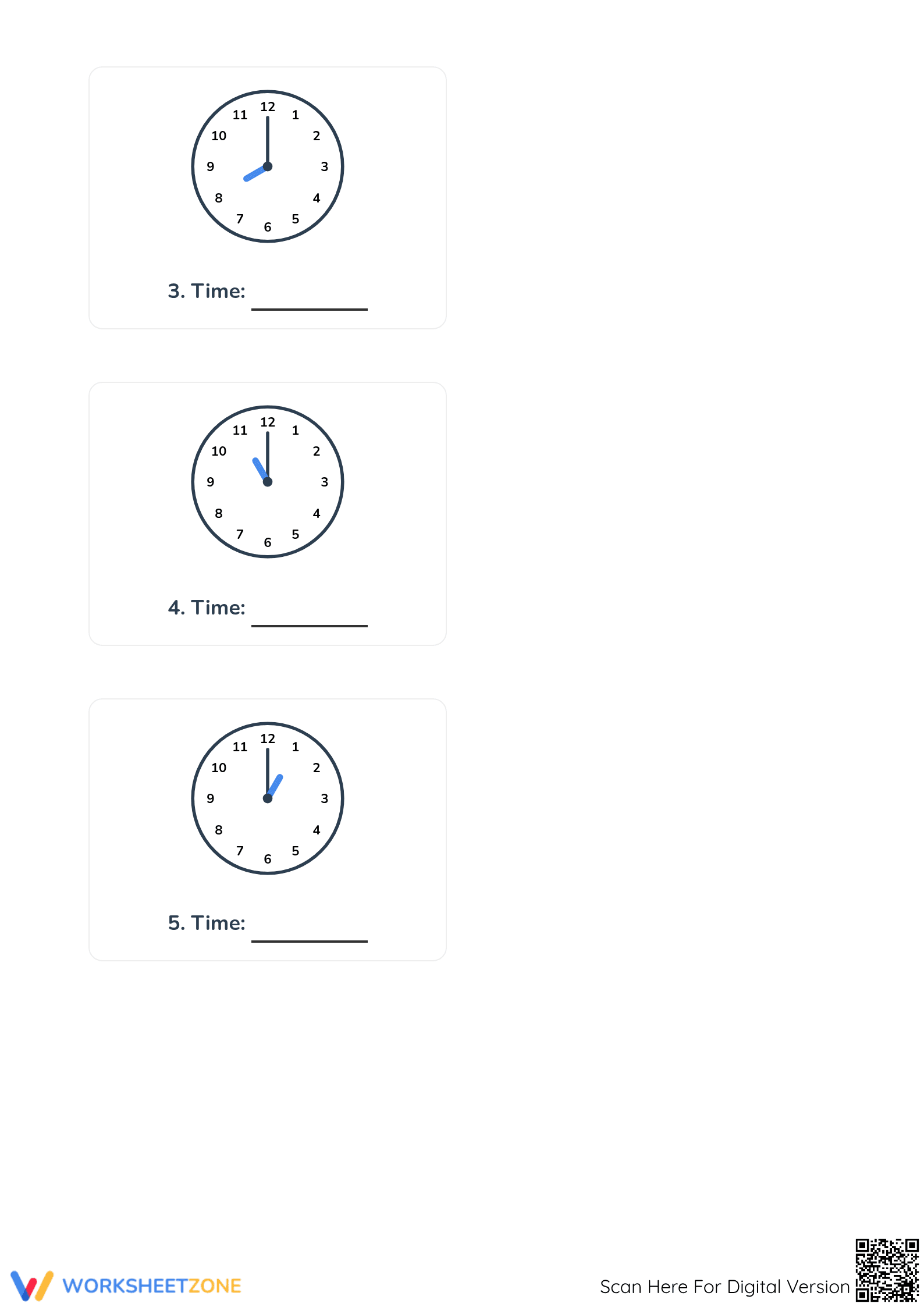
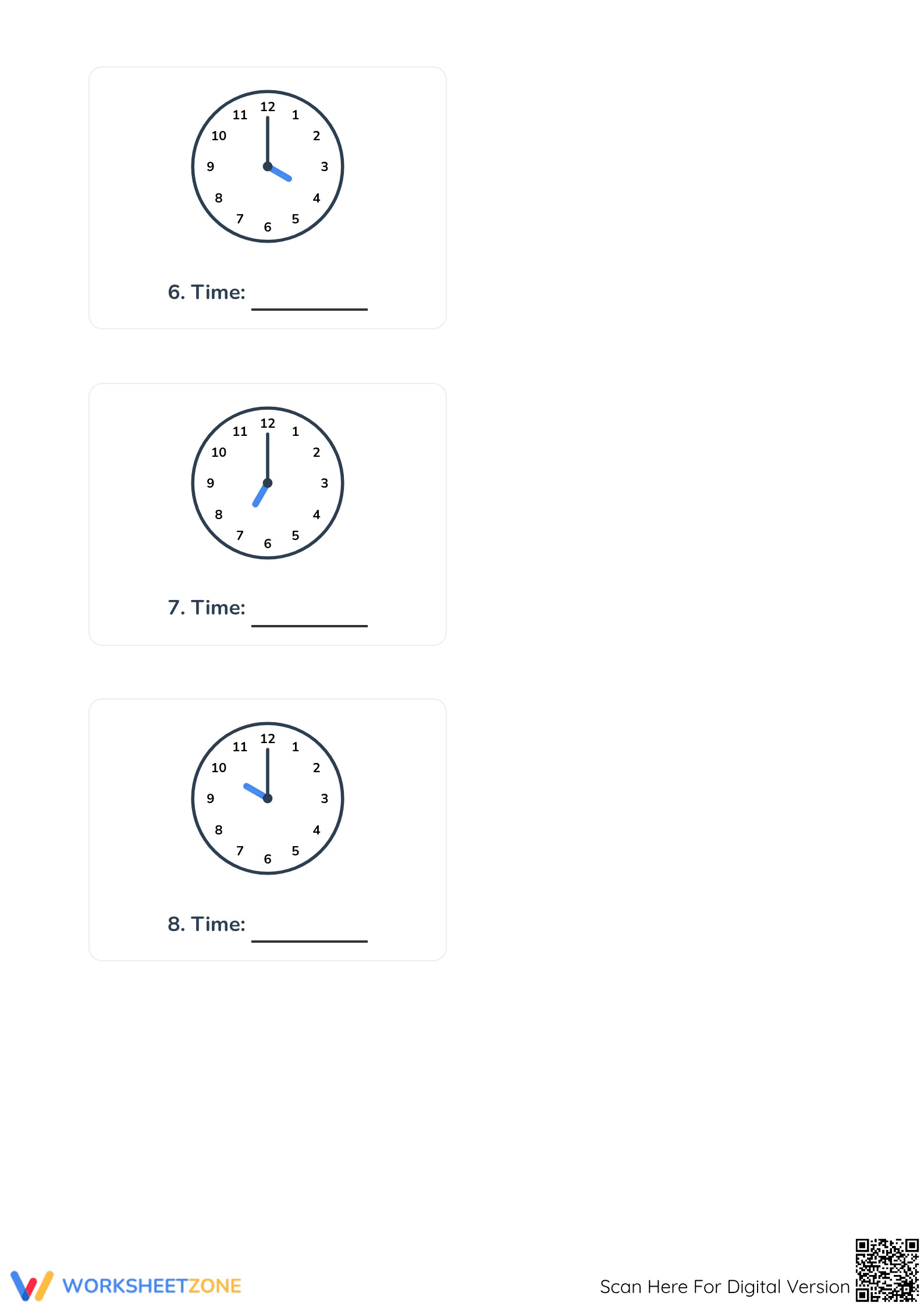
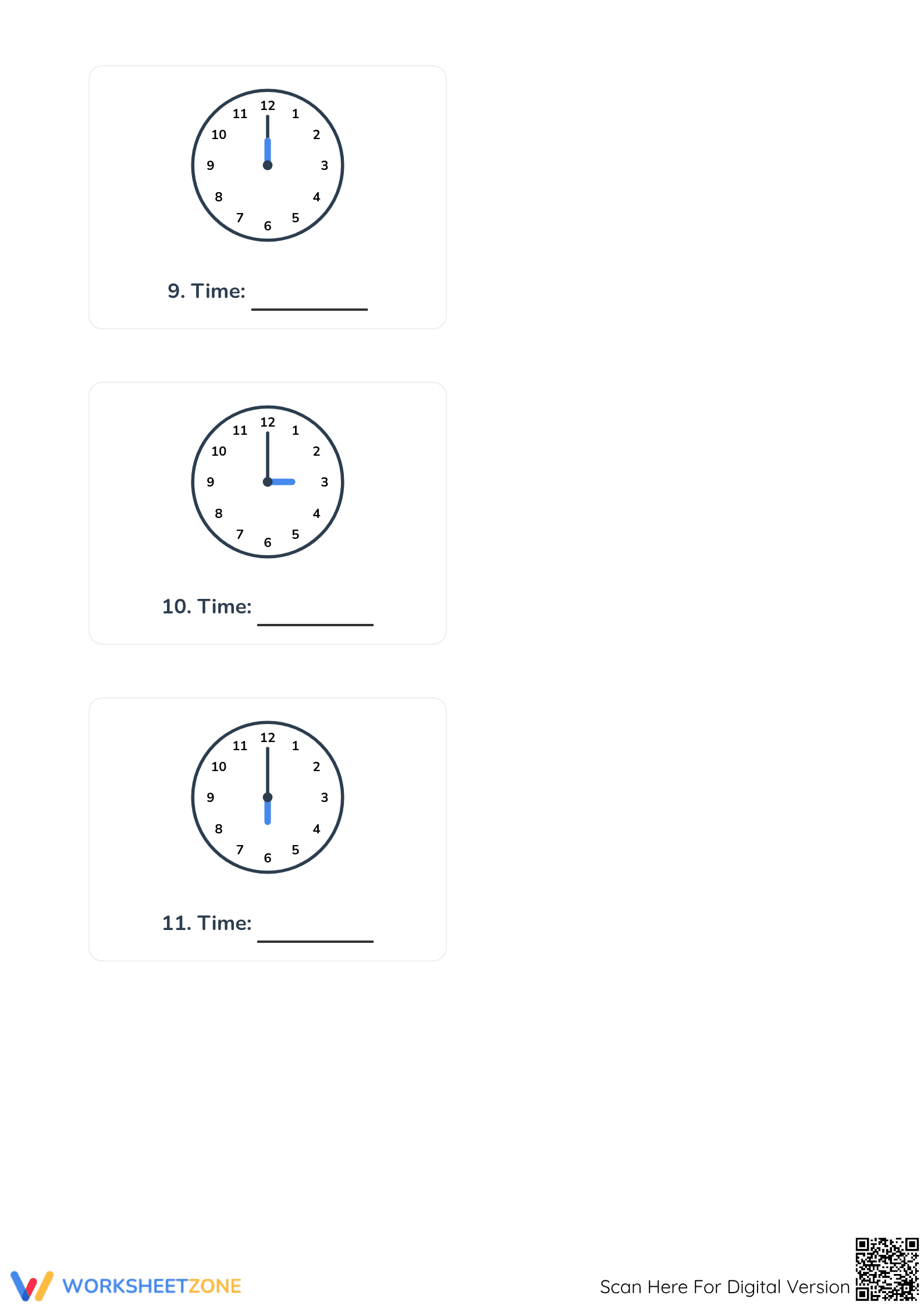

Reading Time to the Hour Worksheet | Essential Grade 2 Math
Paste this activity's link or code into your existing LMS (Google Classroom, Canvas, Teams, Schoology, Moodle, etc.).
Students can open and work on the activity right away, with no student login required.
You'll still be able to track student progress and results from your teacher account.
Mastering the clock is a pivotal milestone in early elementary mathematics. This Grade 2 worksheet provides a structured, distraction-free environment for students to practice telling time to the hour. By focusing exclusively on one-hour intervals, learners build the confidence needed to decode analog clock faces accurately and relate visual hand positions to numeric time representations.
At a Glance
- Grade: 2 · Subject: Math — Date and Time
- Standard:
CCSS.MATH.CONTENT.2.MD.C.7— Tell and write time from analog and digital clocks- Skill Focus: Telling time to the hour
- Format: 5 pages · 14 problems · Answer key included · PDF
- Best For: Morning work and quick formative assessment
- Time: 15–20 minutes
What's Inside
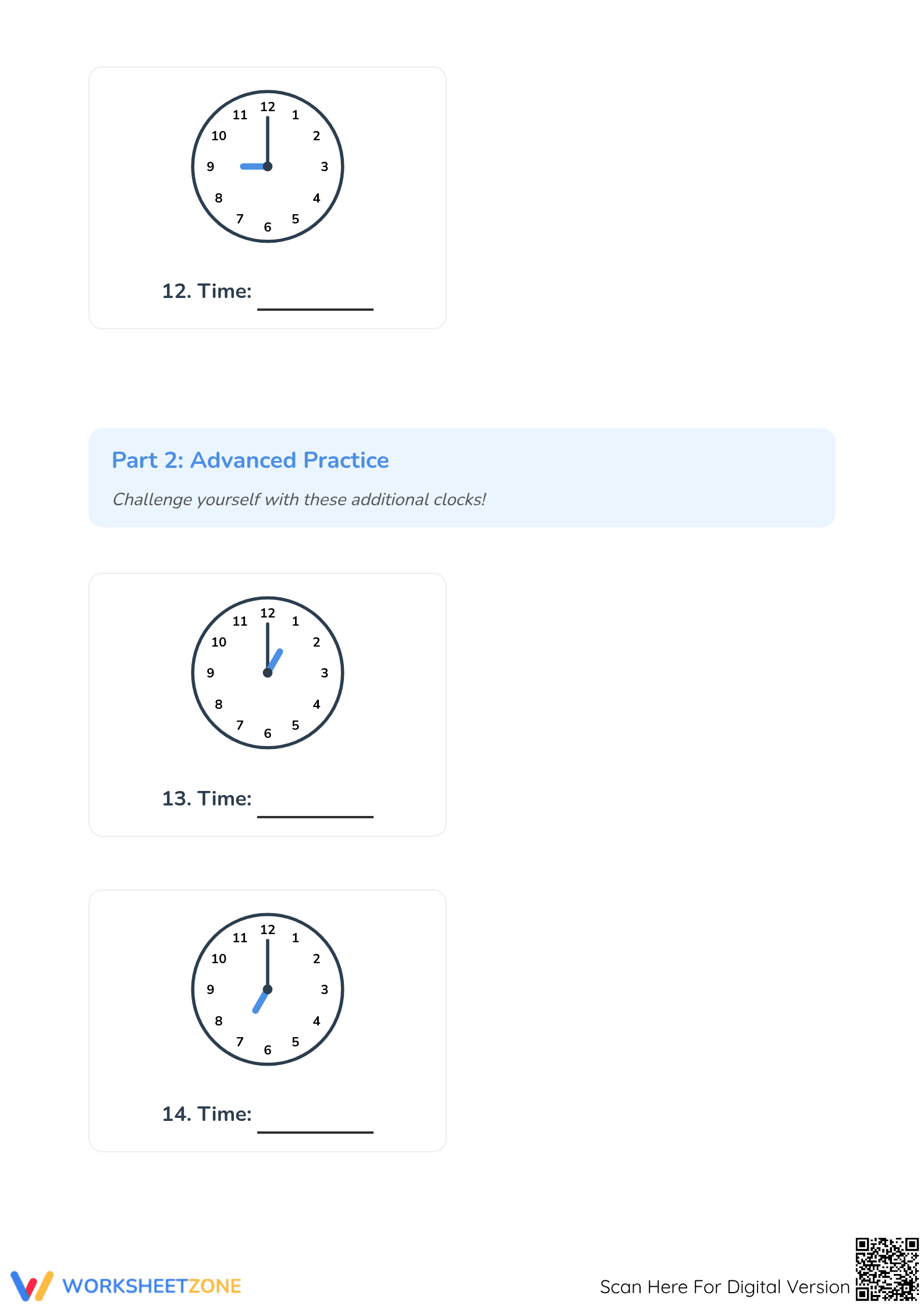
This set includes five printable pages with 14 distinct analog clock faces. The worksheet is divided into 'Basic Reading' and 'Advanced Practice' sections. Each page features large, clear clock diagrams with bold numerals and ample space for student responses. A full answer key is provided for rapid grading and immediate feedback.
Zero-Prep Workflow
This resource is designed for immediate classroom use with a preparation time of under two minutes. First, print the five-page PDF (30 seconds). Second, distribute the worksheets during your math block (30 seconds). Third, use the answer key to review responses (60 seconds). It is a perfect solution for sub plans or unexpected schedule shifts.
Standards Alignment
The primary focus is CCSS.MATH.CONTENT.2.MD.C.7: "Tell and write time from analog and digital clocks to the nearest five minutes, using a.m. and p.m." While focused on the hour, this activity serves as the essential prerequisite for mastering smaller time increments. This standard code can be copied directly into lesson plans, IEP goals, or district curriculum mapping tools.
How to Use It
Use this worksheet as a targeted warm-up before lessons on half-hour intervals. For formative assessment, observe students completing the first page to identify those struggling with hand differentiation. Most students will complete the 14 problems within a 15-to-20-minute window during independent practice or math centers to build fluency.
Who It's For
This resource is tailored for second-grade students but is effective for Grade 1 enrichment or Grade 3 remediation. The high-contrast visuals support students with visual processing needs, while the repetitive structure provides predictability for English Language Learners. Pair this worksheet with a physical manipulative clock to provide a tactile bridge between the 2D page and 3D movement.
Telling time to the hour is a foundational temporal literacy skill categorized under CCSS.MATH.CONTENT.2.MD.C.7, where students transition from abstract number recognition to spatial reasoning on an analog face. This worksheet provides fourteen structured opportunities for students to identify the hour hand's position, reinforcing the concept of cyclical time measurements. According to Fisher & Frey (2014), purposeful practice with analog representations is critical for developing a student's mental timeline and proportional reasoning. The clear, uncluttered design of each clock face minimizes cognitive load, allowing second-grade learners to focus on the relationship between the shorter hour hand and the twelve numeric markers. By requiring written numeric responses, the activity bridges visual decoding with mathematical notation. This resource is engineered for immediate classroom integration, serving as a formative assessment tool to gauge mastery of basic chronometric concepts before advancing to five-minute intervals. The inclusion of an answer key ensures accurate, rapid feedback cycles for all learners.


