


























Views
Downloads
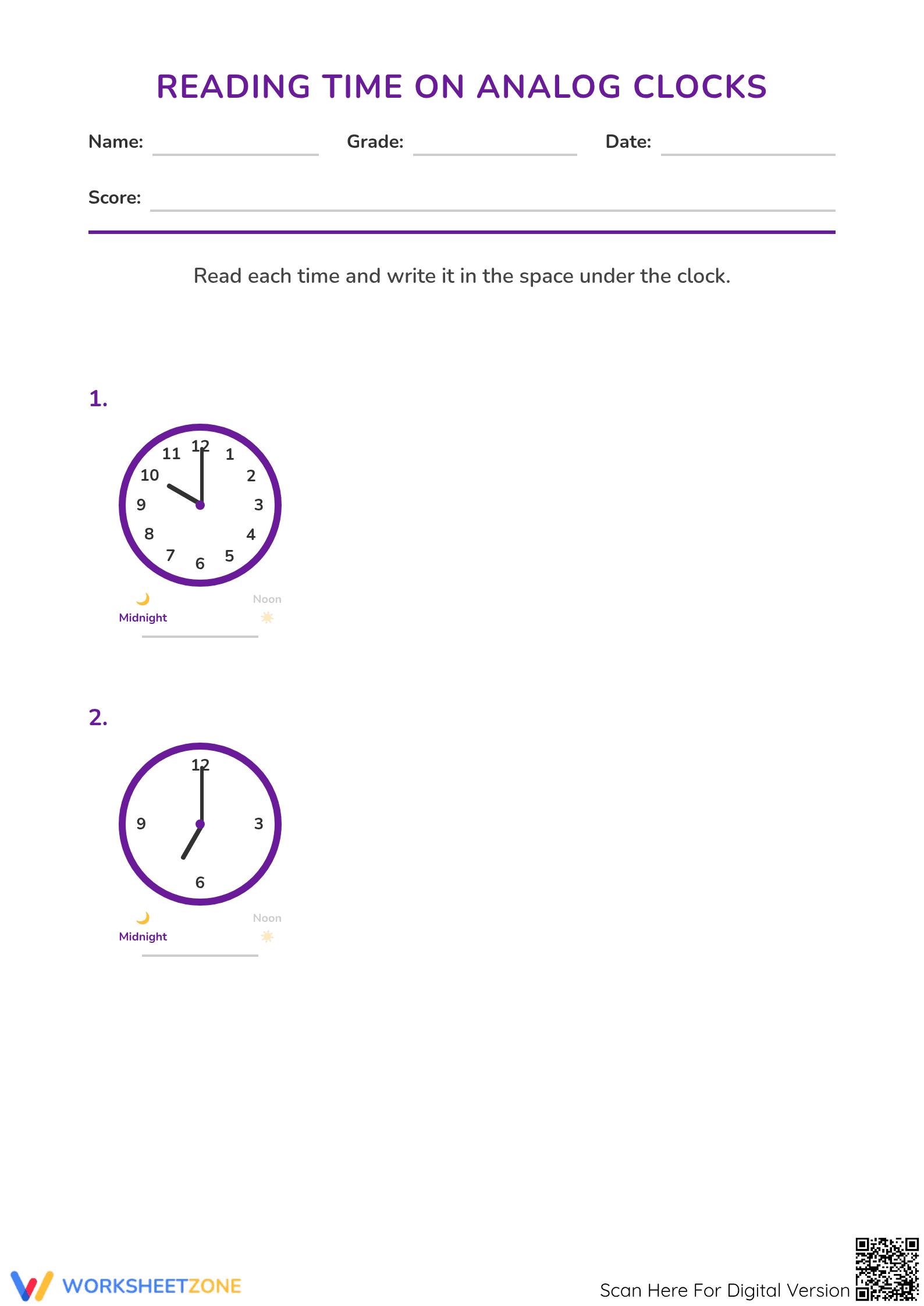
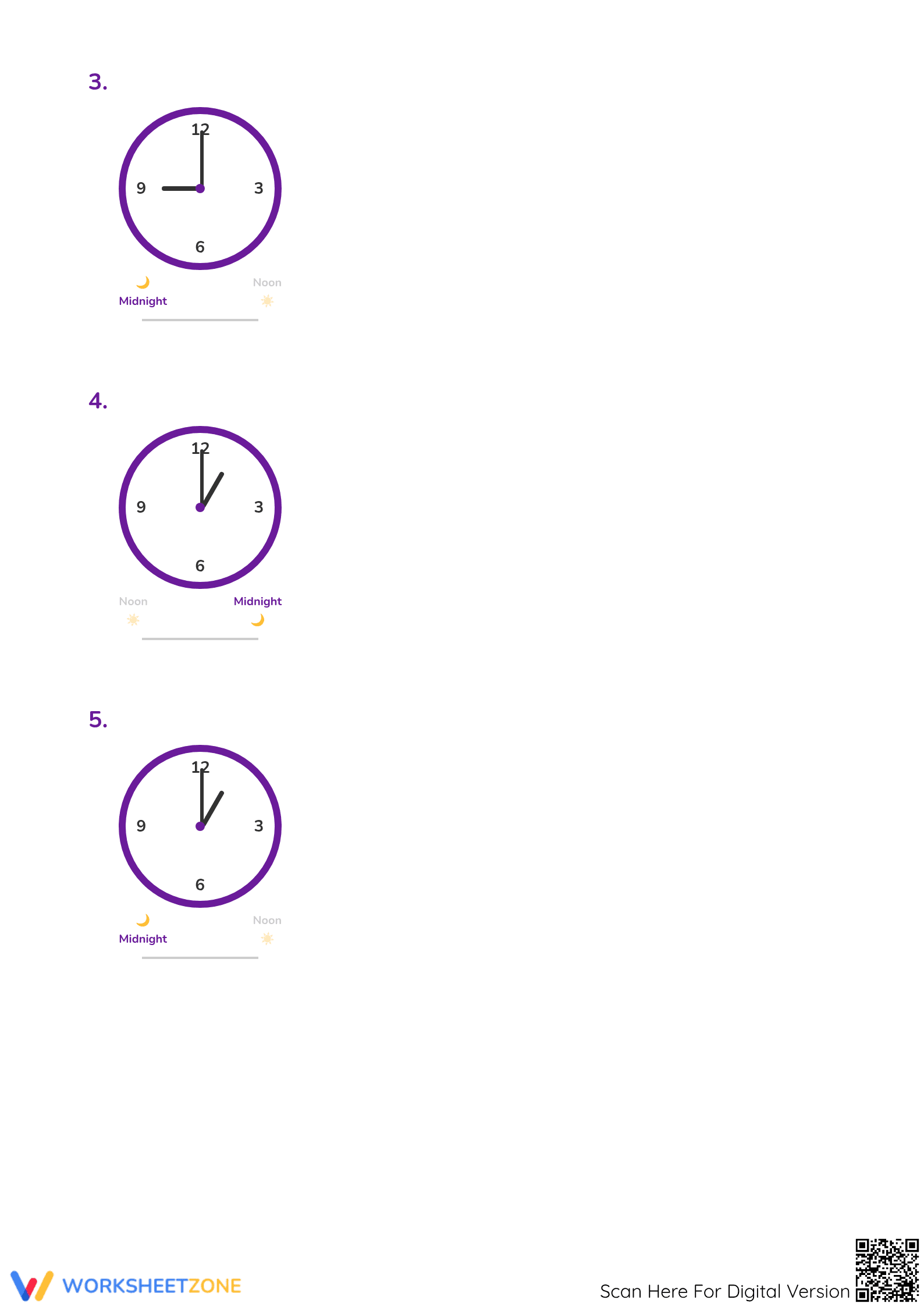
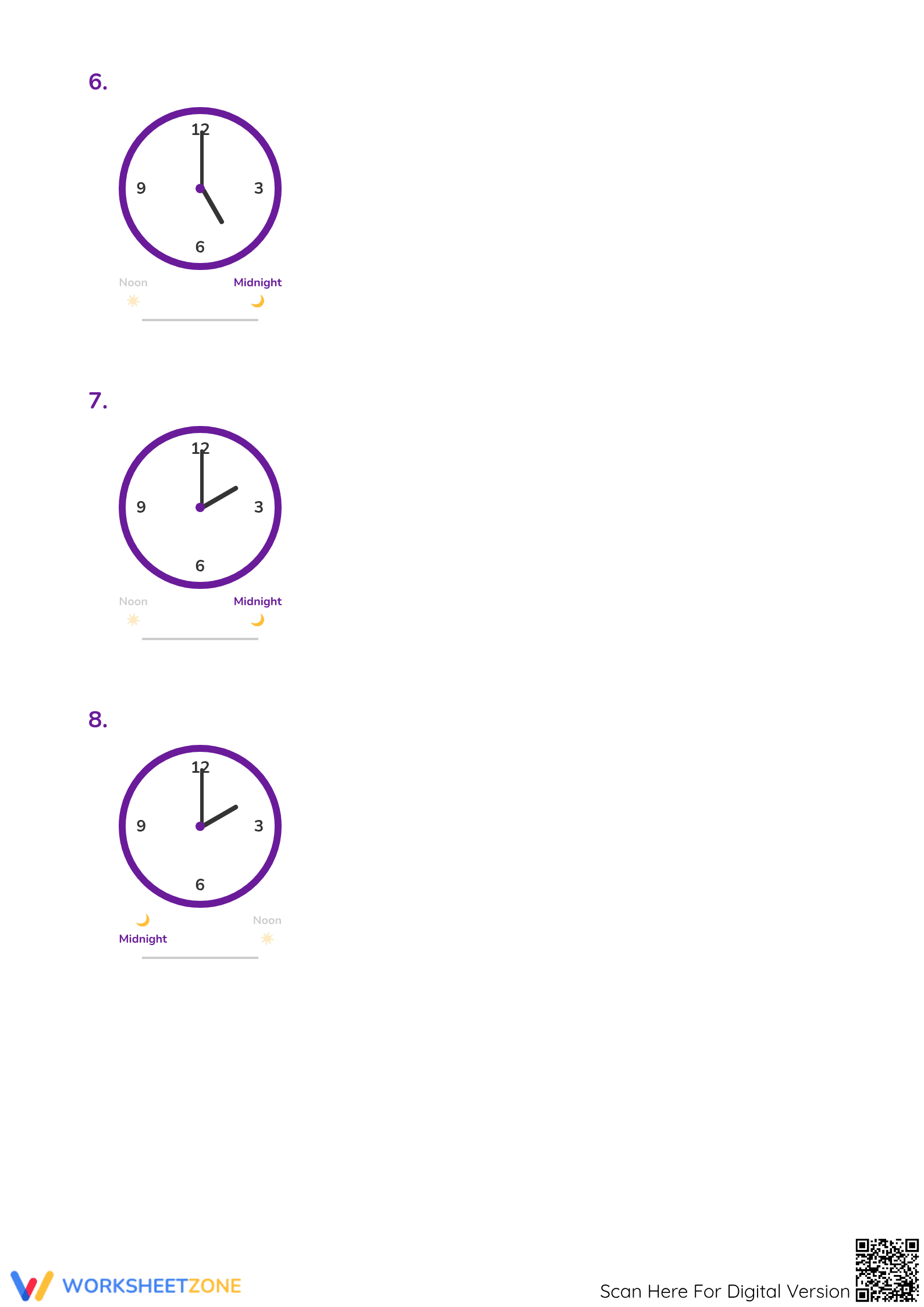
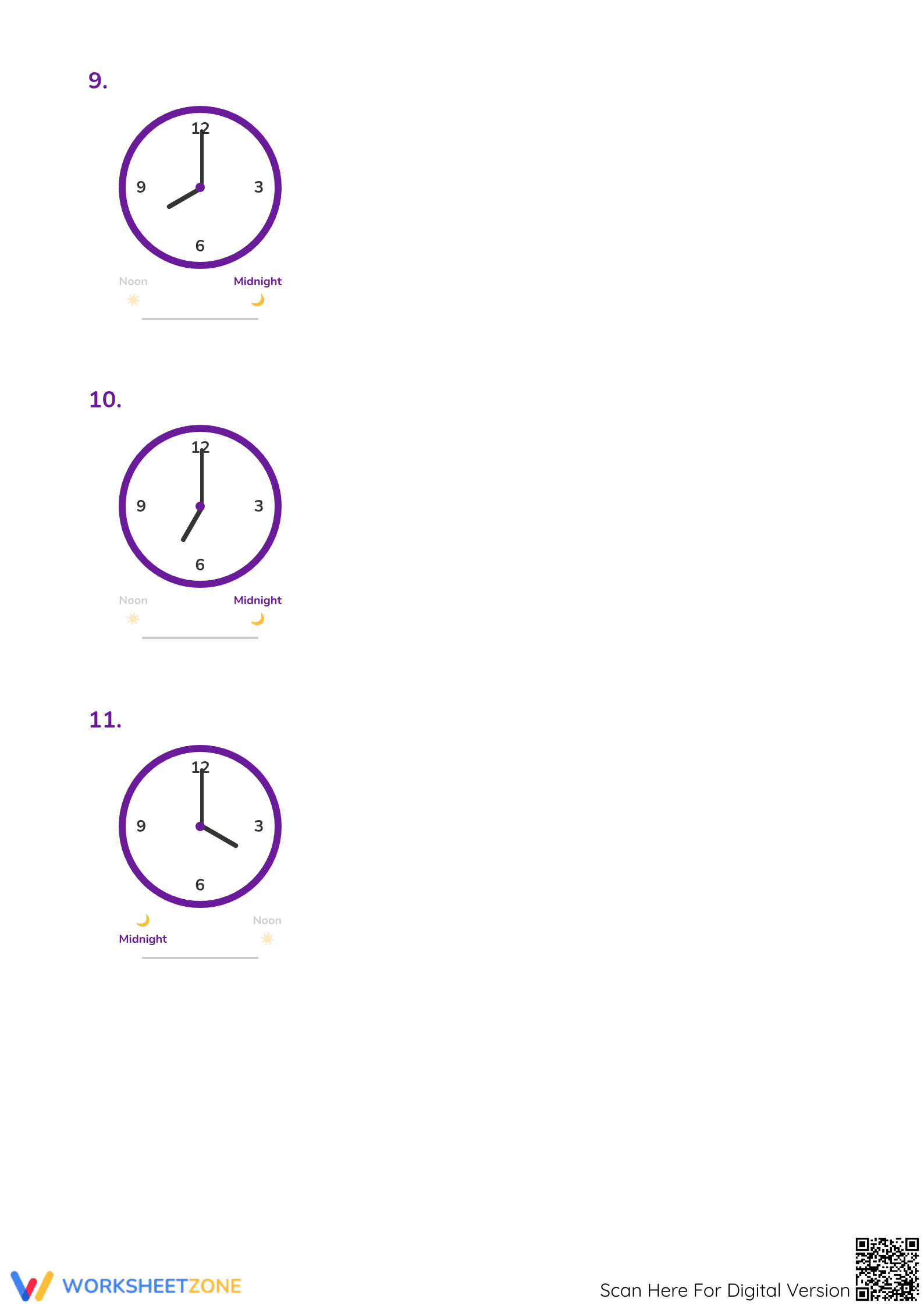

Printable Telling Time Worksheet: 1-Hour Intervals Grade 2-4
Paste this activity's link or code into your existing LMS (Google Classroom, Canvas, Teams, Schoology, Moodle, etc.).
Students can open and work on the activity right away, with no student login required.
You'll still be able to track student progress and results from your teacher account.
Mastering the analog clock is an essential life skill that builds the foundation for time management and schedules. This telling time worksheet provides students with direct practice reading clock faces set to exact one-hour intervals. By identifying hand positions, learners gain confidence in translating visual cues into digital time formats and a.m./p.m. designations.
At a Glance
- Grade: 2-4 · Subject: Math
- Standard:
2.MD.C.7— Tell and write time from analog and digital clocks to the nearest hour.- Skill Focus: Analog Clock Reading (Whole Hours)
- Format: 5 pages · 14 problems · Answer key included · PDF
- Best For: Independent practice and time-telling centers
- Time: 15–20 minutes
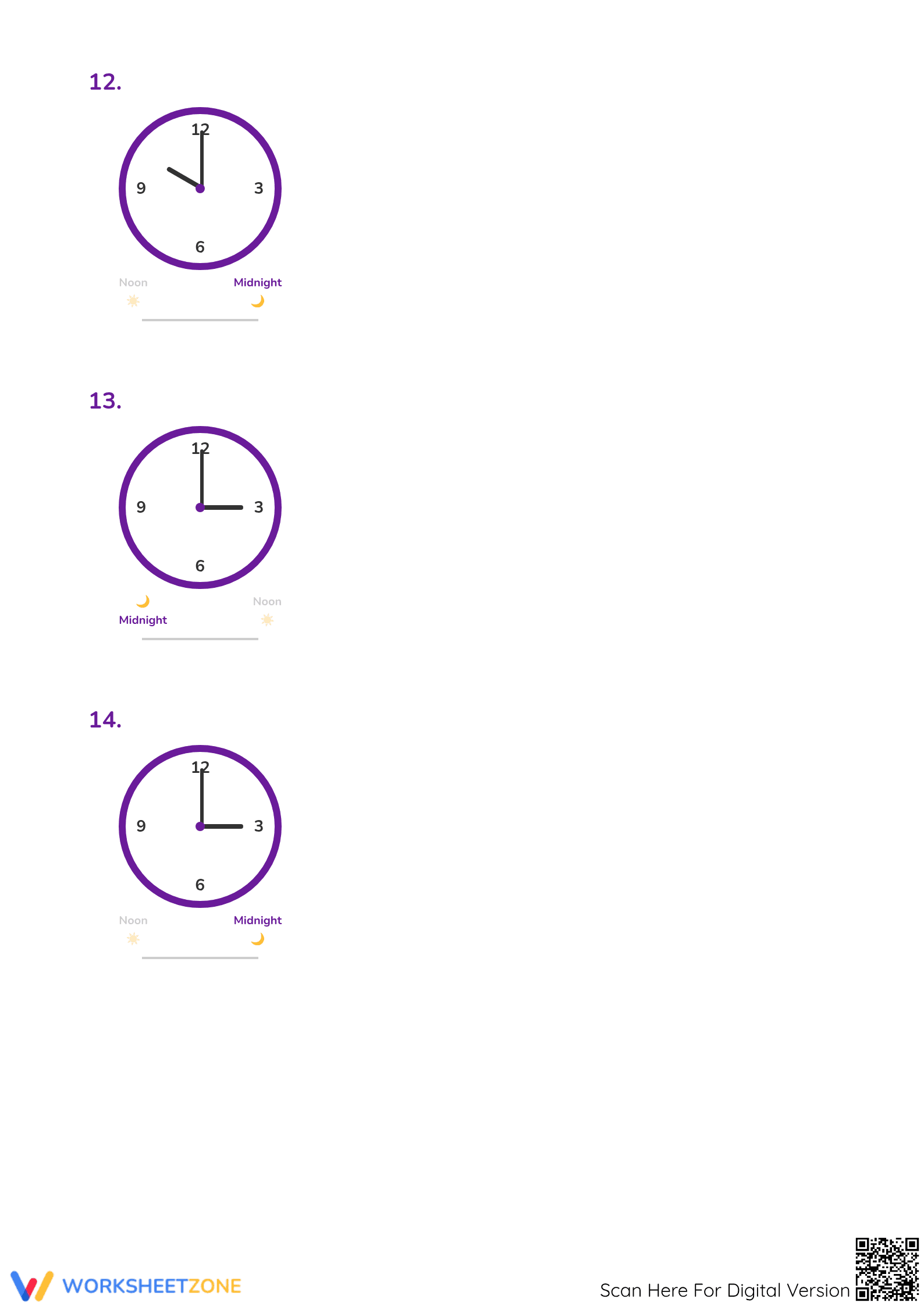
This comprehensive PDF pack includes 5 distinct pages of practice, totaling 14 individual analog clock faces for students to analyze. Each clock is clear and high-contrast, featuring both "Midnight" and "Noon" icons to help students contextualize the time of day. The worksheet includes a dedicated score line for quick grading and a full set of answer keys to streamline checking.
This resource is designed for immediate classroom deployment with a target prep time of under 2 minutes. First, simply print the desired copies (1 minute). Next, distribute the worksheets to your students as an independent task or warm-up (30 seconds). Finally, use the included answer key for a rapid verbal or visual review (30 seconds). Its self-explanatory layout makes it ideal for sub plans.
This resource aligns primarily with `CCSS.MATH.CONTENT.2.MD.C.7`, which requires students to tell and write time from analog and digital clocks. While focused on one-hour intervals, it serves as the critical prerequisite for higher-order time-telling skills. This standard code can be copied directly into lesson plans, IEP goals, or district curriculum mapping tools to ensure instructional consistency across the grade level.
Use this worksheet during the "You Do" phase of a lesson following a direct demonstration on a classroom clock. It also functions effectively as a formative assessment at the start of a math block to gauge prior knowledge. While students work, observe if they correctly identify the longer minute hand pointing to the twelve. Most students will complete the full set in approximately 15 minutes.
This practice set is specifically designed for 2nd and 3rd-grade students who are just beginning their time-telling journey. It is also an excellent remedial resource for 4th-grade students requiring a refresher on clock orientation. The clean design and lack of distracting visuals make it particularly effective for students with ADHD. Pair this with a physical geared clock for the best results.
Effective instruction in time-telling requires a balance between conceptual understanding of duration and the procedural skill of reading clock faces. According to a RAND AIRS 2024 analysis of mathematics curriculum, frequent low-stakes practice with analog clocks significantly improves a student's ability to internalize the base-60 system. This worksheet targets the `2.MD.C.7` standard, focusing on the fundamental skill of identifying whole-hour intervals. By isolating the hour hand movement while the minute hand remains fixed at the twelve, the resource reduces cognitive load and allows for the rapid acquisition of clock literacy. Research from Fisher & Frey (2014) supports this approach, suggesting that scaffolded practice with clear visual anchors leads to higher rates of mastery. This 5-page PDF provides the necessary repetition to move time-reading from a conscious effort to a fluent skill that students can apply to daily routines.


