


























Views
Downloads

Printable Reading Analog Clocks Worksheet | Grade 2-4 Math
Paste this activity's link or code into your existing LMS (Google Classroom, Canvas, Teams, Schoology, Moodle, etc.).
Students can open and work on the activity right away, with no student login required.
You'll still be able to track student progress and results from your teacher account.
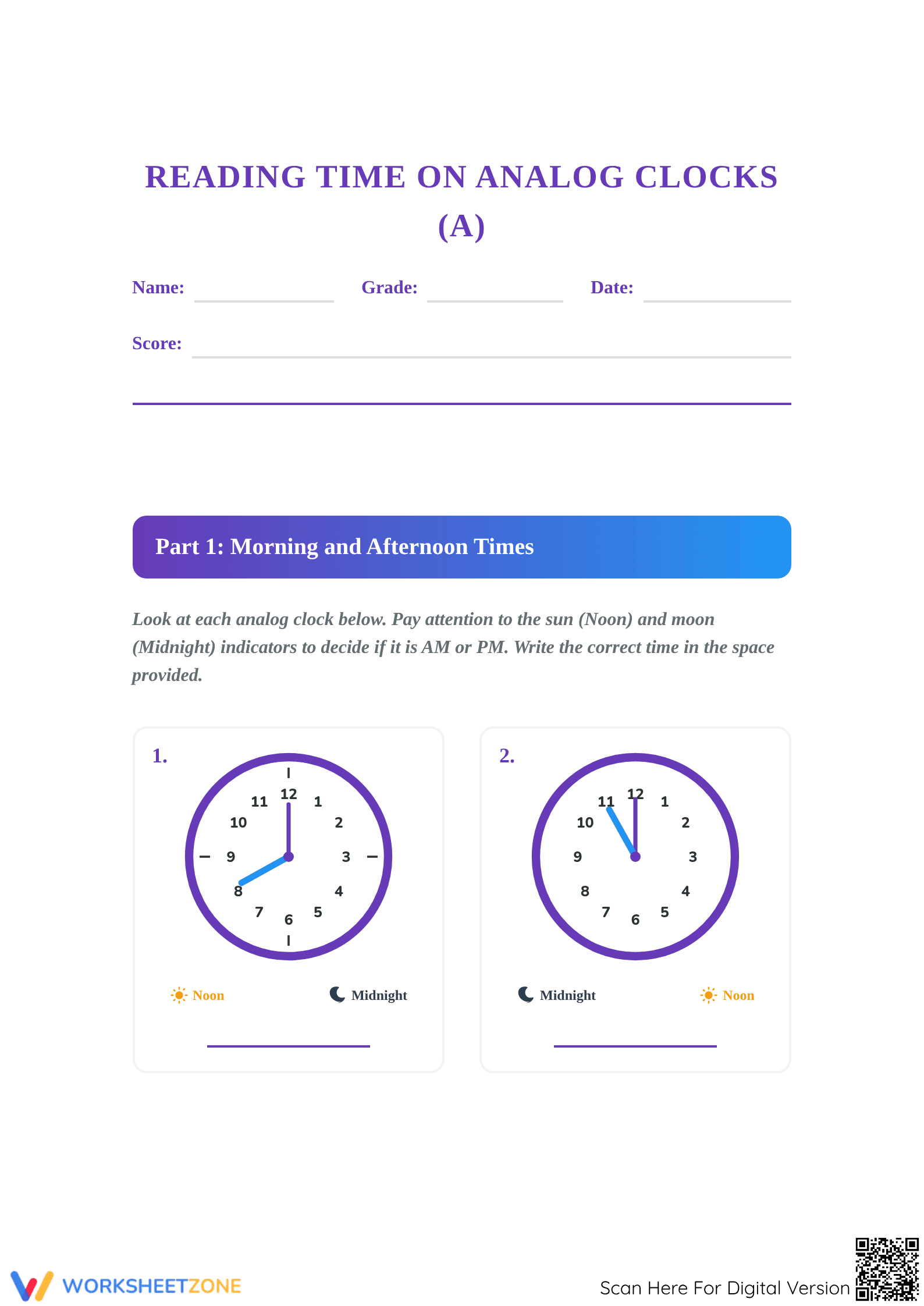
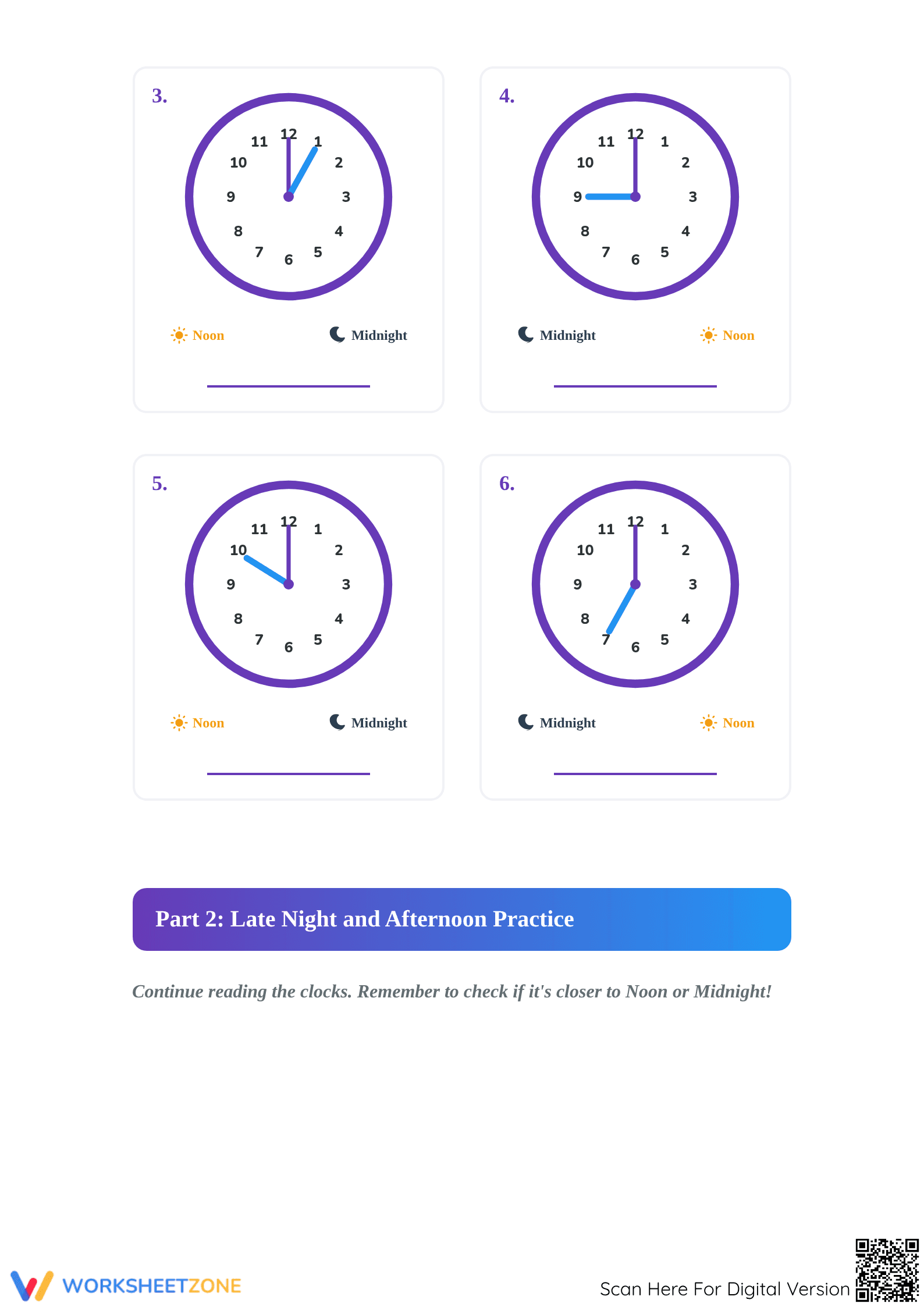
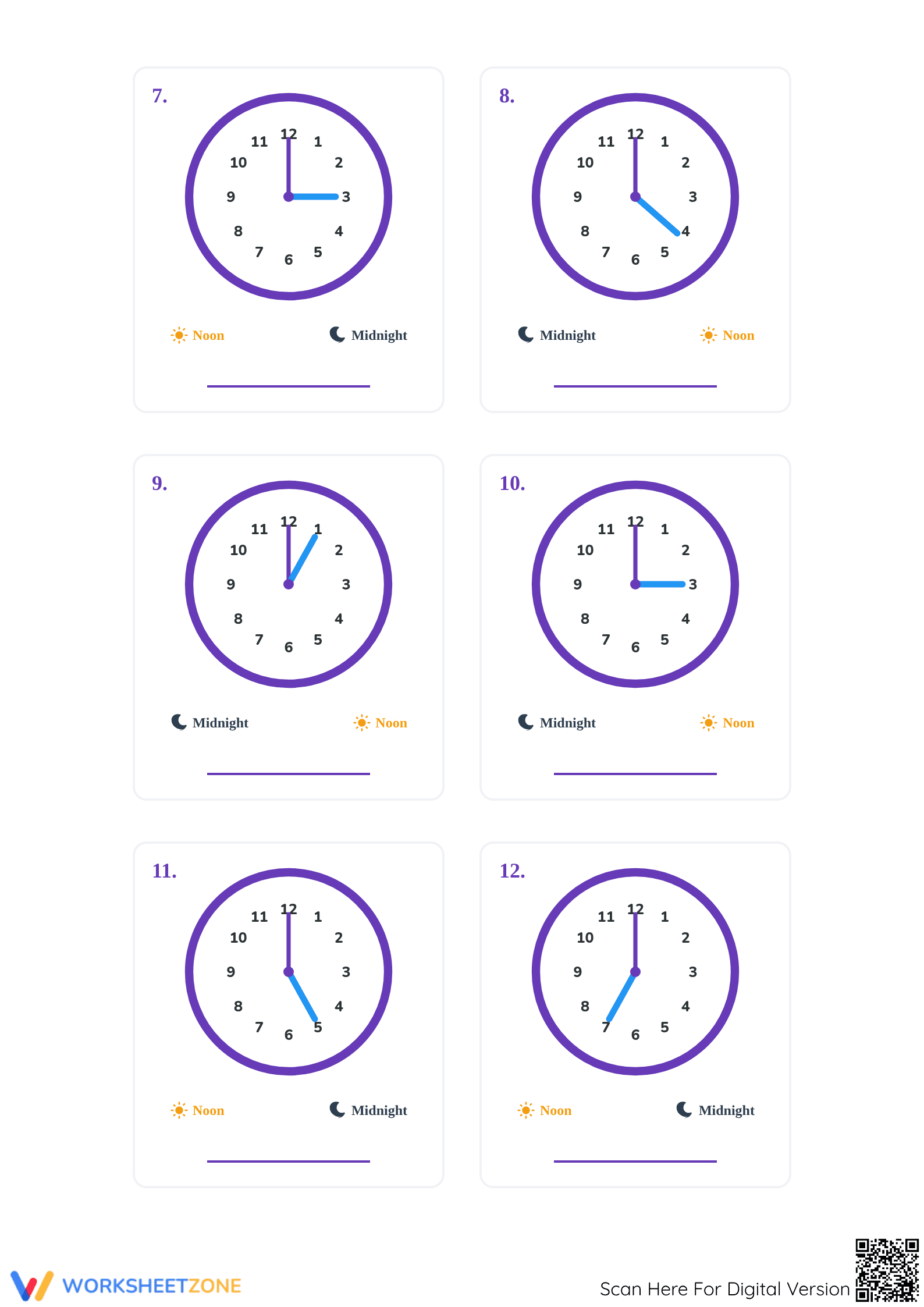
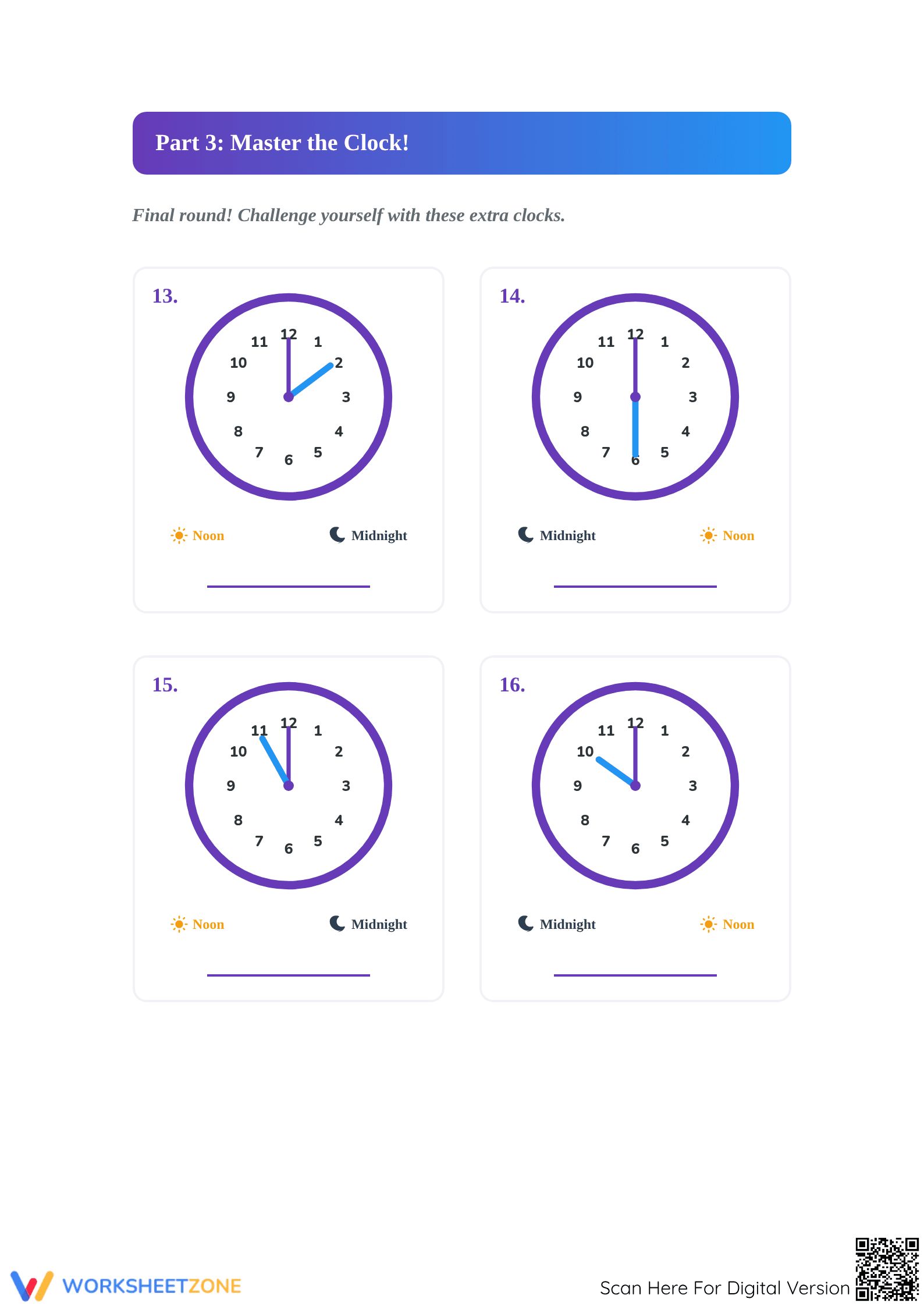
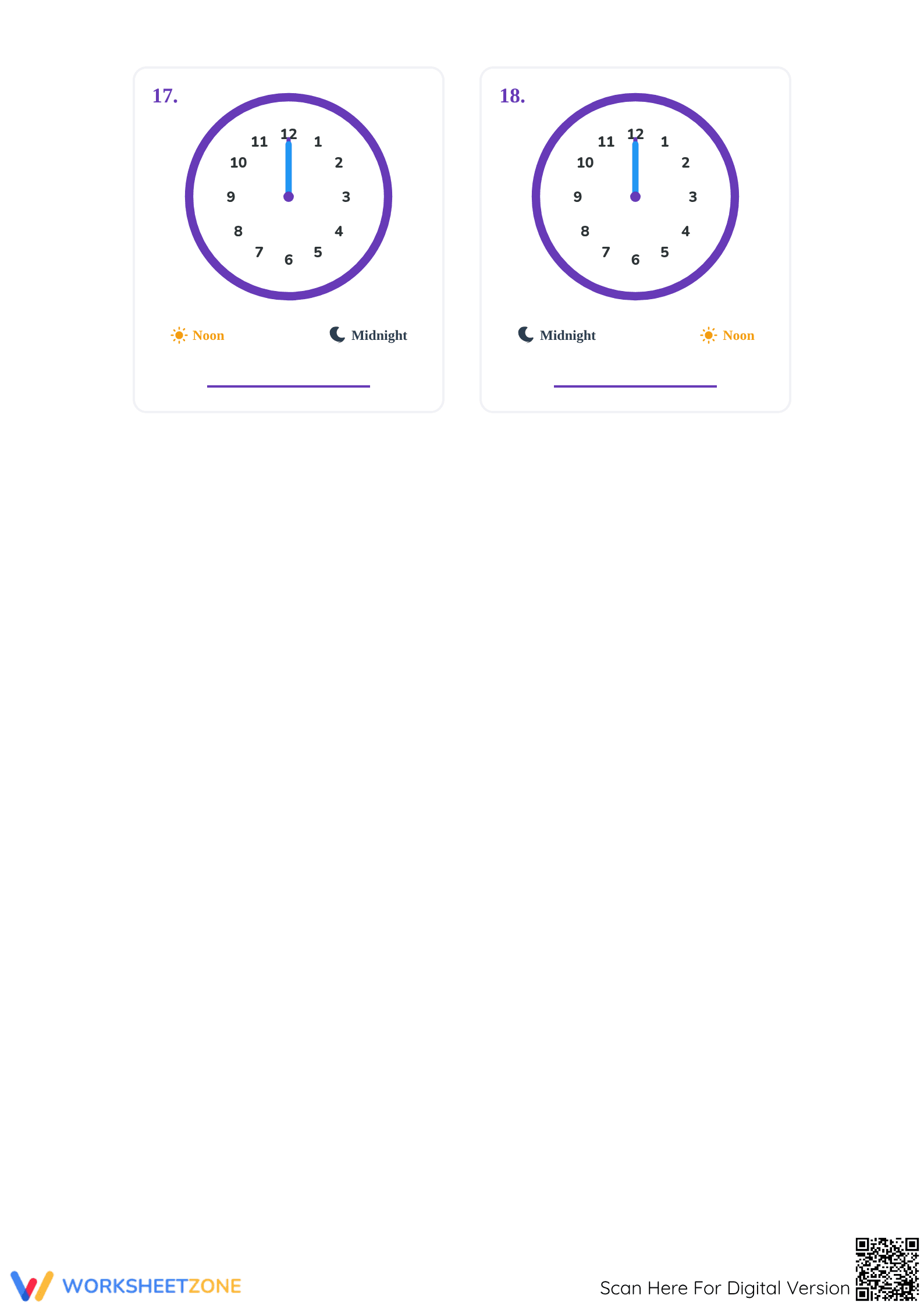
This comprehensive analog clock worksheet helps students master the essential skill of telling time in one-hour intervals while correctly identifying morning and afternoon periods. By observing Noon and Midnight indicators, Grade 2, 3, and 4 learners develop a concrete understanding of chronological order and the transition between AM and PM hours.
At a Glance
- Grade: 2–4 · Subject: Math
- Standard:
CCSS.MATH.CONTENT.2.MD.C.7— Tell and write time from analog clocks using a.m. and p.m.- Skill Focus: Reading analog clocks (1-hour intervals)
- Format: 5 pages · 18 problems · Answer key included · PDF
- Best For: Independent practice or homework review
- Time: 20–30 minutes
The five-page instructional packet features 18 large, clear analog clock faces distributed across three progressive practice sections. Each problem includes a visual sun (Noon) or moon (Midnight) icon to guide students in determining the correct time of day. The set comes with a complete answer key for rapid grading and structural support for student self-correction.
Zero-Prep Workflow
This resource is designed for a streamlined classroom workflow. Step 1: Print the multi-page PDF (less than 1 minute). Step 2: Distribute the packets for morning work or as a standalone time-telling lesson (30 seconds). Step 3: Review answers as a whole group using the provided key (5-10 minutes). With zero teacher setup required, this packet is ideal for sub plans or emergency math fillers.
Standards Alignment
Primary alignment is to CCSS.MATH.CONTENT.2.MD.C.7, which requires students to tell and write time from analog and digital clocks using a.m. and p.m. While this specific worksheet focuses on whole-hour intervals, it serves as the foundational scaffold for more complex time intervals. This standard code can be copied directly into lesson plans, IEP goals, or district curriculum mapping tools.
How to Use It
Use this worksheet as a formative assessment during a unit on measurement and data. Assign Part 1 after direct instruction on the difference between the hour hand and minute hand. Teachers can observe students' ability to differentiate between AM and PM by checking if they correctly identify the sun/moon cues. Most students will complete the 18 tasks within a 25-minute block.
Who It's For
This resource targets Grade 2-4 students who need reinforced practice with analog time-telling. It is particularly effective for learners requiring visual aids to understand 24-hour cycles. Pair this worksheet with a physical geared classroom clock or a digital time-matching activity for a multisensory instructional experience.
Aligned to standard CCSS.MATH.CONTENT.2.MD.C.7, this worksheet targets the visual-spatial processing required for reading analog clocks and the conceptual understanding of AM/PM periods. According to the NAEP (2024) assessment framework, early mastery of time-telling is a critical predictor of general mathematical fluency and organizational skills. This 18-problem set provides the high-frequency practice needed to bridge the gap between abstract clock face observation and practical daily application. Research from Fisher & Frey (2014) emphasizes the importance of providing clear visual scaffolds—such as the Noon and Midnight icons included here—to support students as they transition to independent mastery of abstract temporal concepts. This resource provides a robust, evidence-based solution for educators seeking to improve student accuracy in time-telling across the elementary grade levels.


