


























Views
Downloads

Grade 7 Reading Comprehension: History of Tea | Essential
Paste this activity's link or code into your existing LMS (Google Classroom, Canvas, Teams, Schoology, Moodle, etc.).
Students can open and work on the activity right away, with no student login required.
You'll still be able to track student progress and results from your teacher account.
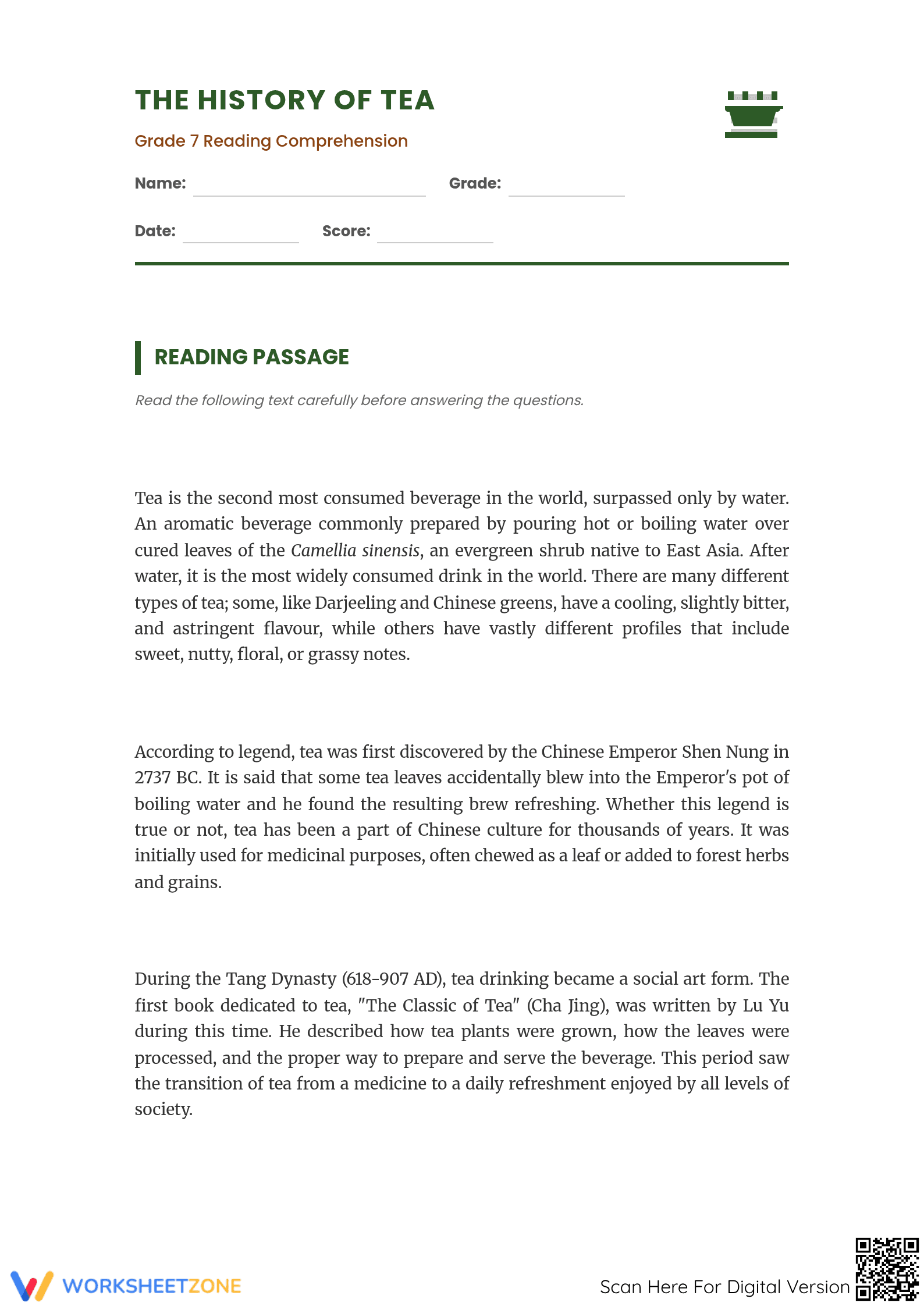
This Grade 7 informational text worksheet guides students through the global history of tea, from ancient Chinese legends to modern production. Students develop critical literacy skills by extracting evidence, defining domain-specific vocabulary, and synthesizing historical shifts. It provides a structured pathway for mastering reading comprehension through a high-interest non-fiction topic.
At a Glance
- Grade: 7 · Subject: English Language Arts
- Standard:
CCSS.ELA-LITERACY.RI.7.1— Cite several pieces of textual evidence to support analysis of what the text says- Skill Focus: Informational Text Analysis
- Format: 4 pages · 13 problems · Answer key included · PDF
- Best For: Independent practice or sub plans
- Time: 30–45 minutes
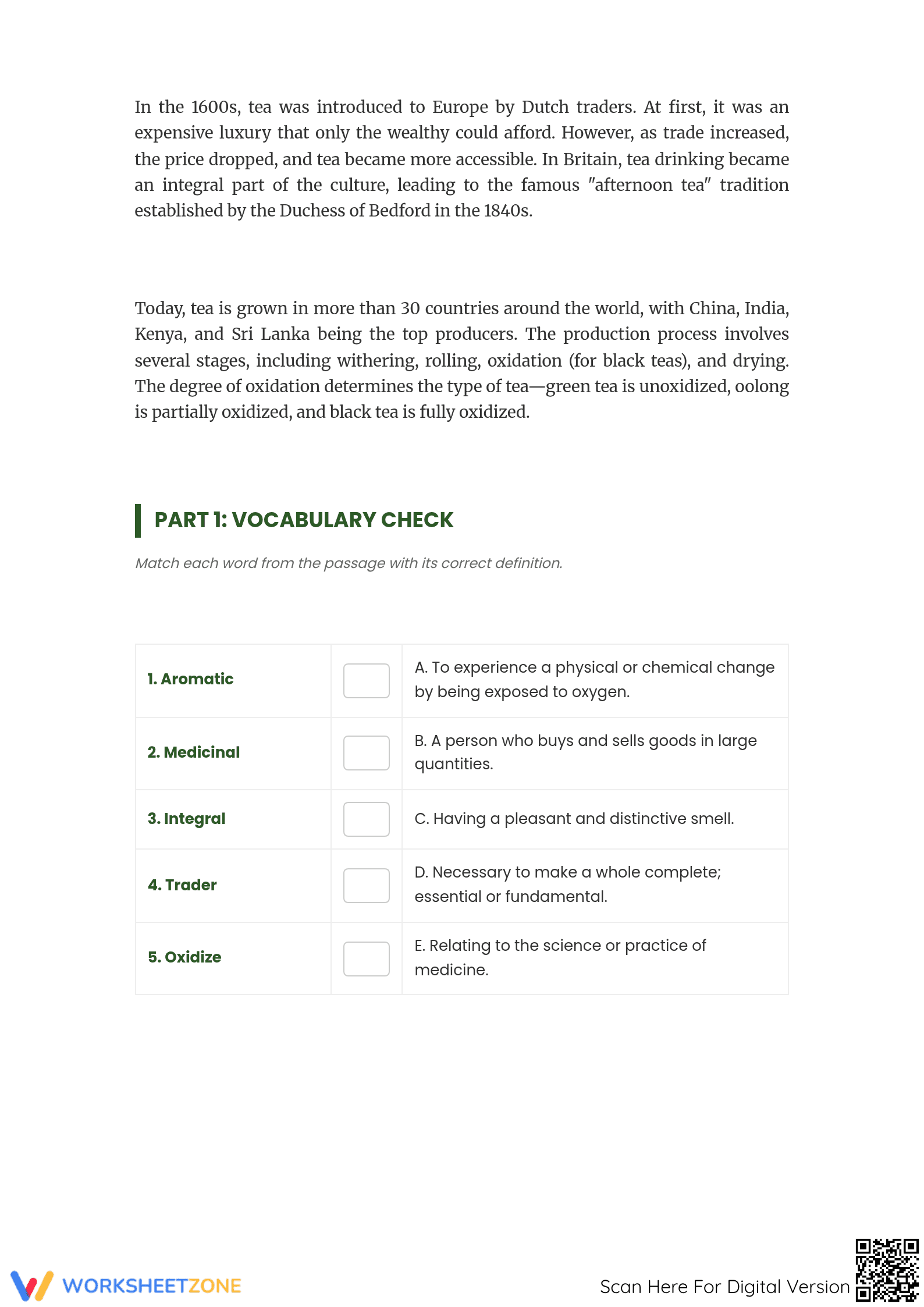
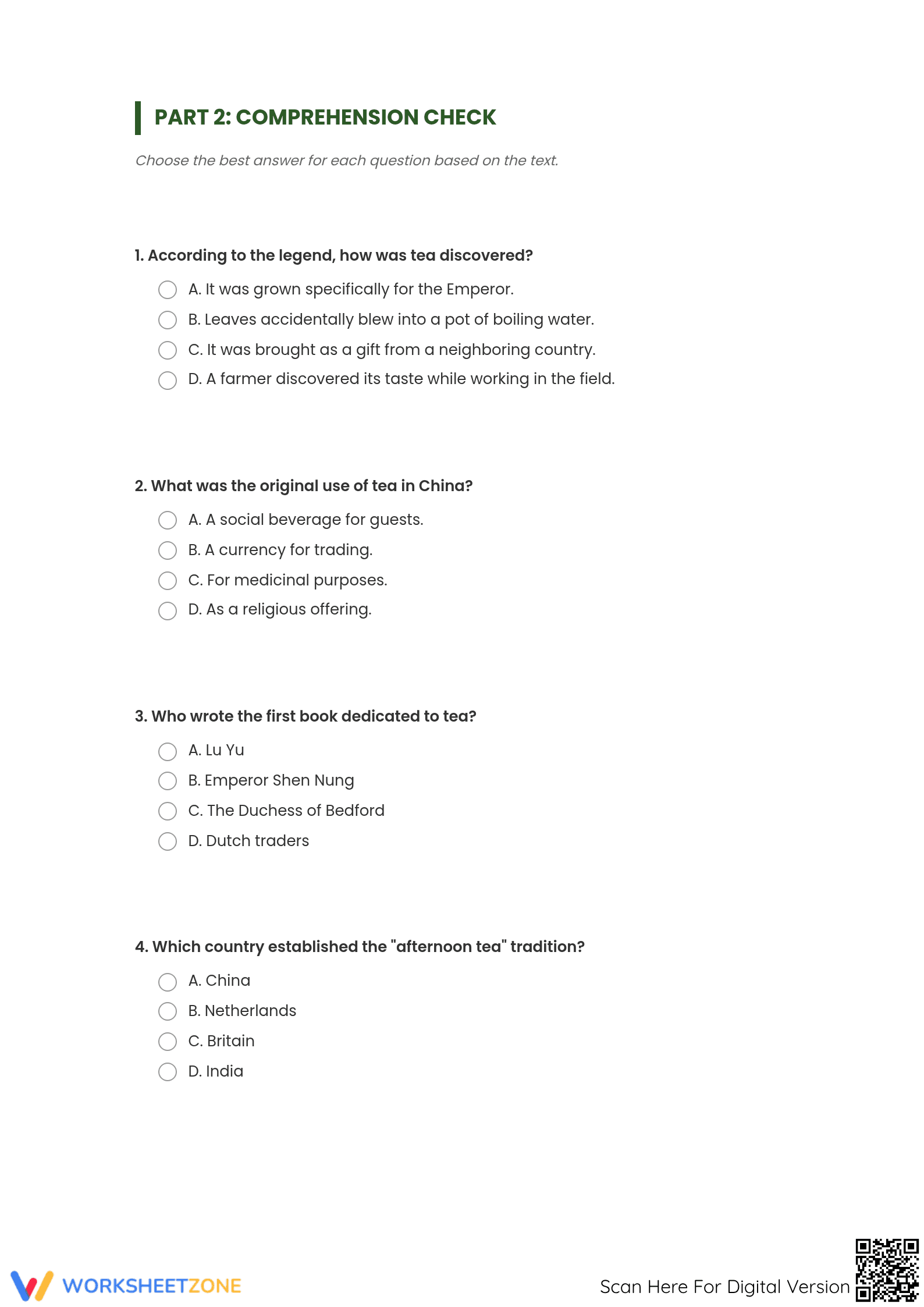
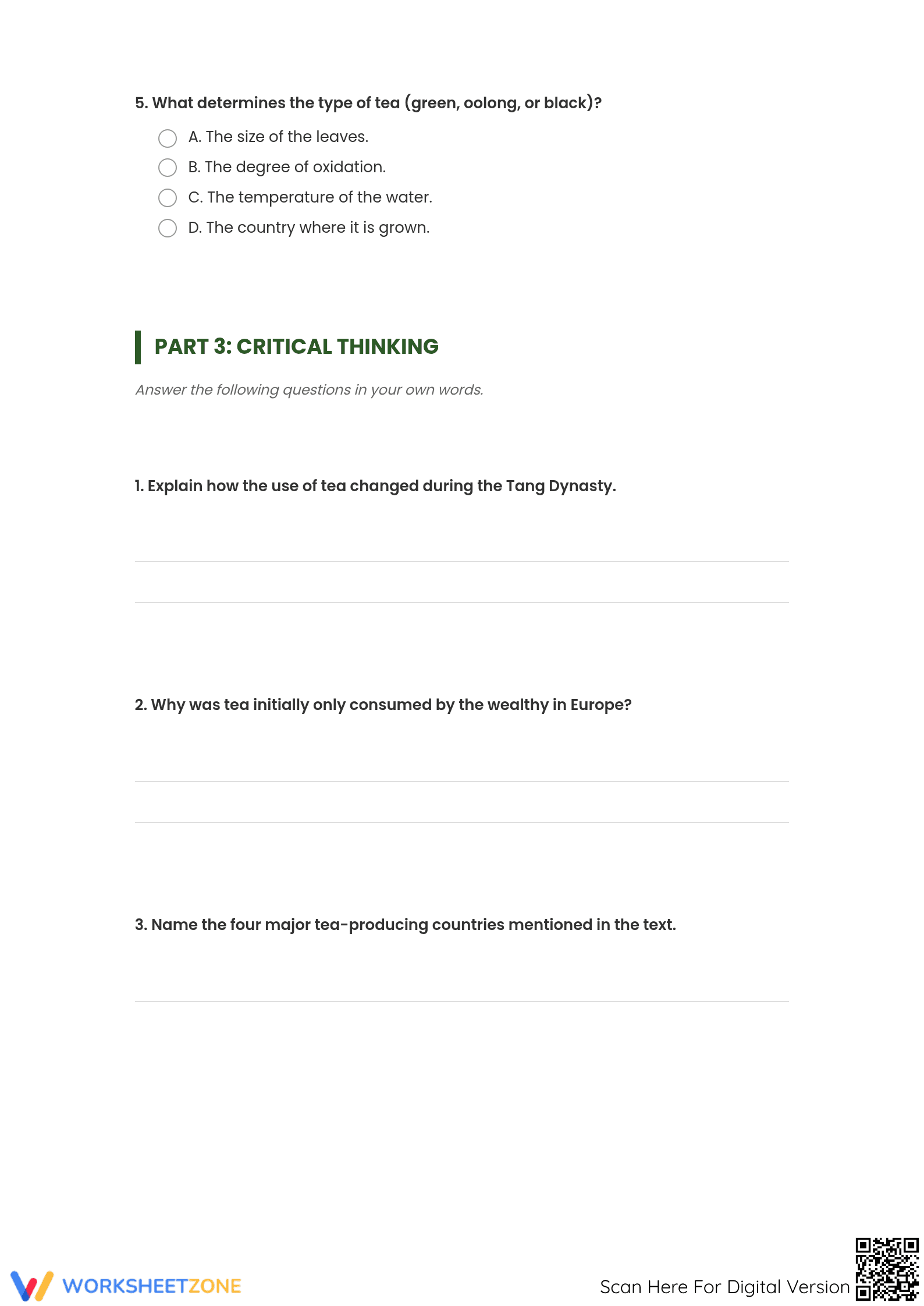
The packet contains a comprehensive four-page layout. It begins with a detailed multi-paragraph reading passage titled "The History of Tea." Following the text, students engage with three distinct assessment sections: a five-item vocabulary matching grid, five multiple-choice comprehension questions, and three open-ended critical thinking prompts. A full answer key is provided for immediate feedback and easy grading.
Zero-Prep Workflow
- Print: Generate the four-page PDF in seconds for your entire class.
- Distribute: Hand out the materials for a 35-minute independent work block or quiet reading session.
- Review: Use the included answer key to facilitate a five-minute whole-class review or rapid grading.
This resource requires zero teacher setup, making it an ideal emergency sub plan or a ready-to-go Friday literacy activity.
Standards Alignment
The primary focus is `CCSS.ELA-LITERACY.RI.7.1`, requiring students to cite several pieces of textual evidence to support analysis of what the text says explicitly. Additionally, the vocabulary section supports `CCSS.ELA-LITERACY.RI.7.4` by challenging students to determine the meaning of words and phrases as they are used in a text. Both standard codes can be copied directly into lesson plans, IEP goals, or district curriculum mapping tools.
How to Use It
Assign this worksheet during the "Independent Practice" phase of a unit on informational text structures. It serves as an excellent formative assessment to gauge student ability to identify cause-and-effect relationships in history. For a collaborative twist, have students compare their "Critical Thinking" responses in pairs before submitting. Expected completion typically ranges from 30 to 45 minutes depending on reading speed.
Who It's For
This resource is designed for 7th-grade general education classrooms, but the clear structure also supports English Language Learners (ELL) and students with IEPs requiring scaffolded reading tasks. It pairs naturally with an anchor chart on "Citing Evidence" or a short video documentary on global trade routes to provide a multi-modal learning experience for diverse learners.
This Grade 7 reading comprehension resource is meticulously aligned with CCSS.ELA-LITERACY.RI.7.1, focusing on the essential skill of citing textual evidence to support informational analysis. By engaging with 13 diverse tasks—including vocabulary matching and critical thinking—students move beyond surface-level reading to achieve deeper cognitive processing of non-fiction content. According to the RAND AIRS 2024 report on secondary literacy, providing students with structured, high-interest informational texts is a primary driver in closing the achievement gap for middle school readers. This worksheet facilitates that growth by offering a clear progression from literal comprehension to inferential reasoning. The inclusion of a dedicated answer key ensures that educators can provide the immediate, corrective feedback necessary for skill acquisition. This resource serves as a reliable tool for measuring student progress toward state-mandated proficiency benchmarks in English Language Arts while minimizing teacher administrative burden.


