


























Views
Downloads

Metaphors and Similes Worksheet | Grade 5 ELA Printable
Paste this activity's link or code into your existing LMS (Google Classroom, Canvas, Teams, Schoology, Moodle, etc.).
Students can open and work on the activity right away, with no student login required.
You'll still be able to track student progress and results from your teacher account.
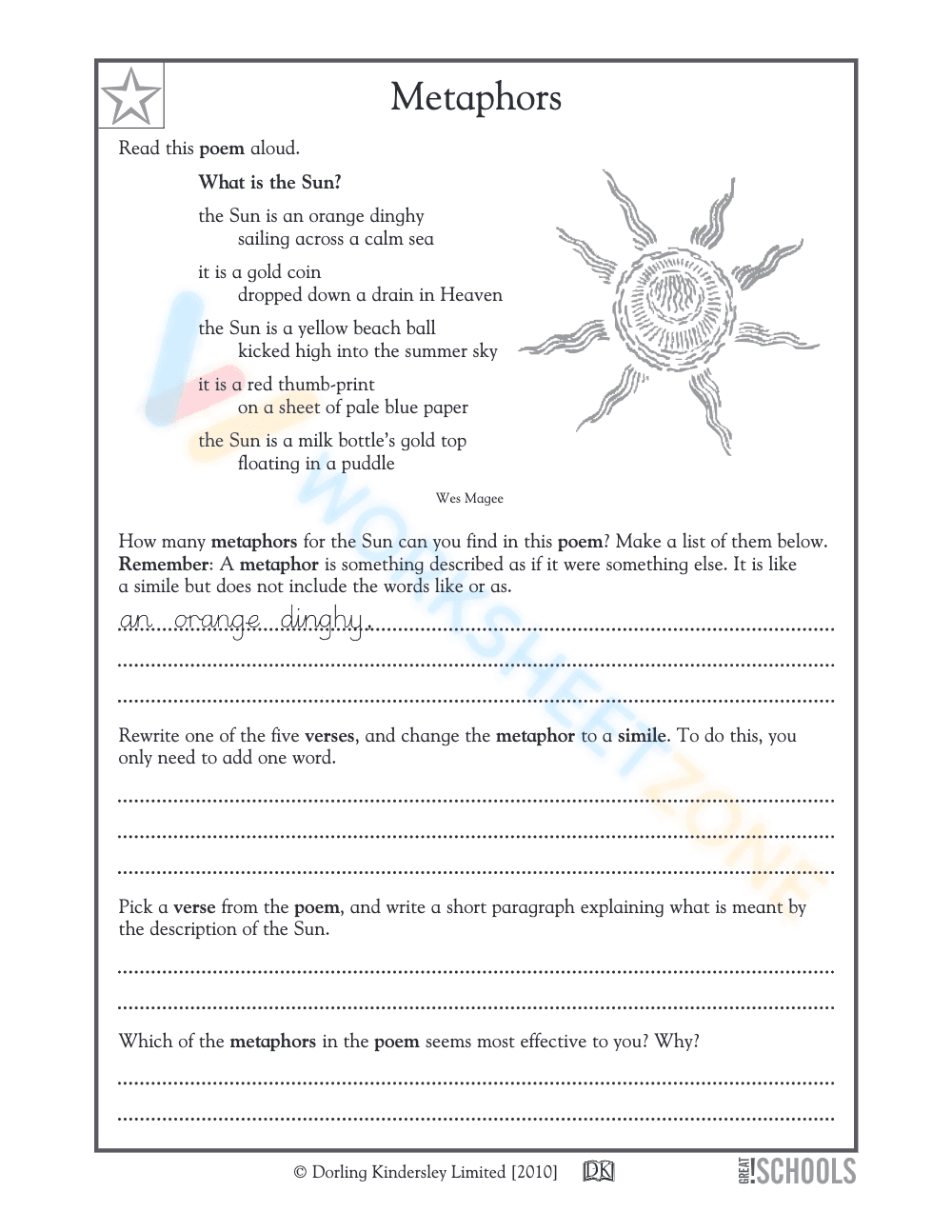
This Grade 5 English Language Arts worksheet helps students master figurative language by analyzing and creating metaphors and similes. By reading a short poem and completing targeted writing exercises, learners will develop a deeper understanding of how authors use descriptive language to create vivid imagery and convey complex ideas.
At a Glance
- Grade: 5 · Subject: ELA
- Standard:
CCSS.ELA-LITERACY.L.5.5.A— Interpret figurative language, including similes and metaphors.- Skill Focus: Metaphors and Similes
- Format: 4 pages · 5 problems · Answer key included · PDF
- Best For: Independent practice
- Time: 20–30 minutes
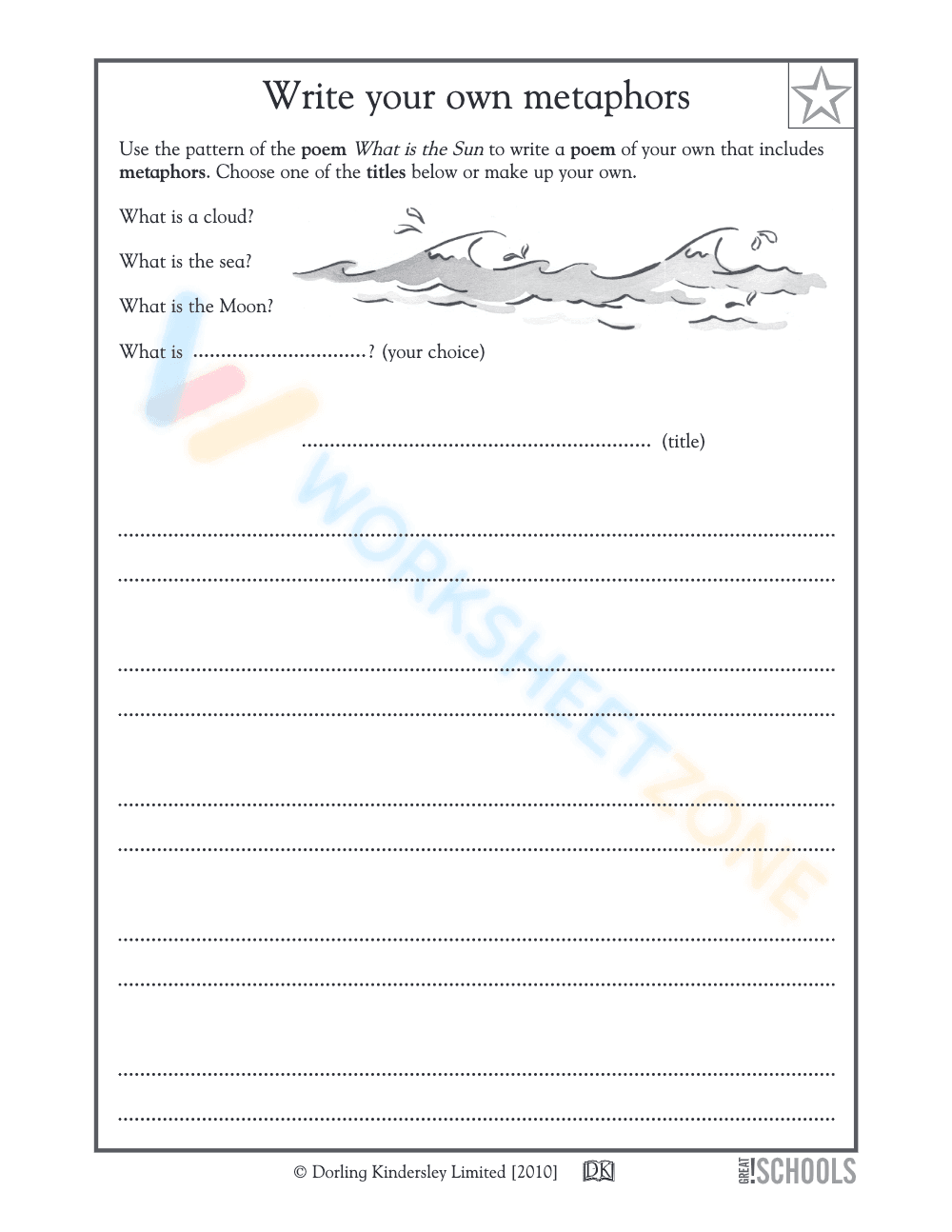
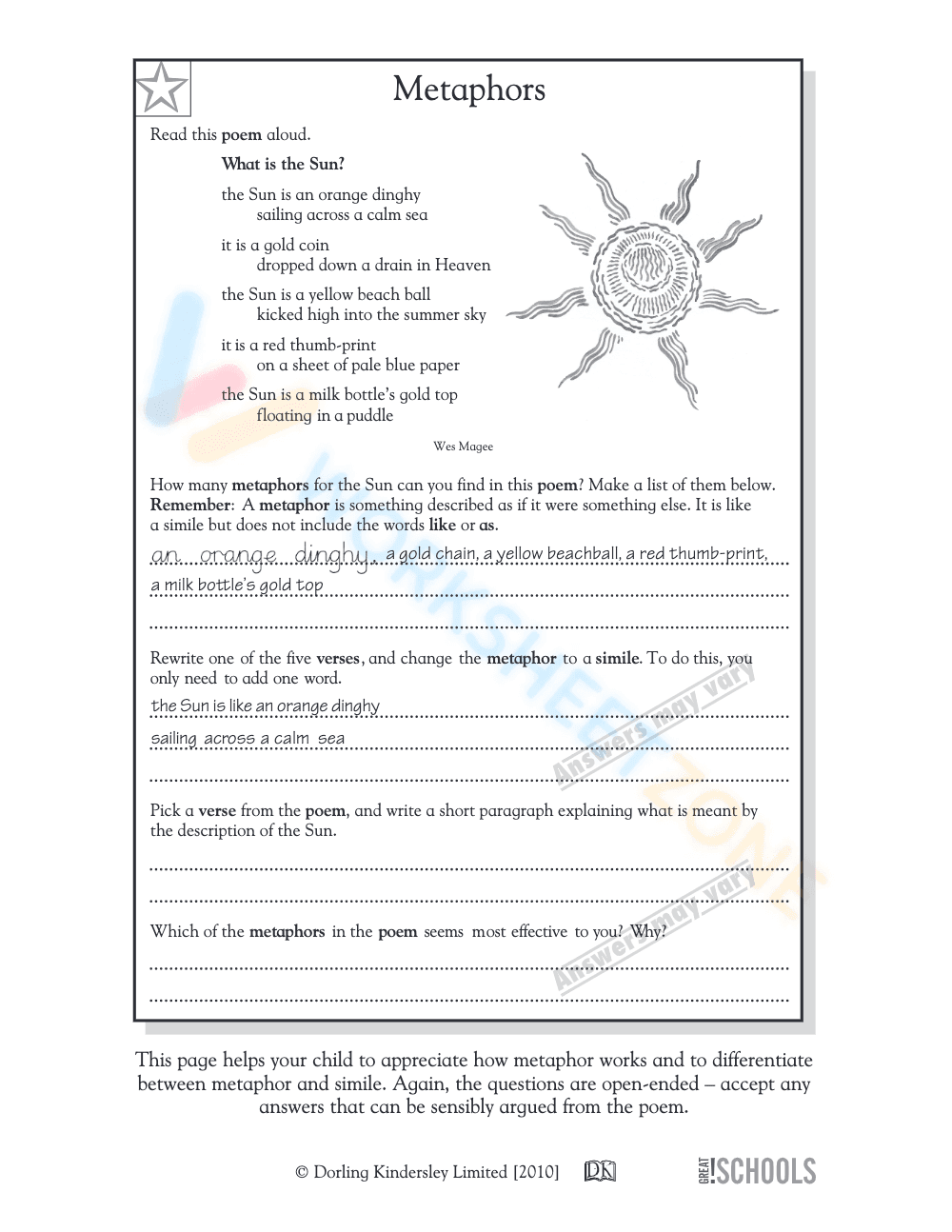
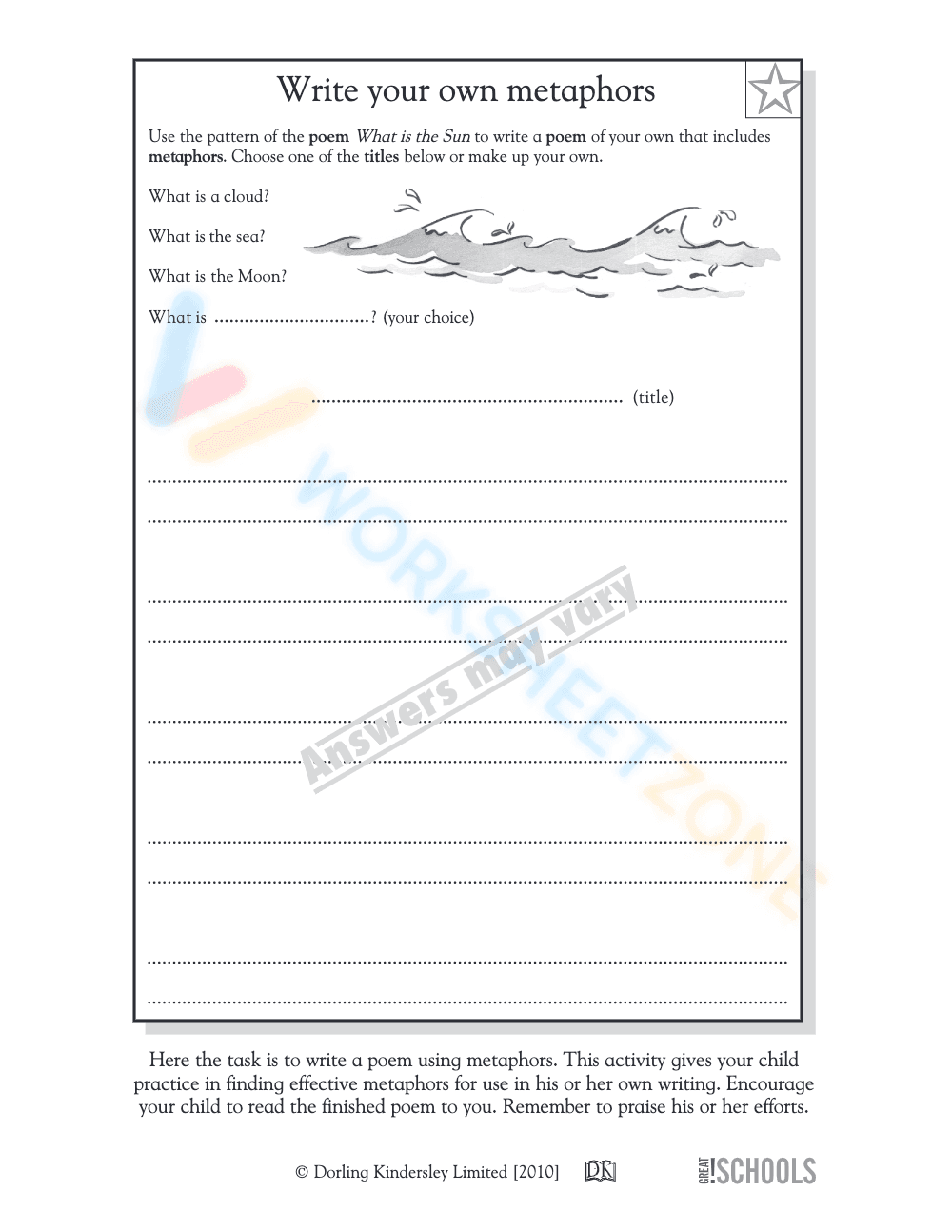
This comprehensive resource includes two student activity pages and two corresponding answer key pages with teacher notes. The first page features a mentor poem, "What is the Sun?", followed by four analytical tasks where students identify metaphors, convert a metaphor into a simile, and explain the author's meaning. The second page provides a creative writing prompt, challenging students to draft their own original poem using metaphors based on a selected nature theme.
Skill Progression
- Guided practice: Students begin by reading a provided poem and identifying the specific metaphors used by the author, offering a clear, low-stakes entry point.
- Supported practice: Next, learners manipulate the text by rewriting a verse to change a metaphor into a simile, requiring them to apply their knowledge of figurative language rules.
- Independent practice: Finally, students synthesize their learning by writing an entirely original poem utilizing metaphors, demonstrating full mastery of the concept.
This gradual-release approach ensures students build confidence before tackling the creative writing task.
Standards Alignment
This worksheet is directly aligned to CCSS.ELA-LITERACY.L.5.5.A: Interpret figurative language, including similes and metaphors, in context. It also supports reading comprehension standards by asking students to analyze how specific word choices shape meaning. Both standard codes can be copied directly into lesson plans, IEP goals, or district curriculum mapping tools.
How to Use It
Deploy this worksheet during a poetry unit or figurative language review. It works beautifully as an independent practice assignment after direct instruction on the differences between similes and metaphors. As a formative assessment tip, review students' rewritten similes on the first page to quickly gauge if they understand the structural difference (using "like" or "as") before they move on to writing their own poems. Expect the entire activity to take 20 to 30 minutes.
Who It's For
This resource is designed for fifth-grade general education students, but it can easily be adapted for advanced fourth graders or sixth graders needing a refresher. For students who need extra support, provide a word bank of descriptive adjectives or allow them to work in pairs for the final poetry-writing task. Pair this activity with an anchor chart detailing common types of figurative language.
Mastering figurative language is a critical component of advanced reading comprehension and expressive writing. According to a recent ScienceDirect TpT Analysis, explicit instruction in literary devices significantly improves students' ability to decode complex texts and articulate abstract concepts. This worksheet directly targets CCSS.ELA-LITERACY.L.5.5.A, requiring students to interpret figurative language, including similes and metaphors. By moving learners from identification to application, the activity reinforces the cognitive pathways necessary for deep literary analysis. When students actively convert metaphors to similes and draft their own figurative poetry, they transition from passive readers to active creators. This structured practice ensures that learners not only recognize poetic devices but also understand their functional impact on tone and imagery, building a strong foundation for middle school literature studies.


