


























Views
Downloads
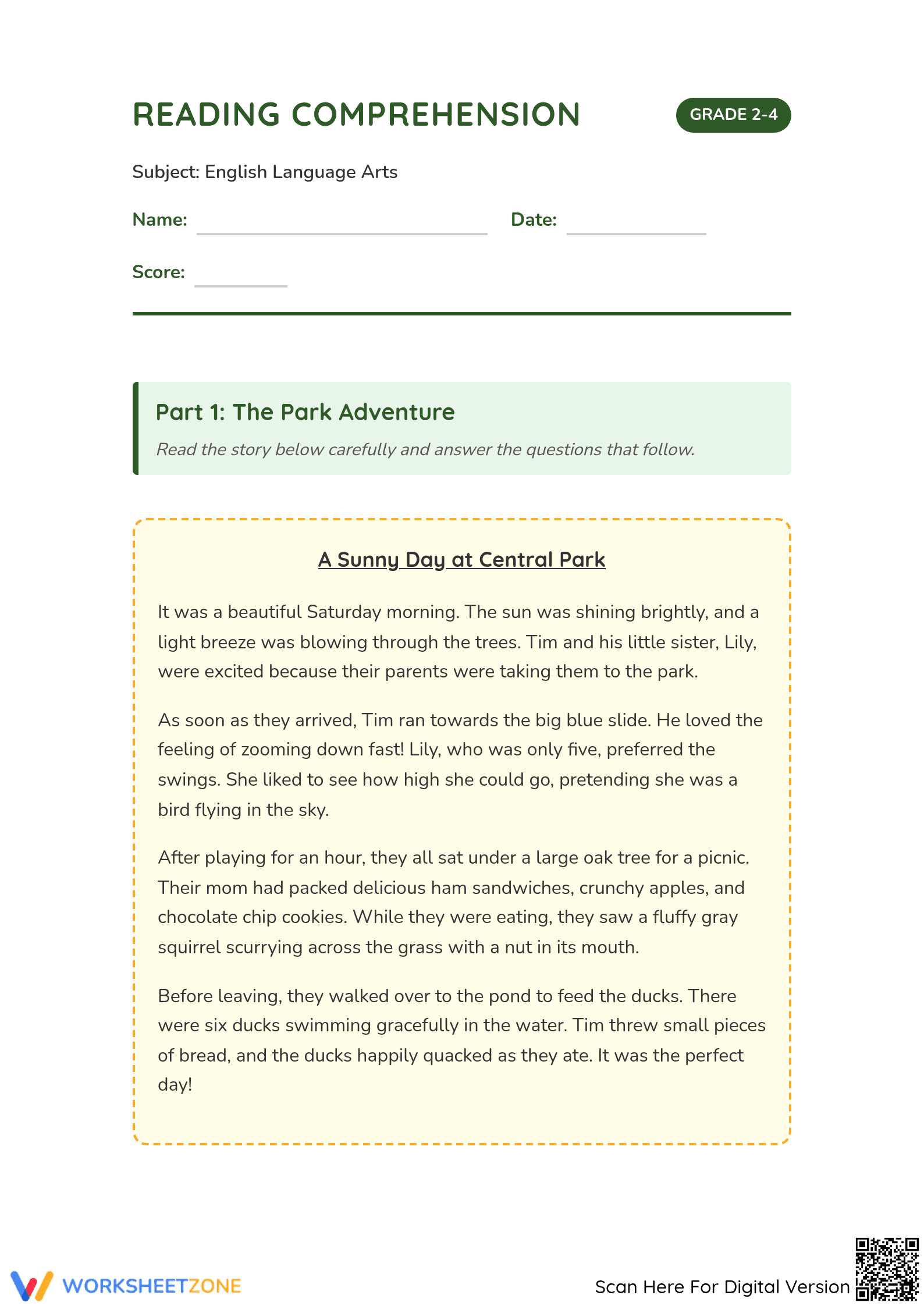
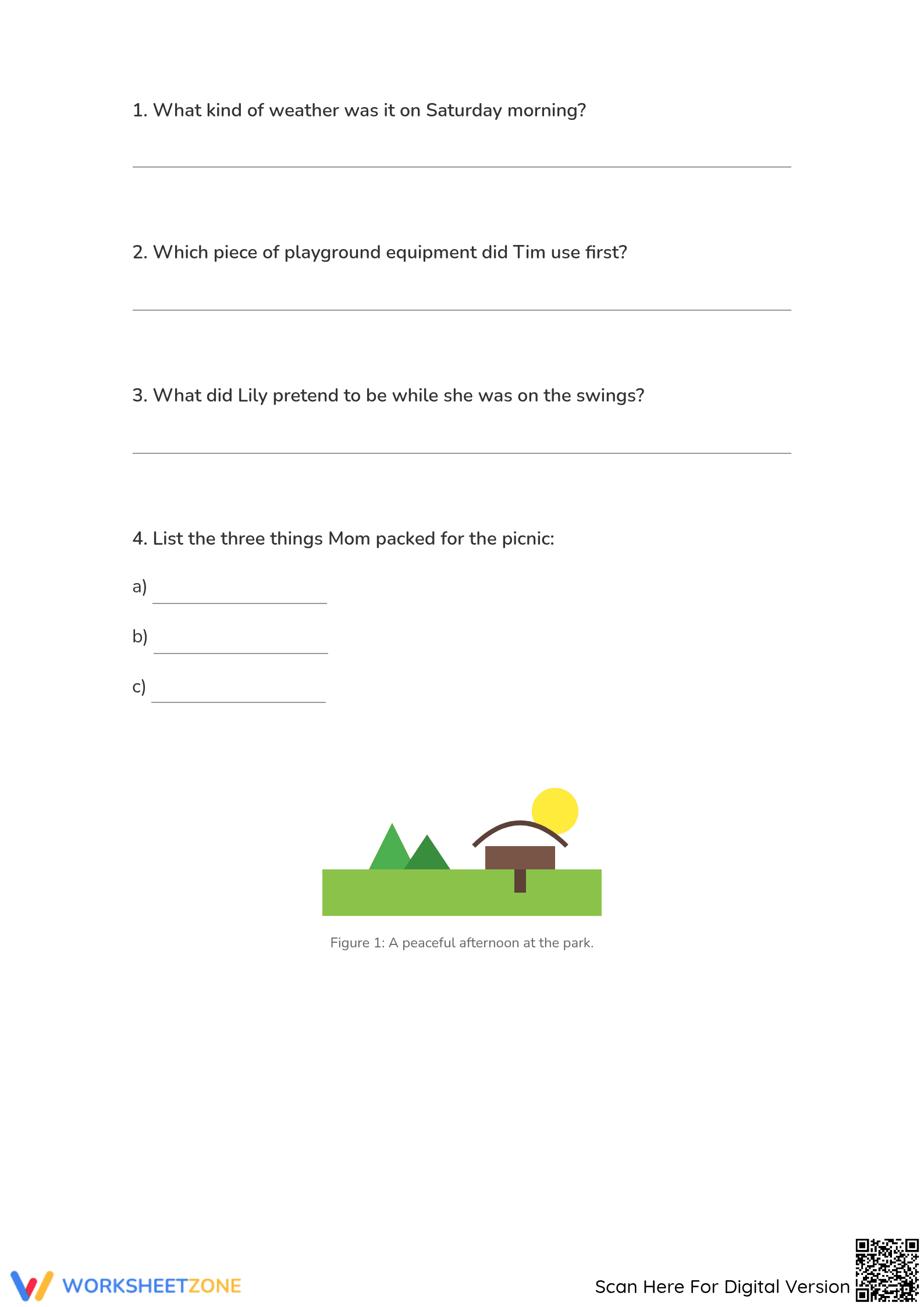
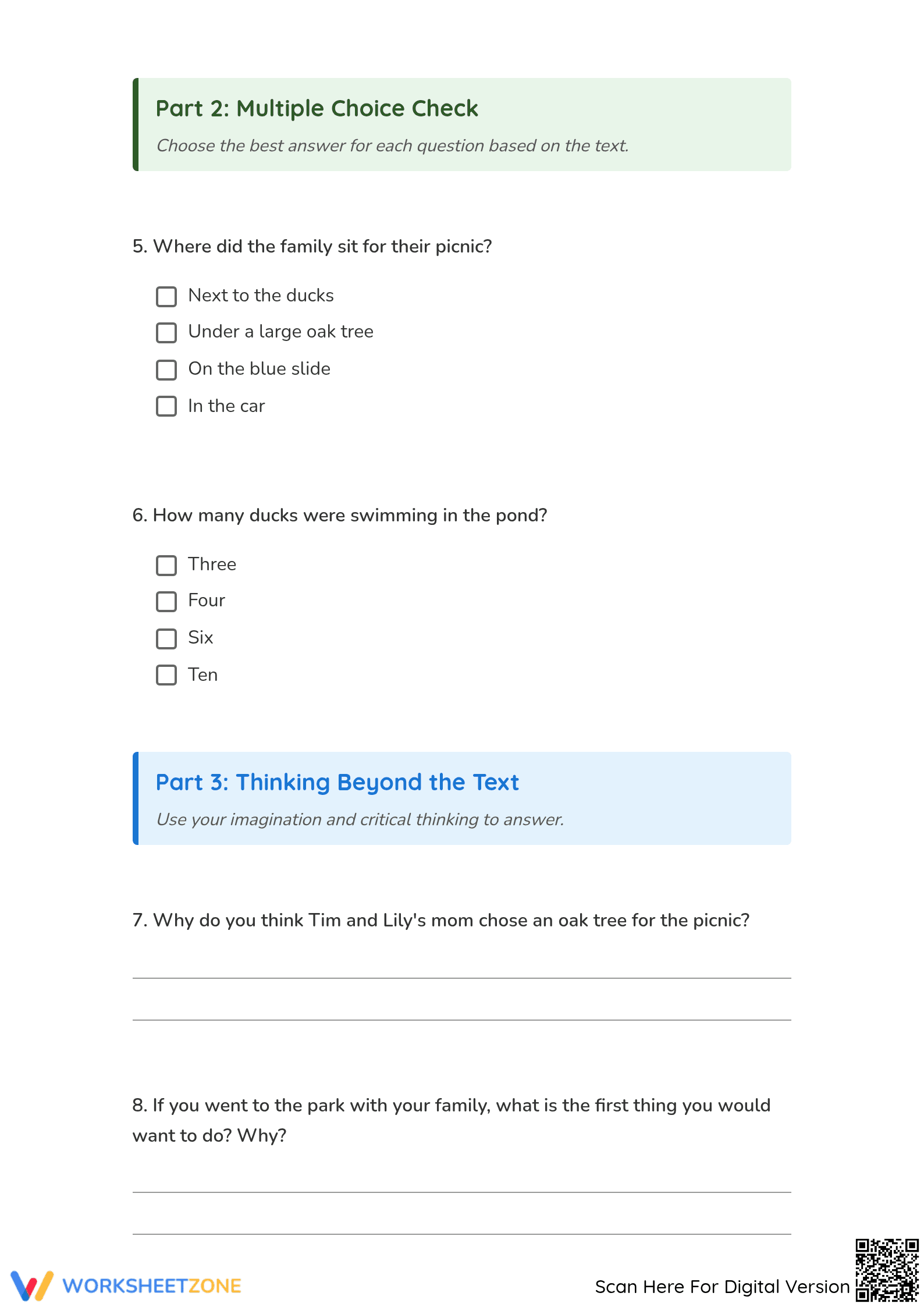
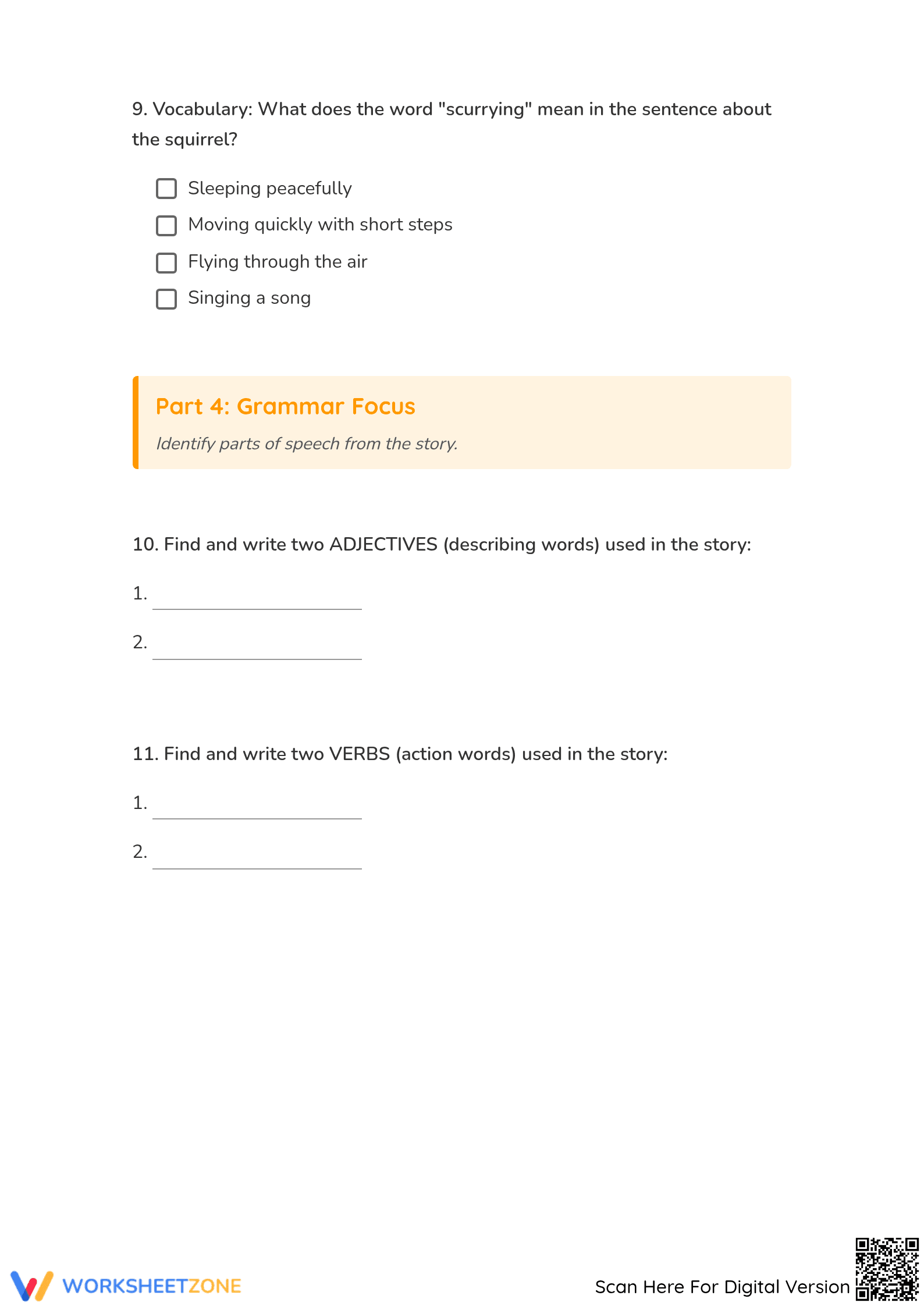

Grade 3 Reading Comprehension — Essential Printable Packet
Paste this activity's link or code into your existing LMS (Google Classroom, Canvas, Teams, Schoology, Moodle, etc.).
Students can open and work on the activity right away, with no student login required.
You'll still be able to track student progress and results from your teacher account.
This Grade 3 reading comprehension worksheet provides a complete instructional cycle for analyzing narrative text. Students engage with a multi-paragraph story to build literal recall, inferential thinking, and foundational grammar skills. It transforms a simple reading activity into a rigorous evidence-based assessment of student understanding and linguistic application.
At a Glance
- Grade: 3 · Subject: ELA
- Standard:
CCSS.ELA-LITERACY.RL.3.1— Ask and answer questions to demonstrate understanding of a text- Skill Focus: Text Evidence & Grammar
- Format: 4 pages · 11 problems · Answer key included · PDF
- Best For: Independent practice or sub plans
- Time: 25–35 minutes
The 4-page PDF contains a cohesive narrative titled "A Sunny Day at Central Park." It features 11 total tasks distributed across four distinct sections: literal comprehension questions, multiple-choice checks, critical thinking prompts, and a grammar identification module. A full answer key is provided to facilitate quick grading or student self-correction.
The workflow is designed for immediate classroom implementation. First, print the 4-page packet (30 seconds). Second, distribute to students for independent or small-group work (1 minute). Third, review the 11 responses using the provided answer key for instant feedback (1 minute). Total teacher preparation time is under 2 minutes, making it an ideal resource for emergency sub plans.
The primary focus is CCSS.ELA-LITERACY.RL.3.1: "Ask and answer questions to demonstrate understanding of a text, referring explicitly to the text as the basis for the answers." Additionally, the grammar section supports CCSS.ELA-LITERACY.L.3.1 by requiring students to identify parts of speech. Both standard codes can be copied directly into lesson plans, IEP goals, or district curriculum mapping tools.
Use this as a summative assessment after a unit on key ideas and details to gauge individual mastery. Alternatively, assign it as a workshop activity where students work in pairs to find the specific sentence that proves their answer for Part 1. Expect completion within 25 to 35 minutes depending on student reading speed.
This resource is tailored for Grade 3 students but serves as an excellent challenge for Grade 2 or a scaffolded review for Grade 4. It pairs naturally with a lesson on "Finding the Evidence" or an anchor chart detailing the differences between adjectives and verbs.
According to the RAND AIRS 2024 report on literacy instruction, structured reading packets that integrate literal recall with higher-order critical thinking significantly improve student retention of narrative structures. This worksheet applies these findings by transitioning students from basic recall questions to prompts that require inferential reasoning. By including a grammar component, the resource reinforces the connection between sentence-level mechanics and overall text comprehension. The 11-task sequence ensures that students interact with the text multiple times, a practice supported by Fisher & Frey (2014) as essential for developing deep reading stamina. The alignment with CCSS.ELA-LITERACY.RL.3.1 ensures that the rigor meets national benchmarks for Grade 3 ELA. This evidence-based design provides teachers with a reliable tool for both formative assessment and independent practice, ensuring that students can demonstrate mastery of key literacy standards in a structured, measurable format.


