


























Views
Downloads

Grade 4 Reading Comprehension — Printable No-Prep Worksheet
Paste this activity's link or code into your existing LMS (Google Classroom, Canvas, Teams, Schoology, Moodle, etc.).
Students can open and work on the activity right away, with no student login required.
You'll still be able to track student progress and results from your teacher account.
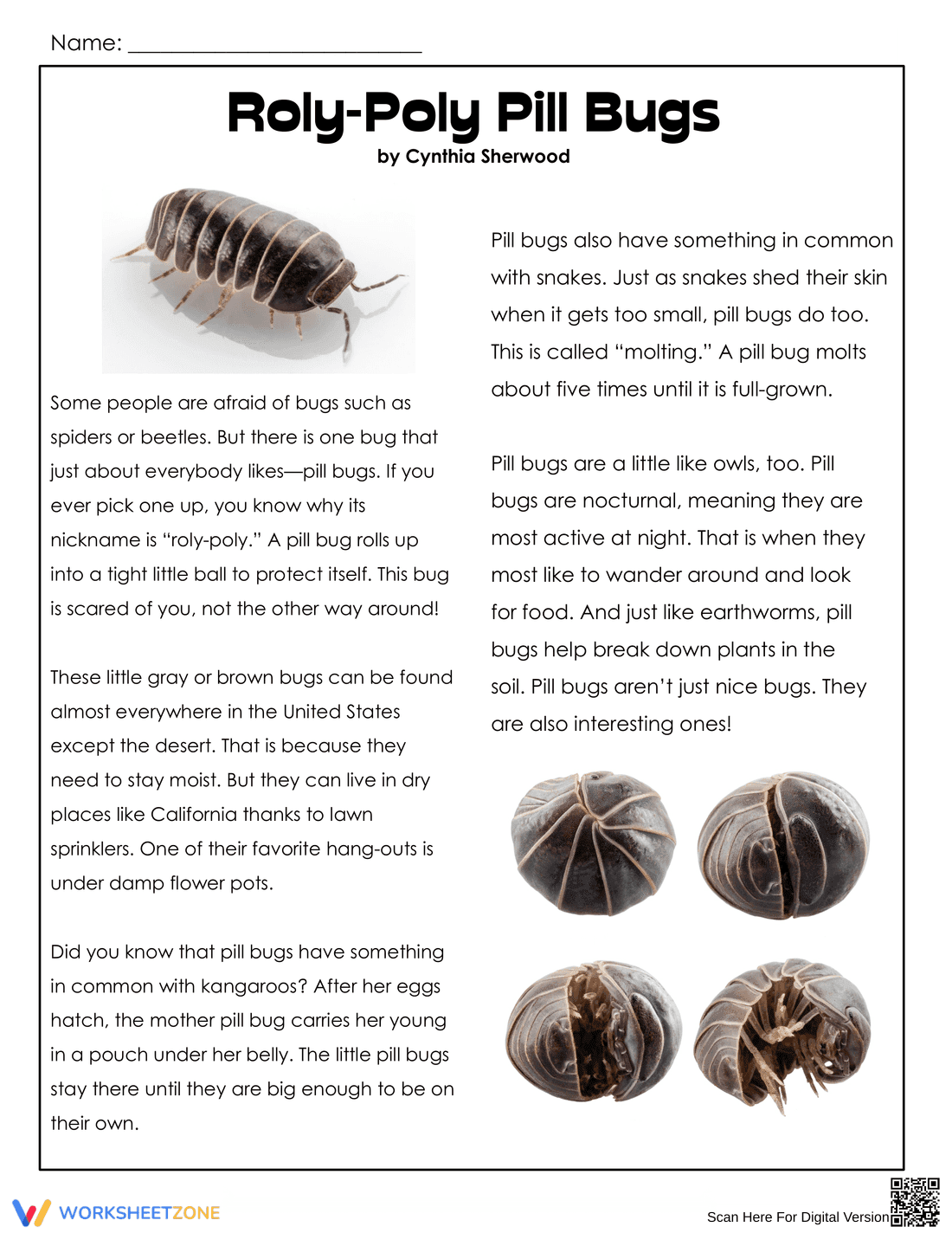
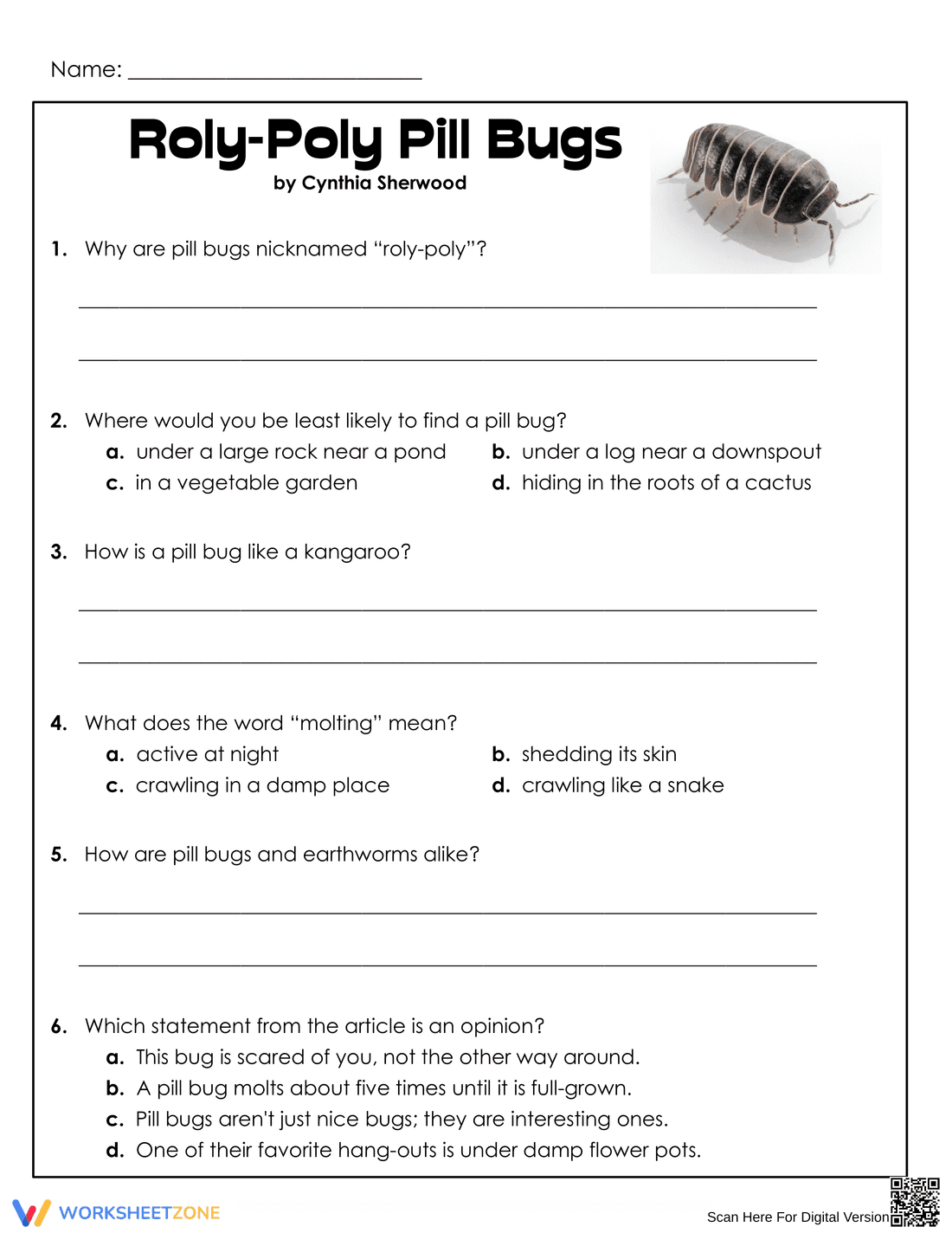
This Grade 4 reading comprehension worksheet helps students build essential literacy skills by analyzing an engaging informational text about pill bugs. By answering targeted questions, learners practice locating explicit details, determining vocabulary meaning in context, and distinguishing between fact and opinion to strengthen their overall reading proficiency.
At a Glance
- Grade: 4 · Subject: ELA
- Standard:
CCSS.ELA-LITERACY.RI.4.1— Refer to details and examples in a text- Skill Focus: Reading Comprehension
- Format: 3 pages · 6 problems · Answer key included · PDF
- Best For: Independent practice and sub plans
- Time: 15–20 minutes
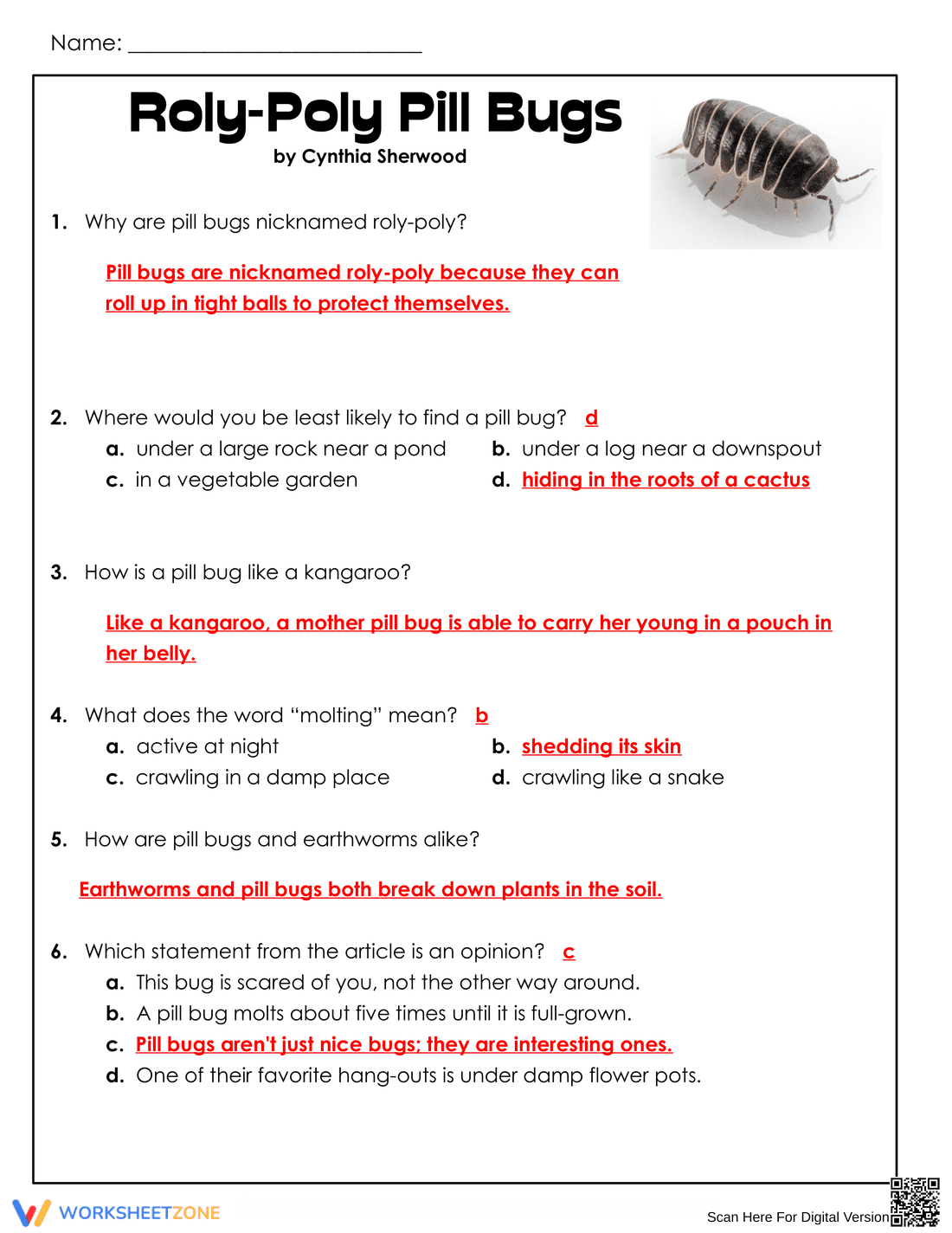
This resource features a high-interest, one-page informational passage titled "Roly-Poly Pill Bugs," followed by a dedicated question page. The assessment includes six mixed-format tasks, combining multiple-choice and short-answer questions that require students to cite text evidence. A complete, red-ink answer key is provided on the third page for rapid grading and immediate student feedback.
Zero-Prep Workflow
- Print (1 minute): Simply download the PDF and print the two-page student packet. No additional materials or teacher setup are required.
- Distribute (1 minute): Hand out the passage and question sheet. The instructions are self-explanatory, allowing students to begin reading immediately.
- Review (3 minutes): Use the included answer key to quickly check student responses or project it on the board for whole-class self-correction.
With a total teacher prep time of under two minutes, this resource is highly suitable for emergency sub plans, morning work, or unexpected schedule changes.
Standards Alignment
This worksheet is strictly aligned to CCSS.ELA-LITERACY.RI.4.1, requiring students to refer to details and examples in a text when explaining what the text says explicitly and when drawing inferences. It also supports vocabulary acquisition by asking students to determine the meaning of domain-specific words like "molting." Both standard codes can be copied directly into lesson plans, IEP goals, or district curriculum mapping tools.
How to Use It
Teachers can utilize this passage during independent reading blocks to reinforce comprehension strategies taught during whole-group instruction. It also serves as an excellent formative assessment tool after a science unit on insects or animal adaptations. While students work, observe whether they are actively underlining or highlighting text evidence before writing their short answers. Expected completion time ranges from 15 to 20 minutes, depending on the reader's fluency level.
Who It's For
This resource is designed for fourth-grade general education students, but it can easily be adapted for fifth-grade intervention groups needing foundational practice with informational texts. To support developing readers, teachers might pre-teach challenging vocabulary or allow students to read the passage with a partner. It pairs naturally with anchor charts on finding text evidence or distinguishing between facts and opinions.
Developing strong informational text analysis skills is a critical component of upper elementary literacy instruction. According to a 2024 report by EdReports, students who regularly engage with high-quality, knowledge-building texts demonstrate significant improvements in cross-curricular reading comprehension. This resource directly supports that objective by aligning with CCSS.ELA-LITERACY.RI.4.1, challenging students to refer to details and examples in a text to support their answers. By requiring learners to locate explicit evidence and determine vocabulary meaning in context, the worksheet builds the stamina necessary for more complex middle school reading tasks. Consistent practice with mixed-format questions—such as the multiple-choice and short-answer items provided here—ensures that students can articulate their understanding accurately. Integrating targeted, standards-aligned passages into weekly routines provides educators with reliable data to monitor student growth and adjust instructional strategies effectively.


