




























1 / 2
0
Views
0
Plays

0.0
0
Save
0 Likes
Share
Punnett Square Practice – Learn Genetics
0 Views
0 Plays

Paste this activity's link or code into your existing LMS (Google Classroom, Canvas, Teams, Schoology, Moodle, etc.).
Students can open and work on the activity right away, with no student login required.
You'll still be able to track student progress and results from your teacher account.
Information
Description
What It Is:
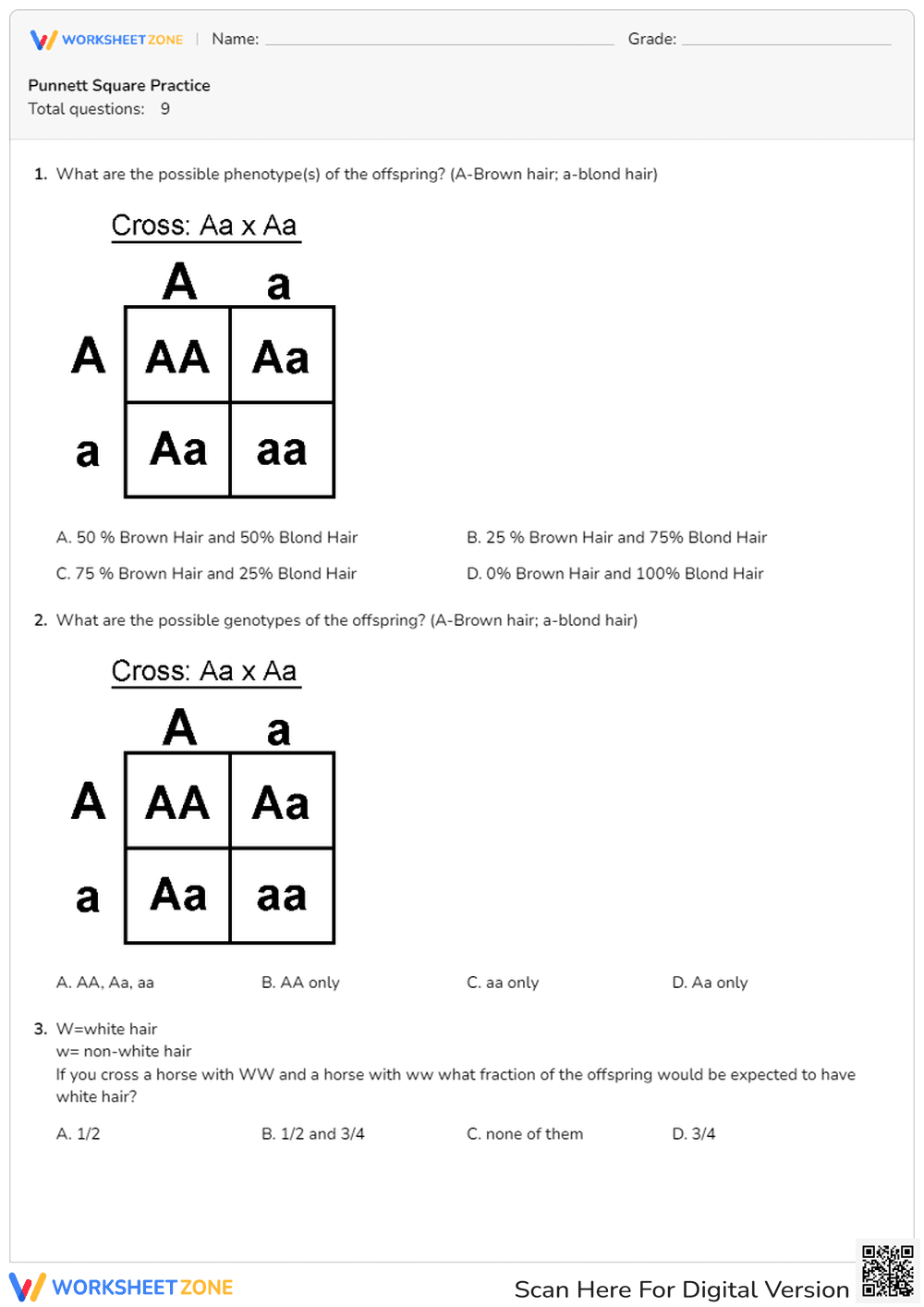
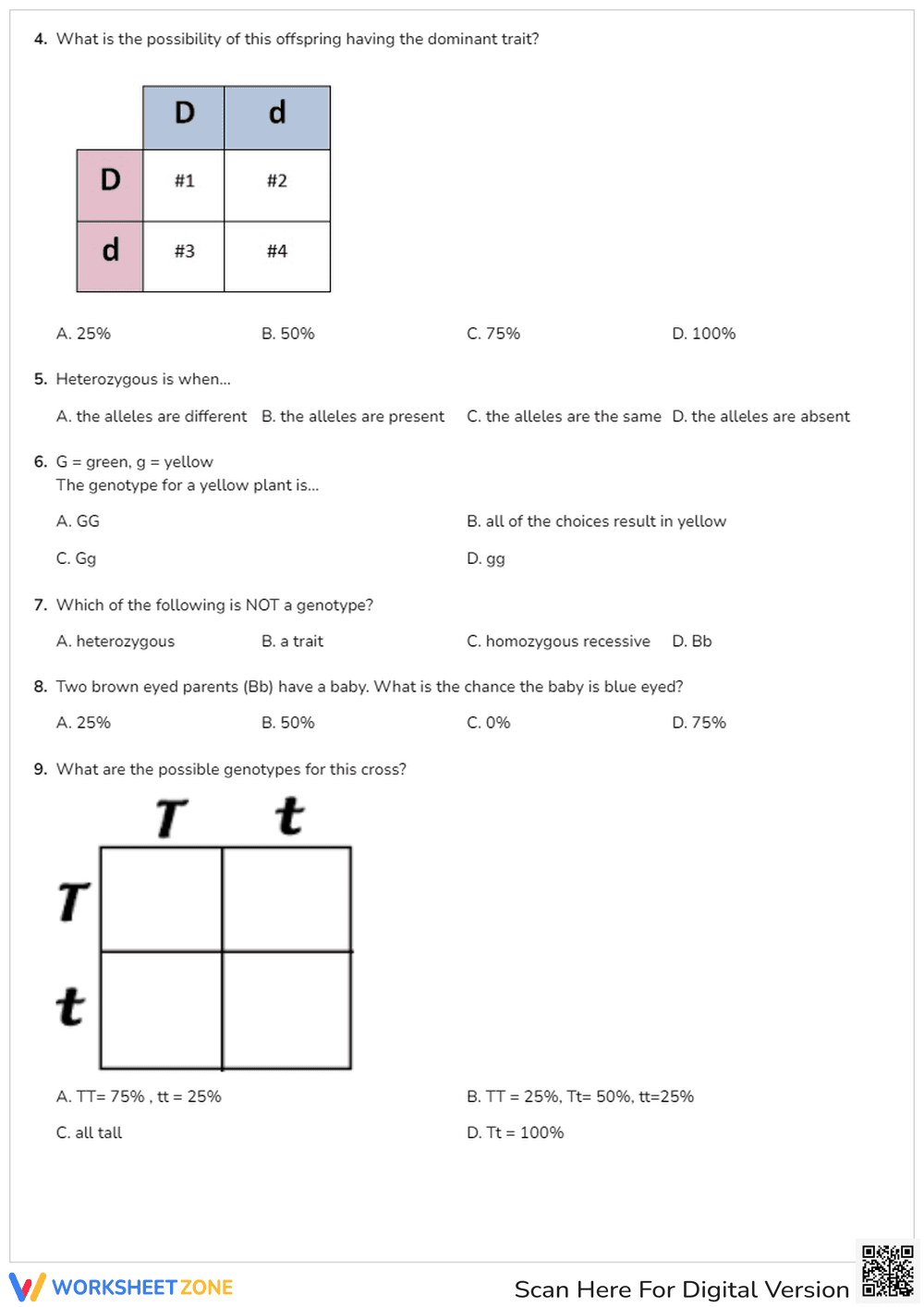
This worksheet helps students practice using Punnett squares to understand genetic inheritance patterns. Students will calculate the possible phenotypes and genotypes of offspring based on various genetic crosses and work through sample problems related to traits like hair color.
Why Use It:
This worksheet is ideal for reinforcing genetic principles, especially the use of Punnett squares to predict inheritance patterns in offspring. It’s perfect for students studying biology or genetics.
How to Use It:
• Students complete the Punnett square by filling in the possible genotypes and phenotypes.
• After completing the squares, students answer related questions on genetic probabilities.
• Discuss results with the class for further understanding.
Grade Suitability:
Best suited for high school biology students or introductory courses in genetics.
• Ideal for grades 9–12 studying inheritance and Mendelian genetics.
• Can be used in biology lessons and exercises.
Target Users:
• Students learning about inheritance and genetic traits.
• Teachers conducting genetics lessons or preparing for exams.
This worksheet helps students practice using Punnett squares to understand genetic inheritance patterns. Students will calculate the possible phenotypes and genotypes of offspring based on various genetic crosses and work through sample problems related to traits like hair color.
Why Use It:
This worksheet is ideal for reinforcing genetic principles, especially the use of Punnett squares to predict inheritance patterns in offspring. It’s perfect for students studying biology or genetics.
How to Use It:
• Students complete the Punnett square by filling in the possible genotypes and phenotypes.
• After completing the squares, students answer related questions on genetic probabilities.
• Discuss results with the class for further understanding.
Grade Suitability:
Best suited for high school biology students or introductory courses in genetics.
• Ideal for grades 9–12 studying inheritance and Mendelian genetics.
• Can be used in biology lessons and exercises.
Target Users:
• Students learning about inheritance and genetic traits.
• Teachers conducting genetics lessons or preparing for exams.


