


























Views
Downloads



Printable Pumpkin Life Cycle Science Cards | Grade 3
Paste this activity's link or code into your existing LMS (Google Classroom, Canvas, Teams, Schoology, Moodle, etc.).
Students can open and work on the activity right away, with no student login required.
You'll still be able to track student progress and results from your teacher account.
These printable pumpkin science cards help students master the biological stages of a plant's life cycle. By matching images with technical vocabulary, learners develop a concrete understanding of how organisms grow and change. This resource provides a hands-on way to explore botanical science while building essential literacy skills through visual and textual association.
At a Glance
- Grade: 3 · Subject: Science
- Standard:
3-LS1-1— Develop models to describe that organisms have unique and diverse life cycles- Skill Focus: Pumpkin Life Cycle Vocabulary
- Format: 3 pages · 6 stages · Answer key included · PDF
- Best For: Science centers and independent vocabulary practice
- Time: 15–20 minutes
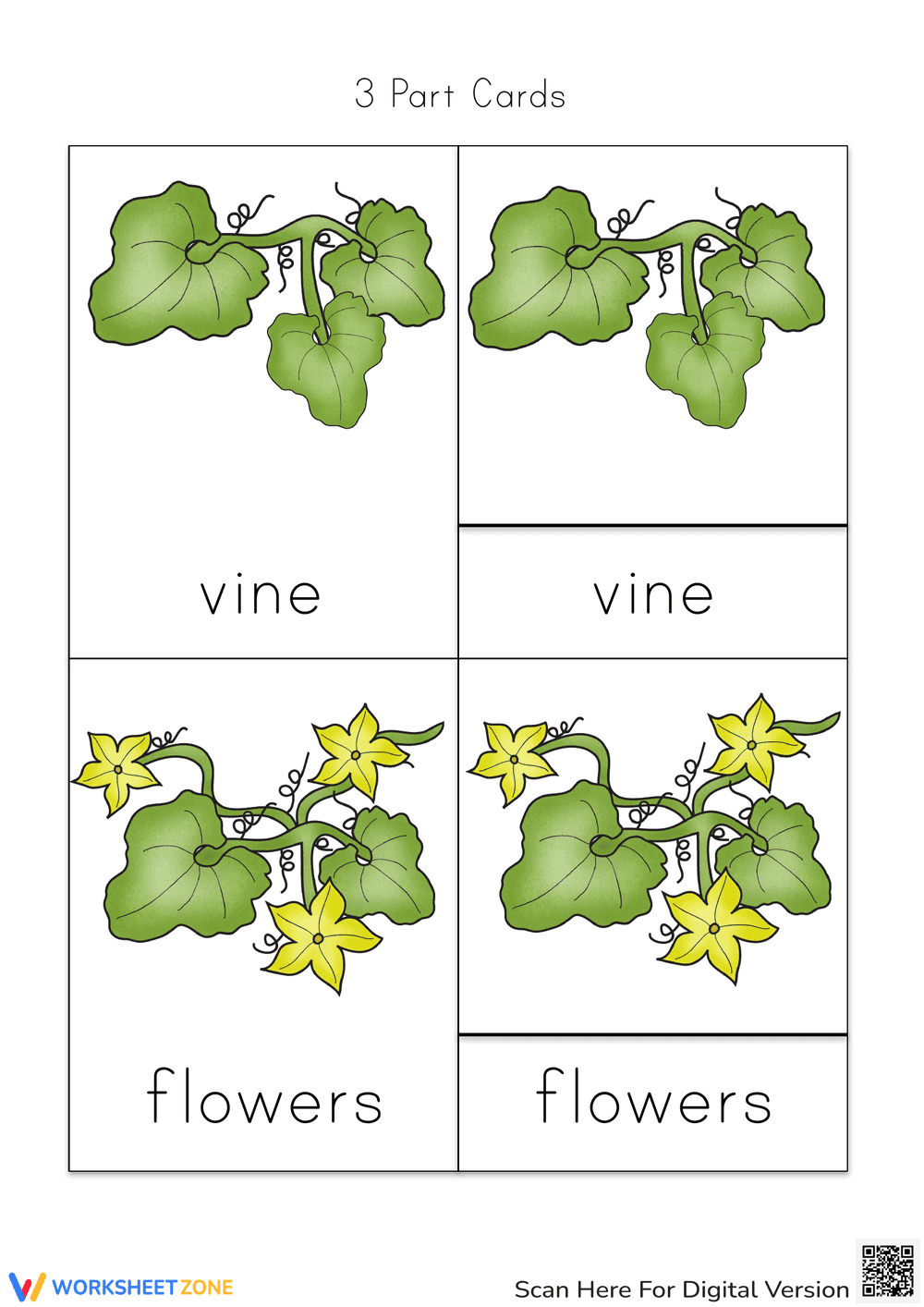
Inside this PDF, you will find three pages of Montessori-style 3-part cards covering six distinct stages: seed, sprout, vine, flowers, green pumpkin, and mature pumpkin. Each stage includes a control card featuring both the image and text, a separate picture card, and a standalone label. The clear, high-quality illustrations ensure students can easily distinguish between different growth phases without confusion.
Zero-Prep Workflow
- Print: Select the three pages and print on heavy cardstock for maximum durability (30 seconds).
- Distribute: Cut along the provided lines to separate the control cards, pictures, and labels (1 minute).
- Review: Place the cards in a basket or tray for students to sort and match independently (30 seconds).
Total teacher preparation time is under two minutes, making this an ideal resource for morning work, science centers, or emergency sub plans.
Standards Alignment
This resource aligns with `3-LS1-1`: "Develop models to describe that organisms have unique and diverse life cycles but all have in common birth, growth, reproduction, and death." It specifically addresses the growth and reproduction phases of a flowering plant. This standard code can be copied directly into lesson plans, IEP goals, or district curriculum mapping tools.
How to Use It
Use these cards during a whole-group introduction to plant biology by displaying the control cards on a document camera to introduce the 6 stages. For formative assessment, observe students during independent center time to see if they can correctly sequence the stages without referring to the control cards. This activity typically takes 15 to 20 minutes for a student to complete fully.
Who It's For
This resource is designed for Grade 3 students but is highly effective for English Language Learners (ELLs) who need visual support for science vocabulary. It pairs naturally with a pumpkin dissection activity or a non-fiction passage about autumn harvests. The tactile nature of the cards supports kinesthetic learners who benefit from physical manipulation of materials.
Research from Fisher & Frey (2014) emphasizes that visual non-linguistic representations, such as these 3-part cards, are critical for students to internalize complex scientific concepts. By utilizing the 3-LS1-1 standard, this worksheet ensures that students are not just memorizing names but are building a mental model of biological progression. The 3-part card format provides immediate feedback, allowing for self-correction which is a hallmark of effective independent practice. Studies in the RAND AIRS 2024 report suggest that high-quality, standards-aligned visual aids significantly improve retention rates for technical vocabulary in elementary science. This resource bridges the gap between abstract biological processes and concrete visual evidence, providing a structured pathway for students to achieve mastery in life science domains. It is a reliable tool for any classroom focusing on evidence-based instructional strategies for early elementary learners.


