


























Views
Downloads

Protein Synthesis Worksheet | Essential Grade 10-12 Biology
Paste this activity's link or code into your existing LMS (Google Classroom, Canvas, Teams, Schoology, Moodle, etc.).
Students can open and work on the activity right away, with no student login required.
You'll still be able to track student progress and results from your teacher account.
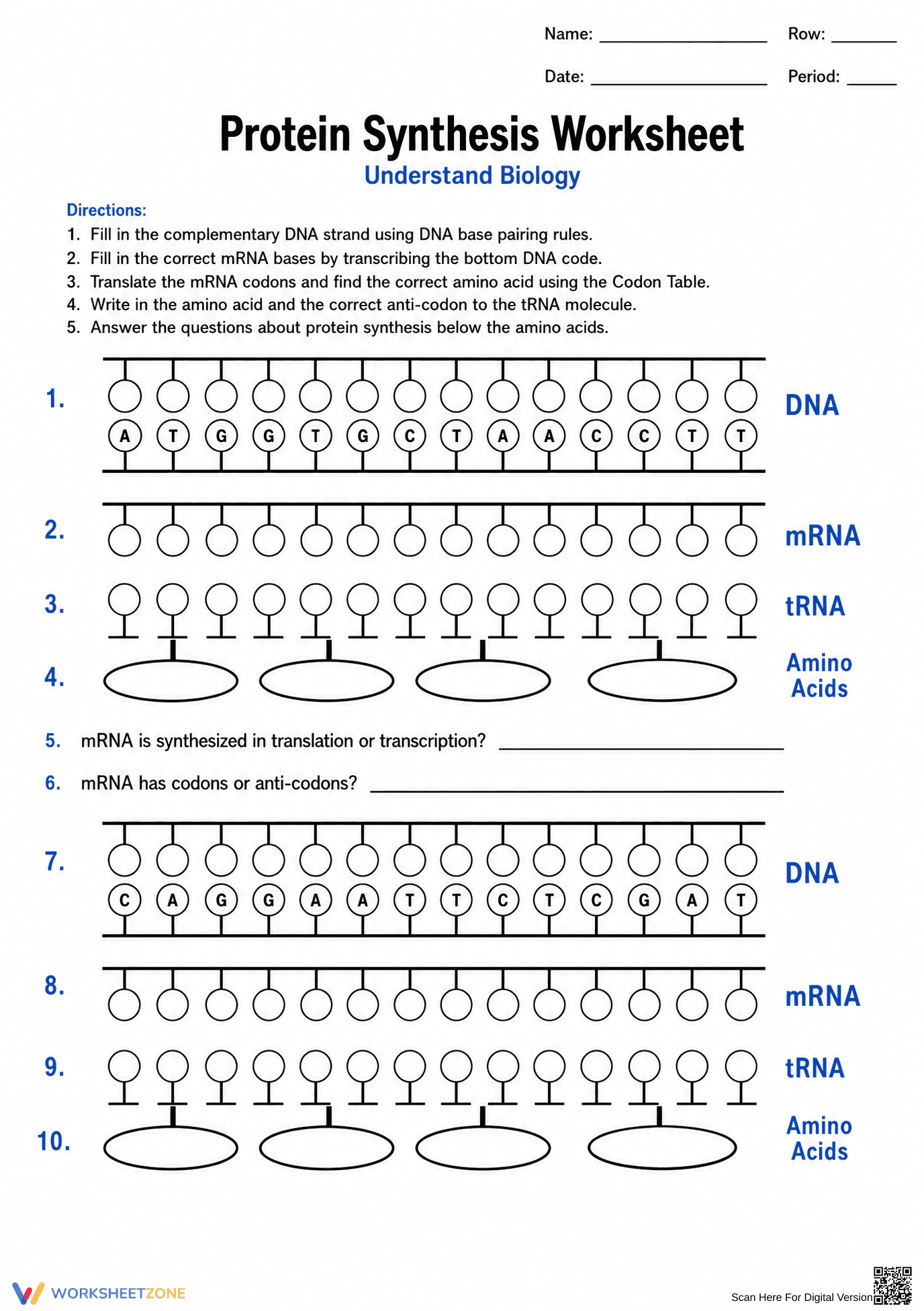
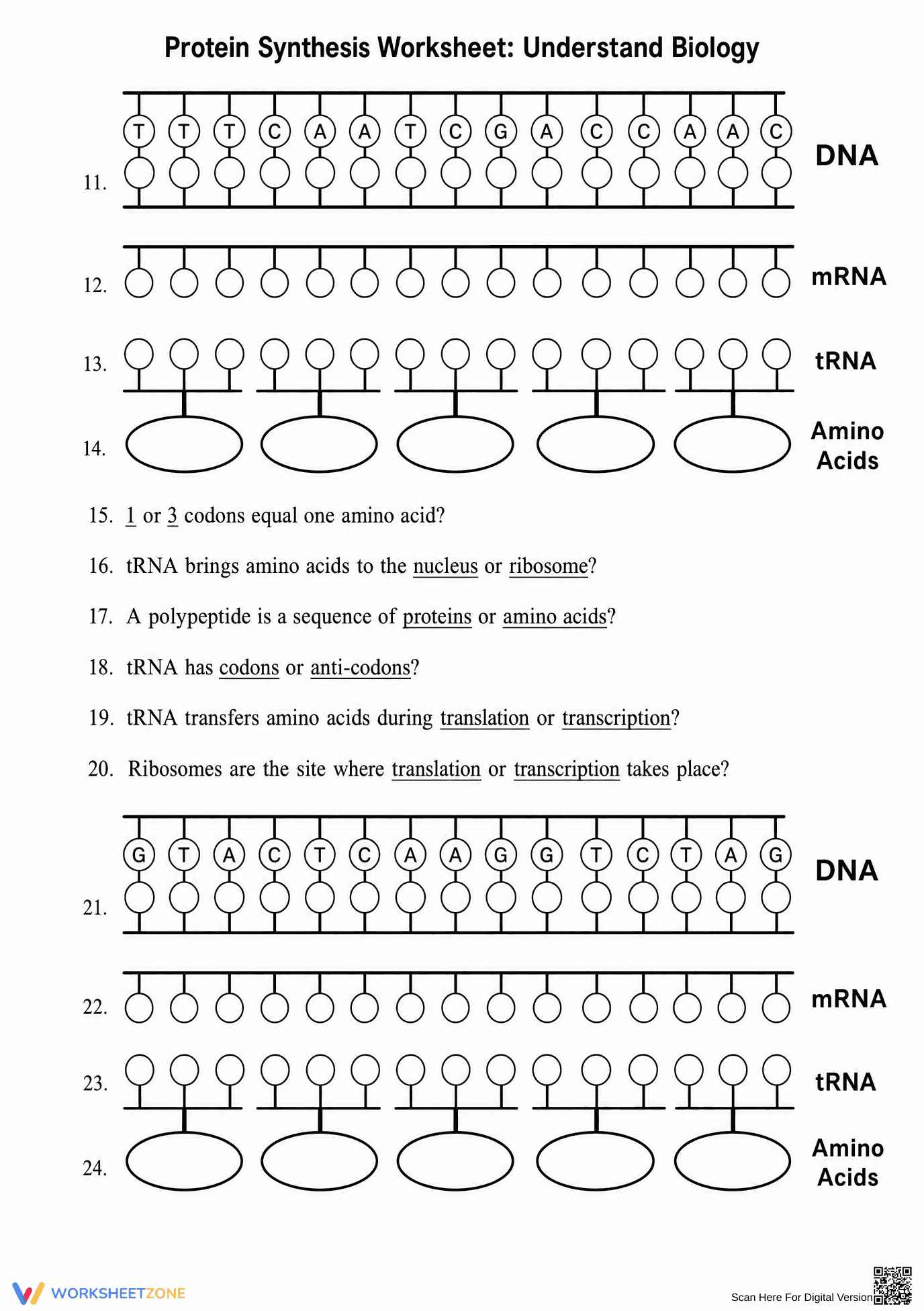
This high school biology resource provides a comprehensive framework for students to practice the central dogma of molecular biology. By manually converting DNA sequences into mRNA and identifying corresponding amino acids, learners solidify their understanding of how genetic information flows from the nucleus to the ribosome. This worksheet ensures students master the mechanics of protein construction through repetitive, high-quality practice.
At a Glance
- Grade: 10-12 · Subject: Biology
- Standard:
HS-LS1-1— Explain how DNA structure determines protein structure and essential life functions- Skill Focus: Transcription and Translation
- Format: 2 pages · 24 problems · Answer key included · PDF
- Best For: Independent practice or sub plans
- Time: 30–45 minutes
The worksheet features four distinct sequence-mapping diagrams where students must fill in complementary DNA strands, transcribe mRNA, and determine tRNA anticodons. Interspersed between these visual models are 8 conceptual questions that challenge students to distinguish between transcription and translation locations, identify codon-to-amino-acid ratios, and define the role of ribosomes. The layout is clean and focused, minimizing distractions for secondary learners.
The zero-prep workflow is designed for maximum efficiency in a busy high school setting. Teachers can print the 2-page PDF in under 2 minutes, distribute it immediately to students without prior setup, and use the final 5 minutes of class for a rapid peer-review session. This structure makes it an ideal resource for emergency sub plans or as a quiet reinforcement activity following a lecture on molecular genetics.
This resource aligns with `HS-LS1-1`, focusing on the transcription and translation processes that govern protein synthesis. It specifically addresses the mechanism of the genetic code and the role of RNA in protein assembly. Both standard codes can be copied directly into lesson plans, IEP goals, or district curriculum mapping tools to ensure compliance with state and national science frameworks.
Use this worksheet as a formative assessment immediately following a direct instruction session on the genetic code. Alternatively, assign it as a collaborative station activity where students use a shared codon chart to verify their amino acid sequences. Observe students during the tRNA anticodon section to ensure they are not confusing base-pairing rules between DNA and RNA, which is a common misconception at this level.
This is designed for Grade 10-12 students in General Biology, Honors Biology, or introductory AP Biology courses. It serves as an excellent scaffold for students who require a concrete way to visualize the abstract nature of molecular biology. Pair this with a physical codon wheel or a digital protein synthesis simulation for a multi-modal learning experience that caters to different learning styles.
According to Fisher & Frey (2014), the use of graphic organizers and sequence-mapping in science education facilitates the gradual release of responsibility, moving students from guided modeling to independent mastery. This worksheet utilizes that pedagogical shift by providing 24 structured tasks that require students to apply the HS-LS1-1 standard in a concrete, repetitive manner. Research indicates that manual transcription and translation exercises help bridge the gap between microscopic biological concepts and observable phenotypic traits. By requiring students to identify specific amino acids from mRNA codons, the resource reinforces the precision of the genetic code. This systematic approach ensures that high school learners develop the technical literacy required for advanced biological studies. The inclusion of both conceptual questions and procedural diagrams supports diverse cognitive processing needs within the secondary science classroom, ensuring all students can demonstrate their understanding of protein synthesis.


