


























Views
Downloads

Protein Synthesis Worksheet | Essential Grade 9-12 Biology
Paste this activity's link or code into your existing LMS (Google Classroom, Canvas, Teams, Schoology, Moodle, etc.).
Students can open and work on the activity right away, with no student login required.
You'll still be able to track student progress and results from your teacher account.
This essential Grade 9-12 biology worksheet provides students with targeted practice in the central dogma of molecular biology. By manually sequencing nucleotides and identifying key cellular locations, learners solidify their understanding of how genetic information flows from DNA to functional proteins in a clear, structured format.
At a Glance
- Grade: 9-12 · Subject: Biology
- Standard:
HS-LS1-1— Explain how DNA structure determines protein structure through transcription and translation- Skill Focus: Transcription and translation sequencing
- Format: 2 pages · 20 problems · Answer key included · PDF
- Best For: Independent practice or formative assessment
- Time: 25–35 minutes
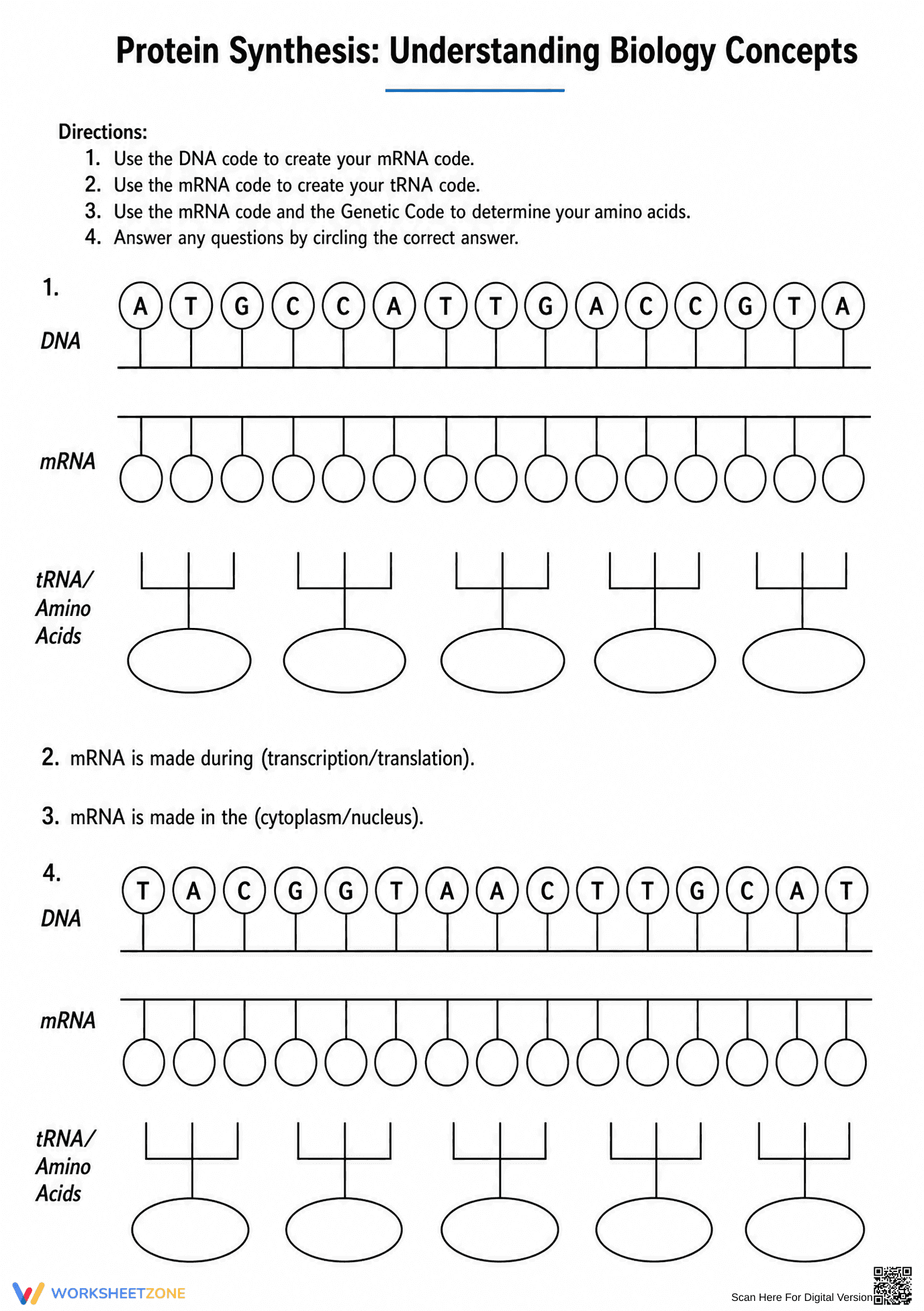
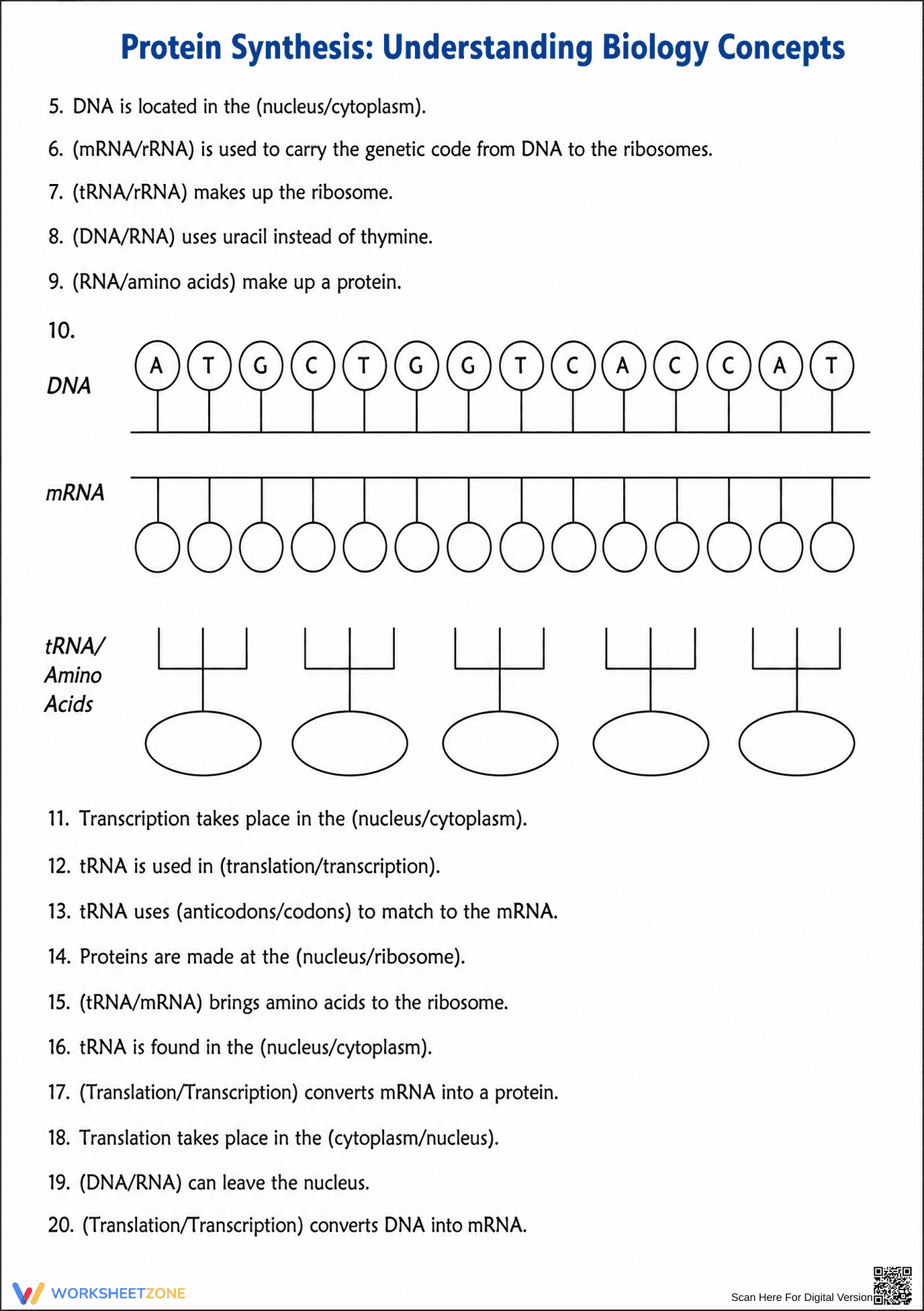
This 2-page PDF features 3 comprehensive sequencing diagrams where students convert DNA codes into mRNA and then into tRNA/amino acid chains. Accompanying these diagrams are 17 multiple-choice and identification questions focusing on cellular organelles, RNA types, and the specific roles of codons and anticodons during the synthesis process.
Skill Progression
- Guided practice: The first sequencing task provides a clear visual framework for converting 15 DNA bases into mRNA and tRNA, establishing the base-pairing rules.
- Supported practice: Multiple-choice questions reinforce vocabulary and conceptual locations, such as the nucleus and ribosome, before the next sequence.
- Independent practice: Final sequencing tasks and comprehensive identification questions require students to apply knowledge without visual cues or prompts.
This worksheet follows a gradual-release model to ensure students master the mechanics of the genetic code before moving to complex mutations.
Standards Alignment
This resource is aligned to `HS-LS1-1`: "Construct an explanation based on evidence for how the structure of DNA determines the structure of proteins which carry out the essential functions of life through systems of specialized cells." Both standard codes can be copied directly into lesson plans, IEP goals, or district curriculum mapping tools.
How to Use It
Use this worksheet as a mid-unit formative assessment after introducing the codon chart. It works best during the independent practice phase of instruction to check for common misconceptions, such as confusing the nucleus with the ribosome. Expected completion time is 30 minutes for most high school learners.
Who It's For
Designed for high school biology students, including those in Honors or AP tracks needing a refresher on mechanics. It pairs naturally with a standard genetic code codon chart and a direct instruction lesson on the role of RNA polymerase and ribosomes.
According to the NAEP Science Framework, understanding the molecular basis of heredity is a cornerstone of secondary biological literacy. This worksheet addresses the mechanical "how" of protein synthesis, a prerequisite for higher-order analysis of mutations and gene expression. Research by Fisher & Frey (2014) emphasizes that scaffolded practice in technical sequencing—such as the DNA-to-protein transition—reduces cognitive load during complex biological modeling. By providing 20 distinct opportunities to interact with the HS-LS1-1 standard, this resource ensures that students move beyond rote memorization toward procedural fluency. The inclusion of both transcription and translation tasks within a single 2-page document allows for a holistic view of the central dogma, supporting long-term retention of molecular biology concepts.


