


























Views
Downloads

Printable Protein Synthesis Worksheet | Grade 9-12 Biology
Paste this activity's link or code into your existing LMS (Google Classroom, Canvas, Teams, Schoology, Moodle, etc.).
Students can open and work on the activity right away, with no student login required.
You'll still be able to track student progress and results from your teacher account.
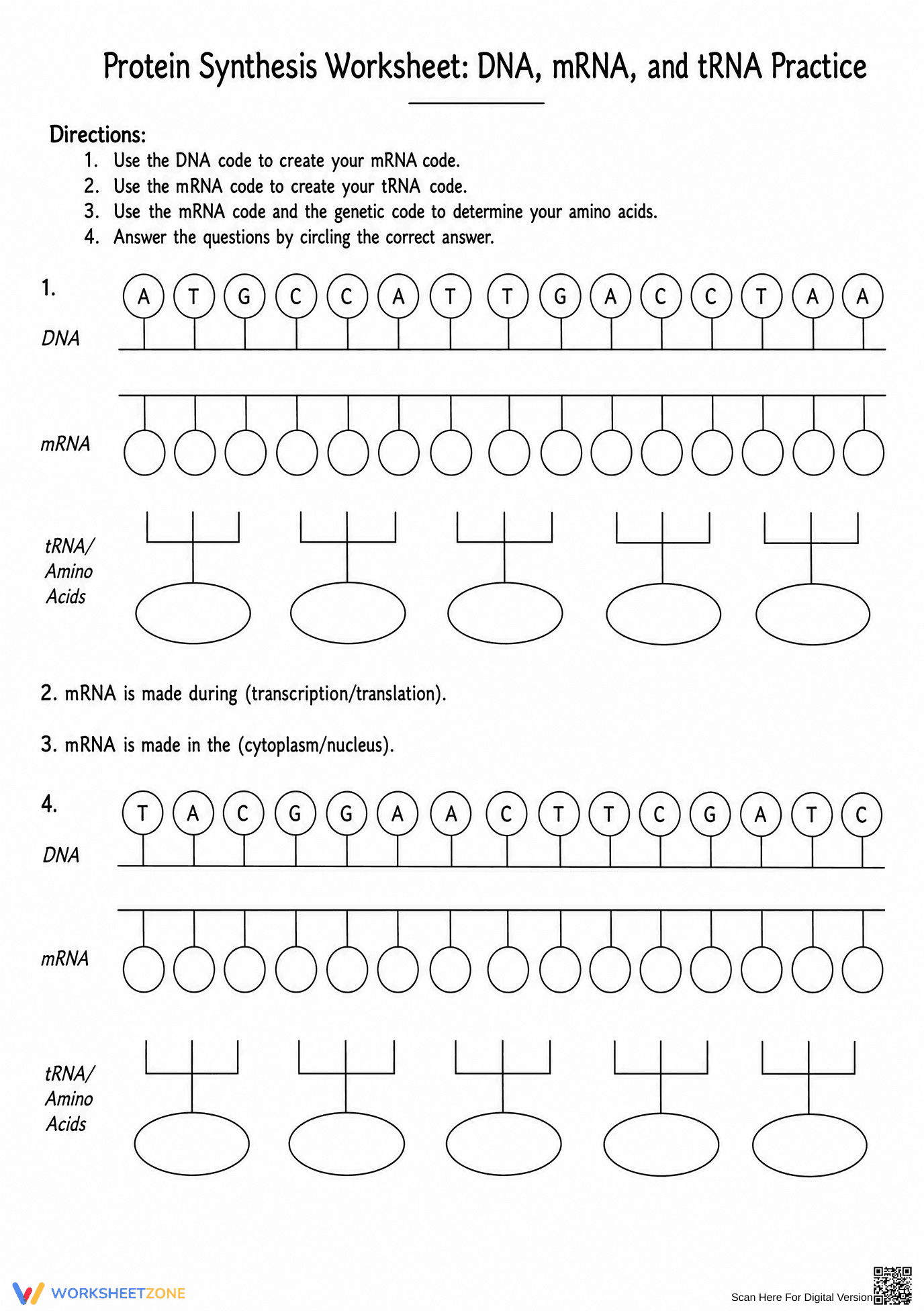
This high school biology worksheet provides focused practice on protein synthesis, guiding students through the processes of transcription and translation. By converting DNA sequences into mRNA and identifying the corresponding tRNA and amino acids, students build a concrete understanding of how genetic information is expressed.
At a Glance
- Grade: 9-12 · Subject: Biology
- Standard:
HS-LS1-1— Explain how DNA structure determines protein structure- Skill Focus: Transcription and Translation
- Format: 2 pages · 20 problems · Answer key included · PDF
- Best For: Independent practice and review
- Time: 25–35 minutes
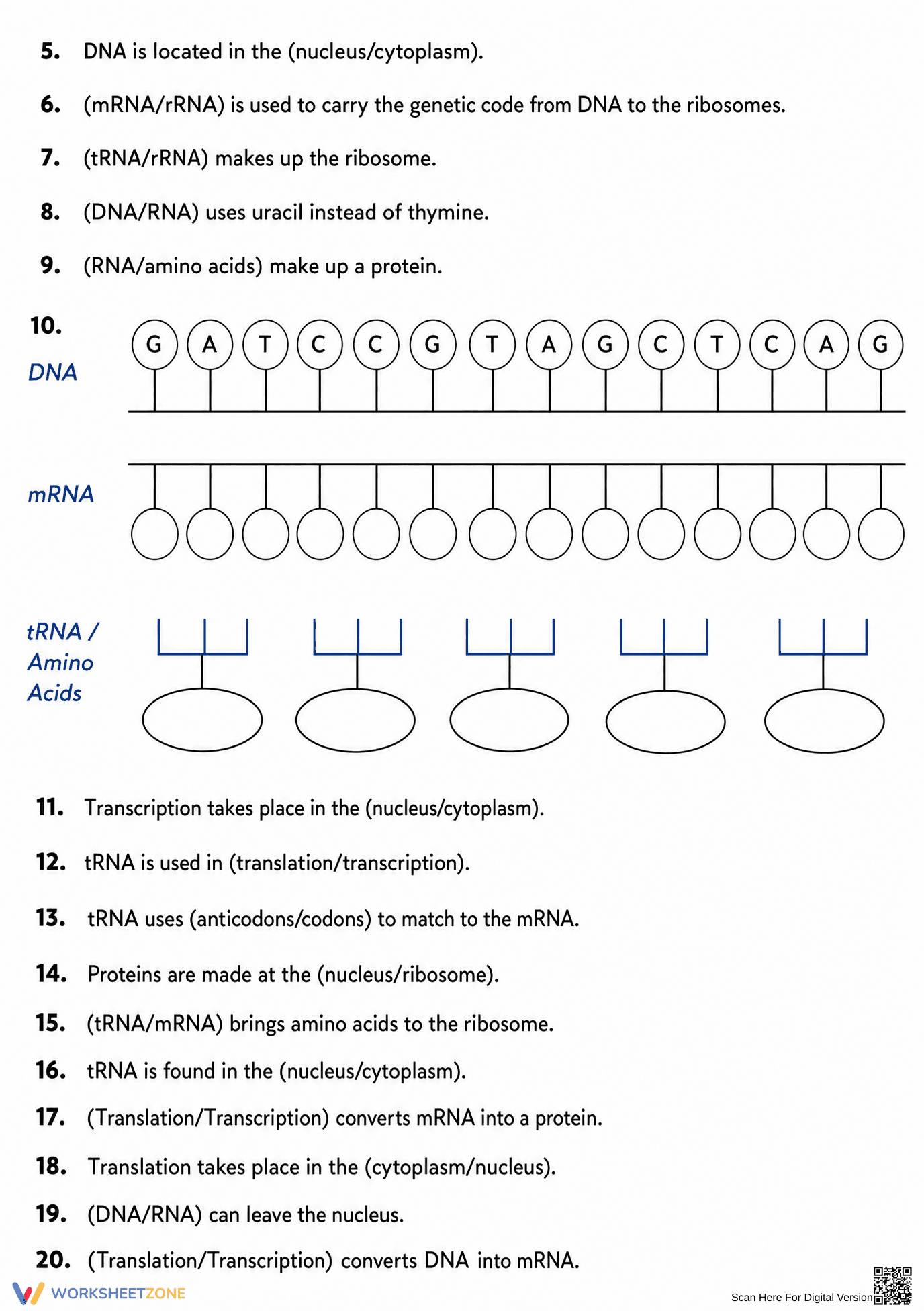
This two-page resource features a mix of visual sequence mapping and targeted conceptual questions. Students will complete three comprehensive sequence blocks where they transcribe DNA to mRNA, then translate it to tRNA and amino acids. Additionally, seventeen multiple-choice and fill-in-the-blank questions reinforce key vocabulary and cellular locations, such as the nucleus and ribosomes. A complete answer key is included for efficient grading.
- Guided practice: The first sequence block provides a clear, structured layout with visual cues for each nucleotide, helping students confidently initiate the transcription process.
- Supported practice: Conceptual questions interleave with the sequence mapping, prompting students to recall where mRNA is made and the specific roles of tRNA and rRNA.
- Independent practice: The final sequence block and concluding questions require students to synthesize their knowledge without visual scaffolds, demonstrating full mastery of the base-pairing rules.
This gradual-release approach ensures students build confidence as they move from basic base-pairing to broader conceptual applications.
This worksheet is aligned to HS-LS1-1: Construct an explanation based on evidence for how the structure of DNA determines the structure of proteins which carry out the essential functions of life through systems of specialized cells. It directly supports students in visualizing the molecular mechanics behind this standard. Both standard codes can be copied directly into lesson plans, IEP goals, or district curriculum mapping tools.
Deploy this worksheet immediately following direct instruction on the central dogma of molecular biology to solidify new concepts. It also serves as an excellent review assignment before a unit exam. As a formative assessment tip, monitor students as they complete the first sequence block; if they struggle to substitute uracil for thymine in the mRNA strand, pause for a quick whole-class reteach. Expected completion time is 25 to 35 minutes.
This resource is designed for high school biology students in grades 9 through 12, as well as introductory college biology learners. To support students who need accommodations, provide a pre-filled genetic code chart or an anchor chart detailing the base-pairing rules (A-U, C-G). This worksheet pairs perfectly with a 3D DNA modeling activity or a digital simulation of the ribosome.
Mastering the mechanics of transcription and translation is a critical step in understanding broader biological systems. Aligned with HS-LS1-1, this resource helps students explain how DNA structure determines protein structure through hands-on sequence mapping. According to ScienceDirect TpT Analysis, providing students with structured, visual models of molecular processes significantly reduces cognitive overload and improves long-term retention of complex genetic concepts. By breaking down the central dogma into discrete, manageable steps—from identifying the nucleus as the site of transcription to mapping codons at the ribosome—students can systematically build their molecular biology vocabulary. This targeted practice ensures that learners not only memorize base-pairing rules but also comprehend the functional relationships between DNA, RNA, and amino acids, laying a strong foundation for advanced genetics coursework.


