


























Views
Downloads


Properties of Water Worksheet | Essential Grade 7-12 Science
Paste this activity's link or code into your existing LMS (Google Classroom, Canvas, Teams, Schoology, Moodle, etc.).
Students can open and work on the activity right away, with no student login required.
You'll still be able to track student progress and results from your teacher account.
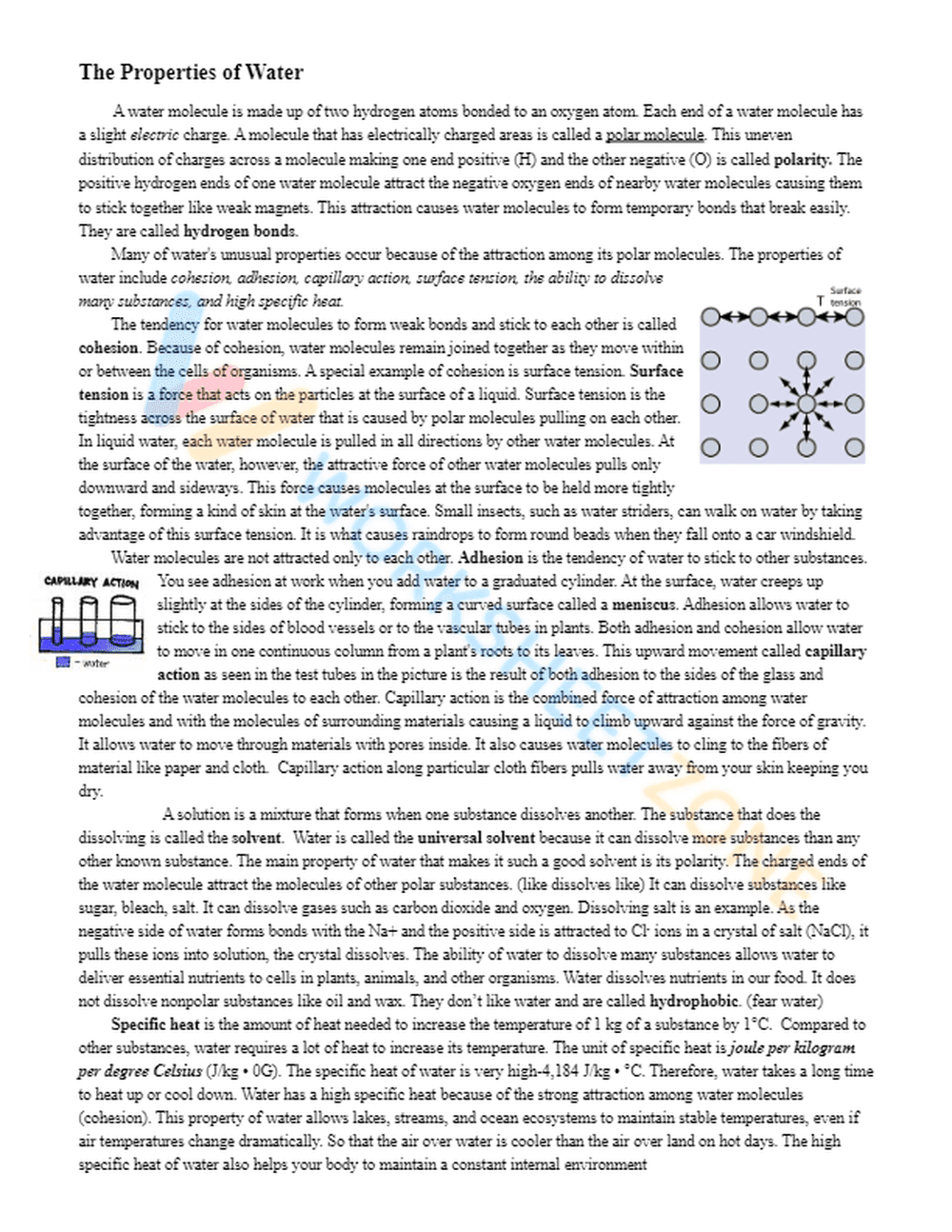
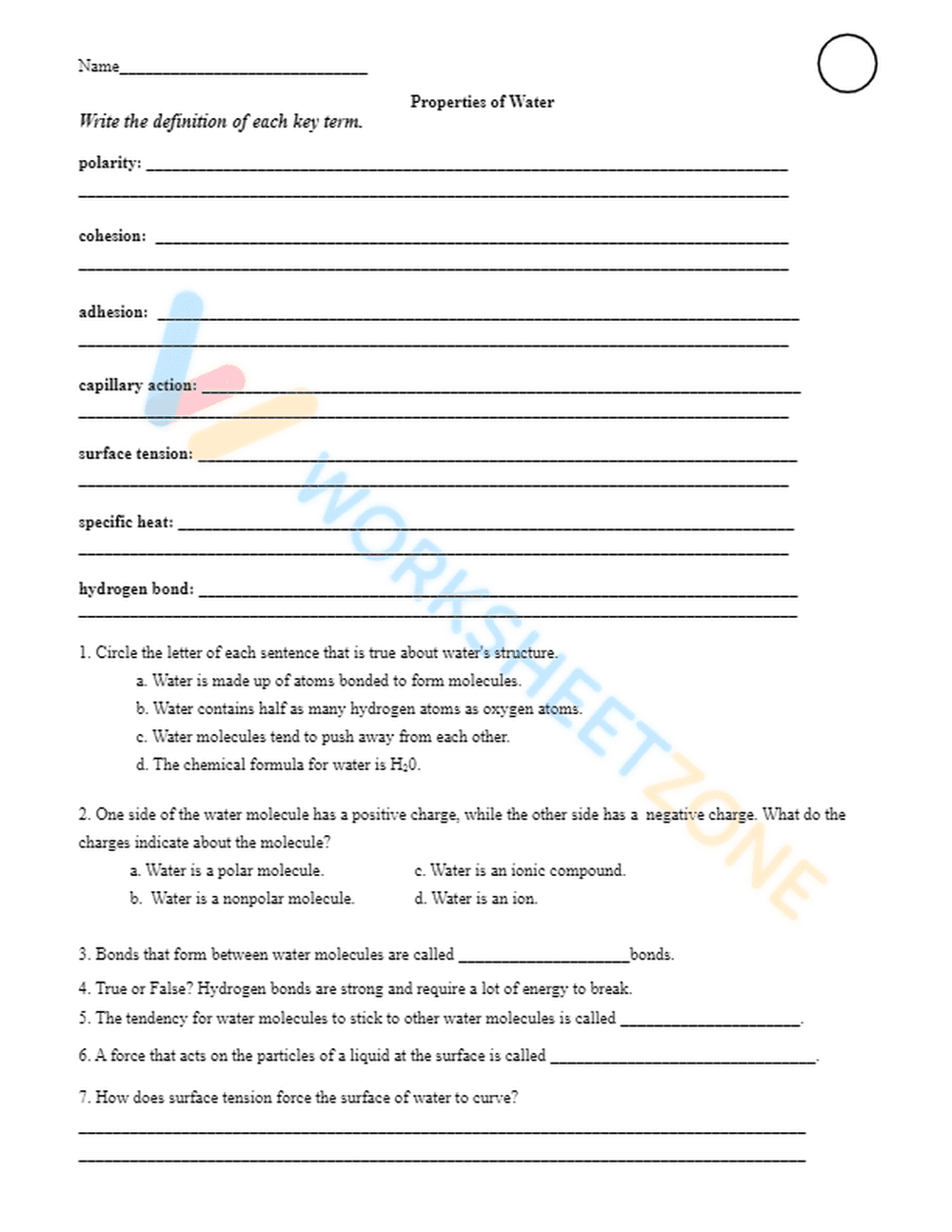
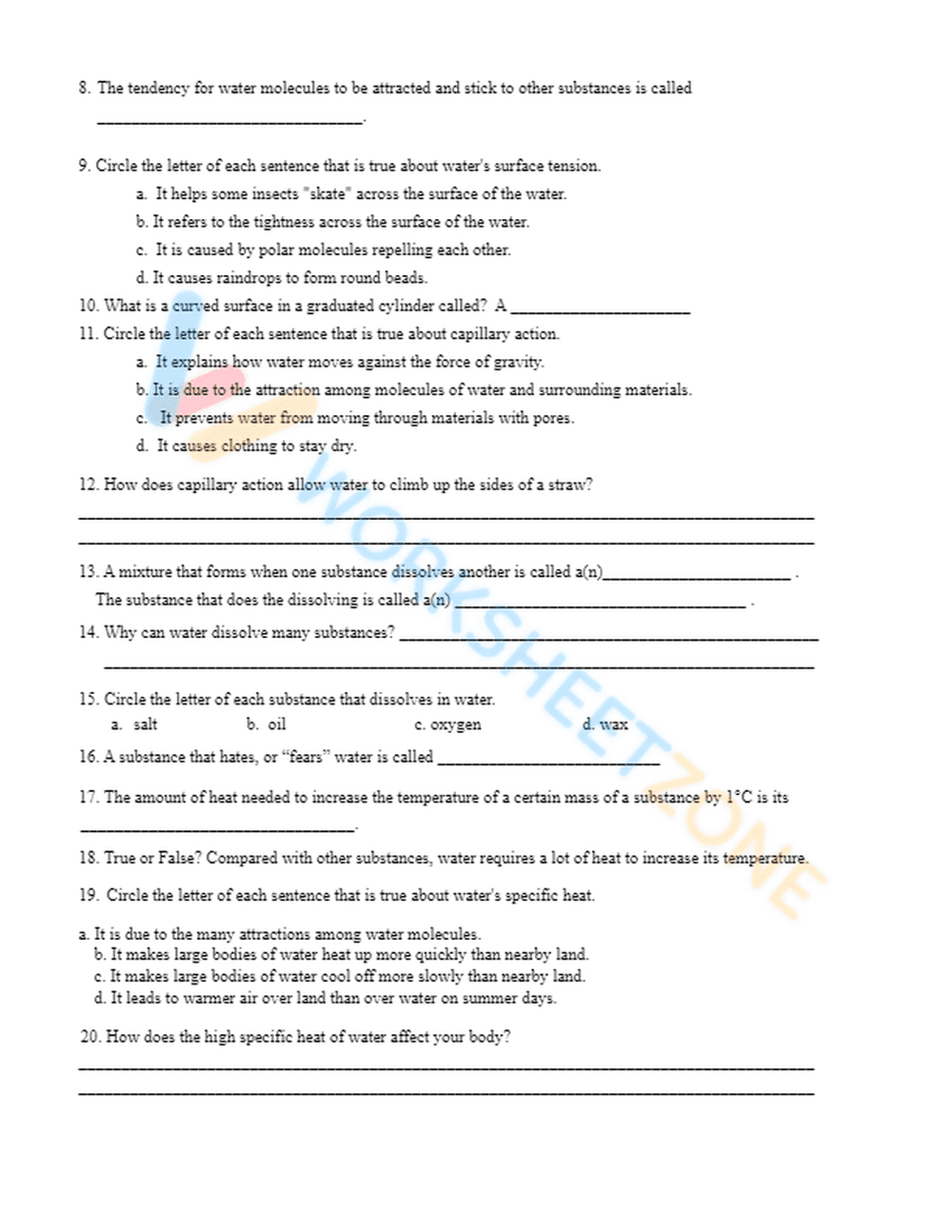
This comprehensive Properties of Water worksheet provides a detailed analysis of the unique chemical and physical characteristics that make water essential for life. Students will analyze polarity, hydrogen bonding, and thermal properties to understand how water behaves in biological and environmental systems. It bridges the gap between molecular structure and observable phenomena.
At a Glance
- Grade: 7-12 · Subject: Science
- Standard:
MS-PS1-1— Develop models to describe the atomic composition of simple molecules and structures- Skill Focus: Chemical and Physical Properties of Water
- Format: 4 pages · 34 problems · Answer key included · PDF
- Best For: Independent practice or emergency sub plans
- Time: 45–60 minutes
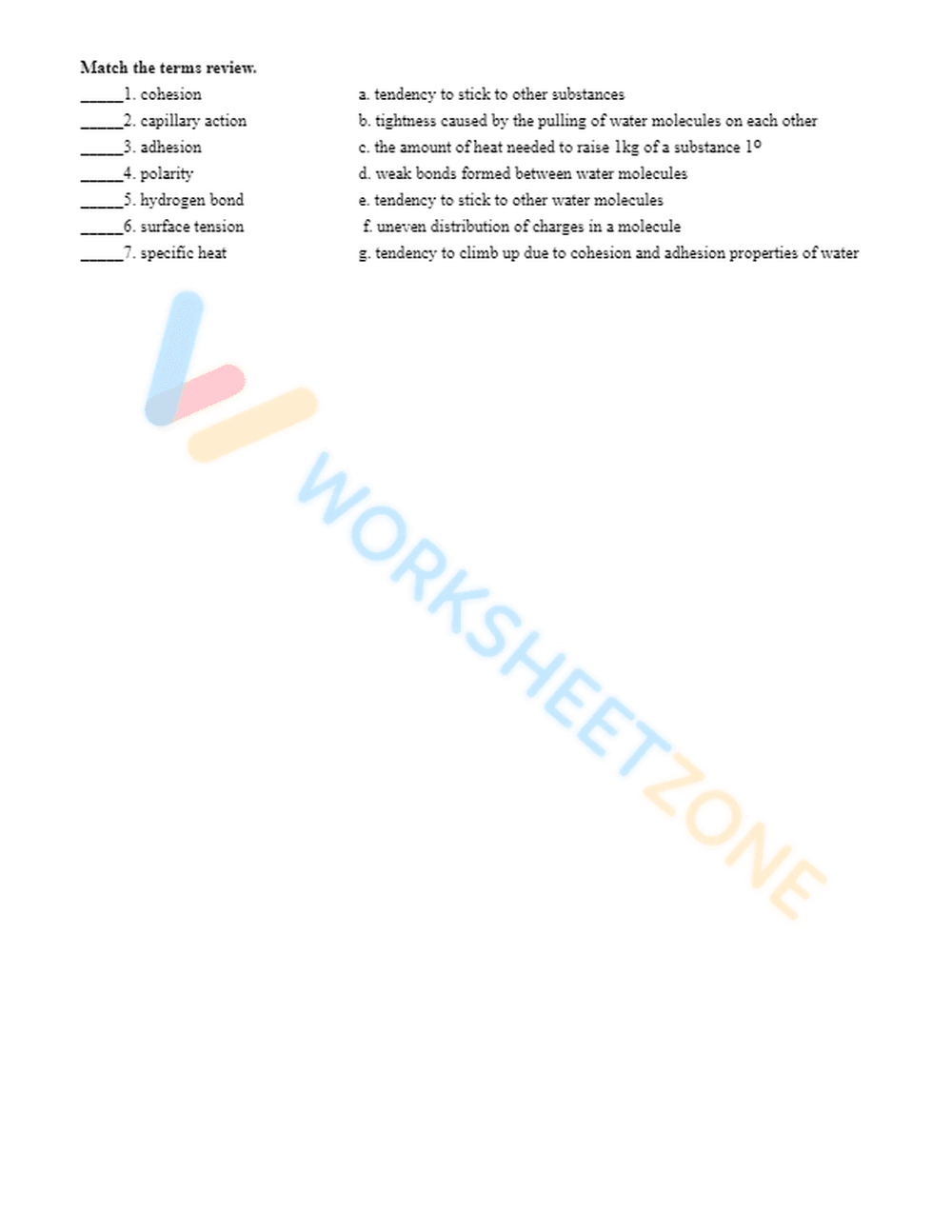
The packet contains a detailed one-page informational text followed by three pages of rigorous assessment. Students engage with 7 key term definitions, 20 mixed-format questions including multiple choice, true/false, and short answer, and a final 7-item matching review. The layout includes clear diagrams for surface tension and capillary action to support visual learners.
This resource is designed for immediate classroom implementation. First, print the 4-page PDF in less than a minute. Second, distribute to students as a self-contained reading and practice packet. Third, review answers using the included key for immediate feedback. Total teacher preparation time is under 2 minutes, making it an ideal solution for busy instructional days or emergency sub plans.
The primary focus is MS-PS1-1, requiring students to understand the structure and properties of matter. It also supports HS-PS1-3 by exploring how intermolecular forces like hydrogen bonding influence bulk properties such as specific heat and surface tension. Both standard codes can be copied directly into lesson plans, IEP goals, or district curriculum mapping tools.
Use this as a primary instructional tool during a unit on Earth science or biology. Assign the reading and definitions first to build a conceptual foundation before moving to the application questions. It serves as an excellent formative assessment; observe student responses to the specific heat questions to gauge their understanding of thermal energy transfer. Expected completion is 45 to 60 minutes.
This worksheet is tailored for middle and high school students in General Science, Biology, or Chemistry. It provides enough scaffolding for Grade 7 learners while maintaining the rigor required for Grade 12 review. Pair this with a live demonstration of a meniscus or water striders to provide a concrete connection to the text-based evidence.
According to the RAND AIRS 2024 report, high-quality informational texts paired with structured retrieval practice significantly improve long-term retention of complex scientific concepts. This resource aligns with those findings by integrating a technical reading passage with 34 targeted tasks that require students to define, identify, and explain the properties of water. By focusing on the MS-PS1-1 standard, the worksheet ensures that students move beyond rote memorization toward a functional understanding of molecular polarity and hydrogen bonding. Research from Fisher & Frey (2014) emphasizes that the gradual release of responsibility—moving from text-based definitions to complex application questions—is critical for secondary literacy. This 4-page set provides that exact progression, ensuring students can articulate why water is the universal solvent and how its high specific heat regulates global temperatures.


