































Printable Screenplay Structure Word Search | Grades 6–7 ELA

Paste this activity's link or code into your existing LMS (Google Classroom, Canvas, Teams, Schoology, Moodle, etc.).
Students can open and work on the activity right away, with no student login required.
You'll still be able to track student progress and results from your teacher account.
Students will reinforce their understanding of screenplay structure by locating sixteen key terms in a themed word search. The activity sharpens vocabulary, reinforces narrative concepts, and builds quick recall, making the terminology of film storytelling instantly recognizable while also encouraging focused attention.
At a Glance
- Grade: Grades 6–7 · Subject: English Language Arts (ELA)
- Standard:
— vocabulary enrichment through essential screenplay terms- Skill Focus: Core screenplay structure terminology for young writers students
- Format: 3 printable classroom pages · 16 hidden words · Answer key included for quick and easy grading · PDF format
- Best For: Engaging vocabulary practice within film‑studies units
- Time: Approximately 10–15 minutes of focused activity
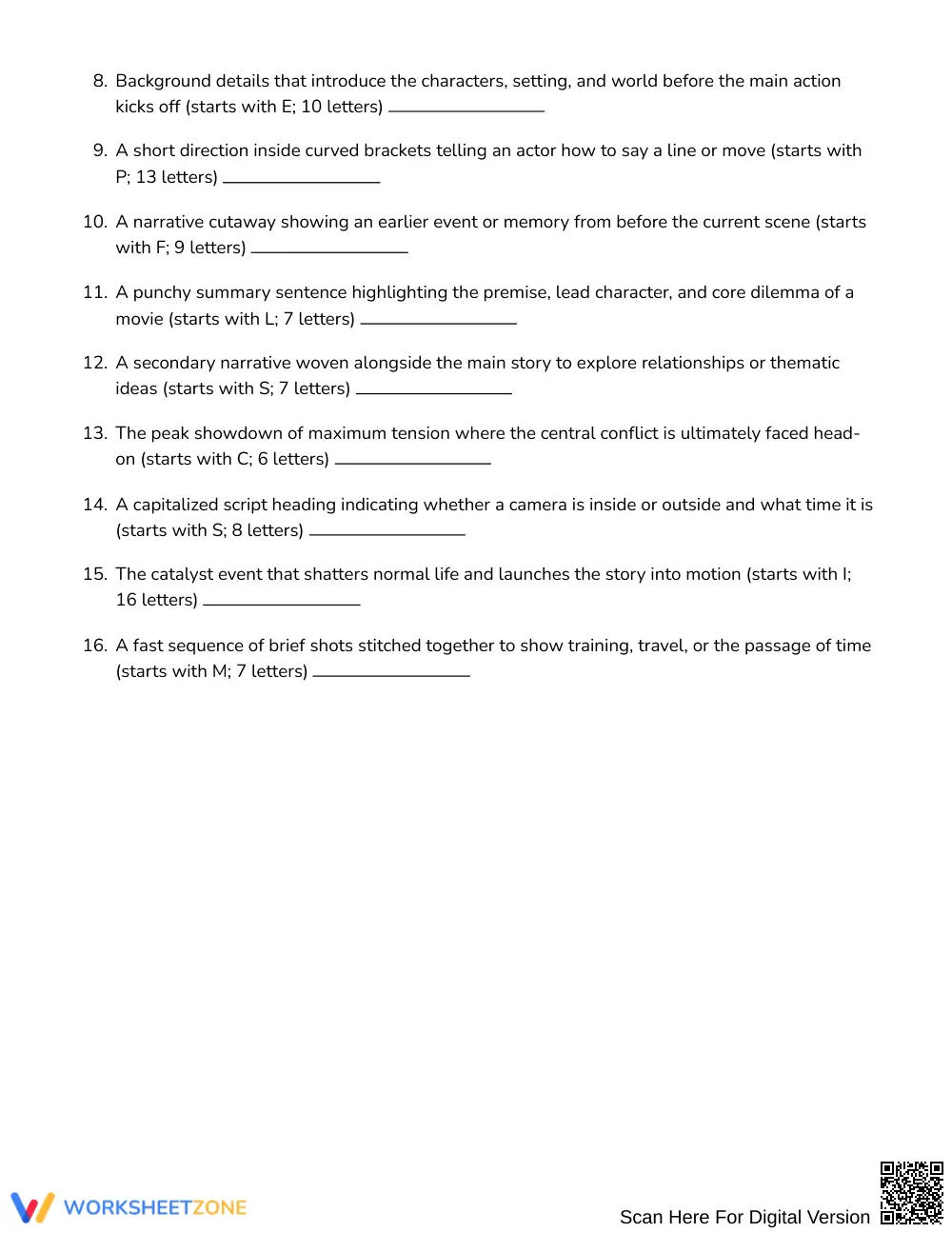
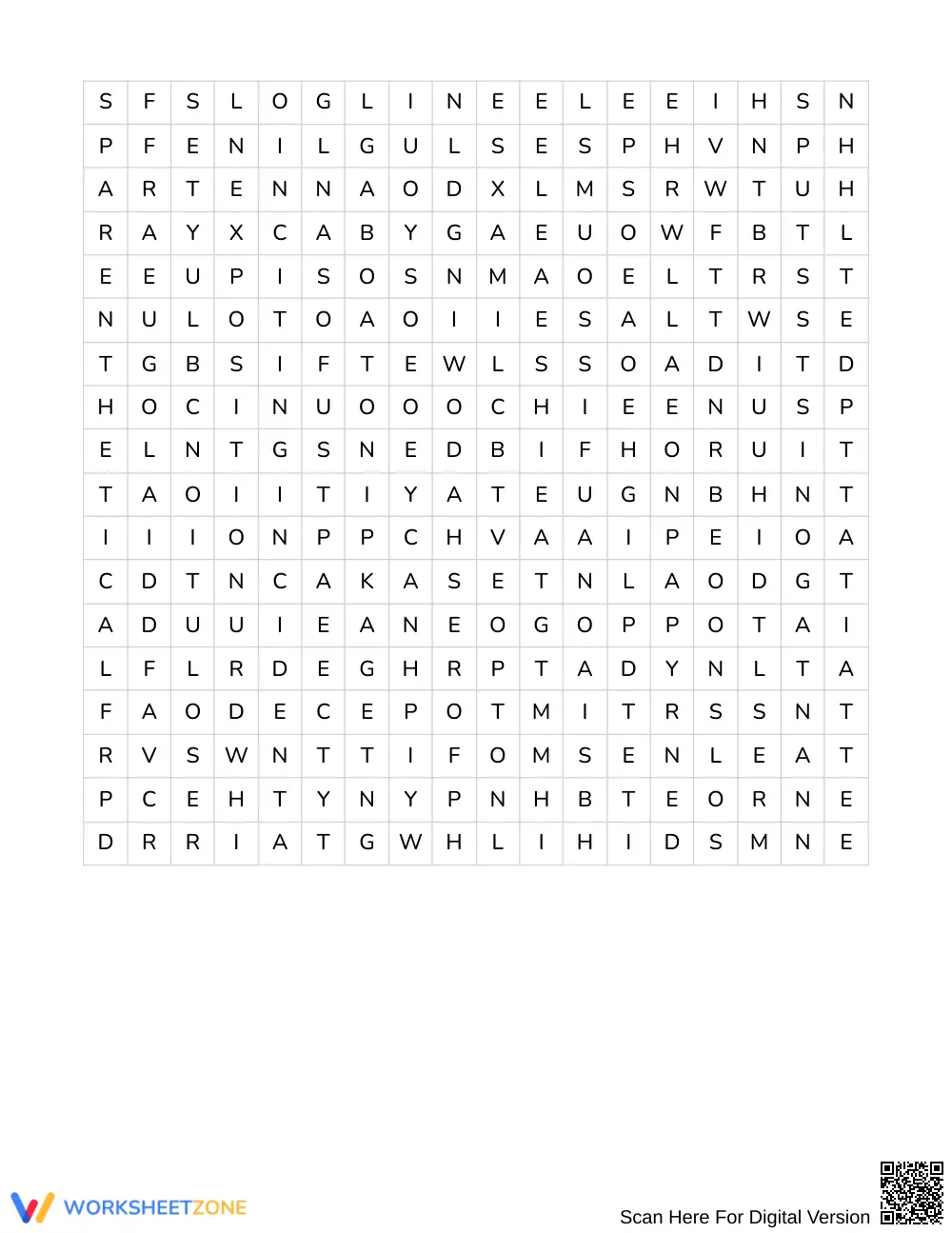
The packet contains a three‑page printable word search grid, a list of sixteen screenplay structure terms, and detailed clues for each. An answer‑key page shows the completed grid for rapid scoring. Directions note that words may run horizontally, vertically, or diagonally in all eight compass directions.
- Guided practice: Students locate the first five terms (EXPOSITION, PROTAGONIST, ANTAGONIST, INCITING INCIDENT, TURNING POINT) while the teacher demonstrates search strategies.
- Supported practice: The next six terms (MIDPOINT, CLIMAX, RESOLUTION, SLUGLINE, SUBPLOT, LOGLINE) are tackled independently with brief teacher check‑ins.
- Independent practice: Learners finish with the final five terms (MONTAGE, FORESHADOWING, FLASHBACK, DIALOGUE, PARENTHETICAL) using only the clues.
These steps follow the classic I Do, We Do, You Do release model, ensuring confidence before full independence.
This activity serves as vocabulary enrichment and is not tied to any specific state or district standard. It simply reinforces key screenplay terminology for emerging readers.
Use the word search as a warm‑up before a lesson on film narrative, allowing 10 minutes for students to activate prior knowledge. Alternatively, employ it as a closing activity after a screenplay‑writing workshop to reinforce terminology while the teacher circulates for quick feedback. Both options fit within a 10–15‑minute slot.
Designed for Grades 6–7 ELA learners, this puzzle supports visual and linguistic learners alike. No additional scaffolding is required, but teachers may pair it with a short film‑clip analysis or an anchor chart of narrative arcs for deeper connection.
Research shows that word‑search puzzles boost vocabulary retention and engage students in active recall (Fisher & Frey 2014). By embedding screenplay structure terms—such as “climax,” “resolution,” and “foreshadowing”—the activity aligns with evidence‑based practices for reinforcing genre‑specific language. The concise format supports the 10‑minute instructional windows common in middle‑school ELA blocks, while the provided answer key enables rapid assessment. Incorporating this enrichment task can complement larger units on narrative craft, offering a low‑stakes yet focused opportunity for learners to internalize key plot components. As Fisher & Frey (2014) emphasize, brief, purposeful activities that connect directly to content accelerate mastery and promote confidence in reading and writing about film narratives. Teachers report that students complete the search with high accuracy, and the visual nature of the grid supports diverse learning styles, including visual and kinesthetic learners.


