































Printable Forecast Words Word Search | Grades 6–7 Science

Paste this activity's link or code into your existing LMS (Google Classroom, Canvas, Teams, Schoology, Moodle, etc.).
Students can open and work on the activity right away, with no student login required.
You'll still be able to track student progress and results from your teacher account.
This Grades 6–7 Science word search reinforces key forecast vocabulary and the concept of uncertainty, letting learners locate sixteen weather‑related terms while connecting each to its definition. Completing the puzzle builds terminology fluency and prepares students for deeper meteorology discussions.
At a Glance
- Grade: Grades 6–7 · Subject: Science
- Standard:
None— Not standards-assessed — vocabulary enrichment activity focusing on weather forecasting terms- Skill Focus: forecast words and uncertainty, building precise meteorological language
- Format: 3 pages of printable puzzle · 16 hidden words to find · Answer key included for quick checking · PDF ready for instant use
- Best For: Vocabulary enrichment activity, review session, or independent practice
- Time: 5–10 minutes for completion, plus brief setup
What's Inside
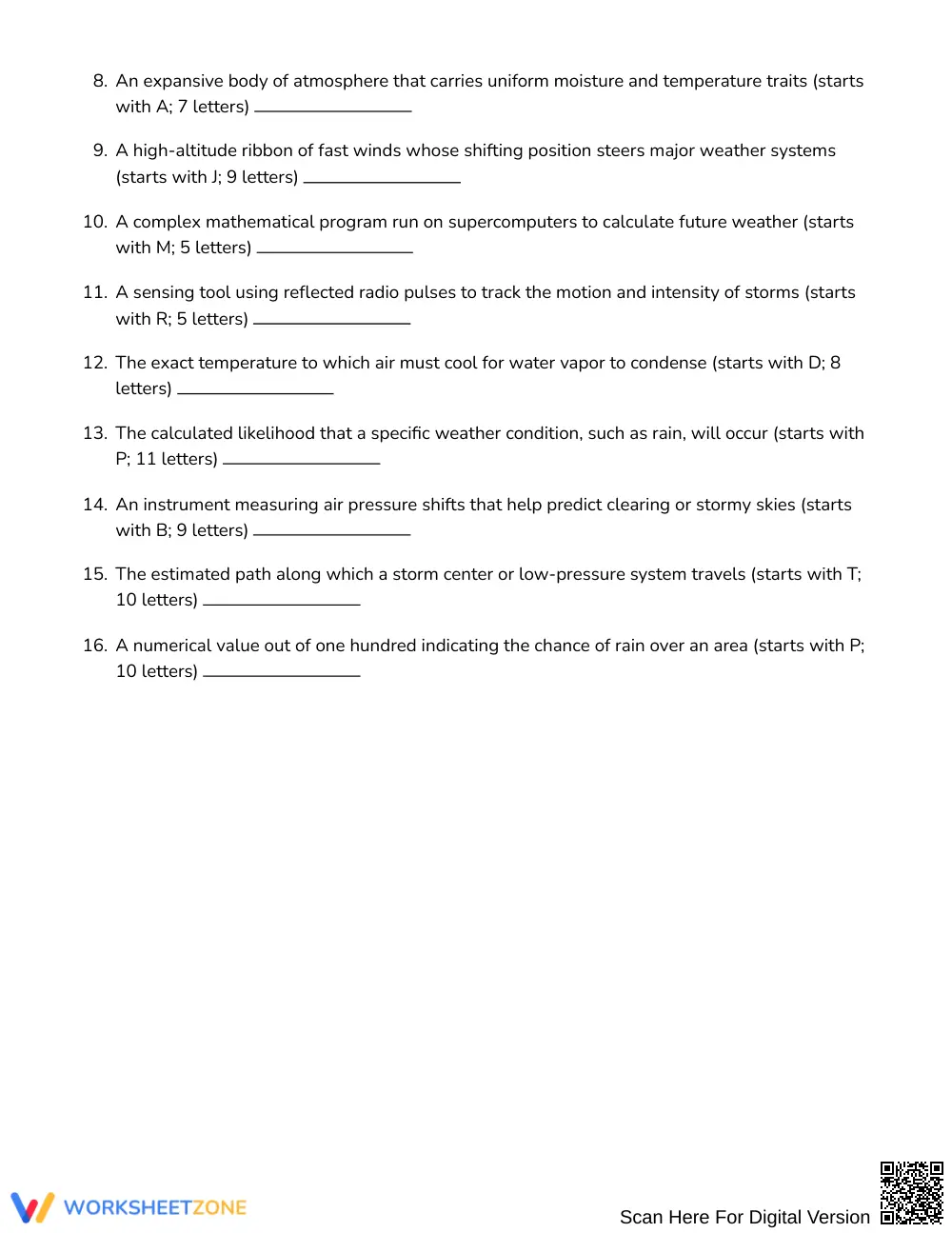
Inside the three‑page PDF you’ll find a single 18 × 18 grid filled with letters, sixteen weather‑related terms hidden in all eight compass directions, and a list of clear clues that define each term. An answer‑key page provides the completed grid for quick verification.
Zero-Prep Workflow
Step 1 – Print: Open the PDF and print the three pages; the process takes under a minute. Step 2 – Distribute: Hand the puzzle and clue sheet to each learner, allowing a brief two‑minute orientation. Step 3 – Review: After completion, use the answer key to check results in another minute, giving immediate feedback. Total teacher prep time stays under two minutes, making the activity perfect for a sub‑plan or quick review.
Standards Alignment
This word search is designed solely for vocabulary enrichment and does not correspond to any state or national standard. It offers a focused, engaging way to build meteorological terminology without formal assessment alignment.
How to Use It
Use 1 – Before a unit on atmospheric processes, assign the puzzle as a warm‑up to activate prior knowledge of key forecast terms. Observe which clues spark discussion and note any misconceptions for a quick formative check. Use 2 – After a lesson on weather models, let learners complete the search independently to reinforce terminology; collect completed grids to gauge retention, spending about five minutes reviewing common errors.
Who It's For
The activity targets Grades 6–7 Science learners, offering an accessible challenge that supports both emerging and confident readers. No differentiation levels are required, but teachers can pair the search with a weather‑forecast anchor chart or a short video on atmospheric uncertainty for richer context.
Research shows that targeted vocabulary activities boost content comprehension, especially when students connect terms to authentic contexts (Fisher & Frey, 2014). This Weather Word Search engages Grades 6–7 learners in identifying sixteen forecast‑related words, reinforcing the skill of interpreting uncertainty language in meteorology. By pairing concise clues with a hands‑on puzzle, the activity promotes active recall and deepens conceptual understanding of weather prediction terminology. Teachers can quickly integrate the search into any lesson, providing immediate feedback through the answer key. The printable format ensures seamless implementation, while the focus on forecast words and uncertainty aligns with best practices for building scientific literacy. Incorporating this enrichment tool supports differentiated instruction and prepares students for more complex analyses of atmospheric data. Studies indicate that word‑search puzzles also improve visual scanning skills and retention of technical terms.


