































Printable Conservation Word Search | Grades 6–7 Science

Paste this activity's link or code into your existing LMS (Google Classroom, Canvas, Teams, Schoology, Moodle, etc.).
Students can open and work on the activity right away, with no student login required.
You'll still be able to track student progress and results from your teacher account.
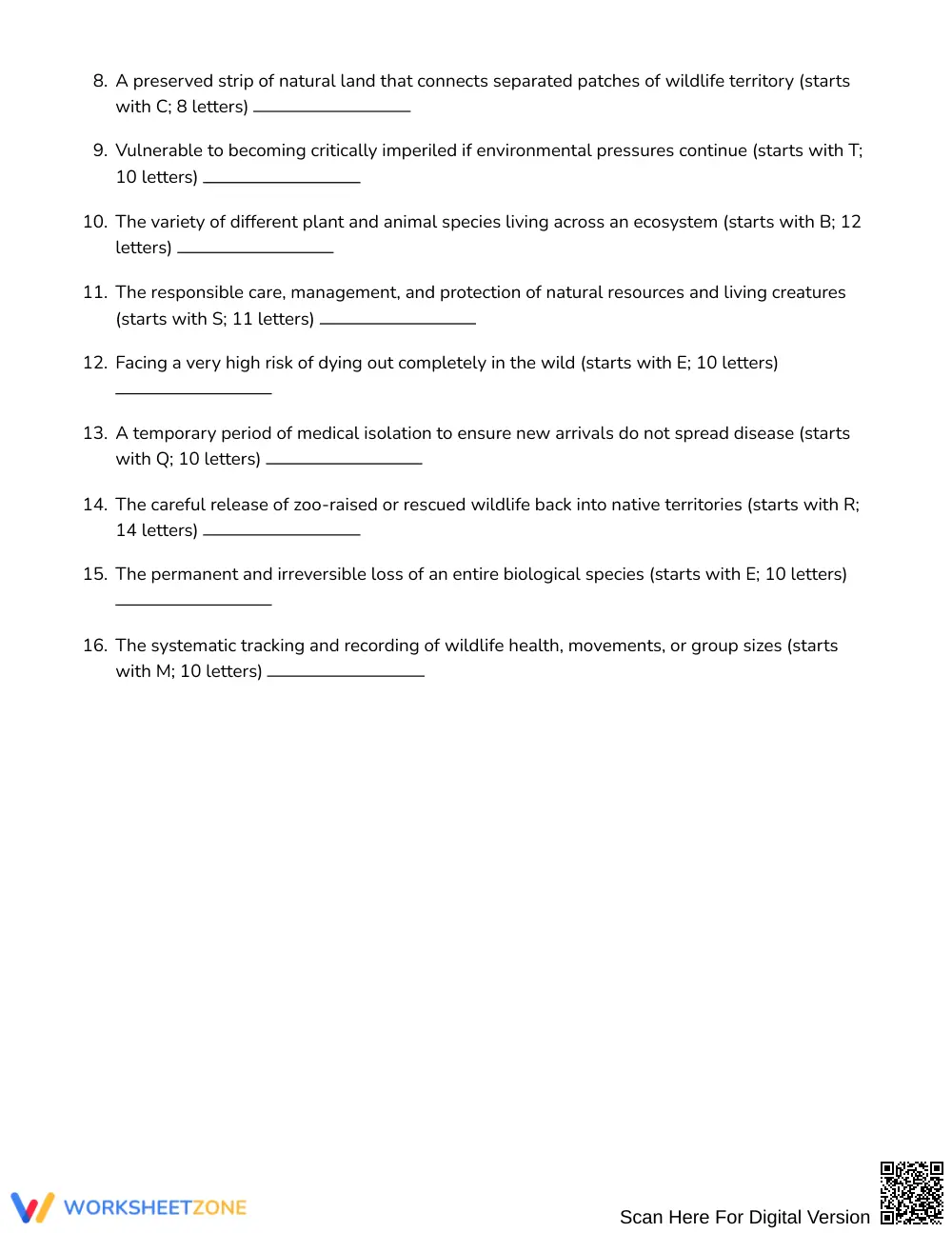
This Grades 6–7 conservation and species protection word search strengthens key life science vocabulary through rigorous context-based clue solving. Students decode 16 academic definitions to identify essential wildlife management concepts before locating each term in an intricate grid, reinforcing accurate spelling, scientific terminology, and ecological understanding.
At a Glance
- Grade: Grades 6–7 middle school · Subject: Life and Environmental Science
- Standard: Not standards-assessed — targeted vocabulary enrichment and scientific literacy building
- Skill Focus: Conservation ecology, habitat stewardship, and species protection terminology
- Format: 3 printable student pages · 16 hidden words · Complete answer key included · PDF format
- Best For: Independent vocabulary review, sub plans, and fast finisher reinforcement
- Time: 20–30 minutes of focused student work
What's Inside
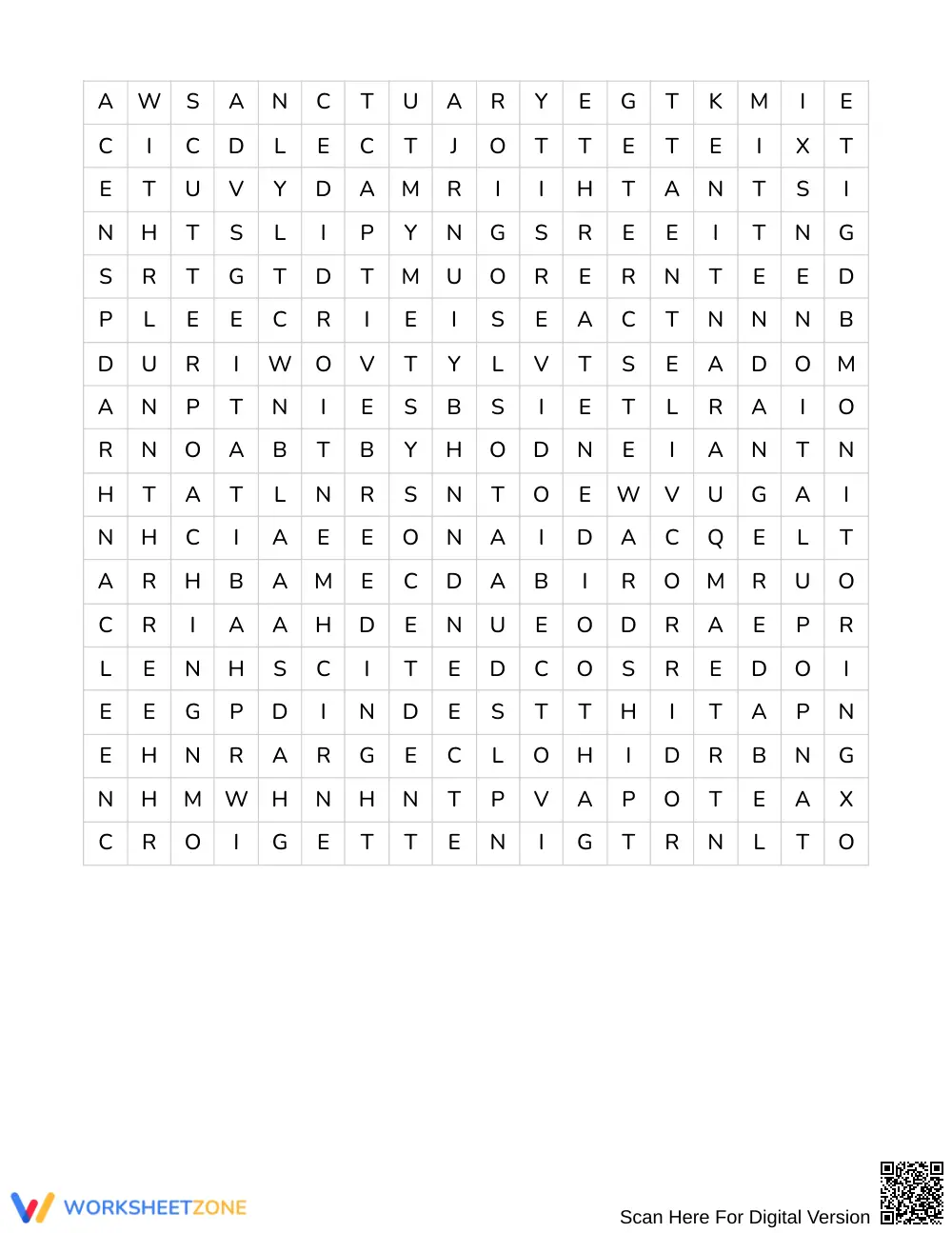
This 3-page printable science activity features 16 clue-based hidden words focused on biodiversity and ecological stewardship. Unlike traditional puzzles with exposed target terms, this challenge omits the word bank. Students must actively read and solve detailed conceptual clues to deduce target vocabulary before searching the grid. A full-page reference answer key is included for immediate feedback and easy self-checking.
Puzzle Mechanics
The activity centers on a dense 18 x 18 letter grid designed to engage middle school learners. The 16 target terms run in all eight possible directions: North, Northeast, East, Southeast, South, Southwest, West, and Northwest. Because there is no word bank provided, students must use the 16 content-rich definitions to generate each term independently, testing both reading comprehension and scientific recall.
Standards Alignment
This resource serves as targeted vocabulary enrichment rather than formal standards-based practice, and it is not aligned to a specific state or national standard. It supports core middle school life science units by cementing foundational terminology related to ecosystem preservation, wildlife management, and human environmental impacts.
How to Use It
Deploy this activity during middle school ecology units as an introductory exploration or as an engaging post-lesson review. In a direct instruction sequence, assign the puzzle immediately after introducing conservation biology concepts so students can synthesize new definitions in a low-stakes context. As a formative assessment routine, circulate while students solve clues to identify which terms—such as captive breeding, corridors, or quarantine—require further conceptual clarification. Most middle school students complete the search in 20 to 30 minutes.
Who It's For
This word search is tailored for Grades 6–7 science students studying ecosystems, human impact, and biodiversity preservation. For students needing support, pair the activity with a classroom science glossary or anchor chart. Pair this resource with a short informational reading passage on endangered species to connect vocabulary directly to real-world conservation casework.
Middle school science achievement hinges on active domain-specific vocabulary acquisition, particularly within complex ecological topics such as conservation and species protection. According to Fisher & Frey (2014), intentional vocabulary instruction that requires students to process definitions and retrieve technical language strengthens long-term conceptual retention across content areas. This clue-driven word search emphasizes active cognitive retrieval by requiring students in Grades 6–7 to solve 16 rigorous scientific definitions without relying on an overt word bank. Locating multi-directional terms across an 18 x 18 grid reinforces orthographic mapping, letter-sequence recognition, and specialized spelling conventions essential for informational literacy. When students connect definitions of captive breeding, biodiversity, and ecosystem stewardship to specific terminology, they build the lexical precision required for scientific discourse. This enrichment activity delivers meaningful, low-prep vocabulary reinforcement that supports both general classroom instruction and independent student study.


