































Printable Character Roles Word Search | Grades 4–5 ELA

Paste this activity's link or code into your existing LMS (Google Classroom, Canvas, Teams, Schoology, Moodle, etc.).
Students can open and work on the activity right away, with no student login required.
You'll still be able to track student progress and results from your teacher account.
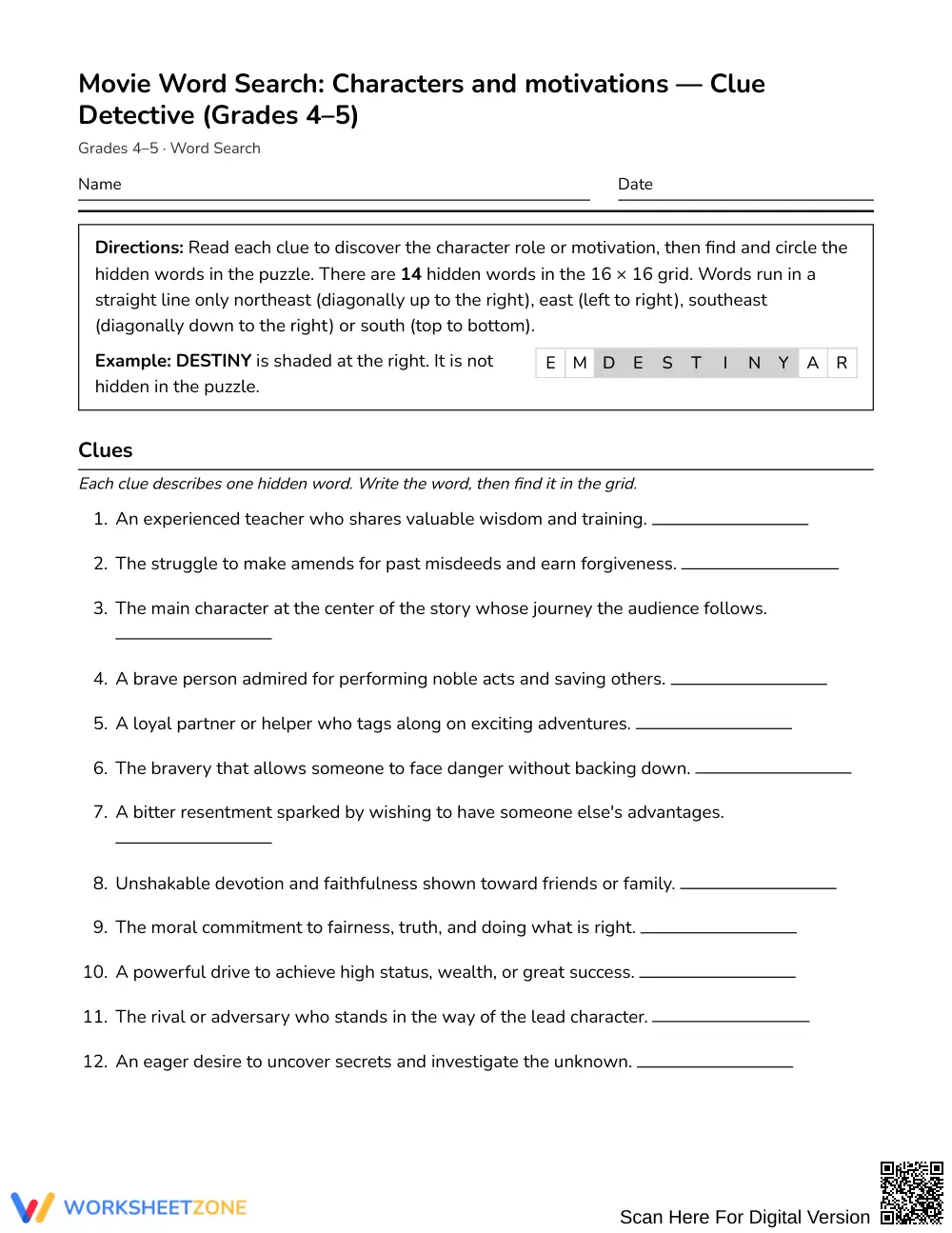
This movie-themed word search strengthens literary vocabulary by introducing students in Grades 4–5 to foundational narrative concepts. Learners identify character roles and character motivations using context clues, connecting terms like protagonist, mentor, and redemption to concrete storytelling definitions while building reading fluency and word-recognition speed.
At a Glance
- Grade: Grades 4–5 · Subject: English Language Arts (ELA)
- Standard: Not standards-assessed — vocabulary enrichment
- Skill Focus: Characters and motivations
- Format: 3 pages · 14 words · Answer key included · PDF
- Best For: Literary vocabulary practice and fast finishers
- Time: 15–25 minutes
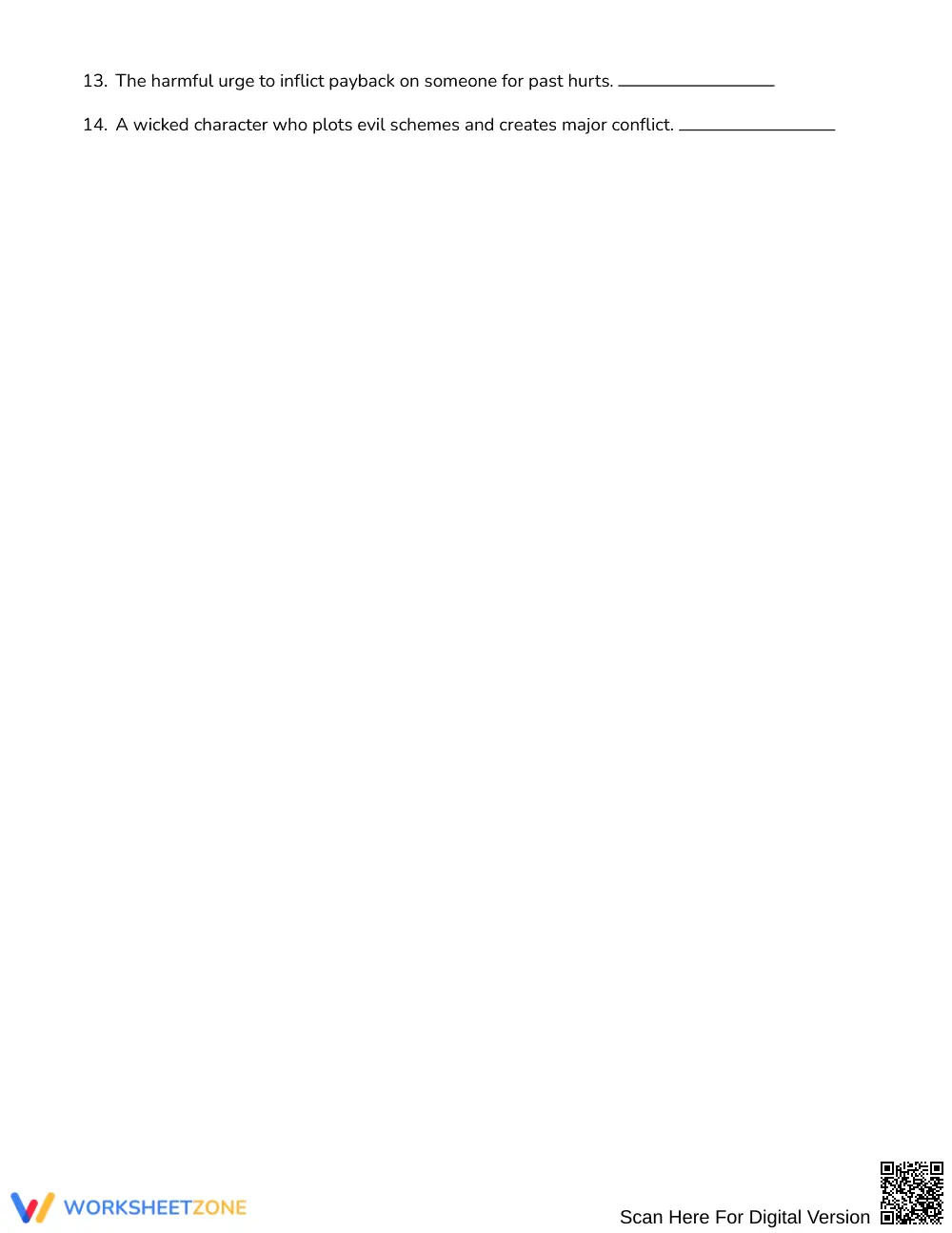
The activity packet includes 3 printable pages featuring a complete 14-word puzzle along with a 3-page full-size answer key. Instead of a basic list, each hidden term is paired with an informative definition clue. Students read definitions for archetypes such as villain and sidekick, alongside motives such as ambition, loyalty, and curiosity, before locating them in a shuffled word bank.
Puzzle Mechanics and Structure
The word search is arranged on a dense 16 x 16 letter grid designed to engage intermediate elementary readers without causing visual fatigue. Target terms are hidden across four distinct directions: northeast (NE), east (E), southeast (SE), and south (S). Students read the conceptual clue first to determine the targeted term, locate the spelling within the word bank, and track the sequence across the grid. This multi-directional layout encourages careful spatial scanning and reinforces correct letter sequences for complex literary vocabulary.
Standards Alignment
This activity provides targeted vocabulary enrichment and is not aligned to an individual state or national standard code. It supplements core English Language Arts curriculum by familiarizing students with essential analytical terms that describe story structure, character dynamics, and character motivations.
How to Use It
Deploy this word search during an introductory unit on narrative elements or following a class novel study or film analysis. As a mid-unit vocabulary exercise, students read the clues aloud and brainstorm movie figures matching each description before searching the grid. During independent completion, circulate to observe whether students use the semantic clues to identify terms or simply scan letter sequences. Typical completion requires 15 to 25 minutes.
Who It's For
This resource is tailored for upper elementary students in Grades 4–5 exploring narrative reading comprehension and creative writing. It provides accessible reinforcement for English language learners acquiring specialized academic vocabulary and offers an engaging challenge for fast finishers. Pair this puzzle with a character analysis graphic organizer or a read-aloud mentor text.
Vocabulary enrichment activities focused on narrative roles and motivations establish the schema students need to interpret complex literary texts. According to Fisher & Frey (2014), intentional exposure to domain-specific terminology across varied interactive formats accelerates word consciousness and aids reading comprehension. By connecting formal literary terms like antagonist, mentor, and loyalty with accessible narrative definitions, this 14-word activity bridges conversational language and analytical discourse. While designed as open enrichment rather than a formal standards-based assessment, engaging with multi-directional letter arrays supports orthographic mapping and visual word recognition for intermediate learners in Grades 4–5. Teachers can incorporate this resource within comprehensive literacy blocks to reinforce character analysis concepts without adding grading overhead, supporting confident participation during subsequent whole-group text discussions and literary writing tasks.


