


























Views
Downloads

Printable Preparing for Weather Hazards Worksheet | Grade 3
Paste this activity's link or code into your existing LMS (Google Classroom, Canvas, Teams, Schoology, Moodle, etc.).
Students can open and work on the activity right away, with no student login required.
You'll still be able to track student progress and results from your teacher account.
This Grade 3 science worksheet empowers students to identify and evaluate various human-engineered solutions for severe weather events. By connecting specific hazards like flooding and lightning to practical preparations, learners develop a foundational understanding of how technology and design mitigate natural risks. Students demonstrate mastery through critical matching and creative local application.
At a Glance
- Grade: 3 · Subject: Science
- Standard:
3-ESS3-1— Evaluate design solutions that reduce the impact of weather-related hazards effectively- Skill Focus: Weather Hazard Mitigation
- Format: 2 pages · 6 tasks · Answer key included · PDF
- Best For: Independent practice or formative assessment
- Time: 15–25 minutes
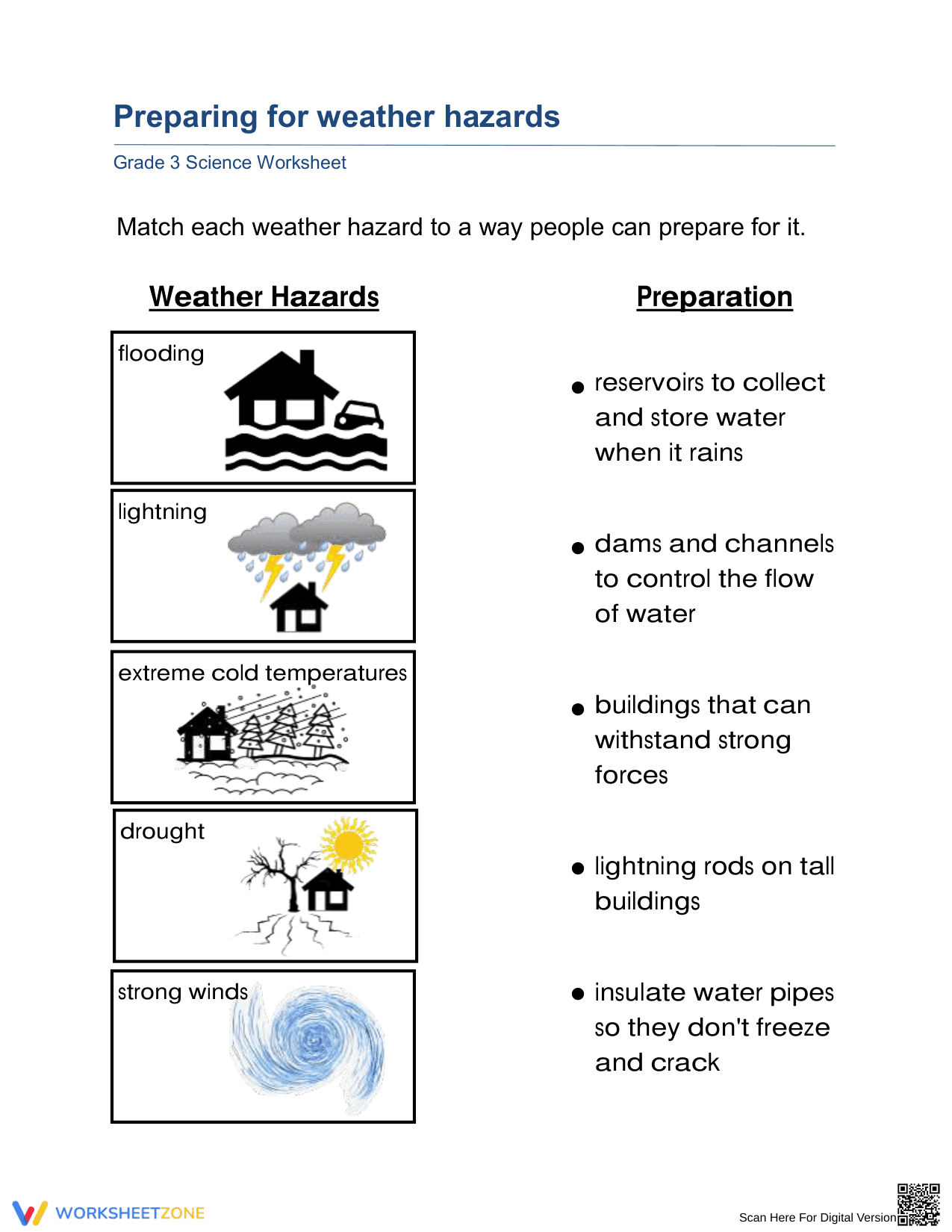
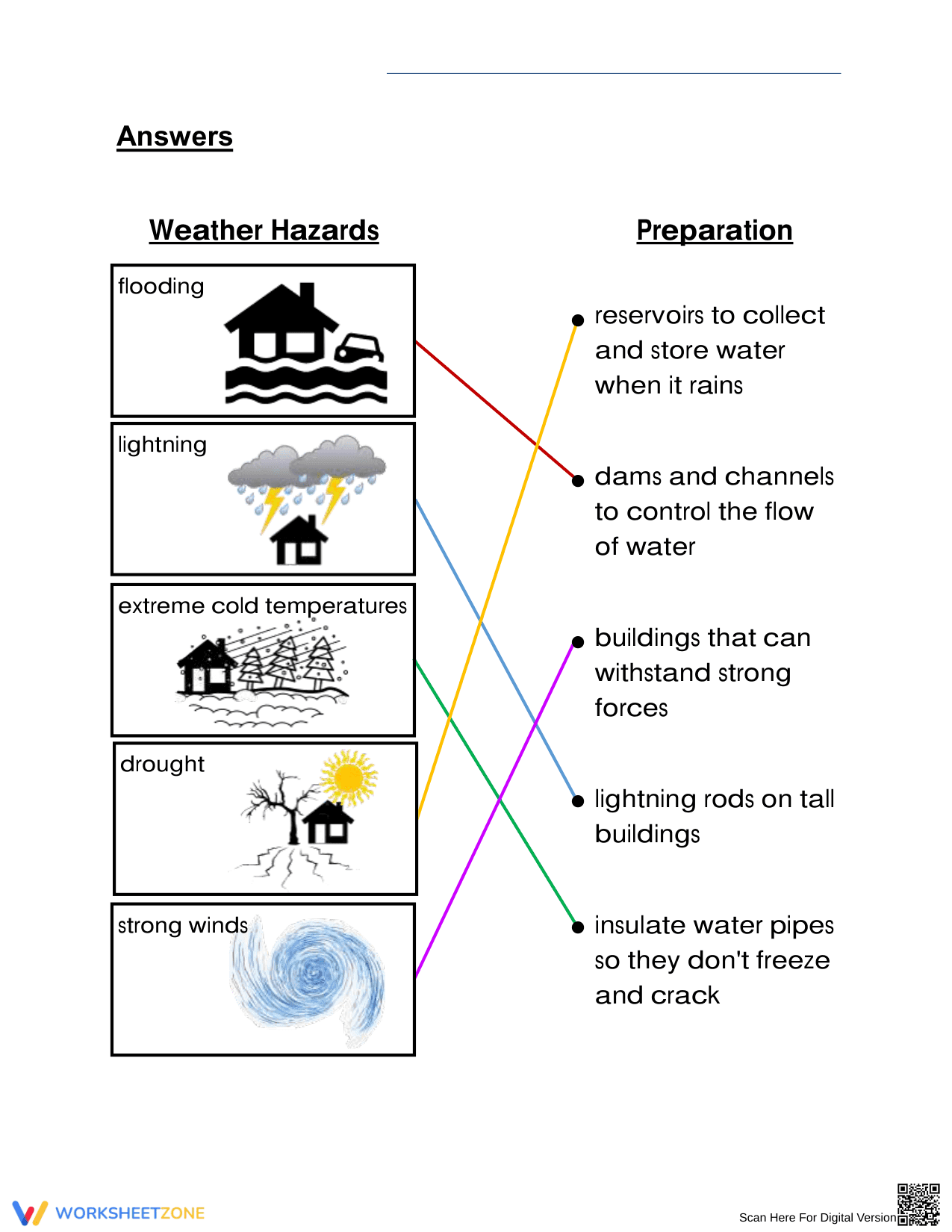
This two-page PDF includes a structured matching activity and an open-ended extension task. The first page features five distinct weather hazards—flooding, lightning, extreme cold, drought, and strong winds—paired with visual icons. Students must match these to technical solutions like lightning rods and reservoirs. The second page provides space for students to illustrate and describe local weather preparation strategies.
Zero-Prep Workflow
Implementing this resource requires zero teacher preparation, making it an ideal choice for busy mornings or unexpected sub plans. First, download the PDF and print copies for your class; no special formatting or colored ink is required. Second, hand out the two-page sets to students. Finally, use the included answer key to quickly verify student matching accuracy.
Standards Alignment
This resource is directly aligned with `3-ESS3-1`, which requires students to make claims about the merit of design solutions that reduce the impacts of weather-related hazards. It encourages students to think like engineers by analyzing how specific structures, like dams or reinforced buildings, protect communities from natural disasters. Both standard codes can be copied directly into lesson plans, IEP goals, or district curriculum mapping tools.
How to Use It
Use this worksheet during the "Elaborate" phase of a 5E science lesson to apply newly learned concepts about severe weather. It serves as an excellent formative assessment tool; observe whether students can distinguish between water-management solutions and temperature-management solutions. Expect students to complete the matching in 10 minutes, with an additional 15 minutes for the local preparation drawing and writing activity.
Who It's For
This activity is designed for third-grade classrooms but is highly effective for fourth-grade review or second-grade enrichment. The visual icons provide essential scaffolding for English Language Learners and students with IEPs. For a comprehensive lesson, pair this worksheet with a weather-themed anchor chart or a short informational passage about meteorology and community safety.
The Grade 3 "Preparing for Weather Hazards" worksheet provides a structured approach to the 3-ESS3-1 standard, focusing on the critical intersection of earth science and engineering design. Research from Fisher & Frey (2014) emphasizes the importance of utilizing visual scaffolds and matching exercises to build domain-specific vocabulary and conceptual frameworks in elementary science. By requiring students to connect abstract hazards to concrete, engineered solutions like lightning rods and reservoirs, this resource supports the development of higher-order thinking skills. The extension task further reinforces learning by bridging classroom concepts with real-world local contexts, a practice proven to increase student engagement and retention. This 2-page PDF serves as a robust tool for assessing student comprehension of hazard mitigation strategies. Educators can rely on this material to provide consistent, evidence-based practice that meets the rigorous demands of modern science frameworks while requiring minimal instructional overhead.


