


























Views
Downloads

Printable Prefixes Worksheet | Grade 6 Essential ELA
Paste this activity's link or code into your existing LMS (Google Classroom, Canvas, Teams, Schoology, Moodle, etc.).
Students can open and work on the activity right away, with no student login required.
You'll still be able to track student progress and results from your teacher account.
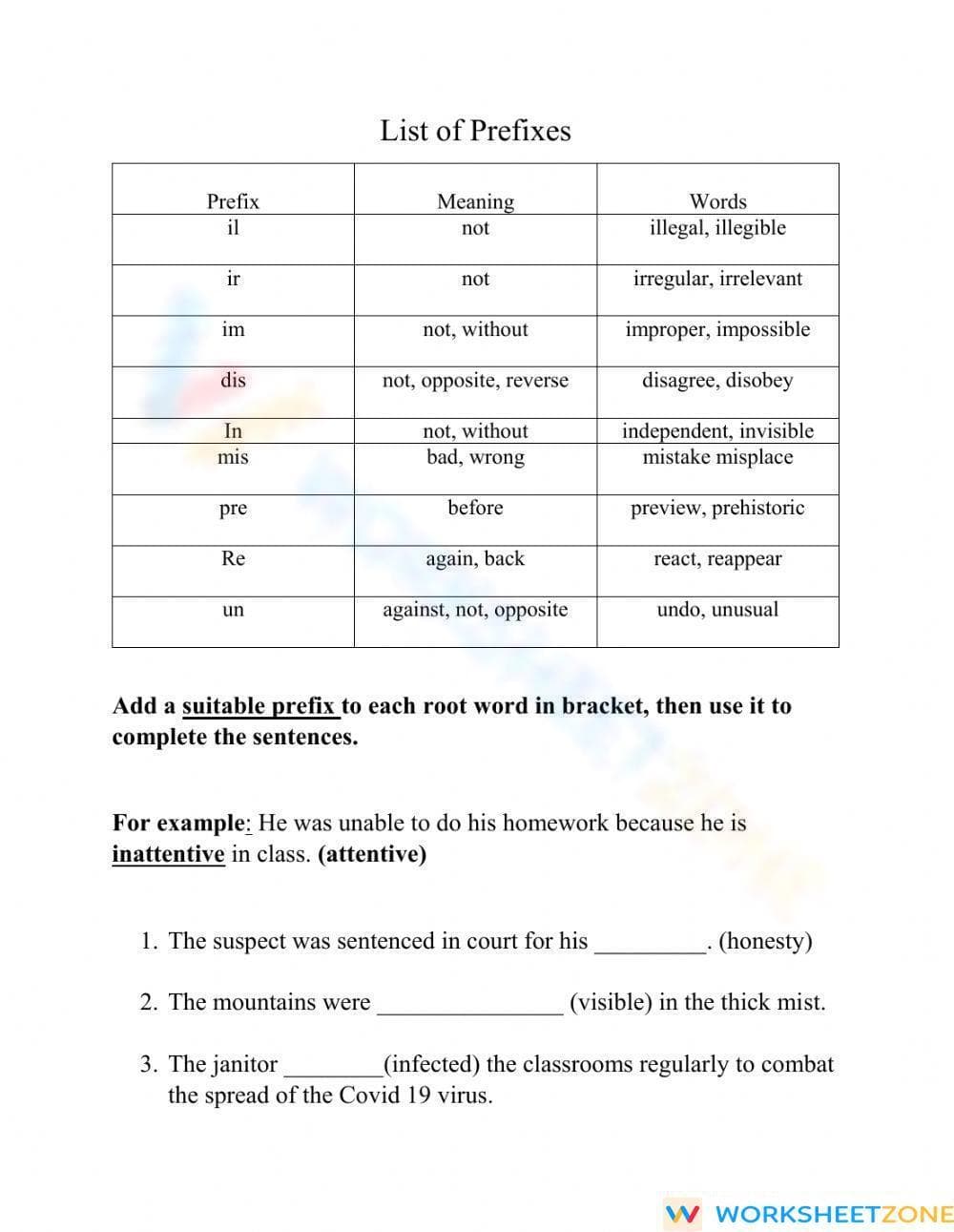
Master the art of word formation with this comprehensive prefix worksheet designed for Grade 6 students. This resource helps learners identify common affixes like 'un-', 're-', and 'dis-' to decode the meaning of complex vocabulary. Students will practice applying these prefixes to root words within context, improving their overall reading comprehension and linguistic precision.
At a Glance
- Grade: 6 · Subject: English Language Arts
- Standard:
CCSS.ELA-LITERACY.L.6.4.B— Use common grade-appropriate affixes as clues to word meanings.- Skill Focus: Prefix Identification and Application
- Format: 2 pages · 5 problems · Answer key included · PDF
- Best For: Independent practice or quick formative assessment
- Time: 15–20 minutes
What's Inside
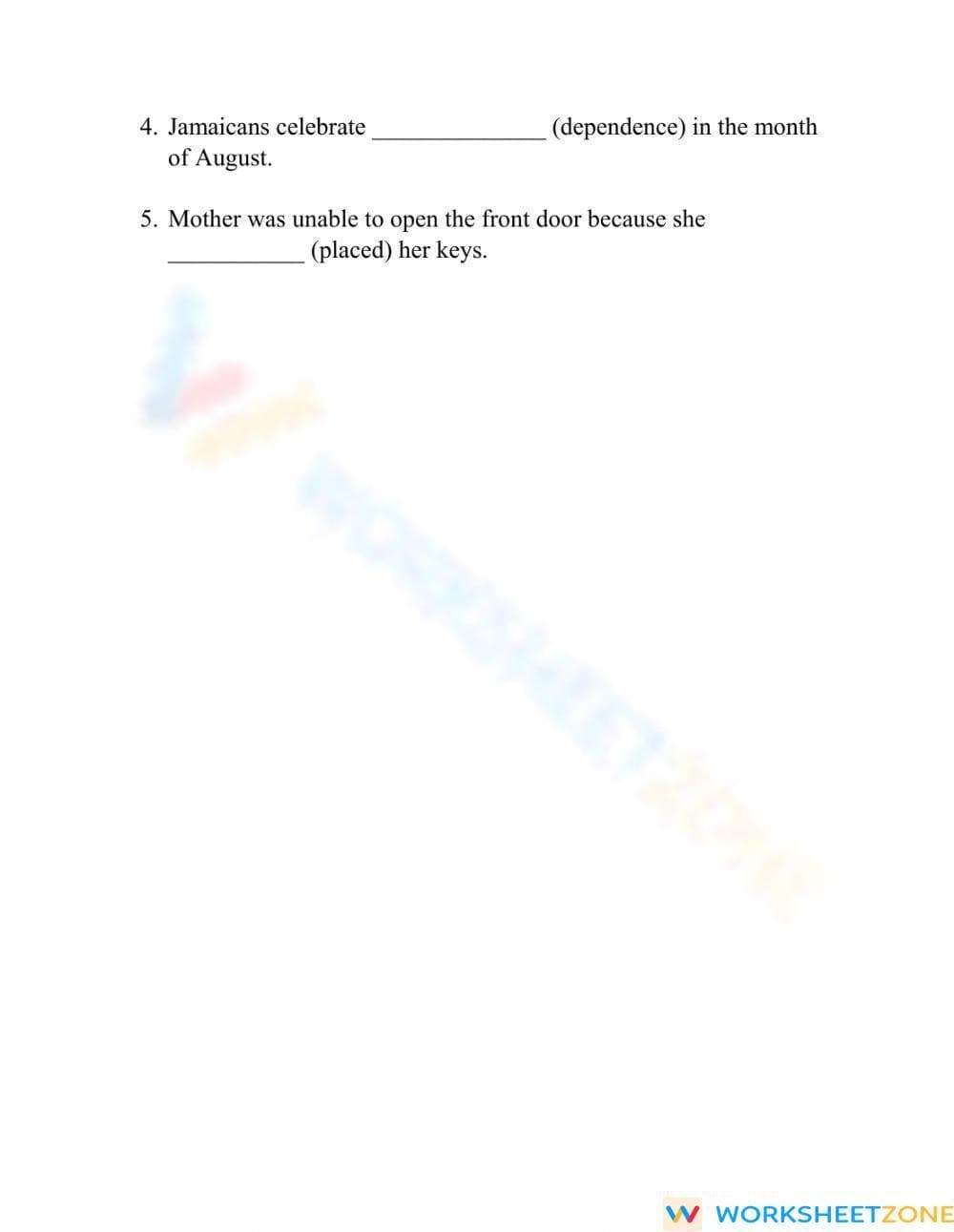
This two-page PDF features a clear "List of Prefixes" reference table on the first page, providing definitions and example words for nine essential prefixes, including 'il-', 'im-', 'mis-', and 'pre-'. Following the reference chart, students encounter five sentence-completion tasks that require them to modify a root word in brackets using a suitable prefix. A complete answer key is provided to facilitate rapid grading or student self-correction.
Zero-Prep Workflow
This worksheet is designed for an immediate, high-impact classroom implementation with a total teacher preparation time of under 2 minutes. The workflow is simple: Print the two pages, Distribute them to your students, and Review the results using the included key. Its self-contained reference chart makes it an ideal resource for substitute plans, homework assignments, or as a "bell-ringer" activity to start the ELA block.
Standards Alignment
This resource is directly aligned with CCSS.ELA-LITERACY.L.6.4.B, which focuses on using common, grade-appropriate Greek or Latin affixes and roots as clues to the meaning of a word. By practicing with prefixes like 'in-', 're-', and 'un-', students build the morphological awareness necessary for high-level text analysis. This standard code can be copied directly into lesson plans, IEP goals, or district curriculum mapping tools.
How to Use It
Deploy this worksheet during the "independent practice" phase of a lesson on morphology or vocabulary building. It serves as an excellent formative assessment tool; teachers can observe which students struggle with the semantic shift between root words and their prefixed counterparts. For a quick review, project the reference table on a whiteboard for a whole-class "check for understanding" before students begin the individual sentences.
Who It's For
This worksheet is tailored for Grade 6 students but is equally effective for Grade 5 review or Grade 7 reinforcement. It provides necessary scaffolding for English Language Learners (ELLs) through the provided reference table. For a complete lesson, pair this resource with a short informational passage where students can highlight and define additional prefixed words they encounter in the wild.
According to the RAND AIRS 2024 report on literacy instruction, explicit morphological instruction—specifically focusing on prefixes and suffixes—is a critical factor in developing adolescent reading fluency and academic vocabulary acquisition. This worksheet implements these evidence-based findings by providing a highly structured environment for students to apply CCSS.ELA-LITERACY.L.6.4.B skills directly within context. By bridging the conceptual gap between isolated prefix definitions and active contextual application, this resource ensures that Grade 6 learners develop the durable "word-solving" strategies necessary for deciphering the complex informational texts encountered in middle school. Educators can confidently rely on this printable PDF as a research-backed tool for improving measurable student outcomes in English Language Arts, especially when integrated into a consistent daily vocabulary routine that prioritizes morphological awareness and root word analysis across the curriculum.


