


























Views
Downloads

Printable Playground Reading Comprehension | Grade K ELA
Paste this activity's link or code into your existing LMS (Google Classroom, Canvas, Teams, Schoology, Moodle, etc.).
Students can open and work on the activity right away, with no student login required.
You'll still be able to track student progress and results from your teacher account.
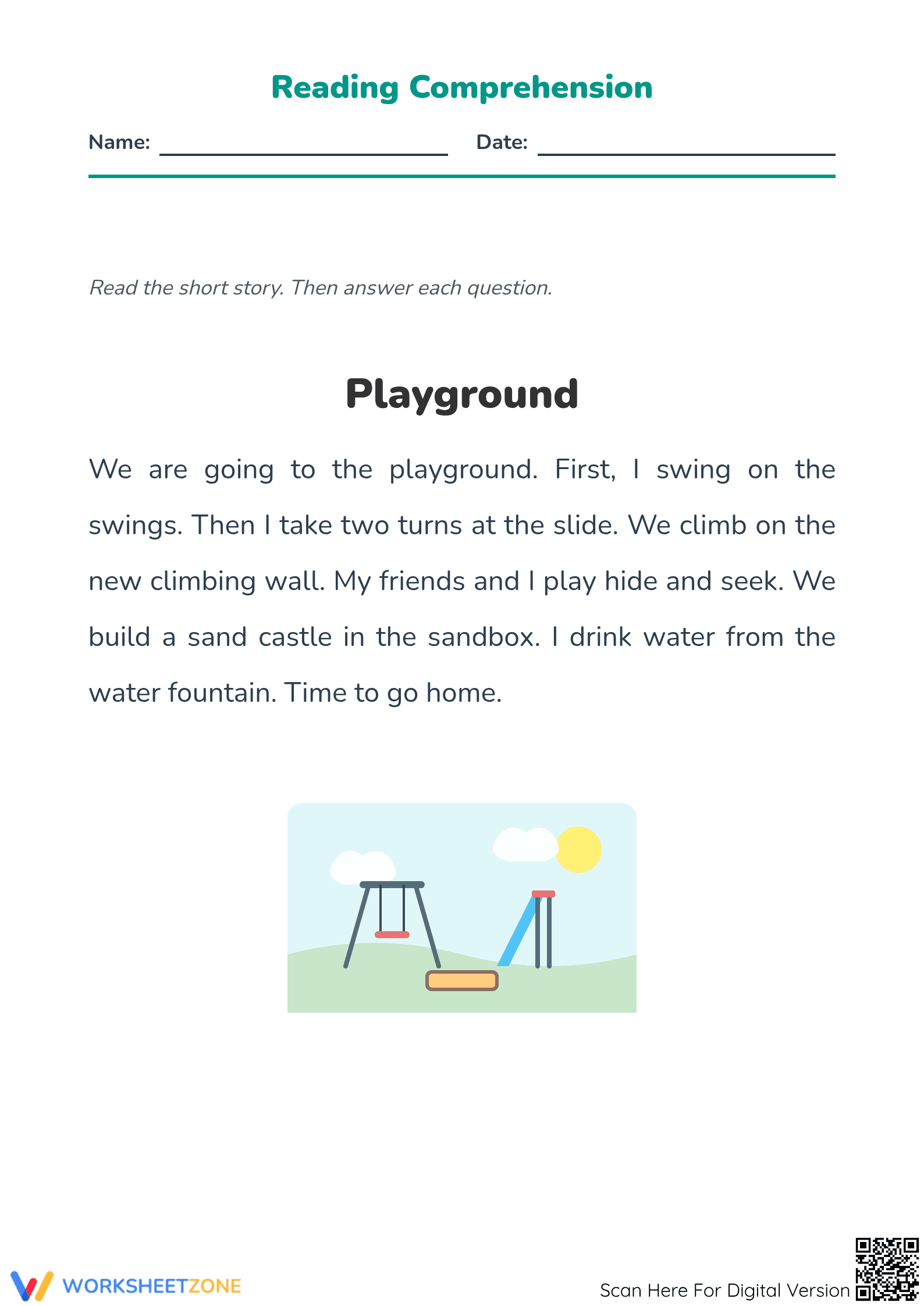
This Kindergarten reading comprehension worksheet helps early learners practice identifying key details within a short, relatable narrative. By reading about a trip to the playground, students develop the ability to recall specific actions and objects from the text, building a foundation for literal comprehension and evidence-based answering.
At a Glance
- Grade: Kindergarten · Subject: ELA
- Standard:
CCSS.ELA-LITERACY.RL.K.1— Ask and answer questions about key details in a text- Skill Focus: Literal Recall & Details
- Format: 2 pages · 5 problems · Answer key included · PDF
- Best For: Early literacy centers and homework
- Time: 10–15 minutes
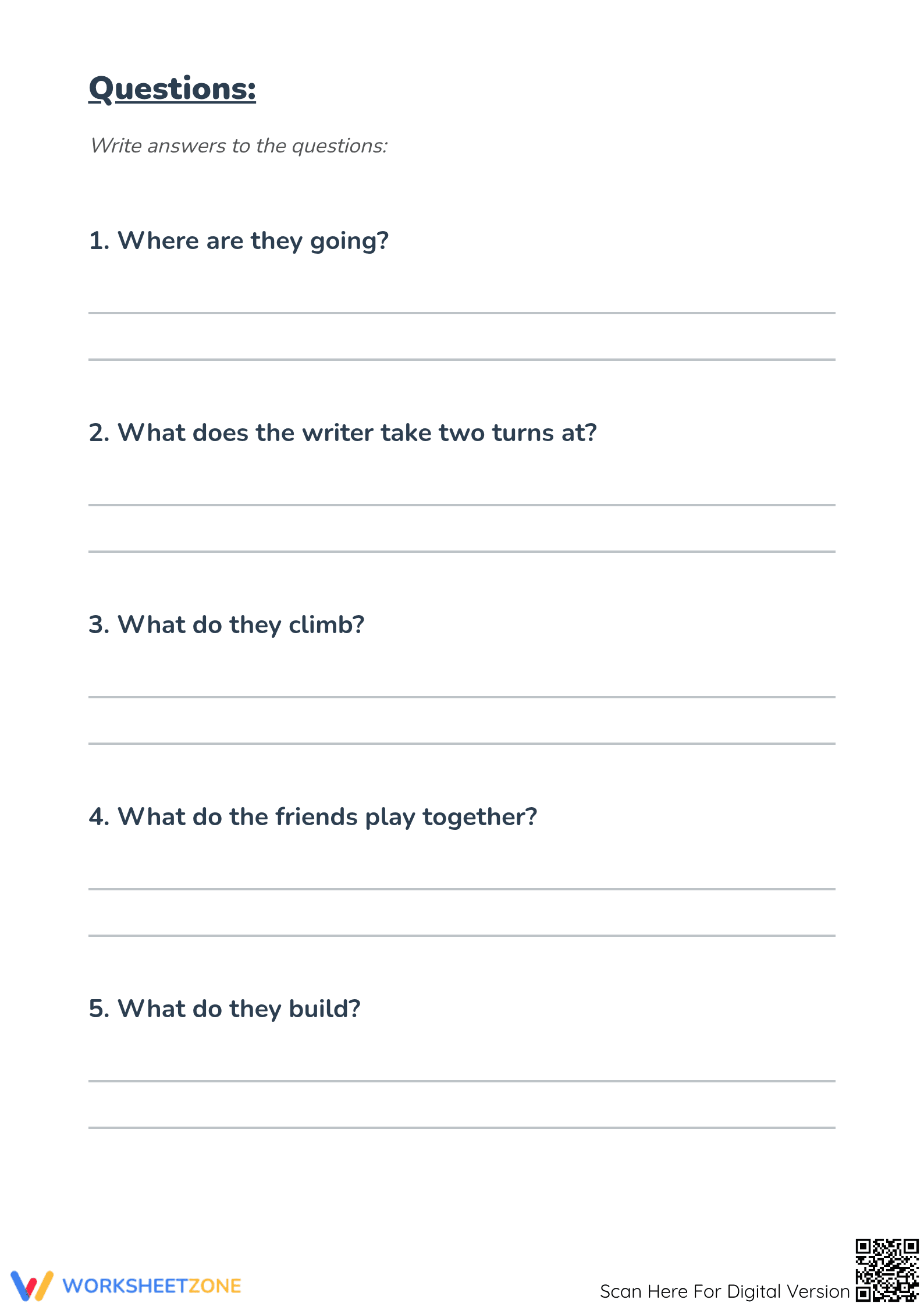
Inside this 2-page PDF, you will find a clear, large-print story titled "Playground" accompanied by a helpful illustration of a swing set and slide. The second page features 5 open-ended questions that require students to write simple answers based directly on the text. A full answer key is provided for quick grading and self-correction.
- Guided practice: The initial reading includes visual cues from the illustration to anchor the setting and vocabulary.
- Supported practice: The first three questions focus on concrete nouns and locations mentioned early in the text to build confidence.
- Independent practice: The final questions require students to synthesize the sequence of events to identify specific activities and outcomes.
This structure supports the gradual release of responsibility by moving from shared reading to independent response.
This resource is specifically aligned to `CCSS.ELA-LITERACY.RL.K.1`, which focuses on answering questions about key details. It also supports CCSS.ELA-LITERACY.RF.K.4 by encouraging emergent readers to engage with high-frequency words in context. Both standard codes can be copied directly into lesson plans, IEP goals, or district curriculum mapping tools.
Use this during your small-group literacy block after a direct instruction lesson on "Who, What, and Where." It serves as an excellent formative-assessment tool; observe if students refer back to the text on page one to find their answers. Expect completion within 10 to 15 minutes depending on student writing speed and fine motor skills.
This is designed for Kindergarten students but works well for first-grade intervention or English Language Learners (ELLs) needing simplified text. Pair this with a playground-themed anchor chart or a physical walk to the school playground to build background knowledge before reading the passage.
Research from Fisher & Frey (2014) emphasizes that literal comprehension is the essential first step toward deeper inferential thinking. This worksheet targets CCSS.ELA-LITERACY.RL.K.1 by requiring students to extract explicit information from a text, a skill that NAEP data suggests is a primary predictor of later reading success. By providing 5 targeted questions, the resource ensures students practice the specific student action of answering "what" and "where" questions with accuracy. According to the RAND AIRS 2024 report, high-quality instructional materials that focus on evidence-based recall help bridge the gap between decoding and understanding. This printable resource provides the structured repetition necessary for Kindergarteners to master the foundational skill of text-dependent questioning, ensuring they are prepared for more complex literary analysis in subsequent grades.


