




























Views
Downloads

Plants Have Needs Worksheet | Grade 1 Essential Science

Paste this activity's link or code into your existing LMS (Google Classroom, Canvas, Teams, Schoology, Moodle, etc.).
Students can open and work on the activity right away, with no student login required.
You'll still be able to track student progress and results from your teacher account.
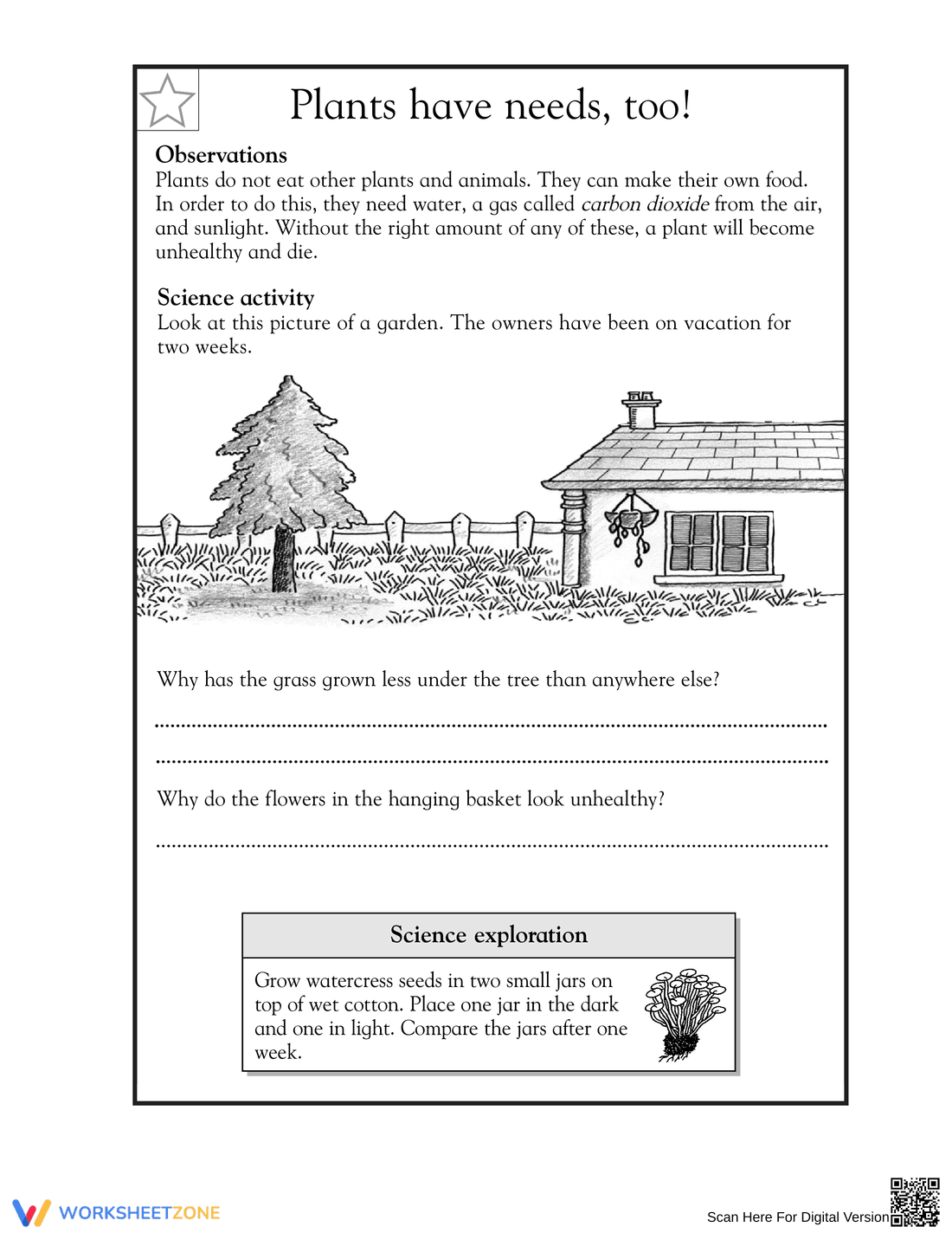
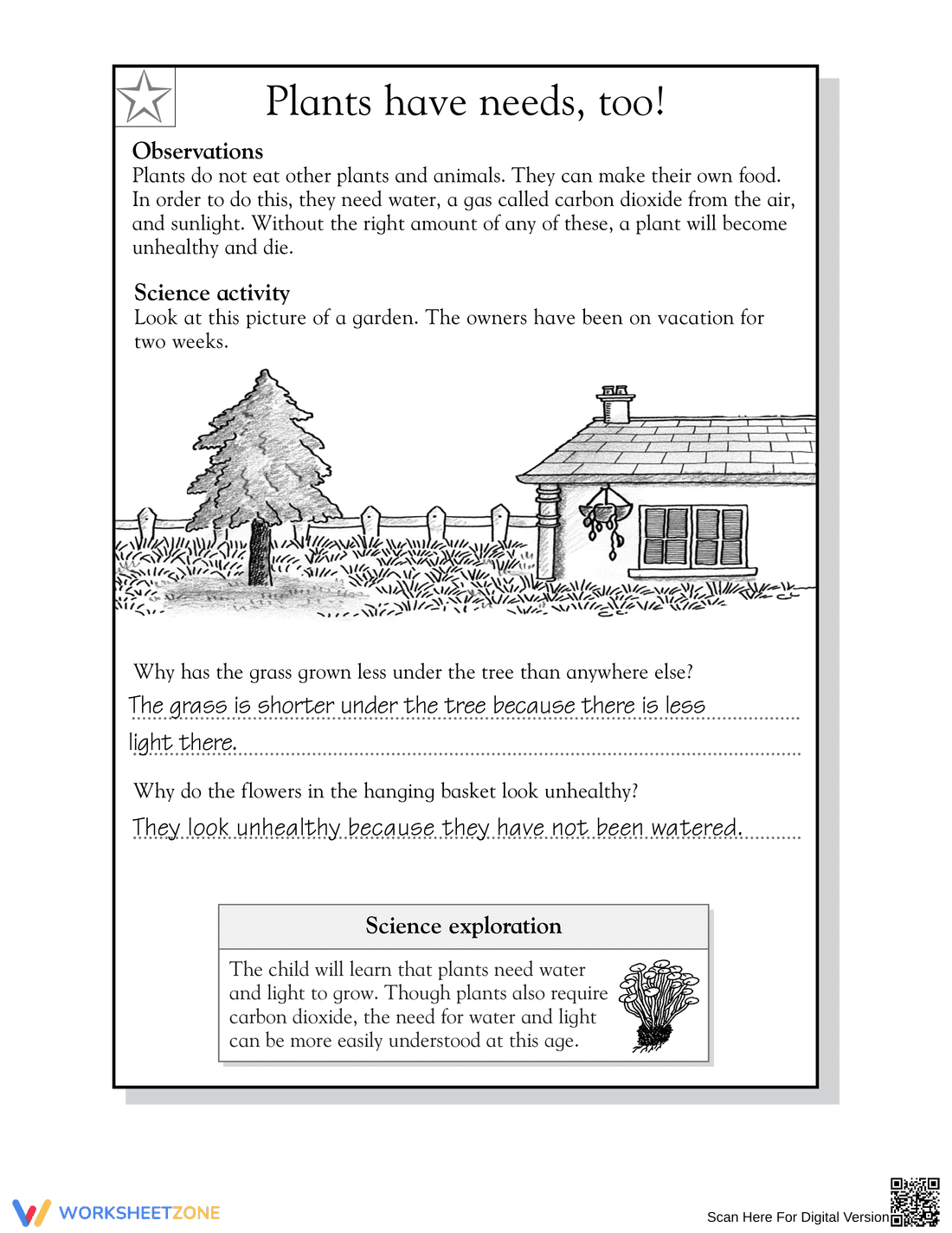
This Grade 1 science worksheet helps students identify the essential needs of plants, including sunlight, water, and air. By analyzing a visual scenario and planning a hands-on experiment, learners observe the direct impact of neglect on plant health. It provides a clear, structured way to master basic biological concepts and environmental interactions.
At a Glance
- Grade: 1 · Subject: Living Things
- Standard:
1-LS1-1— Use observations to describe patterns of what plants and animals need to survive- Skill Focus: Plant Needs (Light, Water, Air)
- Format: 1 page · 3 tasks · Answer key included · PDF
- Best For: First-grade science units and sub plans
- Time: 15–20 minutes
What's Inside
This single-page resource includes a brief reading passage on plant observations, a visual analysis activity featuring a garden scene, and a step-by-step science exploration prompt. The worksheet guides students through critical thinking questions regarding sunlight and hydration, supported by a clear answer key for teacher or parent review.
Zero-Prep Workflow
- Print (30 seconds): Quickly generate copies for the entire class.
- Distribute (30 seconds): Direct students to the observations and activity sections.
- Review (60 seconds): Use the clear format for rapid check-for-understanding.
Total teacher preparation time is under 2 minutes, making this an excellent option for emergency sub plans or busy classroom transitions where zero-prep resources are required.
Standards Alignment
The primary alignment for this resource is 1-LS1-1, focusing on using observations to describe patterns of what plants need to survive. Students engage with the core idea that plants require specific environmental conditions to thrive. This standard code can be copied directly into lesson plans, IEP goals, or district curriculum mapping tools.
How to Use It
Use this worksheet during a direct instruction lesson on living things as a guided practice activity. It is particularly effective after introducing the concept of photosynthesis or basic needs, allowing students to apply their knowledge to a realistic garden scenario. Completion typically takes 15 to 20 minutes, providing an excellent formative assessment of student understanding.
Who It's For
This worksheet is tailored for first-grade students and works well for English Language Learners due to the visual cues provided in the garden illustration. It serves as a natural pairing for a classroom plant-growing project or an introductory science passage about the life cycle of flora in varied environments.
According to the NGSS framework and supporting analysis by EdReports (2024), foundational science instruction in early grades must bridge the gap between abstract concepts and observable evidence. This Grade 1 worksheet facilitates that connection by requiring students to explain what they see in a garden context, specifically focusing on the standard 1-LS1-1 requirement to describe plant survival patterns. Research from Fisher & Frey (2014) emphasizes the importance of gradual release, which is mirrored here through initial observations followed by guided analysis and an independent exploration task. By engaging with these three distinct tasks, students build a robust mental model of biological requirements, ensuring they meet grade-level expectations for scientific literacy and inquiry. This approach is validated by NAEP standards, which prioritize the ability of young learners to link environmental factors directly to the health and growth of living organisms in a structured academic environment.


