




























Views
Downloads

Essential Plant Parts and Functions Worksheet | Grade 3

Paste this activity's link or code into your existing LMS (Google Classroom, Canvas, Teams, Schoology, Moodle, etc.).
Students can open and work on the activity right away, with no student login required.
You'll still be able to track student progress and results from your teacher account.
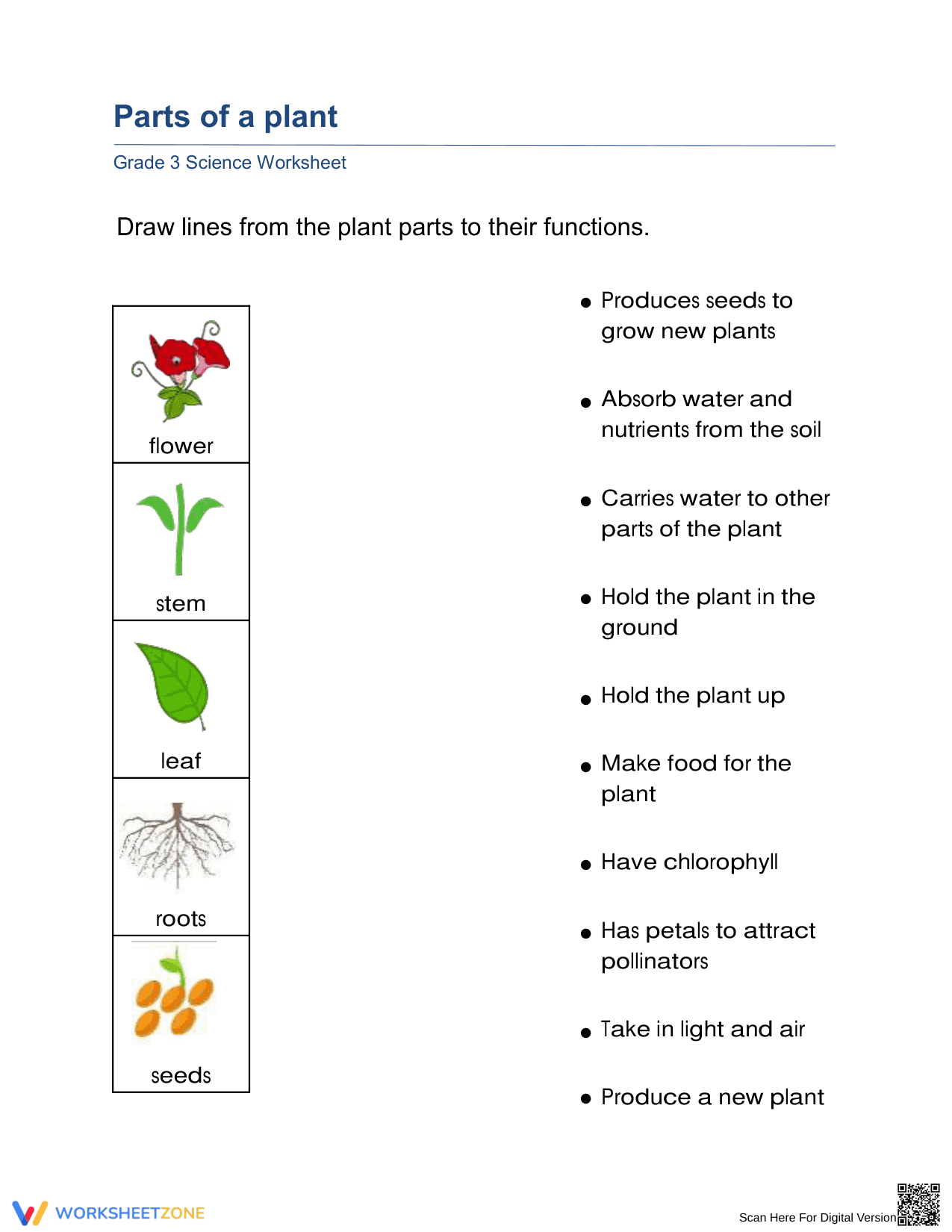
This Grade 3 Science worksheet helps students master the identification and biological roles of essential plant structures. By connecting physical parts like roots and stems to their survival functions, learners build a foundational understanding of how living organisms thrive. This activity ensures students can distinguish between reproduction, nutrient absorption, and photosynthesis.
At a Glance
- Grade: 3 · Subject: Living Things
- Standard:
3-LS1-1— Develop models to describe unique and diverse life cycles of organisms- Skill Focus: Plant Structure and Function
- Format: 2 pages · 10 problems · Answer key included · PDF
- Best For: Independent practice or quick formative assessment
- Time: 15–20 minutes
What's Inside
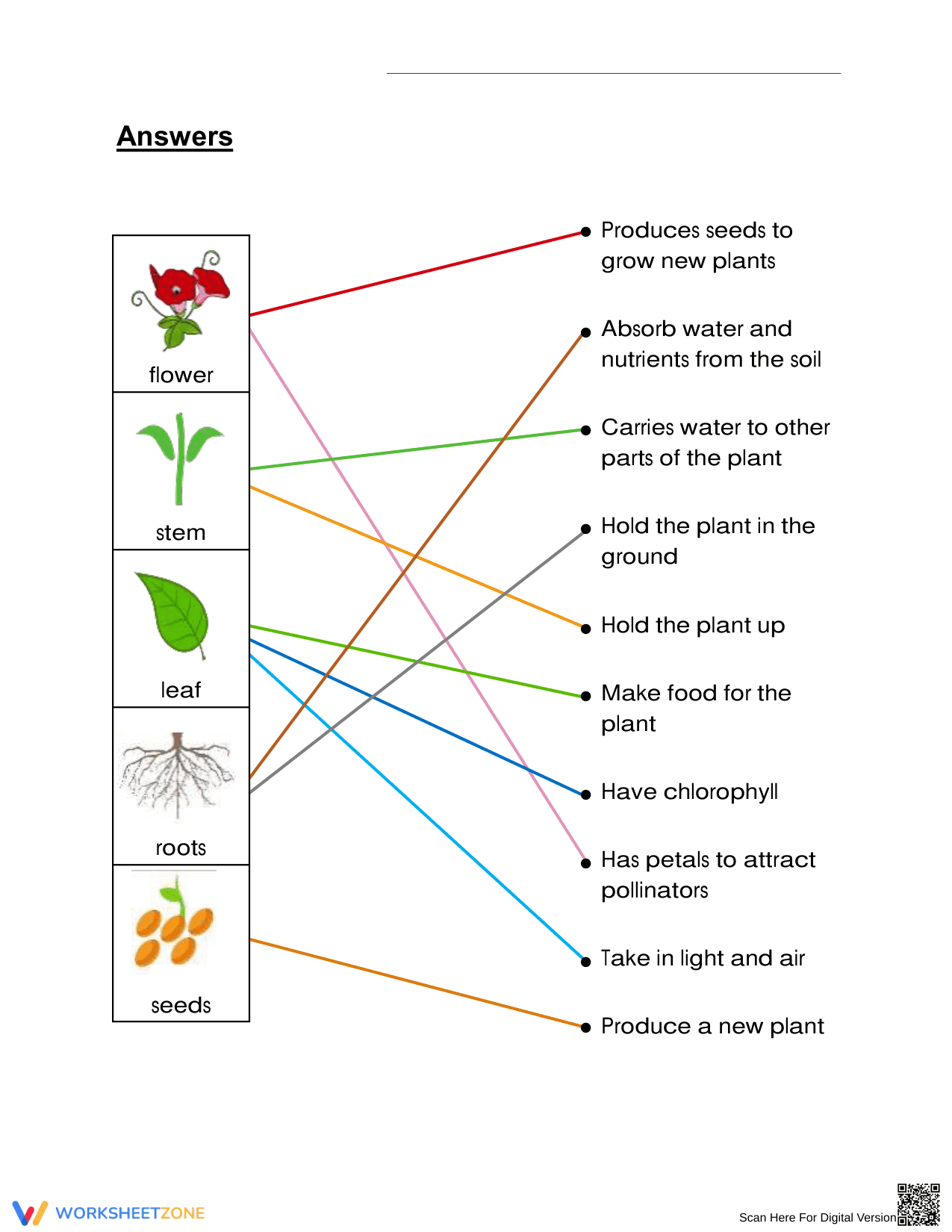
This two-page resource features a high-quality diagram with clear illustrations of a flower, stem, leaf, roots, and seeds. Students are tasked with drawing lines to match these five structures to ten distinct functional descriptions, covering concepts like chlorophyll, pollination, and nutrient transport. A comprehensive answer key is included for immediate grading or student self-correction.
Zero-Prep Workflow
Teachers can implement this activity with a total prep time of under 2 minutes using these three simple steps:
- Print (1 min): Quickly generate single-sided copies for the entire class.
- Distribute (1 min): Hand out the worksheet as a zero-setup individual task.
- Review (2 mins): Use the included answer key for instant grading or peer-review.
This resource is ideal for substitute plans, morning work, or as a fast-finisher activity due to its self-explanatory nature and clear visual cues.
Standards Alignment
The worksheet aligns with 3-LS1-1, which focuses on the structures and processes of living organisms. By identifying how specific parts support a plant's life cycle and survival, students meet the core requirements of life science curriculum standards. Both standard codes can be copied directly into lesson plans, IEP goals, or district curriculum mapping tools.
How to Use It
Use this matching activity during the "Explain" or "Elaborate" phase of a 5E lesson on botany. It serves as an excellent formative assessment tool after a direct instruction session on plant anatomy. Teachers should observe if students can correctly pair the leaf with the production of food, as this indicates readiness for future lessons on photosynthesis. The expected completion time range is 15 to 20 minutes.
Who It's For
This resource is designed for Grade 3 students but works effectively for second-grade enrichment or fourth-grade review. It supports visual learners through clear iconography and provides enough textual detail to challenge advanced readers. It pairs naturally with a hands-on plant dissection or a textbook passage about local flora and includes differentiation notes for various learner profiles.
According to RAND AIRS 2024, instructional materials that emphasize the direct connection between biological structures and their environmental functions significantly improve long-term retention in elementary science. This worksheet facilitates that connection by requiring students to match observable plant parts—roots, stems, leaves, flowers, and seeds—with their specific survival roles, such as water absorption and reproduction. By aligning with 3-LS1-1, the resource supports a rigorous life science curriculum that moves beyond simple identification toward functional analysis. Research from the NAEP highlights that students who master basic plant physiology in the third grade are better prepared for complex ecological concepts in middle school. This activity provides the structured practice necessary to achieve that mastery through a concise, matching-based model. Teachers can use this as a high-impact, low-prep tool to verify student understanding of essential life science objectives efficiently.


