


























Views
Downloads

Grade 1 Plant Life Cycle — Printable No-Prep Worksheet
Paste this activity's link or code into your existing LMS (Google Classroom, Canvas, Teams, Schoology, Moodle, etc.).
Students can open and work on the activity right away, with no student login required.
You'll still be able to track student progress and results from your teacher account.
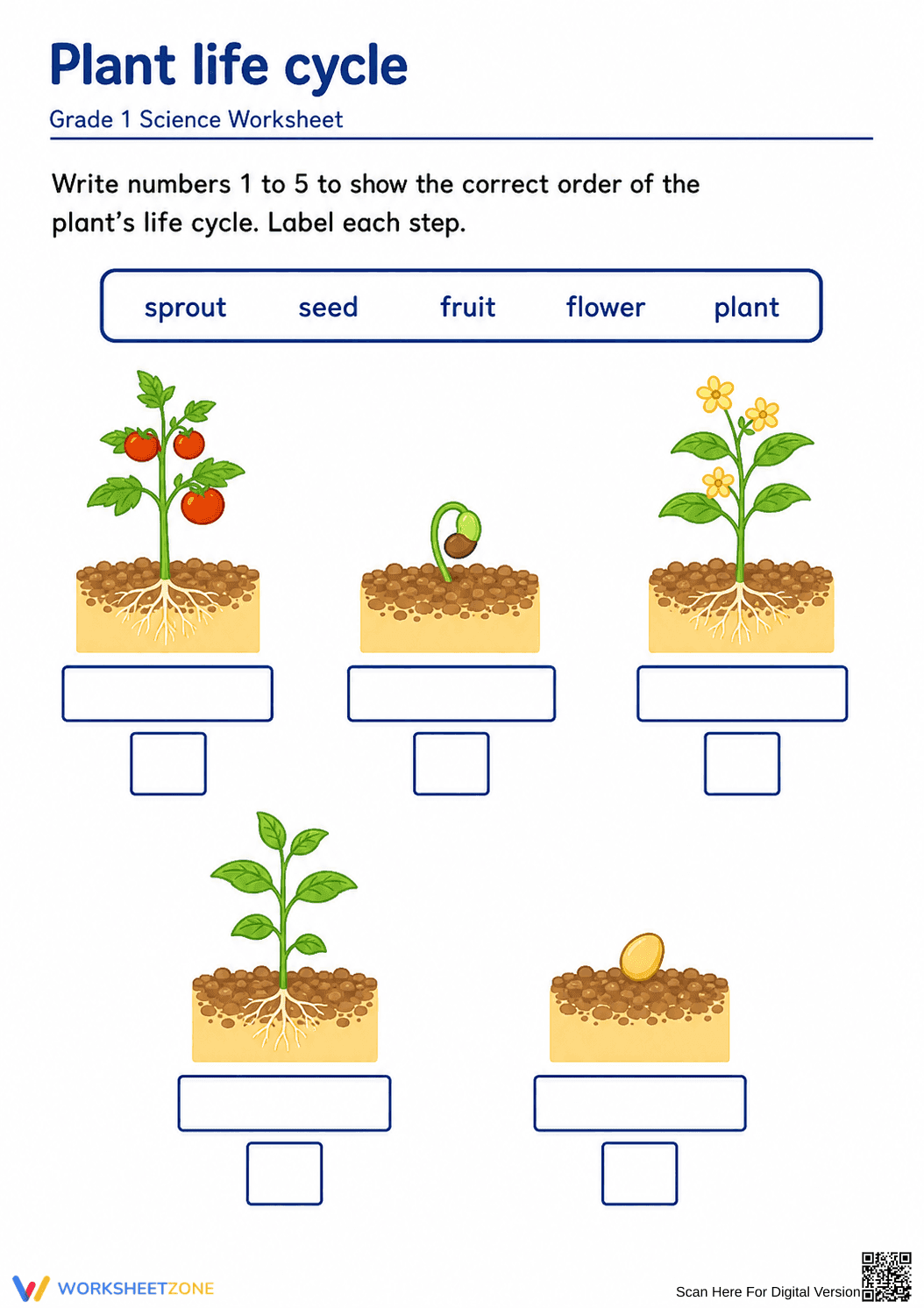
This Grade 1 Science worksheet helps students master biological sequencing by identifying the five key stages of a plant's growth. By numbering and labeling realistic illustrations from seed to fruit, learners develop a concrete understanding of how living things change over time.
At a Glance
- Grade: 1 · Subject: Science
- Standard:
1-LS1-2— Read texts and use media to determine patterns in biological processes- Skill Focus: Plant Life Cycle Sequencing
- Format: 2 pages · 10 tasks · Answer key included · PDF
- Best For: Independent practice and sub plans
- Time: 10–15 minutes
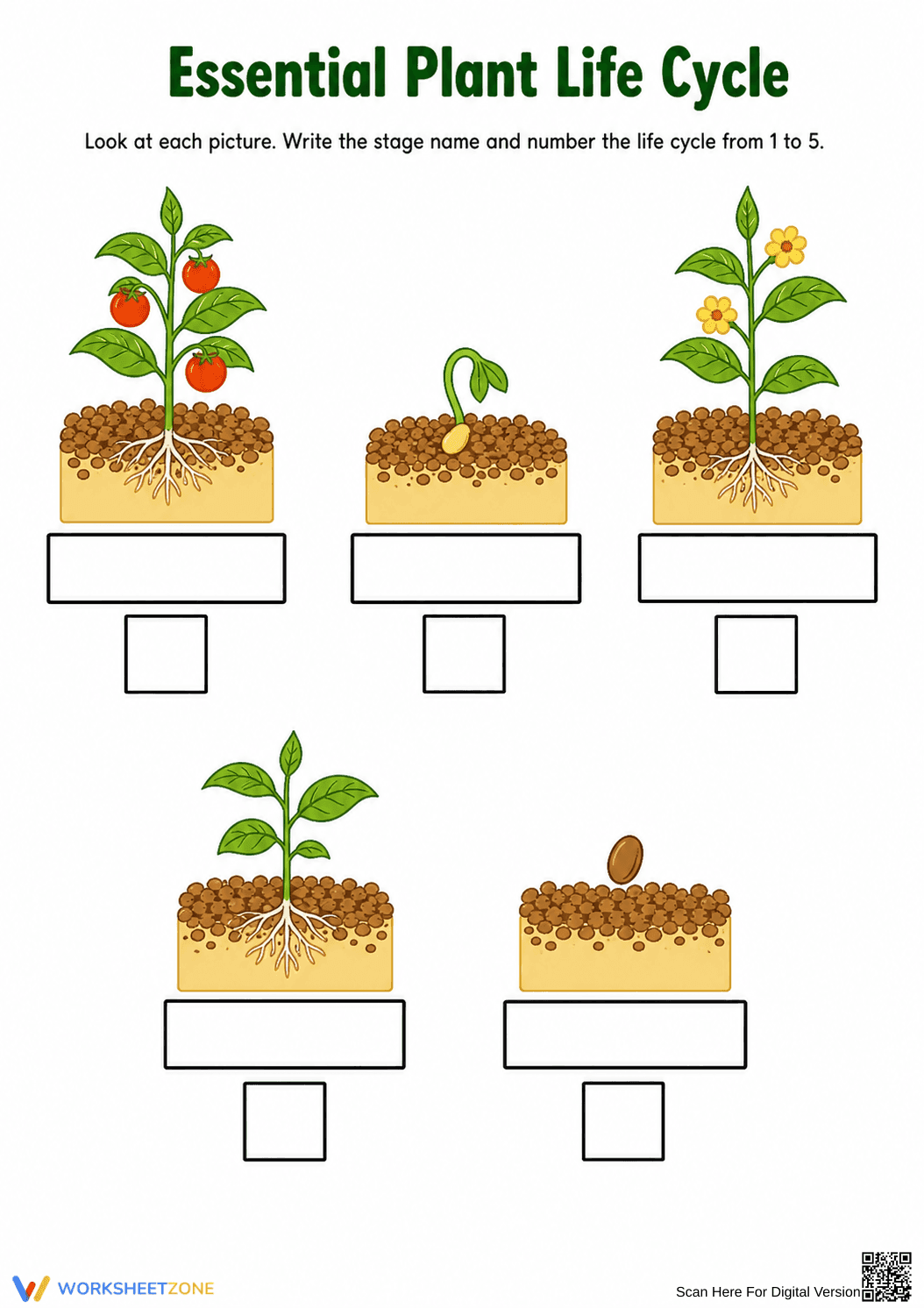
This two-page PDF includes a student worksheet and a corresponding teacher answer key. The primary page features five detailed illustrations representing the seed, sprout, plant, flower, and fruit stages. Students complete 10 distinct tasks: writing numbers 1 through 5 to establish chronological order and using a provided word bank to label each anatomical stage. The clear, uncluttered layout is specifically designed for first-grade motor skills and reading levels.
Zero-Prep Workflow
- Print (1 minute): Select the single student page or both pages if you need the reference key for substitute teacher folders.
- Distribute (1 minute): Hand out the sheets during your unit on living things; the word bank allows for independent work without prior vocabulary drilling.
- Review (2 minutes): Use the included answer key for rapid grading or project it onto a whiteboard for a whole-class check. Total teacher prep time is under two minutes.
Standards Alignment
This resource aligns primarily with 1-LS1-2, focusing on identifying patterns in the behavior and growth of organisms. Students observe visual data to determine the sequential patterns of plant development. Additionally, it supports ELA standard CCSS.ELA-LITERACY.RI.1.3 by requiring students to connect individual growth stages into a cohesive process. Both standard codes can be copied directly into lesson plans, IEP goals, or district curriculum mapping tools.
How to Use It
During instruction, use this worksheet as a guided practice activity after reading a book about gardening or observing real classroom plants. Alternatively, assign this as a quick formative assessment at the end of a life science lesson. While students work, observe how they number the stages to identify any misconceptions about the transition from flower to fruit. Most first graders will complete the 10 tasks within the expected 10 to 15 minutes.
Who It's For
This worksheet is designed for first-grade students but serves as an excellent review for kindergarteners or a scaffolded resource for second graders needing foundational review. The visual nature makes it highly accessible for English Language Learners building science-specific vocabulary through direct image association. It naturally pairs with a physical seed-planting experiment or a classroom anchor chart showing plant parts.
Mastery of biological sequencing in early childhood is a critical predictor of later scientific literacy. According to Fisher & Frey (2014), the use of visual scaffolds like labeling and numbering tasks helps students internalize the gradual release of responsibility model, moving from recognizing patterns to explaining them independently. This Grade 1 worksheet provides exactly 10 structured interactions that align with the 1-LS1-2 standard, ensuring students can accurately read texts and use media to determine patterns in biological processes. By focusing on five distinct stages—seed, sprout, plant, flower, and fruit—the resource reduces cognitive load while reinforcing essential life science terminology. High-quality science materials for primary grades must bridge the gap between observation and systematic recording. This resource fulfills that requirement by providing a clear, printable format that supports both independent practice and formative assessment in the classroom.


