


























Views
Downloads

Pierre the Penguin Printable Worksheet | Kindergarten ELA
Paste this activity's link or code into your existing LMS (Google Classroom, Canvas, Teams, Schoology, Moodle, etc.).
Students can open and work on the activity right away, with no student login required.
You'll still be able to track student progress and results from your teacher account.
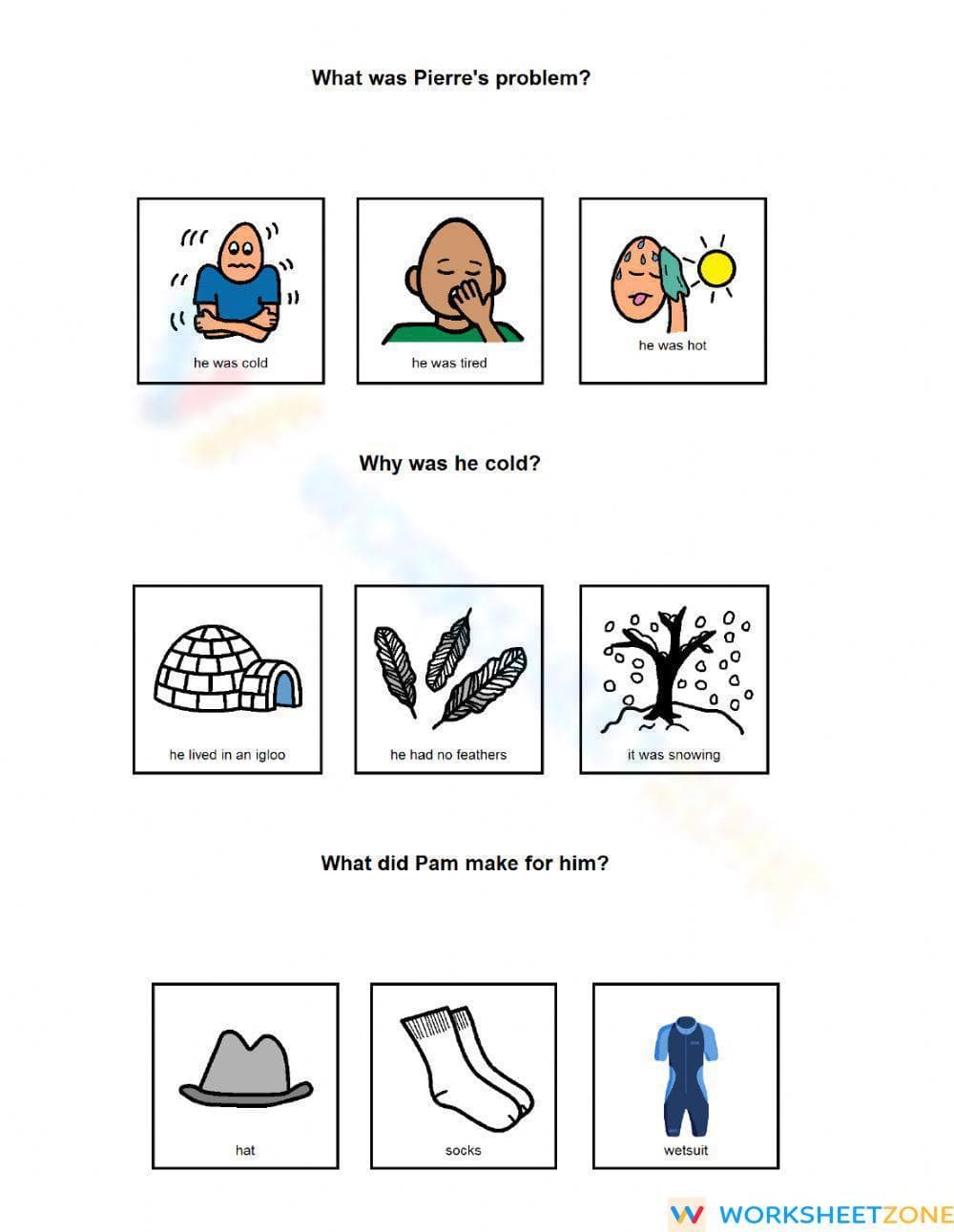
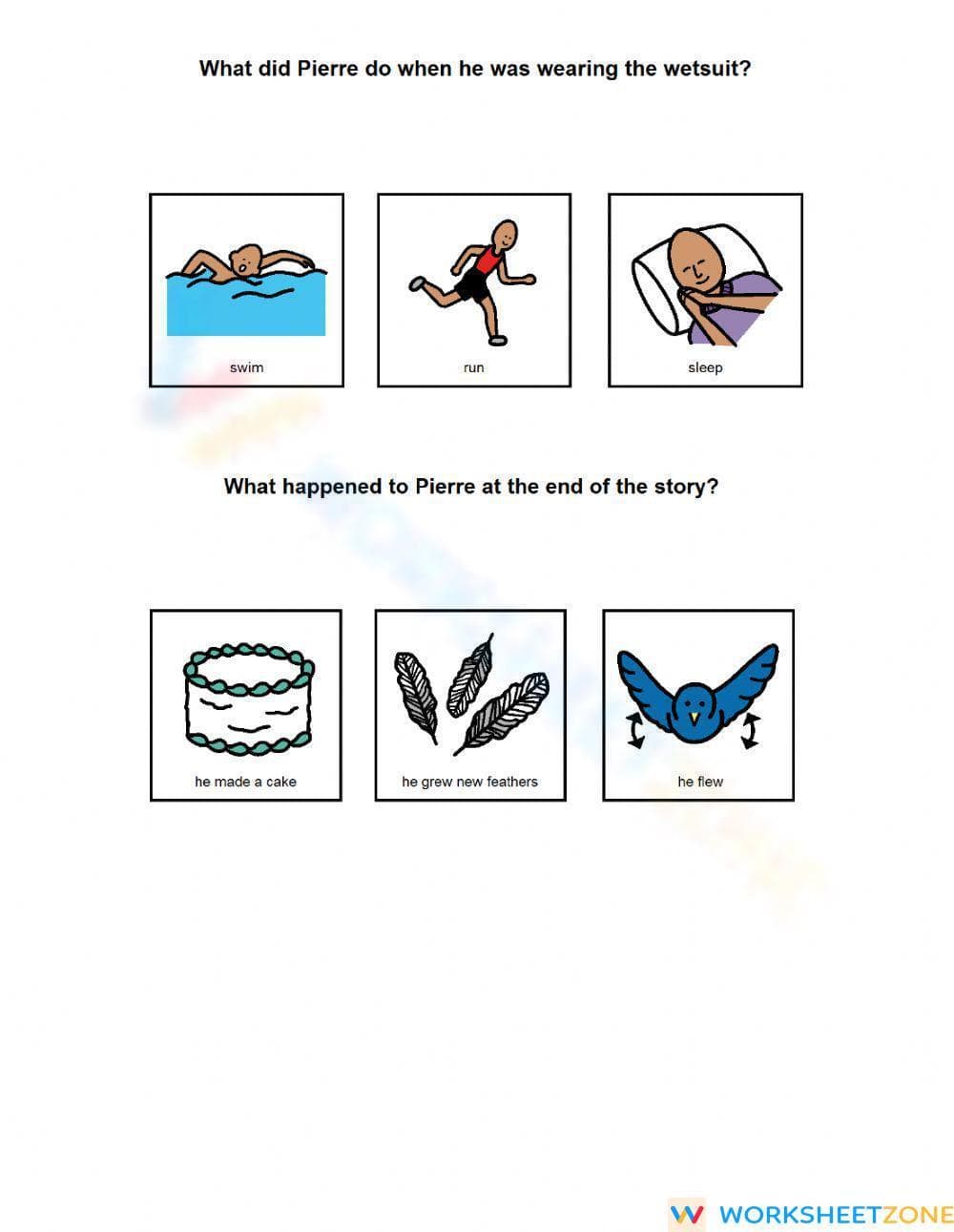
Pierre the Penguin worksheet helps Kindergarten and Grade 1 students master story comprehension through structured visual questioning. By using icon-based answer choices, this resource ensures that early readers and those with diverse learning needs can successfully demonstrate their understanding of key story details. Students will identify the main problem and character actions in this engaging activity.
At a Glance
- Grade: Kindergarten · Subject: ELA Literature
- Standard:
CCSS.ELA-LITERACY.RL.K.1— Ask and answer questions about key details in a text- Skill Focus: Story Comprehension with Visual Support
- Format: 2 pages · 5 problems · Answer key included · PDF
- Best For: Independent practice or small group literacy
- Time: 10–15 minutes
This two-page PDF includes five targeted reading comprehension questions based on the story of Pierre the Penguin. Each question is accompanied by three clear, labeled icons that represent possible answers, such as "he was cold," "wetsuit," or "he flew." This layout minimizes writing requirements while maximizing student engagement and accuracy during the comprehension check.
Zero-Prep Workflow
Teachers can implement this worksheet in three simple steps. First, print the two-page PDF (30 seconds). Second, distribute the copies to students during a literacy block or as a morning work task (1 minute). Third, review the visual answers together or use the provided answer key for quick individual grading (2 minutes). The total teacher preparation time is under two minutes. Mention sub-plan suitability.
Standards Alignment
The primary focus is `CCSS.ELA-LITERACY.RL.K.1`, which requires students to ask and answer questions about key details in a text with prompting and support. This worksheet provides that support through visual cues. Both standard codes can be copied directly into lesson plans, IEP goals, or district curriculum mapping tools to ensure instructional consistency and compliance.
How to Use It
Assign this worksheet immediately after a whole-class reading of the Pierre the Penguin story to capture fresh student insights. During the activity, observe if students can independently link the character's "problem" to the "solution" of the wetsuit, which serves as a great formative-assessment observation tip. Expected completion time ranges from 10 to 15 minutes depending on the support level.
Who It's For
This resource is designed for Kindergarten and Grade 1 students, as well as older students in special education settings who benefit from AAC-style visual supports. It pairs naturally with a printed version of the Pierre the Penguin book or an anchor chart detailing story elements like characters, setting, and plot.
According to the Fisher & Frey (2014) framework for intentional interest and engagement, providing high-quality visual scaffolds is a proven method for improving text-based inquiry among early learners. This Grade K worksheet on Pierre the Penguin directly addresses CCSS.ELA-LITERACY.RL.K.1 by asking students to answer questions about key details using icon-based answer choices. By reducing the decoding burden through visual aids, students can focus exclusively on the cognitive task of recalling story events and identifying cause-and-effect relationships within the narrative. The five structured tasks provide immediate evidence of comprehension, allowing teachers to assess whether a student can identify the main problem, the solution provided by the character Pam, and the eventual resolution. This resource acts as a vital bridge between listening comprehension and independent reading, ensuring all students can participate in rigorous standards-aligned literacy activities regardless of their current reading level or expressive language capabilities.


