


























Views
Downloads

Wild Animal Safari Vocabulary Worksheet | Grade 1 Ready
Paste this activity's link or code into your existing LMS (Google Classroom, Canvas, Teams, Schoology, Moodle, etc.).
Students can open and work on the activity right away, with no student login required.
You'll still be able to track student progress and results from your teacher account.
Strengthen early literacy and biological vocabulary with this comprehensive Wild Animal Safari activity pack. Students practice identifying exotic animals through a multi-sensory approach that combines visual recognition, orthographic processing, and reading comprehension. By the end of these three pages, learners will demonstrate mastery over specific animal names and their defining physical characteristics.
At a Glance
- Grade: 1 · Subject: English Language Arts
- Standard:
CCSS.ELA-LITERACY.L.1.6— Use words and phrases acquired through reading and responding to texts- Skill Focus: Animal Vocabulary & Spelling
- Format: 3 pages · 12 problems · Answer key included · PDF
- Best For: Independent Literacy Centers or Sub Plans
- Time: 20–30 minutes
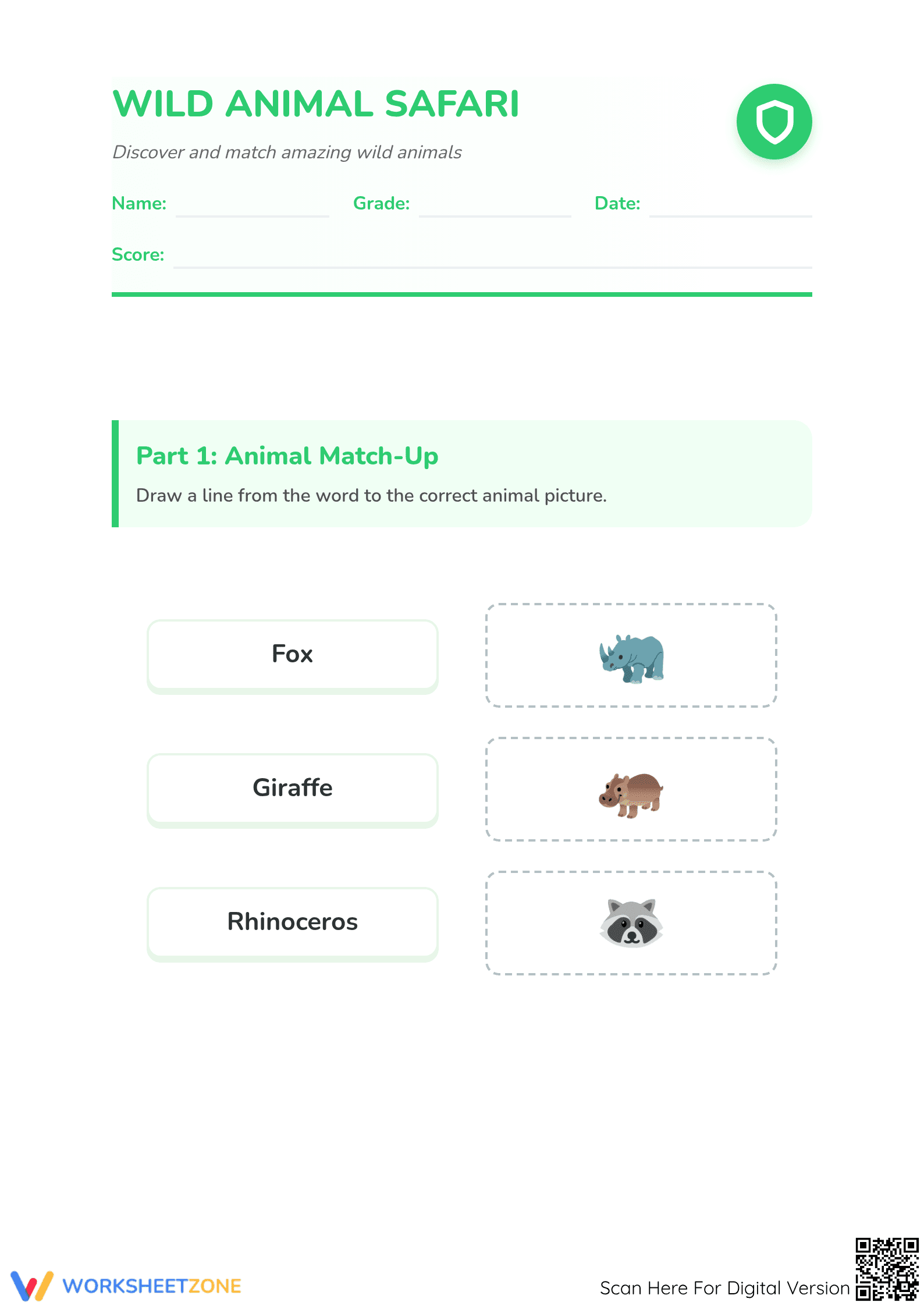
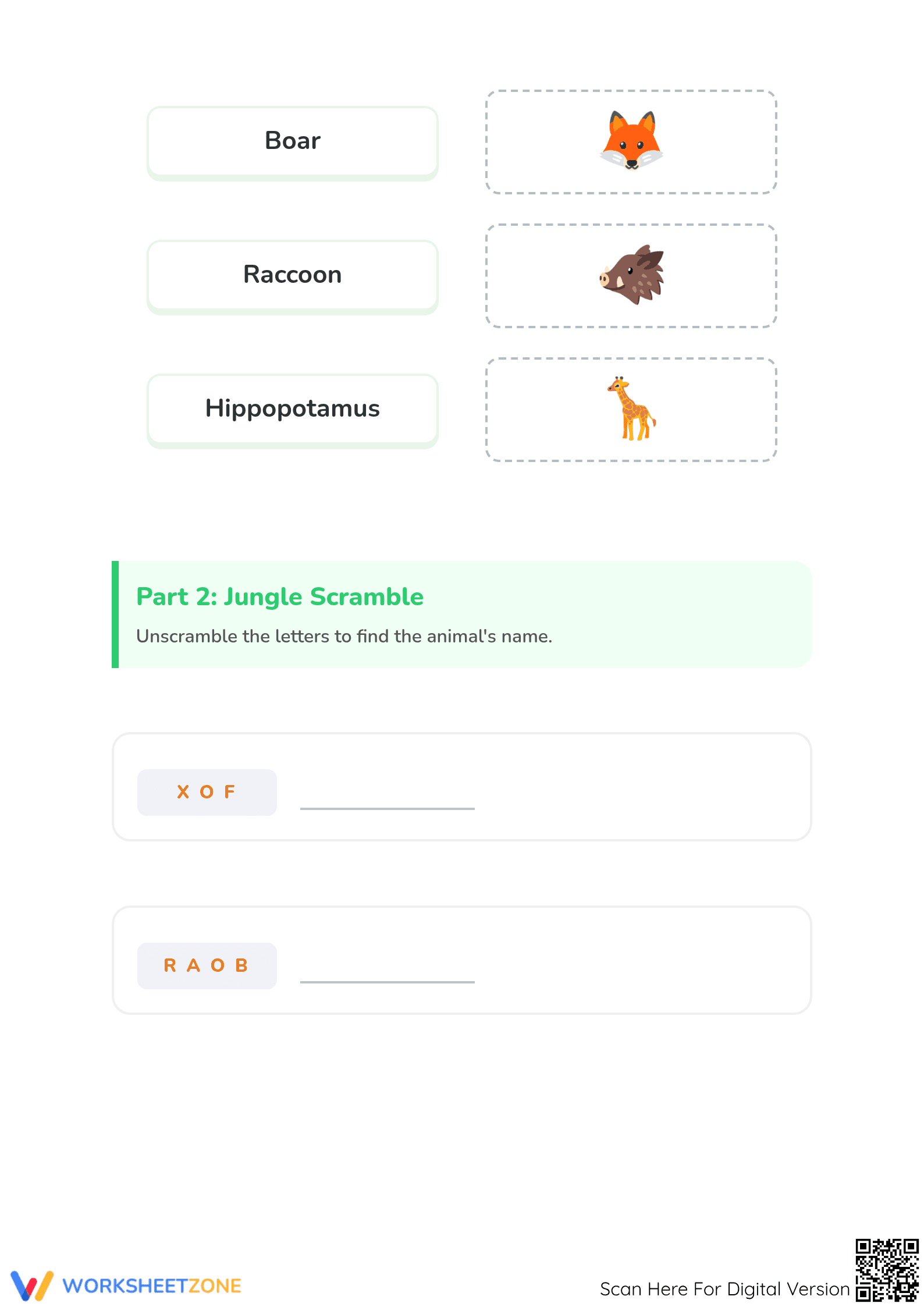
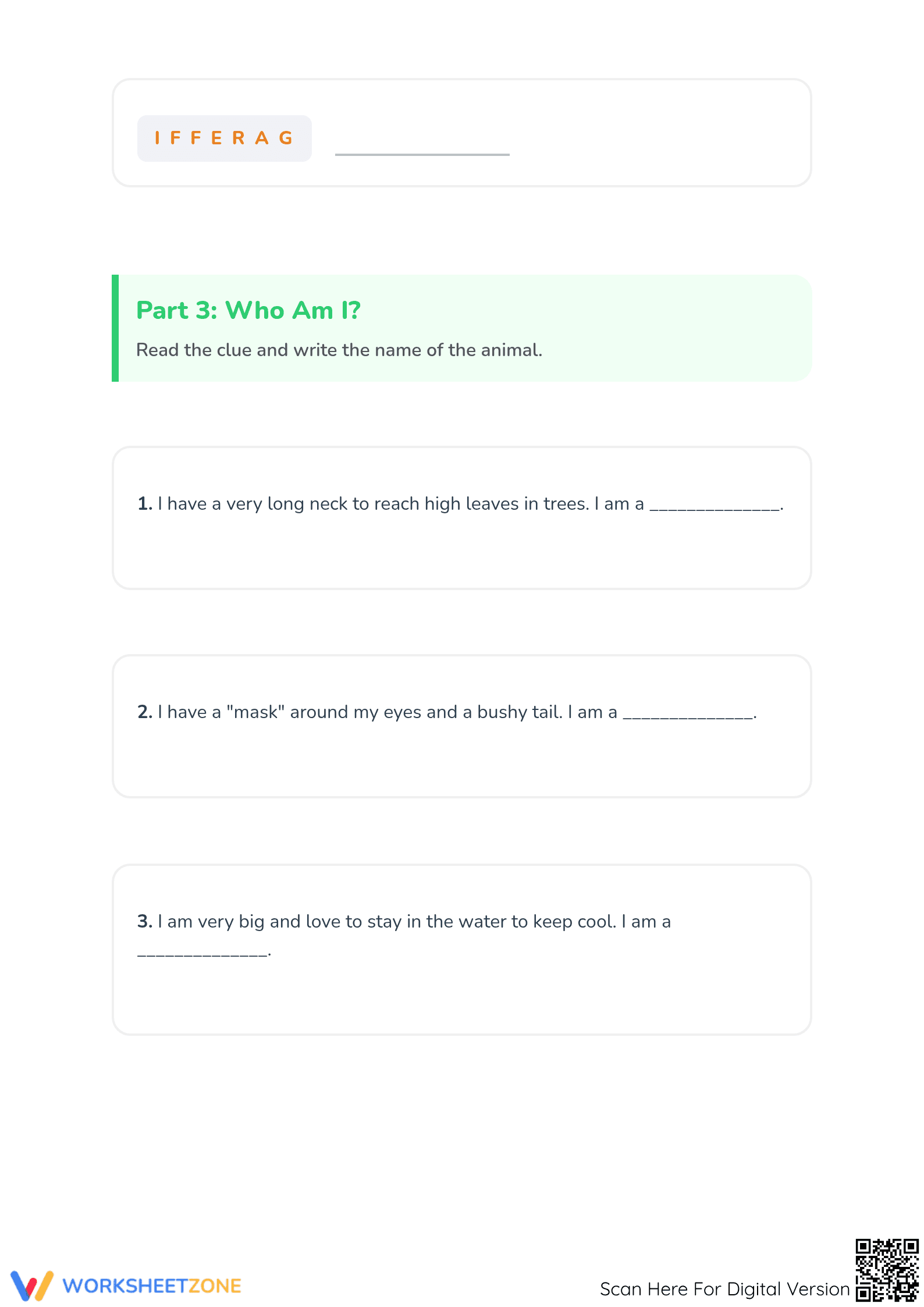
What's Inside: This 3-page PDF resource features three distinct instructional segments. Part 1 provides a visual matching exercise for six animals, including the rhinoceros and hippopotamus. Part 2 challenges students with letter unscrambling to reinforce spelling patterns. Part 3 concludes with "Who Am I?" riddles that require students to synthesize descriptive clues to identify the correct animal. A full answer key is provided for rapid grading.
Zero-Prep Workflow: This resource is designed for immediate classroom implementation with a total teacher prep time of under 2 minutes. First, print the three-page sequence for each student (or assign specific pages for shorter sessions). Second, distribute the packets during your literacy block or as a quiet morning work activity. Third, review the answers using the included key or by having students read the riddles aloud to the class. The clear headings and self-explanatory instructions make this an ideal candidate for emergency sub plans.
Standards Alignment: The primary focus is `CCSS.ELA-LITERACY.L.1.6`, which requires students to use words and phrases acquired through reading and responding to texts. Additionally, the riddle section supports `CCSS.ELA-LITERACY.RI.1.7` by asking students to use details to describe key ideas. Both standard codes can be copied directly into lesson plans, IEP goals, or district curriculum mapping tools.
How to Use It: Use this worksheet as a summative assessment following a unit on habitats or animals. It works exceptionally well in a literacy center where students can work independently. For a formative assessment, observe students during Part 2; those struggling with the unscramble may need additional phonics support. Expect most first-grade students to complete the full 3-page packet within 25 minutes.
Who It's For: This resource is tailored for Grade 1 students but serves as an excellent challenge for Kindergarteners or a scaffolded review for Grade 2. It is particularly effective for English Language Learners (ELLs) who benefit from the direct pairing of high-quality illustrations with Tier 2 vocabulary words. Pair this with a non-fiction picture book about African savannas for a complete thematic lesson.
Research by Fisher & Frey (2014) emphasizes that vocabulary acquisition is most effective when students encounter words in multiple contexts, such as matching, spelling, and inferencing. This worksheet applies that principle by cycling through 12 tasks that require different cognitive loads. By moving from simple recognition in the matching section to complex synthesis in the riddle section, the resource ensures that the standard CCSS.ELA-LITERACY.L.1.6 is met through varied practice. The inclusion of multi-syllabic words like "hippopotamus" provides necessary phonetic stretching for early readers, while the visual cues ensure the cognitive load remains focused on language acquisition rather than frustration. This structured approach to word-wealth building is a cornerstone of effective early elementary ELA instruction.


