


























Views
Downloads
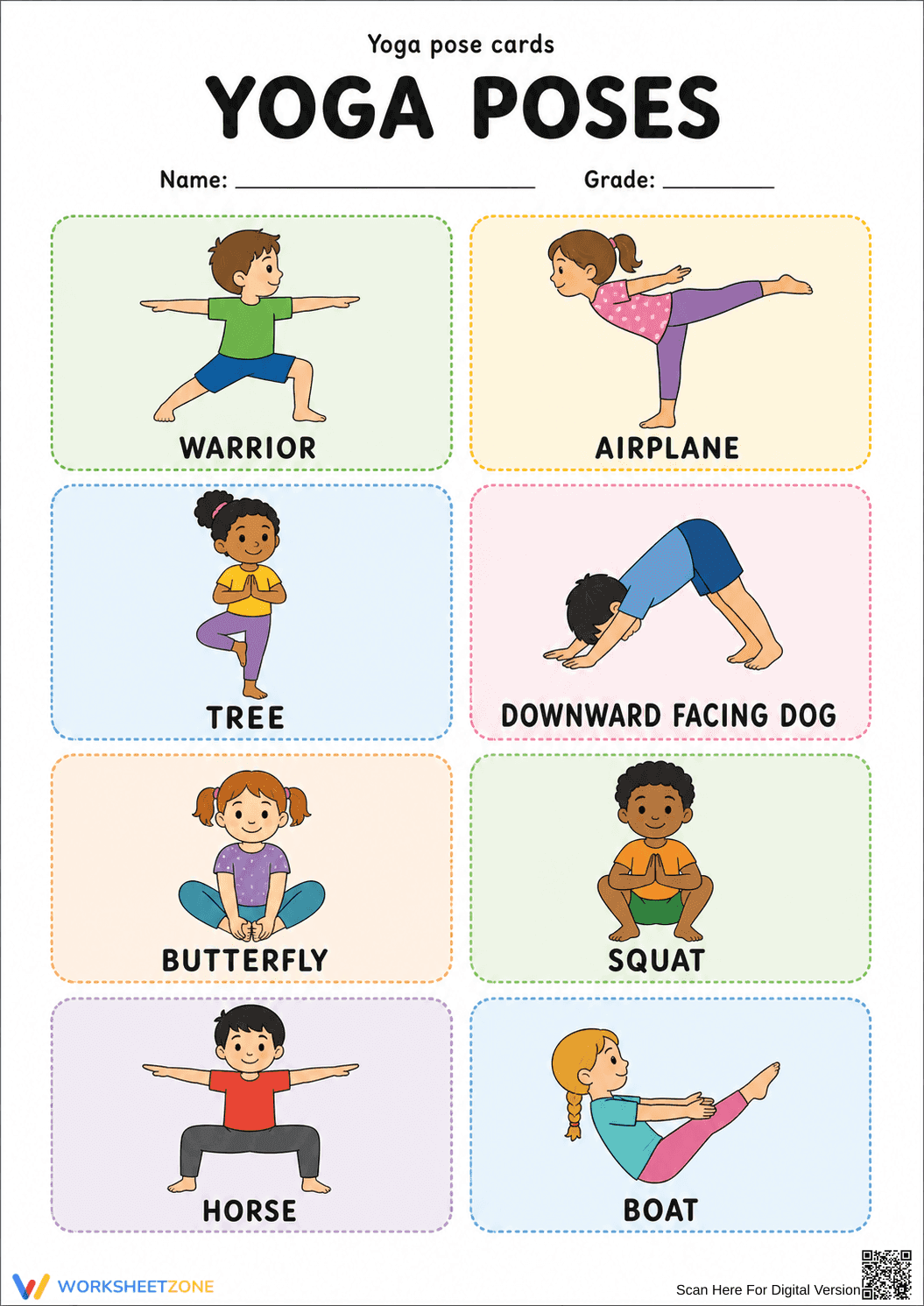

Grade 1 Yoga Poses — Printable No-Prep Worksheet
Paste this activity's link or code into your existing LMS (Google Classroom, Canvas, Teams, Schoology, Moodle, etc.).
Students can open and work on the activity right away, with no student login required.
You'll still be able to track student progress and results from your teacher account.
This Grade 1 yoga poses worksheet provides students with eight visual movement cards to improve gross motor skills, balance, and self-regulation. By following the illustrated guides, children develop physical coordination while practicing mindfulness in a classroom or home setting. It serves as a highly functional tool for brain breaks.
At a Glance
- Grade: 1 · Subject: Physical Education
- Standard:
PE.1.MS.1— Demonstrate basic motor skills and movement patterns- Skill Focus: Gross motor balance and flexibility
- Format: 1 page · 8 poses · No answer key needed · PDF
- Best For: Brain breaks and morning meetings
- Time: 10–15 minutes
The resource features a single-page layout containing eight distinct yoga pose cards: Warrior, Airplane, Tree, Downward Facing Dog, Butterfly, Squat, Horse, and Boat. Each card includes a colorful, diverse illustration of a child performing the pose alongside a clear text label. The high-contrast design ensures visibility when projected or printed as individual flashcards for small group work.
Zero-Prep Workflow
- Print: Open the PDF and print the single-page sheet in color or grayscale (30 seconds).
- Distribute: Hand out the sheet for individual use or project it onto a smartboard for the whole class (30 seconds).
- Review: Lead the students through the eight poses as a guided movement break or station activity (10 minutes).
Total teacher preparation time is under two minutes, making it an ideal sub plan or transition activity during the school day.
Standards Alignment
Aligned to PE.1.MS.1, students demonstrate motor skills and movement patterns needed to perform physical activities. This activity specifically targets static balance and weight transfer through varied body positions. Additionally, it supports social-emotional learning competencies by encouraging self-awareness and stress management through controlled breathing and movement. Both standard codes can be copied directly into lesson plans, IEP goals, or district curriculum mapping tools.
How to Use It
Use this worksheet during transition periods between high-energy subjects to help students refocus their attention. For a formative assessment, observe students during the "Tree" pose to check for static balance proficiency and core engagement. The expected completion time for a full circuit of all eight poses is approximately 12 minutes, allowing for one minute of holding time per pose plus brief transitions.
Who It's For
This resource is designed for Grade 1 students, including those requiring sensory breaks or occupational therapy support. It is particularly effective for kinesthetic learners who benefit from movement-based instruction. Pair this worksheet with a mindfulness anchor chart or a read-aloud book about emotions to create a comprehensive social-emotional learning block that addresses the whole child.
According to the RAND AIRS 2024 report on elementary wellness, integrating short bursts of physical activity into the school day significantly improves student focus and reduces behavioral disruptions. This Grade 1 yoga poses worksheet addresses the PE.1.MS.1 standard by providing structured opportunities for students to practice gross motor balance and flexibility. Research indicates that visual prompts, such as the eight illustrated cards provided here, lower the cognitive load for young learners, allowing them to focus entirely on the physical execution of the movement. By incorporating these poses into a daily routine, educators foster a classroom environment that prioritizes both physical health and emotional regulation. This resource serves as a practical application of movement-based learning strategies that are essential for early childhood development and long-term academic engagement.


