


























Views
Downloads

Letter P Tracing Worksheet | Essential Kindergarten Ready
Paste this activity's link or code into your existing LMS (Google Classroom, Canvas, Teams, Schoology, Moodle, etc.).
Students can open and work on the activity right away, with no student login required.
You'll still be able to track student progress and results from your teacher account.
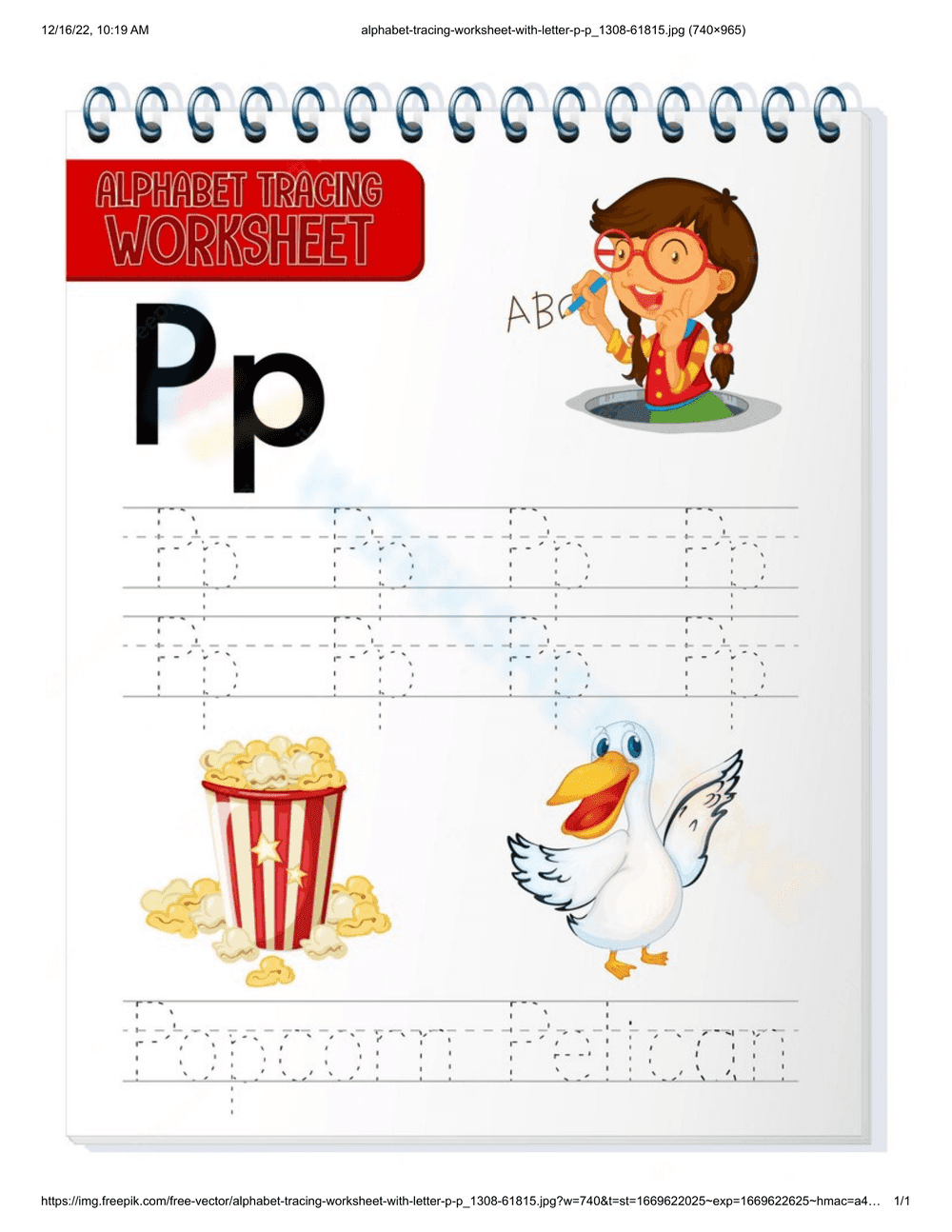
This Kindergarten Letter P tracing worksheet provides immediate practice for students learning to master the mechanics of handwriting. By focusing on both uppercase and lowercase forms, the resource ensures students develop the necessary fine motor control to produce legible text. The inclusion of phonics-based vocabulary words further strengthens the connection between letter shapes and their corresponding sounds in early literacy development.
At a Glance
- Grade: Kindergarten · Subject: English
- Standard:
CCSS.ELA-LITERACY.L.K.1.A— Print many upper- and lowercase letters correctly and legibly- Skill Focus: Letter P formation
- Format: 1 page · 10 problems · Answer key included · PDF
- Best For: Morning work and literacy centers
- Time: 10–15 minutes
The worksheet features a clean, one-page layout designed for maximum clarity. It includes two rows of dedicated tracing space for the letter pair "Pp," followed by specialized tracing tasks for the words "Popcorn" and "Pelican." Each letter is presented with clear dashed lines to guide the student's pencil path. The visual cues, including colorful illustrations of the vocabulary words, provide context and engagement for young learners.
Zero-Prep Workflow
This resource is designed for a zero-prep classroom environment. The workflow is simple: first, print the single-page PDF (30 seconds). Second, distribute the sheets to students during a literacy block or as a transition activity (1 minute). Finally, review the student's letter formation by checking for proper stroke order and alignment with the dashed lines (30 seconds per student).
Standards Alignment
This resource is directly aligned with `CCSS.ELA-LITERACY.L.K.1.A`, which requires students to print many upper- and lowercase letters. By providing specific practice for the letter P, the worksheet helps students meet the foundational requirements for conventions of standard English. Both standard codes can be copied directly into lesson plans, IEP goals, or district curriculum mapping tools to ensure compliance with state and national literacy frameworks.
How to Use It
Use this worksheet during the "You Do" phase of a handwriting lesson after demonstrating the proper stroke order for the letter P on a whiteboard. It serves as an excellent formative assessment tool; teachers can observe pencil grip and stroke direction as students work through the ten tracing tasks. For best results, assign this during a quiet literacy center rotation where students can focus on the precision of their movements. Completion typically takes between 10 and 15 minutes.
Who It's For
This worksheet is primarily intended for Kindergarten students, though it is also suitable for Grade 1 students who require additional handwriting intervention. It is particularly effective for English Language Learners (ELLs) who benefit from the visual pairing of the letter P with recognizable objects like a pelican. Pair this resource with a letter P anchor chart or a phonics song.
Research indicates that early orthographic mapping is significantly enhanced through tactile tracing activities. According to Fisher & Frey (2014), the gradual release of responsibility model in early literacy begins with high-support tasks like tracing to build the muscle memory required for independent letter production. This worksheet targets CCSS.ELA-LITERACY.L.K.1.A by providing structured paths for both uppercase and lowercase 'P', ensuring students internalize the specific strokes needed for legible handwriting. By connecting the letter shape to phonemic anchors like "Popcorn" and "Pelican," the resource supports the dual development of motor skills and phonological awareness. Consistent practice with these structured tracing guides reduces cognitive load, allowing young learners to focus on precision and form. This foundational approach is a proven method for establishing the literacy readiness necessary for more complex writing tasks in subsequent grades, providing a clear pathway toward handwriting mastery and alphabetical fluency.


