


























Views
Downloads

Grade 2 Number Words — Printable No-Prep Worksheet
Paste this activity's link or code into your existing LMS (Google Classroom, Canvas, Teams, Schoology, Moodle, etc.).
Students can open and work on the activity right away, with no student login required.
You'll still be able to track student progress and results from your teacher account.
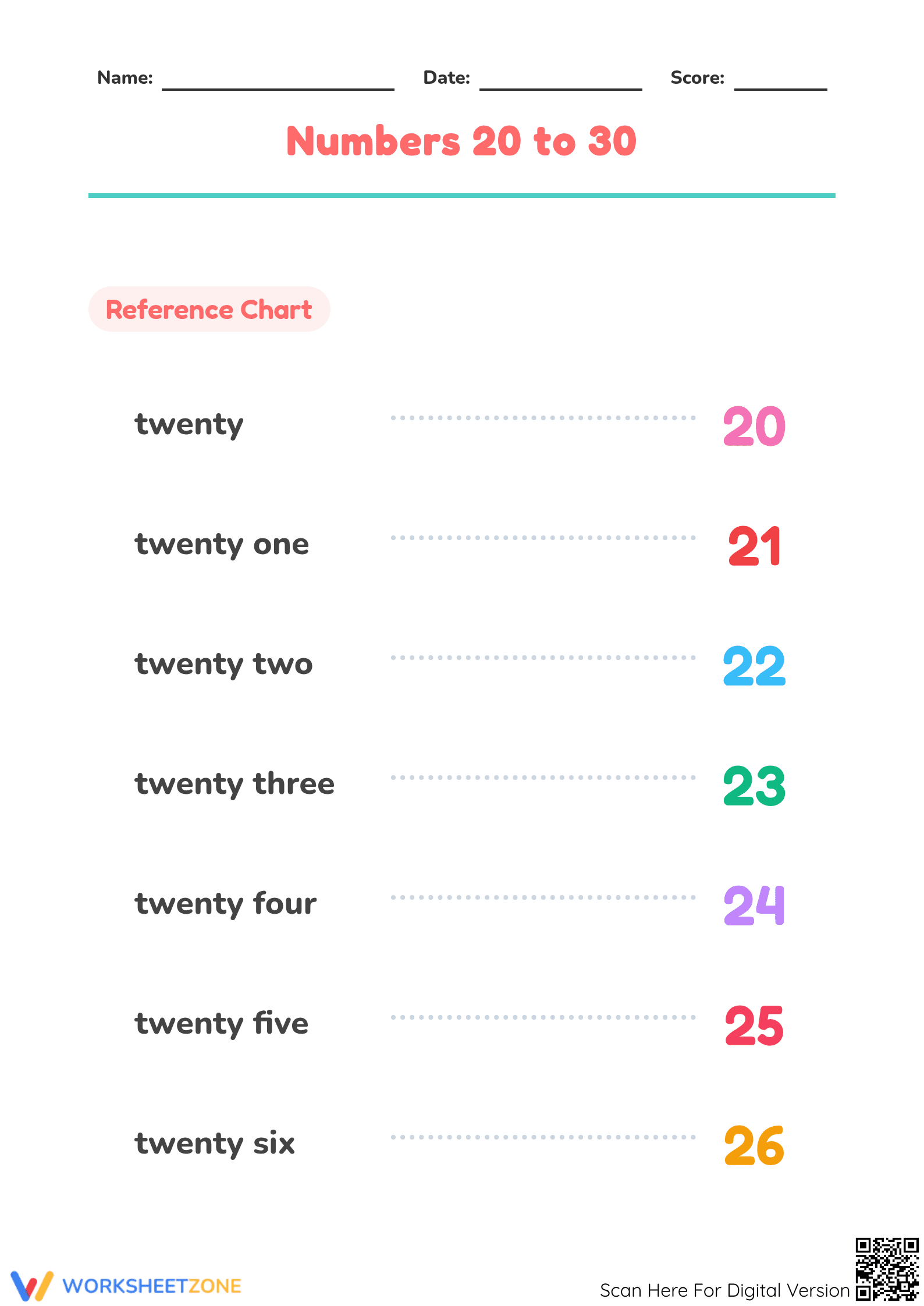
This Grade 2 math worksheet helps students transition confidently between number words and base-ten numerals. By providing a clear reference chart alongside targeted practice, learners build foundational number sense and spelling recognition for numbers twenty through thirty, ensuring they can accurately read and write two-digit values.
At a Glance
- Grade: 2 · Subject: Math
- Standard:
CCSS.MATH.CONTENT.2.NBT.A.3— Read and write numbers using number names.- Skill Focus: Number words to numerals (20-30)
- Format: 3 pages · 5 problems · Answer key included · PDF
- Best For: Independent practice or math centers
- Time: 10–15 minutes
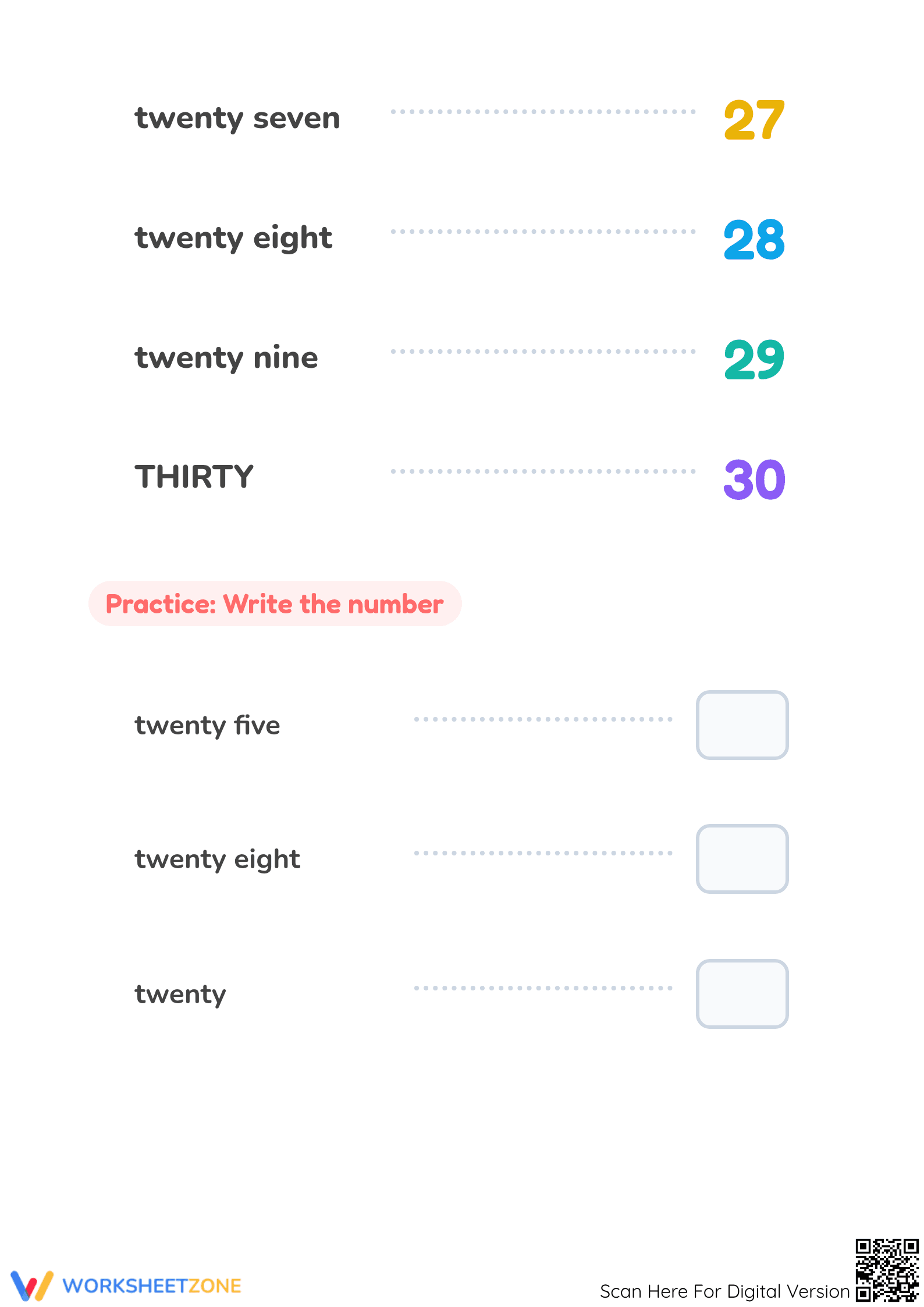
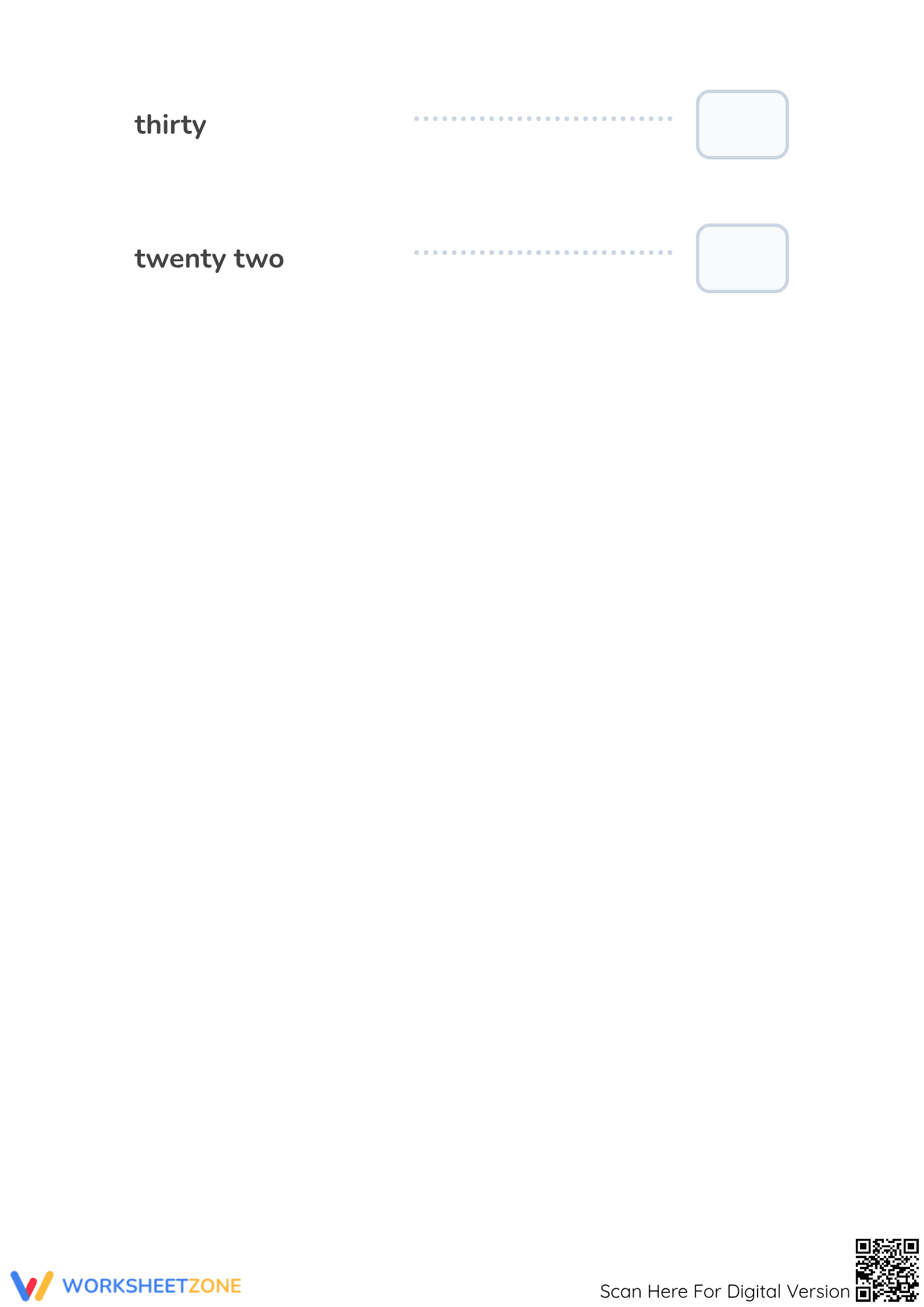
This resource features a comprehensive three-page layout designed for early elementary learners. The first two pages provide a color-coded reference chart mapping the written words "twenty" through "thirty" to their corresponding numerals. Following the chart, students complete five targeted practice problems where they must read a number word and write the correct numeral in the provided box. A complete answer key is included for quick grading.
- Print (1 minute): Simply print the three-page PDF. The clean layout requires no special formatting or cutting.
- Distribute (1 minute): Hand out to students as a standalone assignment, morning work, or substitute teacher activity.
- Review (2 minutes): Use the included answer key to quickly check the five practice boxes for accuracy.
Total teacher prep time is under two minutes, making this an ideal grab-and-go resource for busy educators.
This worksheet is directly aligned to CCSS.MATH.CONTENT.2.NBT.A.3, requiring students to read and write numbers to 1000 using base-ten numerals, number names, and expanded form. It specifically targets the critical transition block of numbers 20 to 30, reinforcing place value understanding. Both standard codes can be copied directly into lesson plans, IEP goals, or district curriculum mapping tools.
Deploy this worksheet during independent math centers after direct instruction on two-digit number words. It also serves as an excellent formative assessment tool; observe whether students rely heavily on the reference chart or if they can complete the five practice boxes from memory. Expected completion time is 10 to 15 minutes.
This activity is designed for second-grade students mastering base-ten numerals and number names. The built-in reference chart provides excellent scaffolding for English Language Learners (ELLs) or students needing extra visual support. Pair this worksheet with base-ten block manipulatives to further solidify the connection between the written word, the numeral, and the physical quantity.
Developing fluency in translating between written words and numerical symbols is a critical component of early mathematical literacy. According to EdReports 2024, instructional materials that explicitly connect number names to base-ten numerals significantly improve students' overall number sense and place value comprehension. This worksheet supports that pedagogical approach by aligning with CCSS.MATH.CONTENT.2.NBT.A.3, ensuring students can accurately read and write numbers using number names. By integrating a visual reference chart with immediate application tasks, learners bridge the gap between language and mathematics. This dual-coding strategy not only reinforces spelling and reading skills but also solidifies the foundational math concepts required for higher-level arithmetic and problem-solving in subsequent grades. Mastery of this specific skill is essential for students to successfully process real-world mathematical contexts, from reading clocks to handling currency.


