


























Views
Downloads


Essential Nouns Practice Worksheet | Grades 1-3
Paste this activity's link or code into your existing LMS (Google Classroom, Canvas, Teams, Schoology, Moodle, etc.).
Students can open and work on the activity right away, with no student login required.
You'll still be able to track student progress and results from your teacher account.
Identifying nouns is a foundational literacy skill that bridges the gap between simple vocabulary and complex sentence structure. This worksheet helps students recognize people, places, and things within the context of complete sentences, ensuring they understand how these lexical units function in real-world communication. By isolating the naming words in varied contexts, students build the grammatical awareness necessary for fluent reading and writing.
At a Glance
- Grade: 1-3 · Subject: ELA
- Standard:
CCSS.ELA-LITERACY.L.1.1.B— Use common, proper, and possessive nouns in sentences- Skill Focus: Noun identification (person, place, thing)
- Format: 2 pages · 10 problems · Answer key included · PDF
- Best For: Independent practice or quick formative assessment
- Time: 10–15 minutes
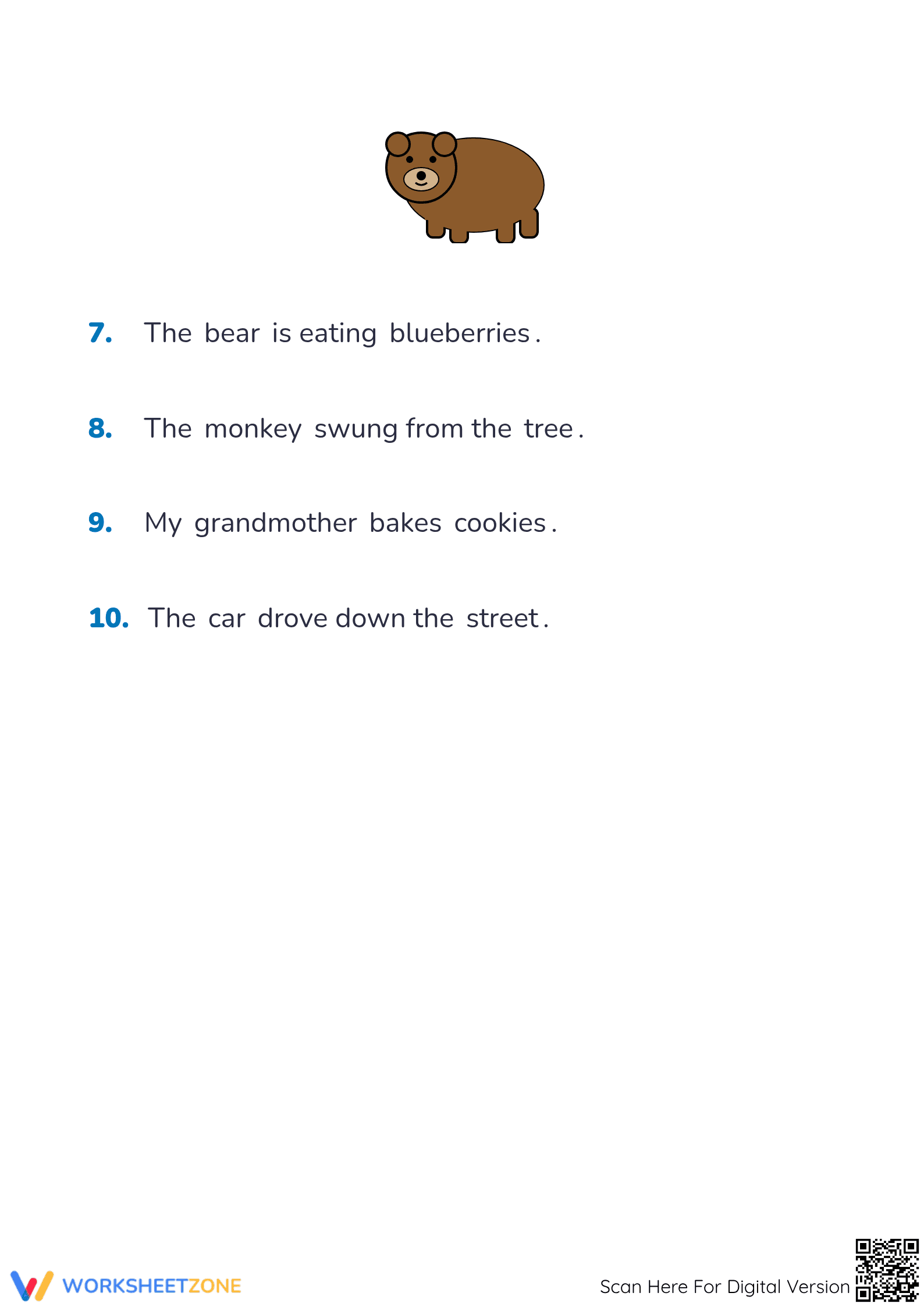
This two-page PDF features 10 carefully crafted sentences ranging in complexity. A helpful definition box at the top of the first page reminds students that nouns represent a person, a place, or a thing. The layout is clean and distraction-free, providing ample space for students to circle their answers. A full answer key is provided for rapid grading, making it easy to provide immediate feedback to learners.
Zero-Prep Workflow
- Print: Select the two-page PDF and print enough copies for your class in under 30 seconds.
- Distribute: Hand out the sheets as a morning warm-up, "bell ringer" activity, or a quick transition task.
- Review: Use the included answer key to check student work or project it for a whole-class review. Total teacher prep time is under two minutes, making this an ideal sub-plan resource.
Standards Alignment
This resource is primarily aligned with CCSS.ELA-LITERACY.L.1.1.B, which focuses on the correct use and identification of common and proper nouns. By identifying nouns like "Spain," "Nick," and "store," students demonstrate mastery of noun categories across different contexts. Both standard codes can be copied directly into lesson plans, IEP goals, or district curriculum mapping tools to ensure instructional compliance.
How to Use It
Use this worksheet during the "You Do" phase of a gradual release lesson on parts of speech. It serves as an excellent formative assessment tool; as students work, walk around to see if they are identifying both common nouns like "apple" and proper nouns like "Spain." This activity is designed to be completed within a 10 to 15-minute window, fitting perfectly into a standard ELA block.
Who It's For
This resource is designed for students in Grades 1 through 3, but it is also highly effective for English Language Learners (ELLs) who need explicit practice with English word classes. It pairs naturally with a classroom anchor chart or a direct instruction lesson on naming words. The simple sentence structures ensure that the focus remains on grammar rather than decoding difficulty.
According to Fisher & Frey (2014), the gradual release of responsibility model is most effective when students are provided with clear, focused tasks that reinforce direct instruction. This worksheet adheres to that principle by providing a specific definition box followed by 10 targeted practice opportunities. By isolating the skill of noun identification within simple and compound sentences, the resource reduces cognitive load, allowing early elementary students to build the lexical stamina necessary for more advanced syntactic analysis. Research from the NAEP suggests that early mastery of parts of speech is a significant predictor of later reading comprehension success. This worksheet provides the repetitive, high-success practice required to move noun recognition from a conscious effort to an automatic skill. The inclusion of the CCSS.ELA-LITERACY.L.1.1.B standard ensures that the practice is strategically aligned with national expectations for primary literacy development.


