




























Views
Downloads
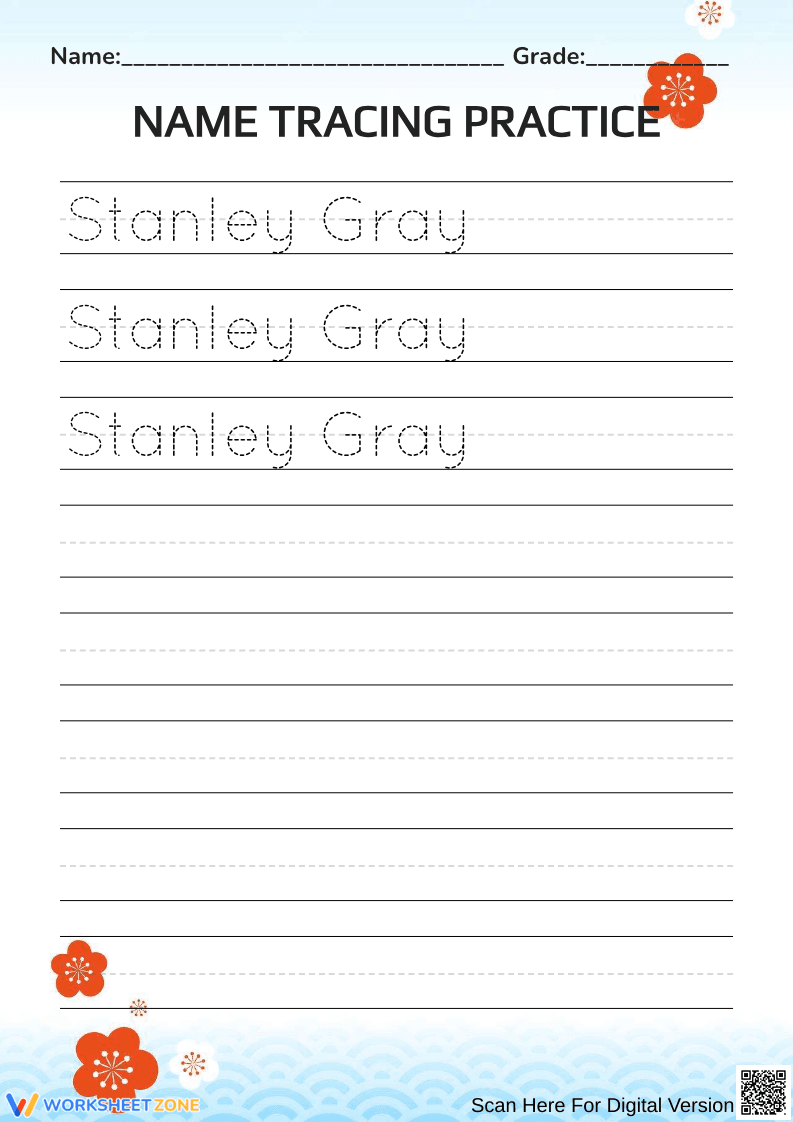

Name Tracing Practice | Essential Grade K-1 Printable

Paste this activity's link or code into your existing LMS (Google Classroom, Canvas, Teams, Schoology, Moodle, etc.).
Students can open and work on the activity right away, with no student login required.
You'll still be able to track student progress and results from your teacher account.
This Grade K-1 name tracing worksheet provides students with structured practice to master letter formation and name recognition. By combining guided tracing with independent writing lines, learners build the muscle memory needed for legible handwriting. This resource ensures students gain confidence in writing their specific name while developing essential fine motor control.
At a Glance
- Grade: K-1 · Subject: Handwriting
- Standard:
CCSS.ELA-LITERACY.L.K.1.A— Print many upper- and lowercase letters accurately- Skill Focus: Name tracing and letter formation
- Format: 1 page · 10 tasks · Answer key N/A · PDF
- Best For: Morning work or handwriting centers
- Time: 5–10 minutes
The worksheet features a clean, distraction-free layout optimized for young learners. It includes one full page with three lines of dotted-line tracing for the name "Stanley Gray" followed by seven empty primary ruled lines. The primary ruling includes a dashed midline to help students maintain consistent letter height and spacing throughout their practice session.
Zero-Prep Workflow
- Print: Generate the PDF and print copies for your class in under 30 seconds.
- Distribute: Hand out sheets during morning arrival or as a transition activity between subjects.
- Review: Provide immediate feedback on pencil grip and stroke direction as students work.
The total teacher preparation time is less than 2 minutes, making it an ideal choice for sub plans or daily handwriting warm-ups.
Standards Alignment
The primary focus is `CCSS.ELA-LITERACY.L.K.1.A`, which requires students to print many upper- and lowercase letters. By practicing a specific name, students engage with a variety of letter shapes and connections in a meaningful context. Both standard codes can be copied directly into lesson plans, IEP goals, or district curriculum mapping tools.
How to Use It
Use this worksheet during the independent practice phase of a handwriting lesson. It is particularly effective as a quiet transition activity after direct instruction on letter strokes. Teachers should observe the student's grip and stroke direction, providing immediate formative feedback. Expect completion within 5 to 10 minutes depending on the student's fine motor development.
Who It's For
This is designed for preschool, kindergarten, and first-grade students who are beginning to write their names. It serves as an excellent differentiation tool for students needing extra support with spatial awareness on the page. Pair this with an alphabet anchor chart to help students reference letter shapes while they work independently.
According to Fisher & Frey (2014), the gradual release of responsibility is vital in early literacy, moving from guided tracing to independent production. This worksheet follows that model by providing three scaffolded tracing lines before requiring the student to produce the text on seven empty primary lines. Aligning with CCSS.ELA-LITERACY.L.K.1.A, the resource targets the foundational skill of letter formation, which is a significant predictor of later writing fluency. Research from the NAEP suggests that early mastery of handwriting allows cognitive resources to be redirected toward higher-level composition tasks. By providing 10 distinct opportunities for practice on a single page, this tool ensures high-repetition engagement without overwhelming the learner. It is a practical, evidence-based addition to any early elementary writing curriculum or individualized education program focusing on fine motor development.


