


























Views
Downloads
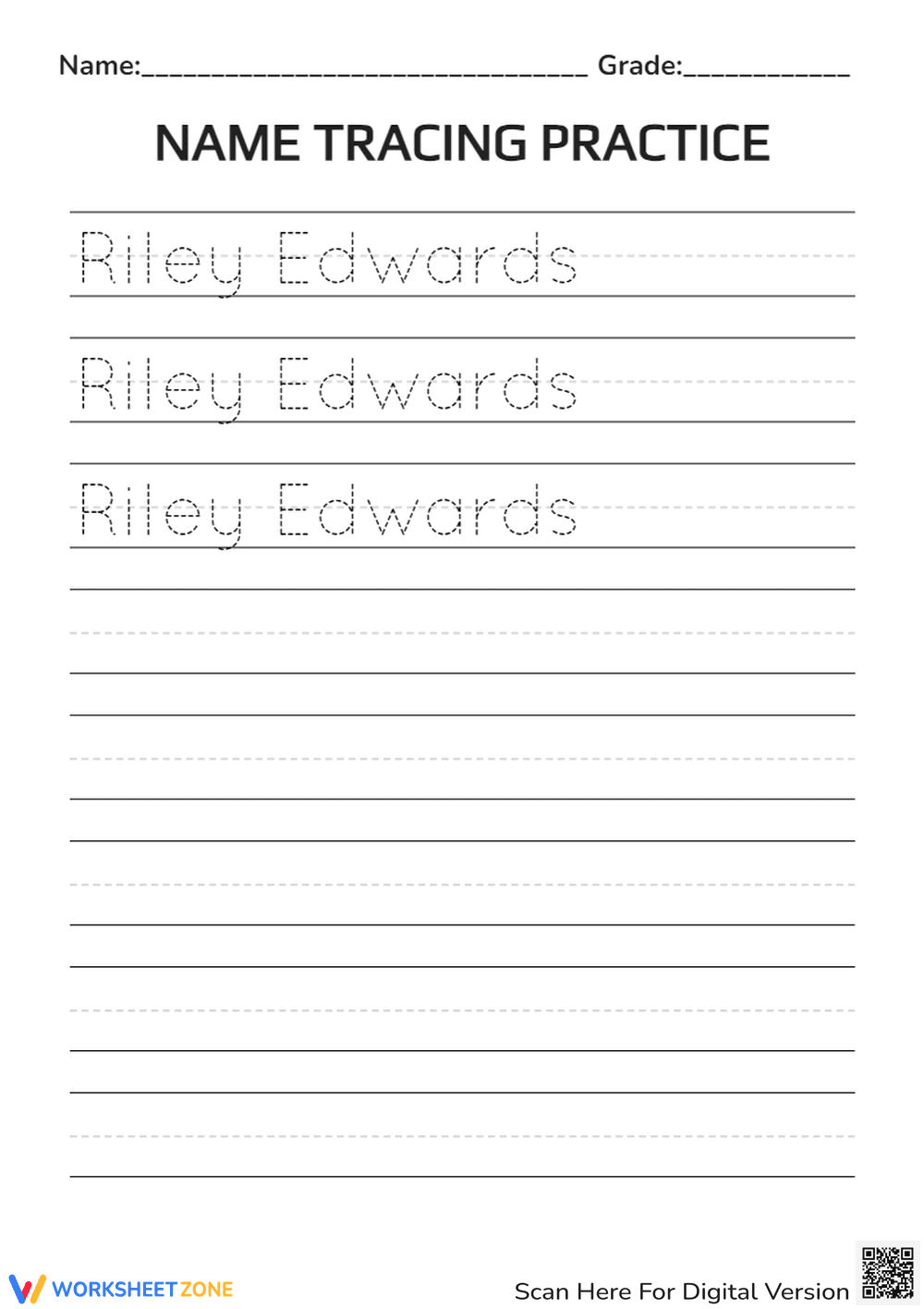

Printable Name Tracing Worksheet | Grade K
Paste this activity's link or code into your existing LMS (Google Classroom, Canvas, Teams, Schoology, Moodle, etc.).
Students can open and work on the activity right away, with no student login required.
You'll still be able to track student progress and results from your teacher account.
This printable name tracing worksheet helps early learners master proper letter formation and spatial awareness. By practicing their specific name, students build fine motor control and foundational handwriting skills. The structured layout transitions from guided tracing to independent writing, ensuring steady progress in early literacy development.
At a Glance
- Grade: K · Subject: Handwriting
- Standard:
CCSS.ELA-LITERACY.L.K.1.A— Print many upper- and lowercase letters- Skill Focus: Name Tracing
- Format: 1 page · 8 practice lines · No answer key · PDF
- Best For: Morning work and centers
- Time: 10–15 minutes
This single-page resource features a clear, primary-lined format designed specifically for young writers. The page includes three rows of dotted-line text for guided tracing of the name "Riley Edwards," followed by five empty primary-lined rows for independent practice. The generous spacing accommodates developing fine motor skills, while the dashed midline provides a crucial visual guide for proper letter sizing and placement.
Zero-Prep Workflow
- Print (1 minute): Simply send the PDF to your printer. The black-and-white design ensures crisp, clear lines while saving ink.
- Distribute (1 minute): Hand out the sheets during morning arrival or transition times. The intuitive layout means students know exactly what to do.
- Review (1 minute): Quickly scan completed sheets to check for proper pencil grip, stroke direction, and line adherence.
With a total prep time of under two minutes, this resource is an excellent addition to any emergency sub plan or daily routine.
Standards Alignment
This handwriting practice aligns directly with CCSS.ELA-LITERACY.L.K.1.A, which requires students to print many upper- and lowercase letters. By focusing on the letters within a specific name, the activity provides meaningful, personalized context for this foundational skill. Both standard codes can be copied directly into lesson plans, IEP goals, or district curriculum mapping tools.
How to Use It
This resource is highly versatile for early childhood classrooms. Use it as a daily morning work activity to establish a calm, focused routine as students arrive. Alternatively, place it in a literacy center for independent practice during small group instruction. As a formative assessment tip, observe students tracing the first row to ensure they start letters at the top. Expected completion time is 10 to 15 minutes.
Who It's For
This worksheet is designed for Kindergarten and first-grade students developing handwriting and fine motor skills. It is also highly effective for occupational therapy sessions or special education students working on individualized name-writing goals. For differentiation, teachers can highlight the bottom baseline with a green marker to provide an extra visual cue for students struggling with spatial boundaries. Pair this activity with a tactile letter-formation lesson using sand trays or shaving cream.
Mastering proper letter formation through targeted practice is a critical milestone in early childhood education. This worksheet supports CCSS.ELA-LITERACY.L.K.1.A by helping students print many upper- and lowercase letters accurately. According to Fisher & Frey (2014), structured, repetitive practice with immediate relevance—such as writing one's own name—significantly increases student engagement and retention of foundational literacy skills. The gradual transition from dotted tracing lines to independent primary lines scaffolds the cognitive and motor demands placed on young learners. By isolating the specific strokes required for their name, students build the automaticity necessary for later, more complex writing tasks. This targeted approach ensures that working memory is eventually freed up for composition and spelling, rather than being consumed by the physical act of letter production, setting a strong foundation for future academic success.


