


























Views
Downloads
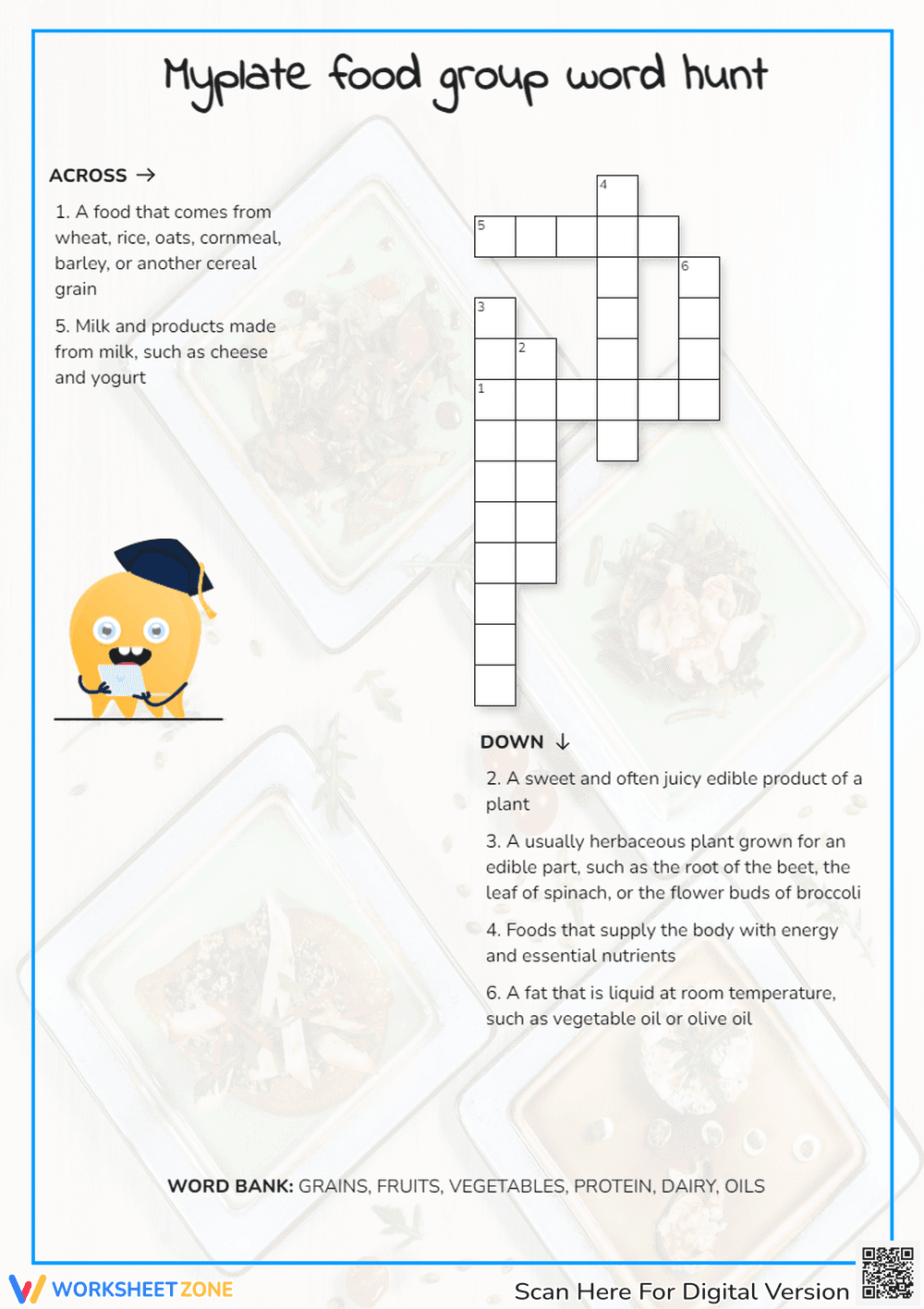

Grade 3 Food Groups — Printable No-Prep Worksheet
Paste this activity's link or code into your existing LMS (Google Classroom, Canvas, Teams, Schoology, Moodle, etc.).
Students can open and work on the activity right away, with no student login required.
You'll still be able to track student progress and results from your teacher account.
This Grade 3 nutrition worksheet helps students master essential health vocabulary by identifying the six major food groups. Using targeted clues and a provided word bank, learners reinforce their understanding of balanced diets and healthy eating habits while completing an engaging crossword puzzle format.
At a Glance
- Grade: 3 · Subject: Health
- Standard:
CCSS.ELA-LITERACY.L.3.6— Acquire and use domain-specific words- Skill Focus: Food group vocabulary
- Format: 1 page · 6 problems · Answer key included · PDF
- Best For: Independent practice or morning work
- Time: 10–15 minutes
Inside this single-page resource, educators will find a structured crossword puzzle featuring six distinct clues related to the MyPlate nutrition guidelines. The worksheet includes a helpful word bank at the bottom—containing terms like grains, fruits, vegetables, protein, dairy, and oils—to support spelling and vocabulary recall. A complete answer key is provided to ensure quick and accurate grading for teachers.
This resource offers a streamlined zero-prep workflow:
- Print (1 minute): Download and print the required copies. The design is printer-friendly.
- Distribute (1 minute): Hand out the worksheets. The clear instructions and word bank mean students can begin immediately.
- Review (3 minutes): Use the provided answer key to quickly check responses or display it for self-correction.
With a total teacher prep time of under two minutes, this activity is an excellent addition to any emergency sub plan.
This activity aligns with CCSS.ELA-LITERACY.L.3.6, requiring students to acquire and use accurately grade-appropriate conversational, general academic, and domain-specific words and phrases. By reading descriptive clues and matching them to specific nutritional categories, students practice critical reading comprehension and vocabulary application. Both standard codes can be copied directly into lesson plans, IEP goals, or district curriculum mapping tools.
Use this crossword puzzle as a formative assessment after a direct instruction lesson on MyPlate guidelines. It serves as an effective independent practice activity to solidify new vocabulary. Alternatively, it works well as a quiet morning work assignment to activate prior knowledge. As a formative assessment observation tip, teachers should note which clues students struggle to decode, indicating a need to review specific definitions. Expected completion time ranges from 10 to 15 minutes.
This worksheet is designed for third-grade students learning about health and nutrition. The inclusion of a word bank provides built-in differentiation, making the task accessible for English Language Learners and students who require spelling support. It pairs naturally with a visual anchor chart of the MyPlate diagram or a direct instruction lesson on building balanced meals.
Integrating domain-specific vocabulary practice into elementary health education significantly improves student retention of core nutritional concepts. According to a recent ScienceDirect TpT Analysis, educational resources that combine visual puzzles with targeted terminology increase student engagement and content mastery by providing multiple cognitive pathways for information recall. This specific worksheet directly targets CCSS.ELA-LITERACY.L.3.6, helping students acquire and use domain-specific words effectively in context. By requiring young learners to read descriptive clues and carefully select the correct nutritional term from a provided word bank, the activity reinforces both foundational reading comprehension and essential scientific literacy. Consistent exposure to health-related vocabulary in structured, low-stakes formats ensures that students can confidently discuss and apply healthy eating principles in their daily lives. This evidence-based instructional approach supports long-term academic success and promotes practical life skills through accessible, standards-aligned classroom practice.


