


























1 / 3
0
Views
0
Downloads

0.0
0
Save
0 Likes
Share
Understanding Mutations Worksheet
0 Views
0 Downloads
Paste this activity's link or code into your existing LMS (Google Classroom, Canvas, Teams, Schoology, Moodle, etc.).
Students can open and work on the activity right away, with no student login required.
You'll still be able to track student progress and results from your teacher account.
Information
Description
What It Is:
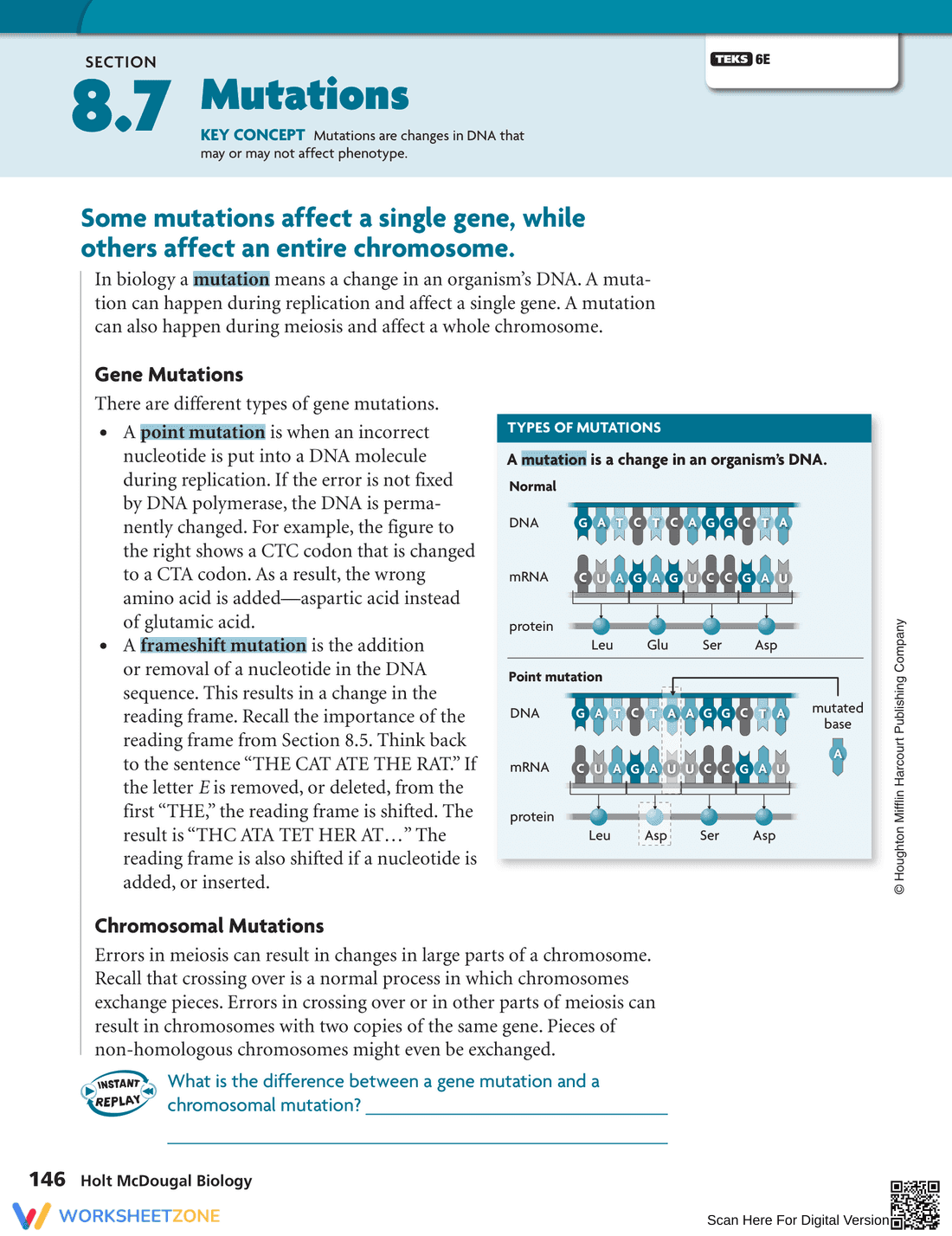
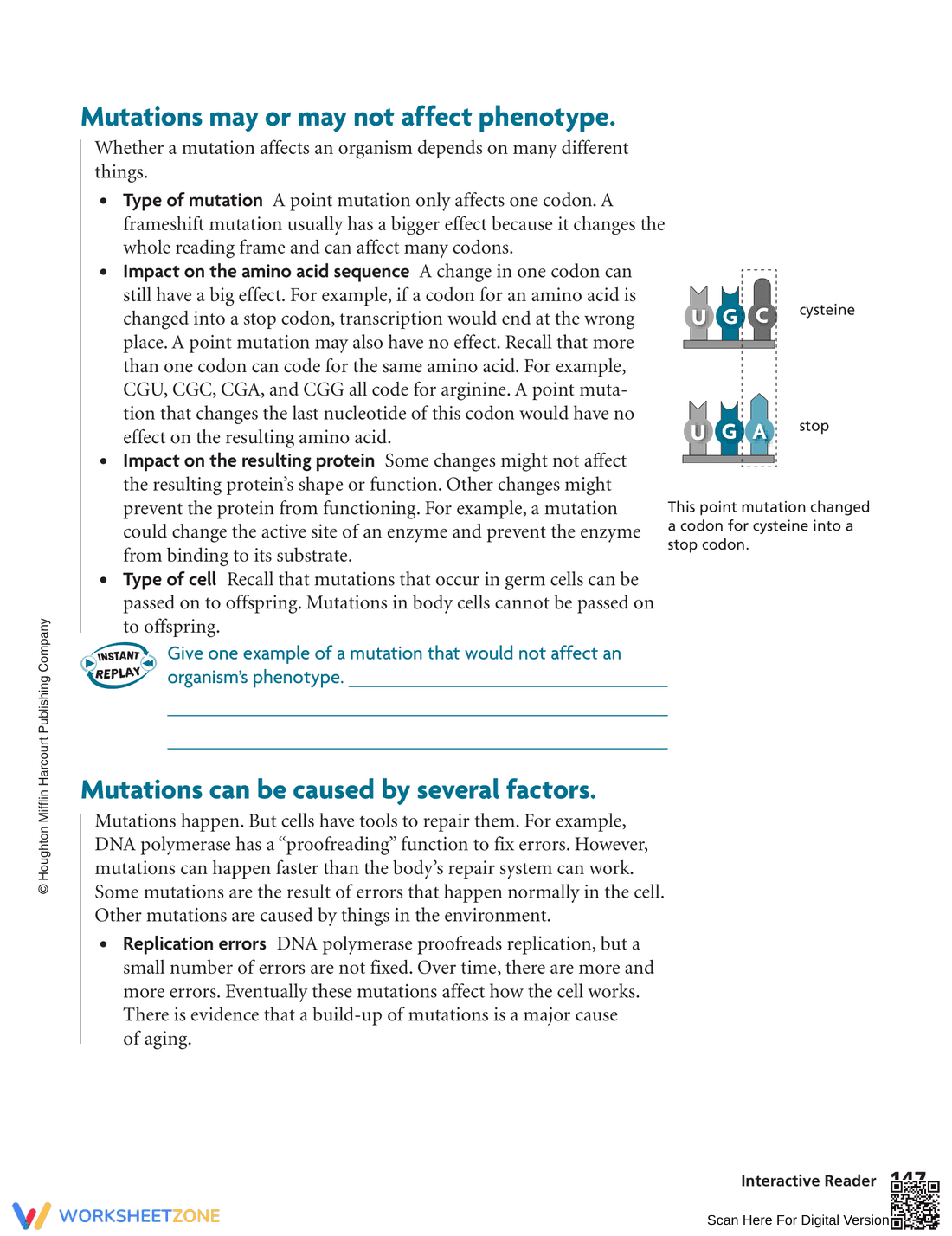
This is a biology worksheet page titled 'Mutations' from a textbook. It explains the concept of mutations as changes in DNA that may or may not affect phenotype. It covers gene mutations, including point mutations and frameshift mutations, with examples and a diagram illustrating a point mutation. It also briefly introduces chromosomal mutations and includes a question prompting the student to differentiate between gene and chromosomal mutations.
Grade Level Suitability:
Suitable for grades 9-12, specifically high school biology courses. The content involves molecular biology concepts like DNA, codons, amino acids, and meiosis, requiring a solid foundation in basic biology.
Why Use It:
This worksheet helps students understand the different types of mutations (gene and chromosomal), the mechanisms behind point and frameshift mutations, and the impact of mutations on protein synthesis and ultimately, phenotype. The visual diagram aids in understanding the molecular changes in a point mutation.
How to Use It:
The worksheet can be used as part of a lesson on genetics and mutations. Students can read the explanations, study the diagram, and then answer the question at the bottom to test their understanding of the differences between gene and chromosomal mutations. The 'Mutant Replay' icon suggests there may be an activity or further explanation of this concept available.
Target Users:
High school biology students, particularly those studying genetics, molecular biology, or heredity. It's also useful for teachers looking for concise explanations and visual aids to teach mutation concepts.
This is a biology worksheet page titled 'Mutations' from a textbook. It explains the concept of mutations as changes in DNA that may or may not affect phenotype. It covers gene mutations, including point mutations and frameshift mutations, with examples and a diagram illustrating a point mutation. It also briefly introduces chromosomal mutations and includes a question prompting the student to differentiate between gene and chromosomal mutations.
Grade Level Suitability:
Suitable for grades 9-12, specifically high school biology courses. The content involves molecular biology concepts like DNA, codons, amino acids, and meiosis, requiring a solid foundation in basic biology.
Why Use It:
This worksheet helps students understand the different types of mutations (gene and chromosomal), the mechanisms behind point and frameshift mutations, and the impact of mutations on protein synthesis and ultimately, phenotype. The visual diagram aids in understanding the molecular changes in a point mutation.
How to Use It:
The worksheet can be used as part of a lesson on genetics and mutations. Students can read the explanations, study the diagram, and then answer the question at the bottom to test their understanding of the differences between gene and chromosomal mutations. The 'Mutant Replay' icon suggests there may be an activity or further explanation of this concept available.
Target Users:
High school biology students, particularly those studying genetics, molecular biology, or heredity. It's also useful for teachers looking for concise explanations and visual aids to teach mutation concepts.


