


























Views
Downloads



Printable Missing Numbers to 20 Worksheet | Grade 1 Math
Paste this activity's link or code into your existing LMS (Google Classroom, Canvas, Teams, Schoology, Moodle, etc.).
Students can open and work on the activity right away, with no student login required.
You'll still be able to track student progress and results from your teacher account.
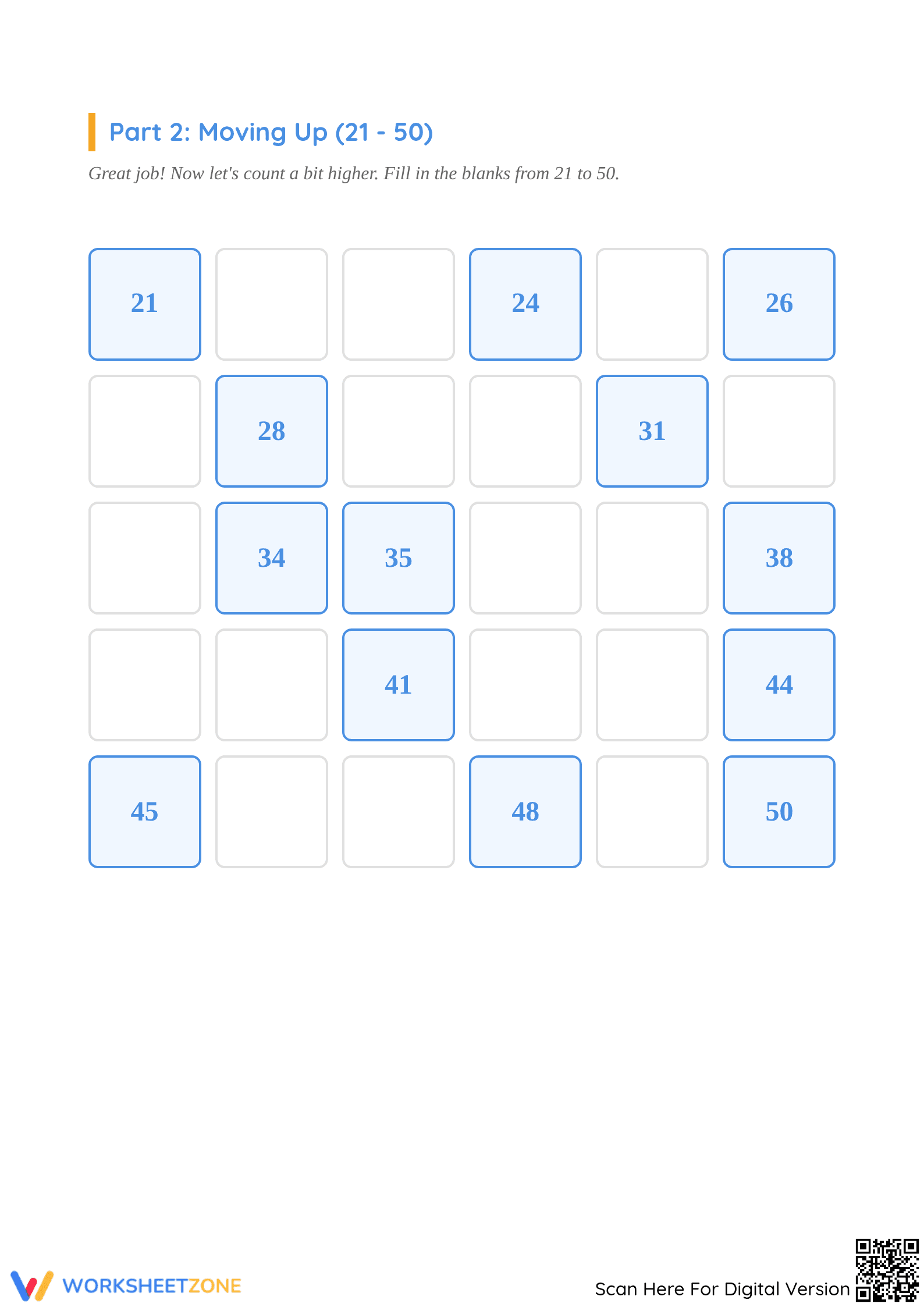
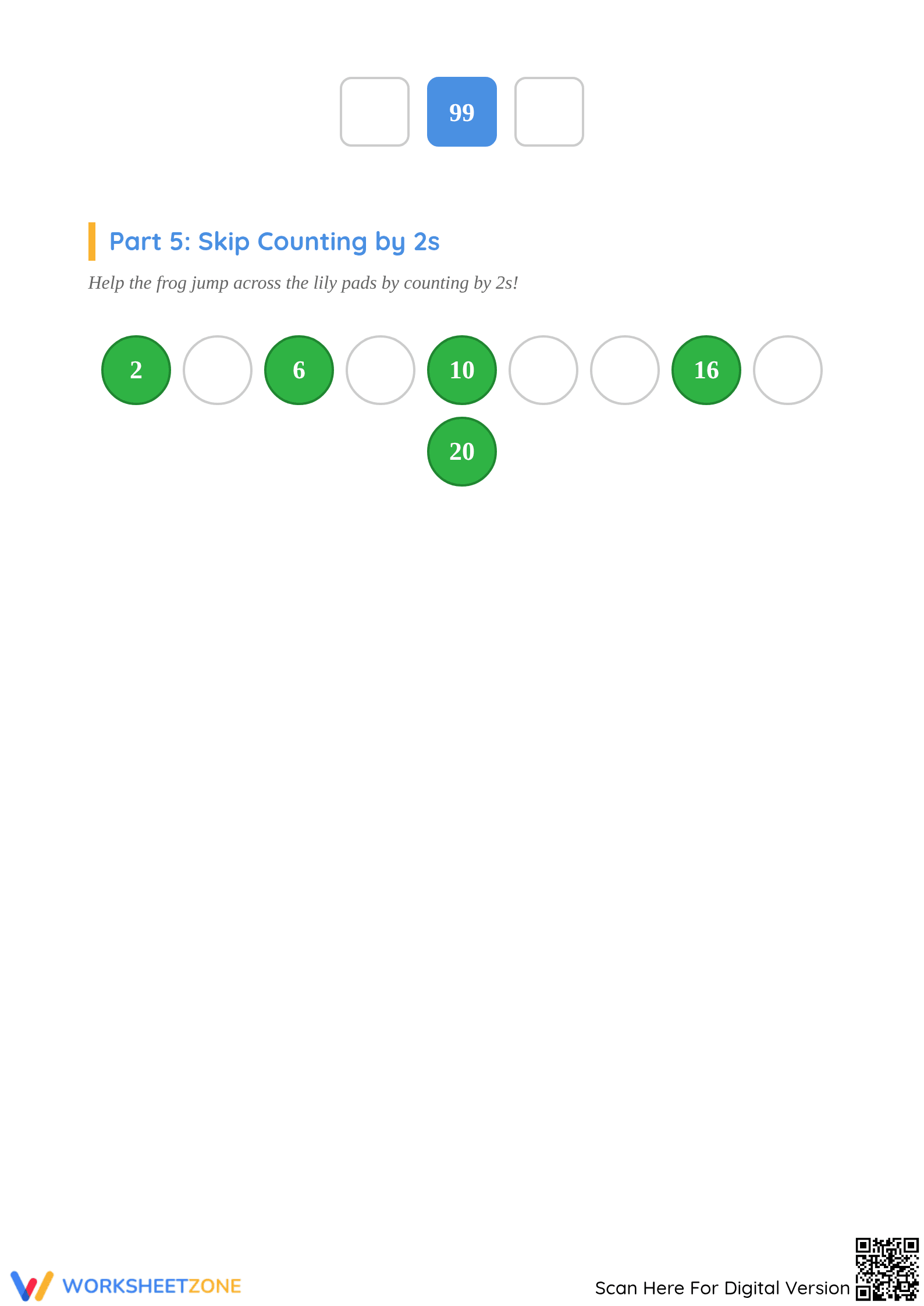
This Grade 1 missing numbers to 20 worksheet provides students with essential practice in counting through sequential number identification. By filling in blanks within number strings, learners reinforce their understanding of numerical order. This resource ensures that students develop the foundational fluency required for complex arithmetic operations and place value concepts.
At a Glance
- Grade: 1 · Subject: Math
- Standard:
1.NBT.A.1— Students count to 120 and write numerals to represent objects in a sequence- Skill Focus: Sequential number identification and writing 1–20
- Format: 4 pages · 60 structured counting problems · Full answer key included · High-quality PDF
- Best For: Daily morning work, independent practice, and foundational number fluency
- Time: 15–20 minutes per page
This comprehensive four-page PDF includes a variety of number sequences ranging from 1 to 20, designed to challenge students at different points in their counting journey. Each page features clear, easy-to-read fonts and large blank boxes for numeral entry, making it accessible for young learners developing fine motor skills. The set includes a full answer key, allowing for quick grading or student self-correction during independent practice sessions.
Zero-Prep Workflow
The zero-prep design allows teachers to implement this activity in under two minutes. First, select the desired pages and print copies for your cohort (30 seconds). Second, distribute the worksheets during transitions or as a morning activity (30 seconds). Third, use the answer key to review responses or perform a rapid check (60 seconds). This workflow is ideal for emergency sub plans or supplemental practice.
Standards Alignment
This resource is explicitly aligned with 1.NBT.A.1, which requires students to count to 120, starting at any number less than 120. In this specific range of 1 to 20, students must read and write numerals to represent a sequence correctly. Mastery of this standard is a prerequisite for understanding place value and addition. This standard code can be copied directly into lesson plans, IEP goals, or district curriculum mapping tools.
How to Use It
Use this worksheet as a formative assessment after initial instruction on the 1-20 number line. During completion, circulate the room to observe if students are counting on their fingers or utilizing mental number lines; this provides insight into their developmental level of abstraction. Alternatively, assign individual pages as homework to reinforce classroom learning and encourage parental involvement in basic numeracy skills. Completion typically takes between fifteen and twenty minutes per page.
Who It's For
This resource is designed for Grade 1 students, though it is equally effective for Kindergarten learners ready for extension or Grade 2 students needing remedial support. It pairs naturally with an interactive number line or a 100-chart as a visual scaffold for students who are still building confidence. The repetitive nature of the tasks provides the necessary drill for students with diverse learning needs to achieve automaticity in number recognition.
Consistent practice with sequential number identification is a primary predictor of later success in algebraic thinking and multi-digit operations. This worksheet addresses the critical transition from rote counting to symbolic representation, vital for mathematical literacy. By engaging in these 60 structured tasks, students solidify their mental number line and improve their ability to count on from any given value, moving towards mastery.


