


























0
Views
0
Downloads

0.0
0
Save
0 Likes
Share
Exploring Metaphors Worksheet
0 Views
0 Downloads
Paste this activity's link or code into your existing LMS (Google Classroom, Canvas, Teams, Schoology, Moodle, etc.).
Students can open and work on the activity right away, with no student login required.
You'll still be able to track student progress and results from your teacher account.
Information
Description
What It Is:
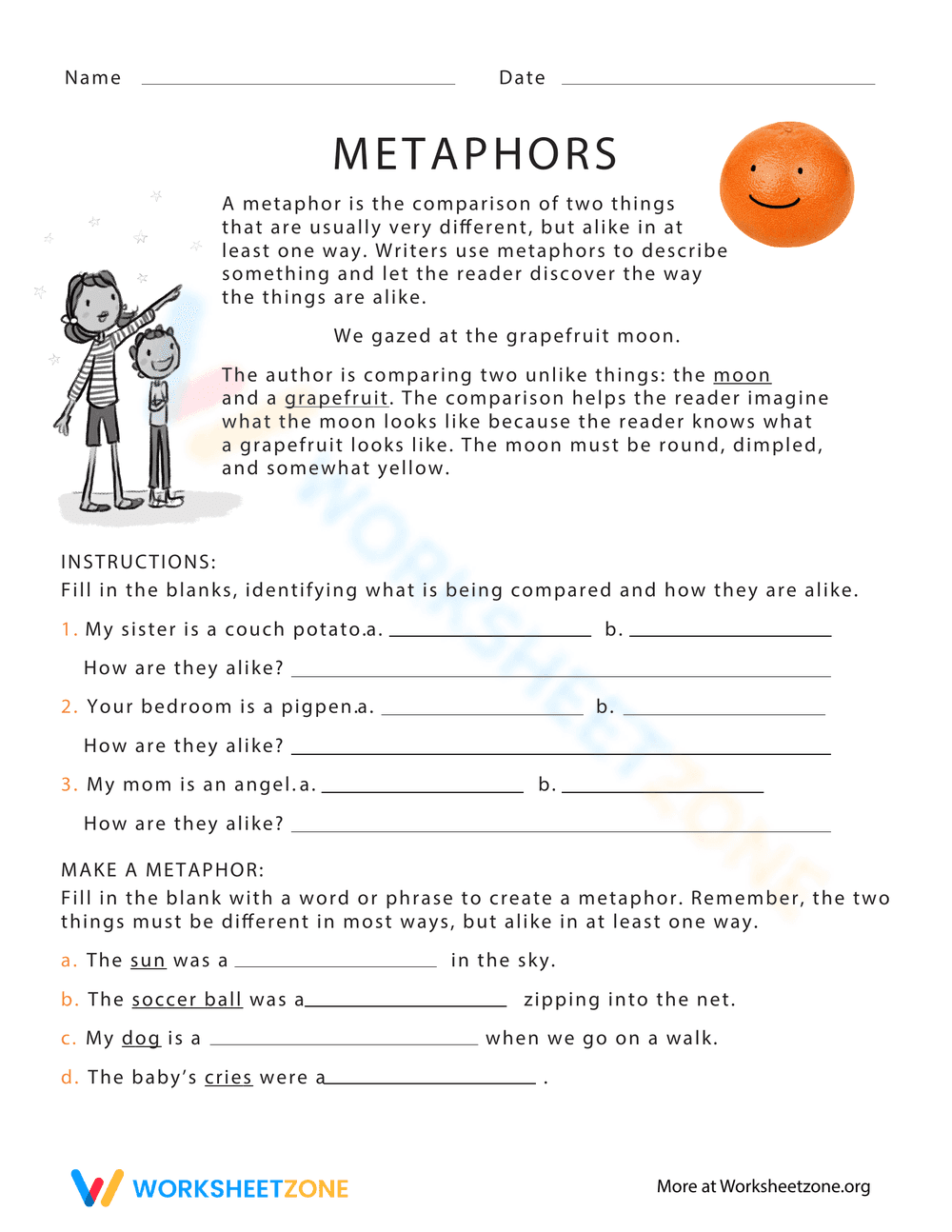
This is a worksheet focused on teaching metaphors. It includes a definition of metaphors, an example sentence ('We gazed at the grapefruit moon'), and an explanation of that example. The worksheet has two activities: filling in blanks to complete existing metaphors and creating original metaphors using provided sentence starters.
Grade Level Suitability:
This worksheet is suitable for grades 4-6. The language and concepts are accessible to students in these grades who are learning about figurative language. The fill-in-the-blank exercises provide scaffolding, while the 'Make a Metaphor' section encourages independent application of the concept.
Why Use It:
This worksheet helps students understand and practice using metaphors. It enhances their comprehension of figurative language and encourages creative writing skills by prompting them to make comparisons between dissimilar things.
How to Use It:
First, review the definition of a metaphor and the provided example. Then, have students complete the fill-in-the-blank sections, identifying the two things being compared and explaining how they are alike. Finally, guide them to create their own metaphors using the sentence starters, emphasizing the importance of finding a unique similarity between unlike things.
Target Users:
This worksheet is designed for elementary and middle school students learning about figurative language, specifically metaphors. It can also be used for students who need extra practice with creative writing and language skills.
This is a worksheet focused on teaching metaphors. It includes a definition of metaphors, an example sentence ('We gazed at the grapefruit moon'), and an explanation of that example. The worksheet has two activities: filling in blanks to complete existing metaphors and creating original metaphors using provided sentence starters.
Grade Level Suitability:
This worksheet is suitable for grades 4-6. The language and concepts are accessible to students in these grades who are learning about figurative language. The fill-in-the-blank exercises provide scaffolding, while the 'Make a Metaphor' section encourages independent application of the concept.
Why Use It:
This worksheet helps students understand and practice using metaphors. It enhances their comprehension of figurative language and encourages creative writing skills by prompting them to make comparisons between dissimilar things.
How to Use It:
First, review the definition of a metaphor and the provided example. Then, have students complete the fill-in-the-blank sections, identifying the two things being compared and explaining how they are alike. Finally, guide them to create their own metaphors using the sentence starters, emphasizing the importance of finding a unique similarity between unlike things.
Target Users:
This worksheet is designed for elementary and middle school students learning about figurative language, specifically metaphors. It can also be used for students who need extra practice with creative writing and language skills.


