


























Views
Downloads

Non-Standard Measurement Printable Worksheet | Grade 1
Paste this activity's link or code into your existing LMS (Google Classroom, Canvas, Teams, Schoology, Moodle, etc.).
Students can open and work on the activity right away, with no student login required.
You'll still be able to track student progress and results from your teacher account.
This Grade 1 math worksheet helps students master the foundational skill of measuring length using non-standard units. By counting paper clips and blocks aligned next to everyday objects, young learners develop spatial reasoning and a concrete understanding of measurement before transitioning to standard rulers.
At a Glance
- Grade: 1 · Subject: Math
- Standard:
CCSS.MATH.CONTENT.1.MD.A.2— Express the length of an object as a whole number of length units- Skill Focus: Non-Standard Measurement
- Format: 2 pages · 12 problems · Answer key included · PDF
- Best For: Independent practice and math centers
- Time: 15–20 minutes
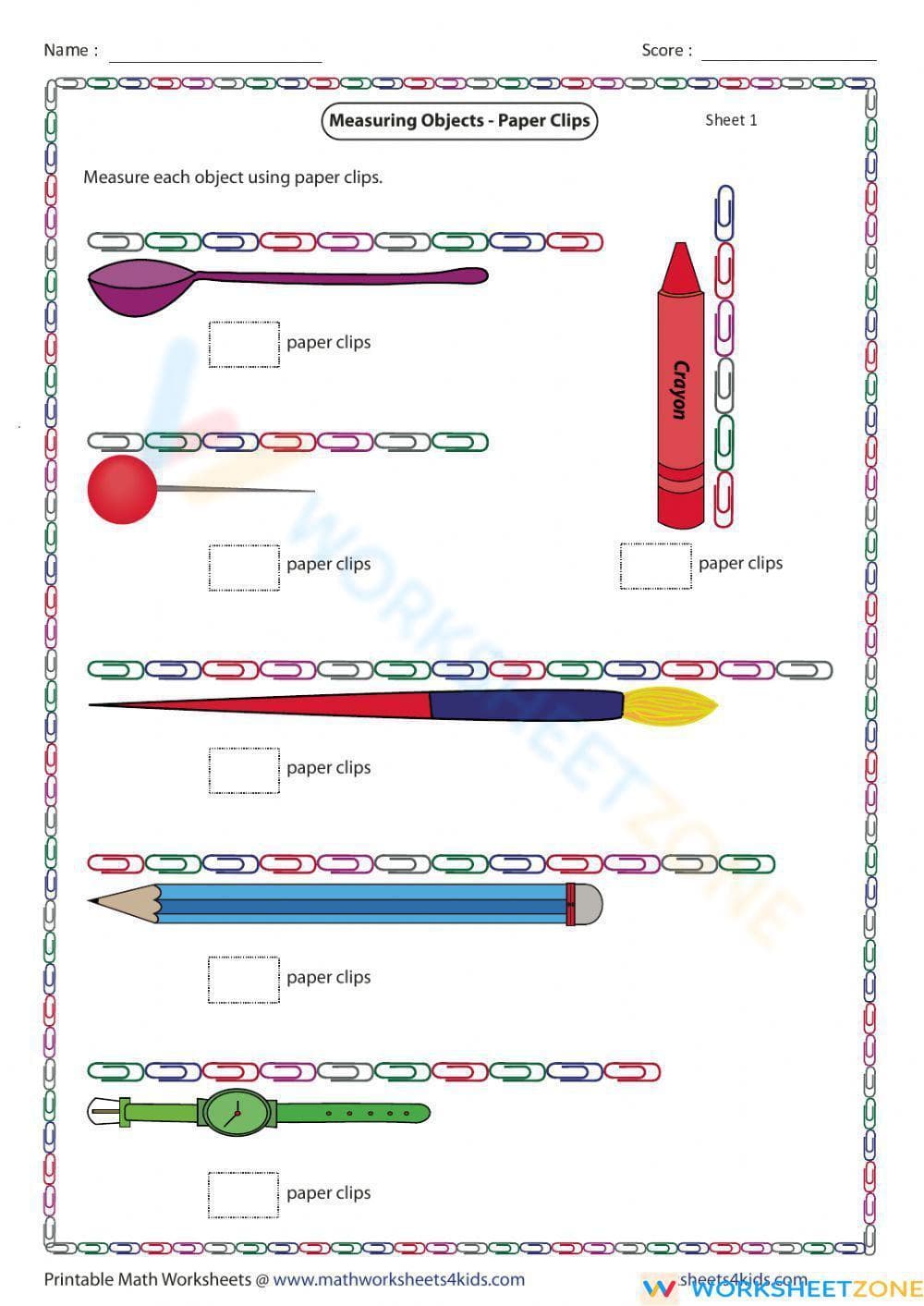
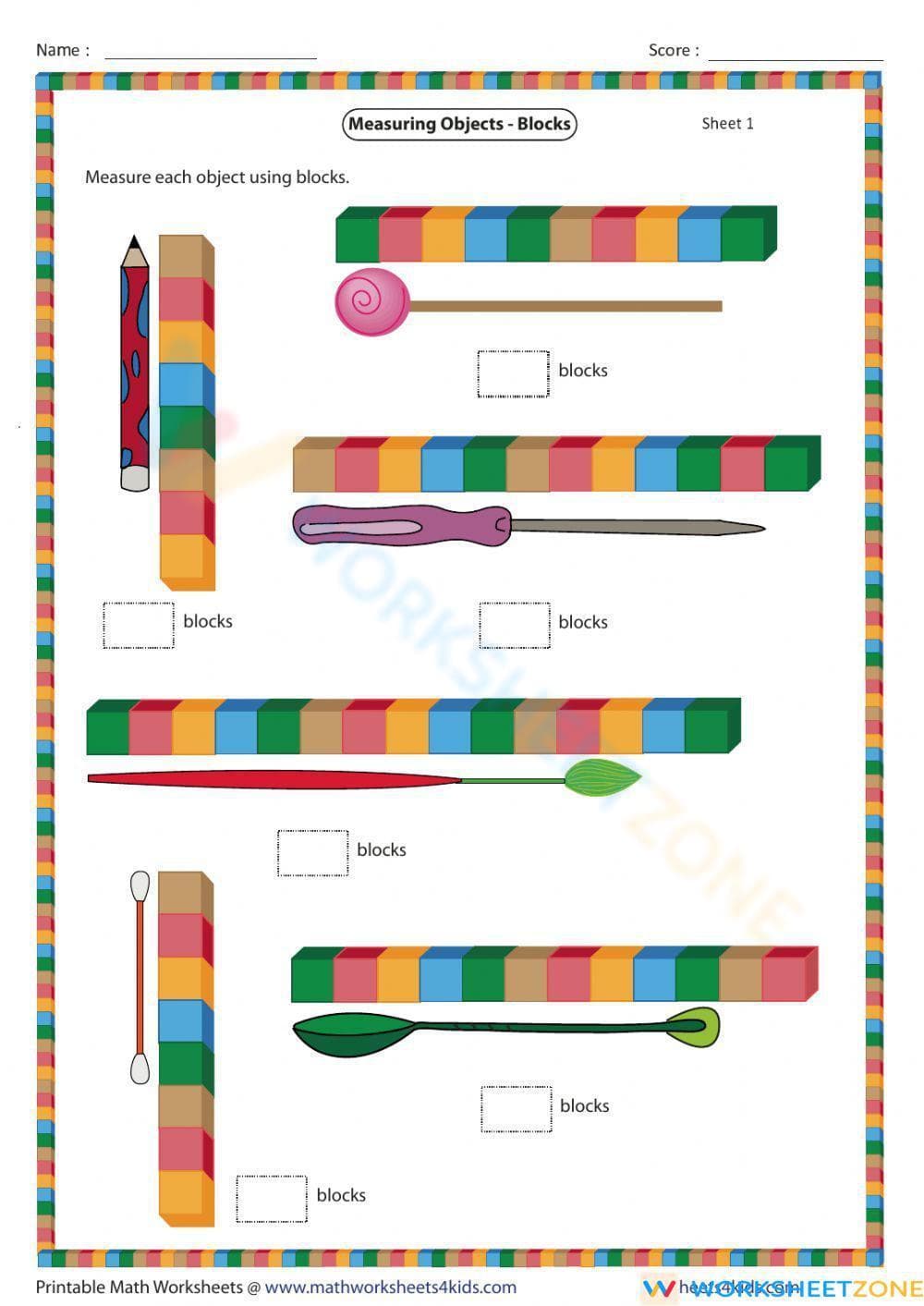
This two-page resource features highly visual, engaging tasks designed specifically for early elementary students. The first page requires students to determine the length of various items, such as a spoon and a crayon, by counting the illustrated paper clips placed end-to-end. The second page reinforces the concept using colorful blocks to measure objects like a pencil and a paintbrush. A complete answer key is provided to ensure quick and accurate grading.
This worksheet is designed for immediate classroom implementation with absolutely no teacher setup required.
- Print (1 minute): Download the PDF and print the two-page set along with the answer key.
- Distribute (1 minute): Hand out during the math block or place directly into math center folders.
- Review (2 minutes): Use the included answer key to quickly check student understanding.
With a total prep time of under two minutes, this activity is an excellent, reliable option for emergency sub plans or unexpected schedule changes.
This resource is directly aligned to primary standard CCSS.MATH.CONTENT.1.MD.A.2, which requires students to express the length of an object as a whole number of length units, by laying multiple copies of a shorter object end to end. It builds the critical prerequisite skills needed for standard measurement. Both standard codes can be copied directly into lesson plans, IEP goals, or district curriculum mapping tools.
Teachers can utilize this worksheet during independent practice immediately following a whole-group lesson on measurement. It also serves as an excellent math center activity where students can complete the paper version while physically measuring real classroom objects with actual paper clips and blocks. As a formative assessment tip, observe whether students are counting the units accurately without skipping or double-counting the visual manipulatives. Expected completion time ranges from 15 to 20 minutes.
This worksheet is primarily designed for first-grade students, though it serves as a valuable review for second graders who need additional support with foundational measurement concepts. For students requiring differentiation, teachers can provide physical paper clips and blocks to lay over the printed images, creating a tactile learning experience. It pairs perfectly with hands-on measurement lessons and introductory anchor charts on comparing lengths.
Mastering non-standard measurement is a critical stepping stone in early mathematics education. By practicing with CCSS.MATH.CONTENT.1.MD.A.2, students learn to express the length of an object as a whole number of length units, establishing the conceptual framework required for standard ruler use. According to EdReports 2024, utilizing visual manipulatives in early measurement tasks significantly improves spatial reasoning in primary grade learners. This foundational practice ensures students understand the core concept of iteration—placing units end-to-end without gaps—before they are introduced to abstract standard units like inches. Providing structured, visual worksheets allows young learners to internalize these spatial relationships effectively, leading to stronger problem-solving skills.


