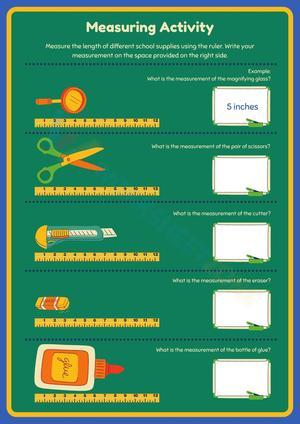
These measurement tools and strategies worksheets give K–5 teachers structured practice pages for every major instrument and technique students encounter from first-grade rulers through fifth-grade graduated cylinders. Each set pairs tool identification with the decision-making skills that separate students who can read a scale from students who actually understand what they're measuring.
What Do These Measurement Tools Worksheets Cover?
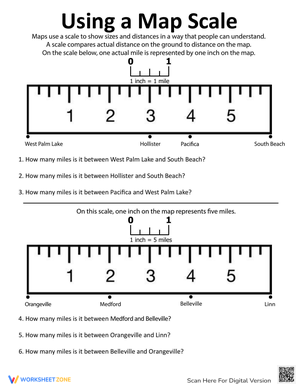
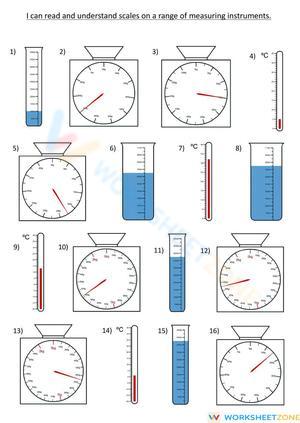
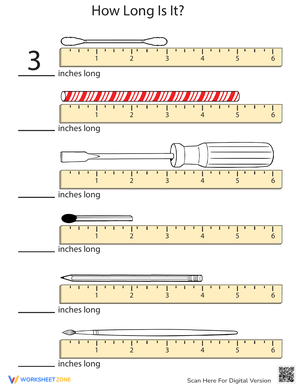
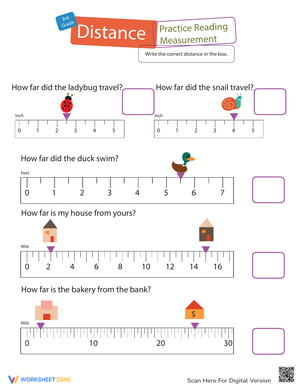
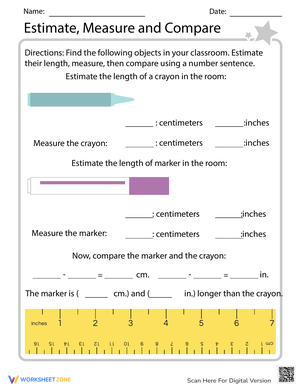
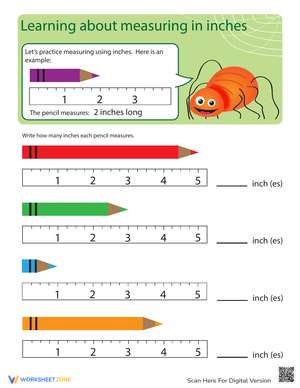
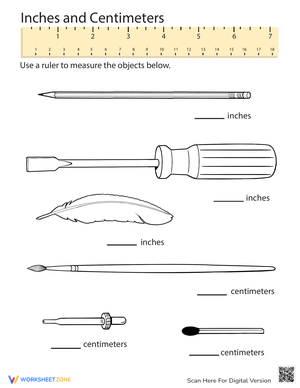
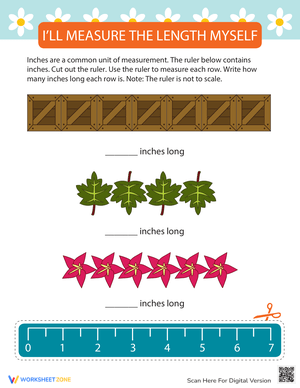
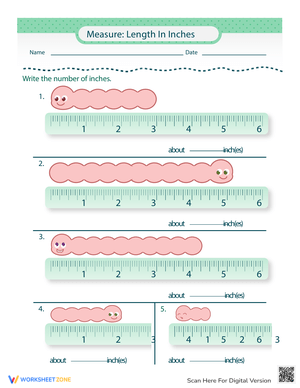
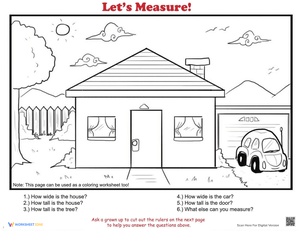
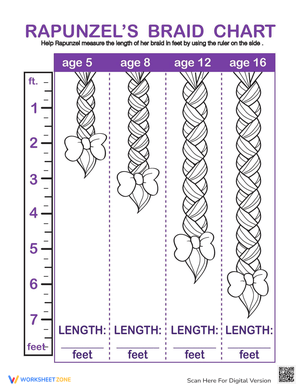
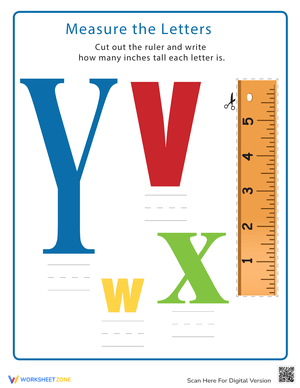
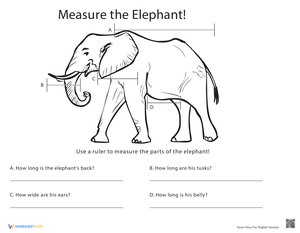
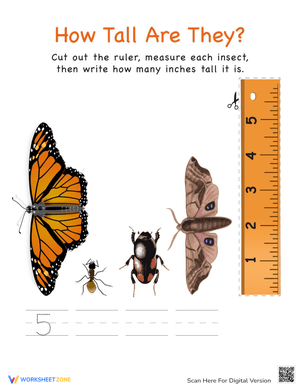
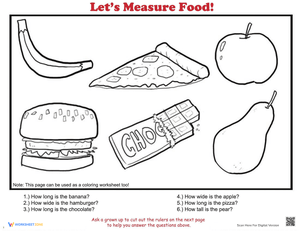
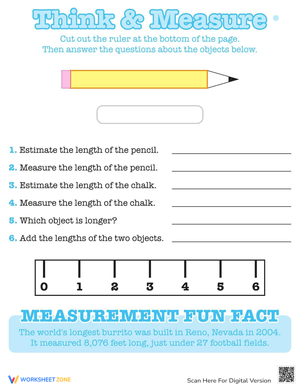
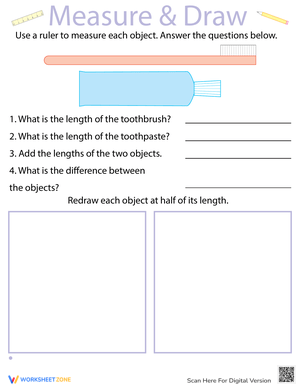
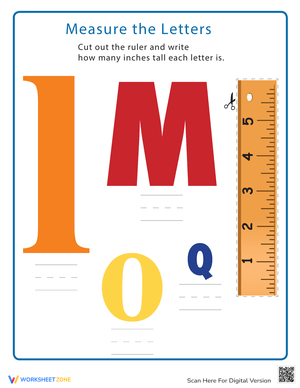
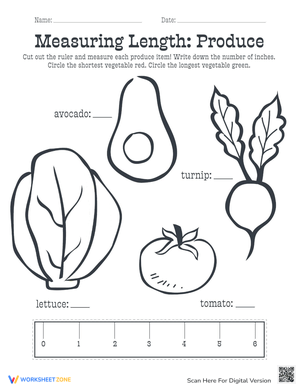
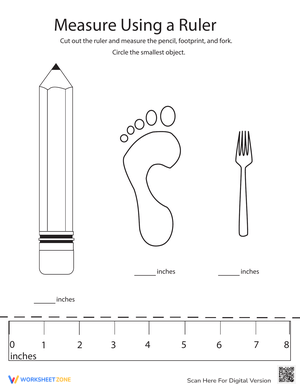
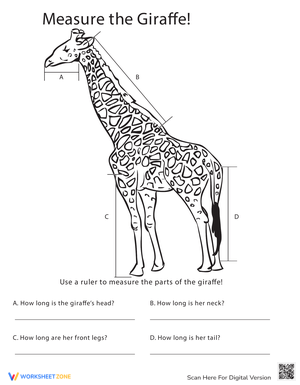
The worksheets cover four measurement attributes — length, weight and mass, liquid volume, and temperature — and the tools that go with each. For length, students work with rulers, yardsticks, meter sticks, and measuring tapes, including practice reading fractional inches and centimeters at the same scale they'll see on actual tools. Weight pages move from balance scales in the primary grades (which object is heavier, by how much) to spring and digital scales in grades three through five, where students record readings in ounces, pounds, grams, and kilograms. Volume pages feature graduated cylinders and measuring cups drawn to accurate scale, with the meniscus visible so students practice reading the bottom of the curve rather than the top. Temperature pages show thermometers with intervals marked in twos and fives, giving students skip-counting practice embedded in a measurement context.
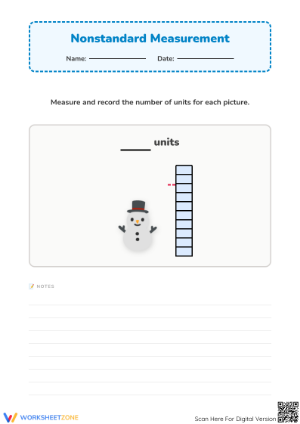
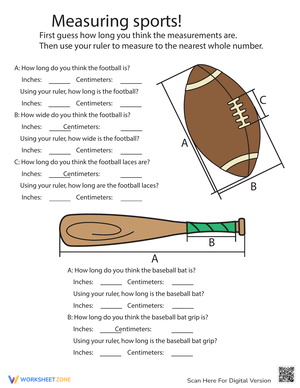
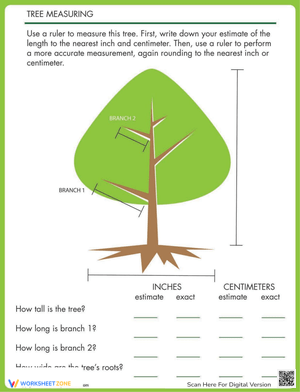
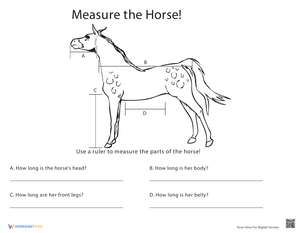
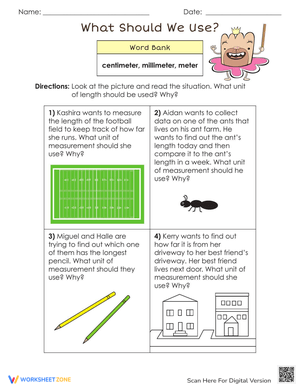
Alongside tool-specific pages, the set includes strategy practice: estimation before measuring, tool and unit selection for given scenarios, and unit iteration with both standard and non-standard units. A subset of pages uses "broken ruler" problems — the ruler begins at 2 or 3 inches rather than zero — which forces students to count intervals instead of simply reading the endpoint. These are consistently the pages that reveal whether a student has internalized how measurement works or has only memorized a procedure.
Standards Alignment
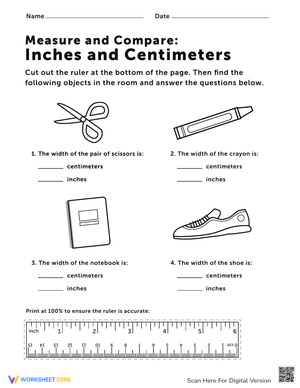
The Common Core standards address measurement tools explicitly in the Measurement and Data domain from grades one through five. First grade (1.MD.A.1–2) establishes the concept of unit iteration and ordering by length. Second grade (2.MD.A.1) introduces standard rulers with inch and centimeter markings. By third grade (3.MD.B.4), students generate measurement data to the nearest quarter inch and display it on line plots — a task that only works if students can read a ruler accurately at fractional intervals. The tool-selection and estimation pages in this set address the reasoning behind those skills rather than just the mechanics, which keeps the work aligned to the standard's intent rather than its surface form. The strategy pages map most directly to the MP.5 mathematical practice standard (use appropriate tools strategically), which appears in the standards language but often receives less explicit instruction than the procedural content.
How Teachers Use These Worksheets For Their Weekly Lesson Planning
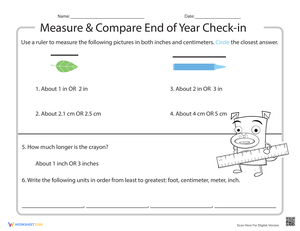
Most teachers reach for individual pages as warm-ups the day after introducing a new tool — five minutes at the start of math before moving into a hands-on activity. A thermometer-reading page on Tuesday, for instance, previews or reinforces the same skill students practiced with physical thermometers on Monday, without the setup time. The tool-selection pages (choose the best instrument for measuring the length of a hallway versus a crayon) work well as exit tickets because the answer is quick to scan and immediately tells you who missed the lesson's core idea.
The error-analysis pages — ones that show a ruler misaligned at the physical edge, or paperclips spaced with visible gaps — work especially well in small groups. Asking three or four students to find and explain the error together generates more useful discussion than independent seat work does, and you hear the reasoning that a completed answer sheet never shows you. During science units on liquids or weather, the volume and temperature pages pull double duty as pre-lab scaffolding; students who have already practiced reading a graduated cylinder on paper make fewer technique errors when they pick up the actual instrument.
Frequently Asked Questions
Are these pages appropriate for students who haven't used physical tools yet?
The introductory pages — tool identification and matching — work as preview material before students handle actual instruments. The measurement-reading pages are designed as reinforcement and are more effective after students have held a ruler or placed an object on a scale at least once. Using them as first exposure tends to produce memorized responses rather than transferable understanding.
How do these work for students who need more challenge?
The fractional-inch ruler pages and the cross-system comparison problems are the natural extension for students who move through the basic tool pages quickly. You can also increase the cognitive demand on any page by covering the answer options on multiple-choice items and asking students to produce the answer before selecting — turning a recognition task into a recall task, which is a meaningful difficulty shift without requiring a different worksheet.
Can I use these for students who are well below grade level in measurement?
Students who struggle with the standard-tool pages often need a step back to unit iteration with non-standard units. If a student can't explain why you can't leave gaps between paperclips when measuring a line, a ruler page won't fix that. Start with the non-standard pages, confirm the concept of consistent unit placement, then return to standard tools. The pages in this set that show incorrect unit placement are useful diagnostic tools at that stage.













 Interactive Worksheet Maker
 Quiz Maker
 Word Search Maker
 Crossword Puzzle Maker
 Word Scramble Generator
 Sentence Scramble Generator
 Handwriting Worksheet Generator
 Name Tracing Generator
 Fill In The Blank Generator