


























Views
Downloads

Printable Material Properties Worksheet | Grade 2
Paste this activity's link or code into your existing LMS (Google Classroom, Canvas, Teams, Schoology, Moodle, etc.).
Students can open and work on the activity right away, with no student login required.
You'll still be able to track student progress and results from your teacher account.
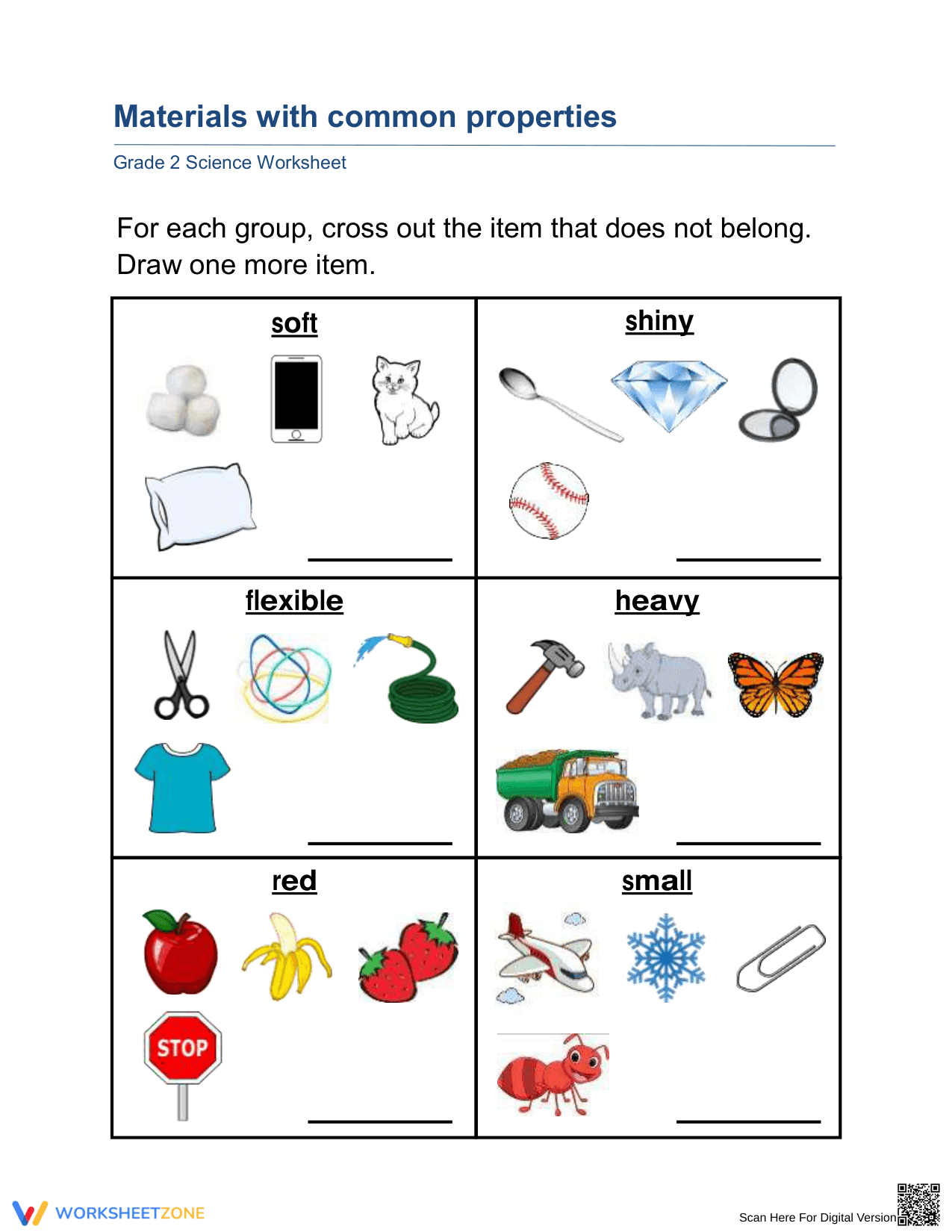
This Grade 2 science worksheet helps students classify everyday objects based on observable physical properties. By identifying items that share characteristics like softness or shininess, young learners build foundational classification skills. The straightforward format ensures students can immediately apply their understanding without confusion.
At a Glance
- Grade: 2 · Subject: Science
- Standard:
2-PS1-1— Classify materials by observable properties- Skill Focus: Identifying material properties
- Format: 1 page · 6 problems · Answer key included · PDF
- Best For: Independent practice or centers
- Time: 10–15 minutes
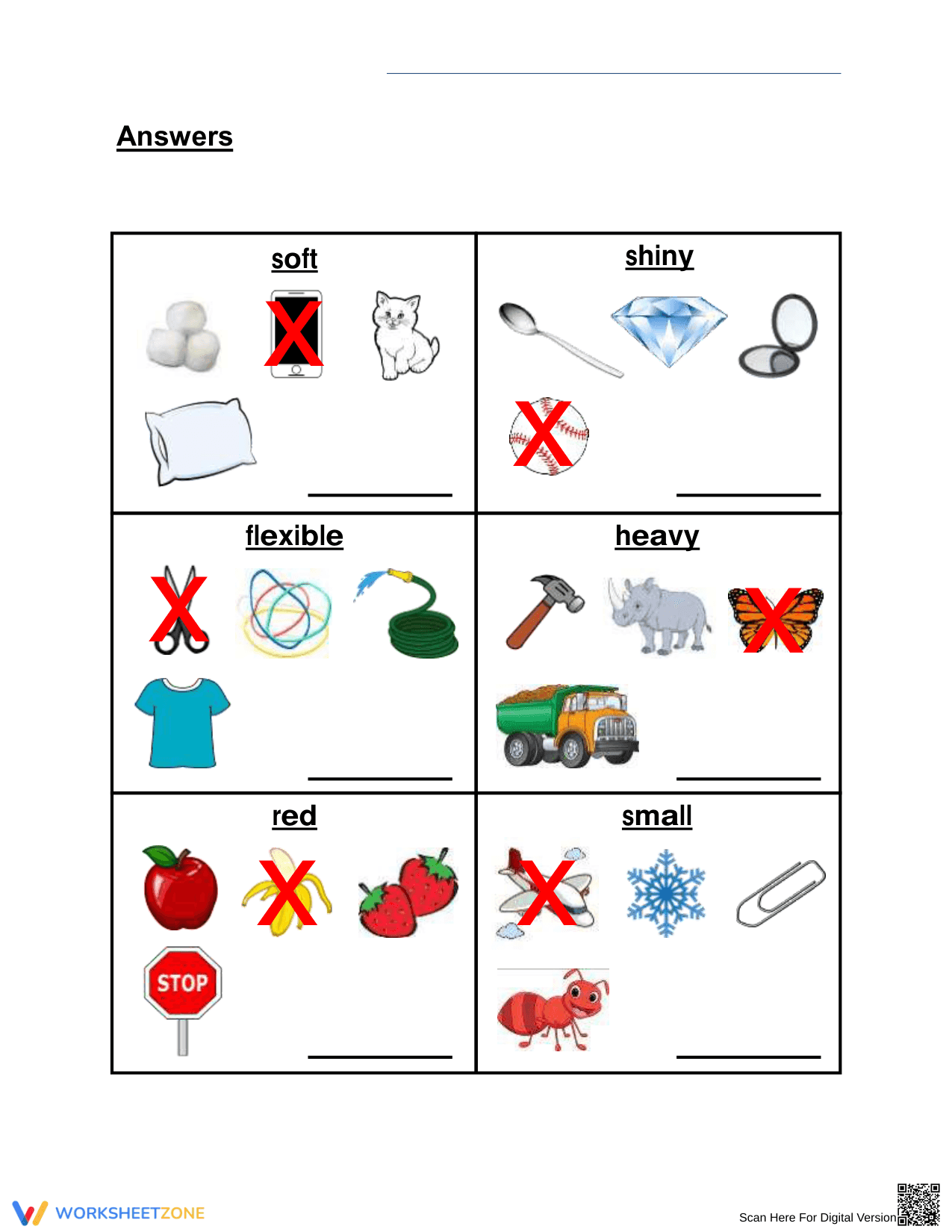
Inside this single-page resource, educators will find six classification groups focusing on specific physical traits: soft, shiny, flexible, heavy, red, and small. Each section requires students to analyze four illustrated objects, cross out the one that does not belong, and draw an additional item. A complete answer key makes grading quick, while clear visual cues support early readers.
Zero-Prep Workflow
This resource is designed for immediate classroom implementation with minimal teacher setup.
- Print (1 minute): Simply download the PDF and print a class set. The black-and-white friendly design ensures clear copies.
- Distribute (1 minute): Hand out the worksheet during science centers, morning work, or as a quick formative assessment.
- Review (3 minutes): Use the included answer key to quickly check student understanding or project it on the board for whole-class review.
With under two minutes of total prep time, this worksheet is an excellent addition to any sub plan.
Standards Alignment
This activity is directly aligned to 2-PS1-1, requiring students to plan and conduct an investigation to describe and classify different kinds of materials by their observable properties. By evaluating objects based on traits like flexibility and weight, students engage in early scientific reasoning. Both standard codes can be copied directly into lesson plans, IEP goals, or district curriculum mapping tools.
How to Use It
Deploy this worksheet after a direct instruction lesson on physical properties to reinforce the concepts. It works exceptionally well as an independent science center activity where students can discuss their reasoning with peers. As a formative assessment tip, observe which students struggle to generate their own example for the "draw one more item" prompt, as this indicates a need for further conceptual review. Most students will complete the six tasks within 10 to 15 minutes.
Who It's For
This resource is primarily designed for second-grade science students, though it serves as an excellent review for third graders or an extension for advanced first graders. The heavy reliance on visual illustrations makes it highly accessible for English Language Learners and students who benefit from reduced text complexity. Pair this worksheet with a hands-on sorting activity using real classroom objects to solidify the connection between the illustrations and tangible materials.
Mastering the ability to categorize objects is a fundamental step in early science education. Aligned with 2-PS1-1, this resource helps students classify materials by observable properties, a critical skill for developing scientific inquiry. According to a 2024 report by EdReports, instructional materials that integrate visual classification tasks significantly improve long-term retention of physical science concepts in early elementary grades. When students actively evaluate and sort items based on specific traits like shininess or flexibility, they build the cognitive frameworks necessary for more complex chemical and physical analyses in later years. This worksheet provides the structured, visual practice required to anchor these foundational concepts effectively. By combining analytical sorting with creative generation—asking students to draw an additional item—the activity ensures a deeper, more robust understanding of material properties.


