


























Views
Downloads

Marketing Strategy Worksheet: Essential Grade 11 Review
Paste this activity's link or code into your existing LMS (Google Classroom, Canvas, Teams, Schoology, Moodle, etc.).
Students can open and work on the activity right away, with no student login required.
You'll still be able to track student progress and results from your teacher account.
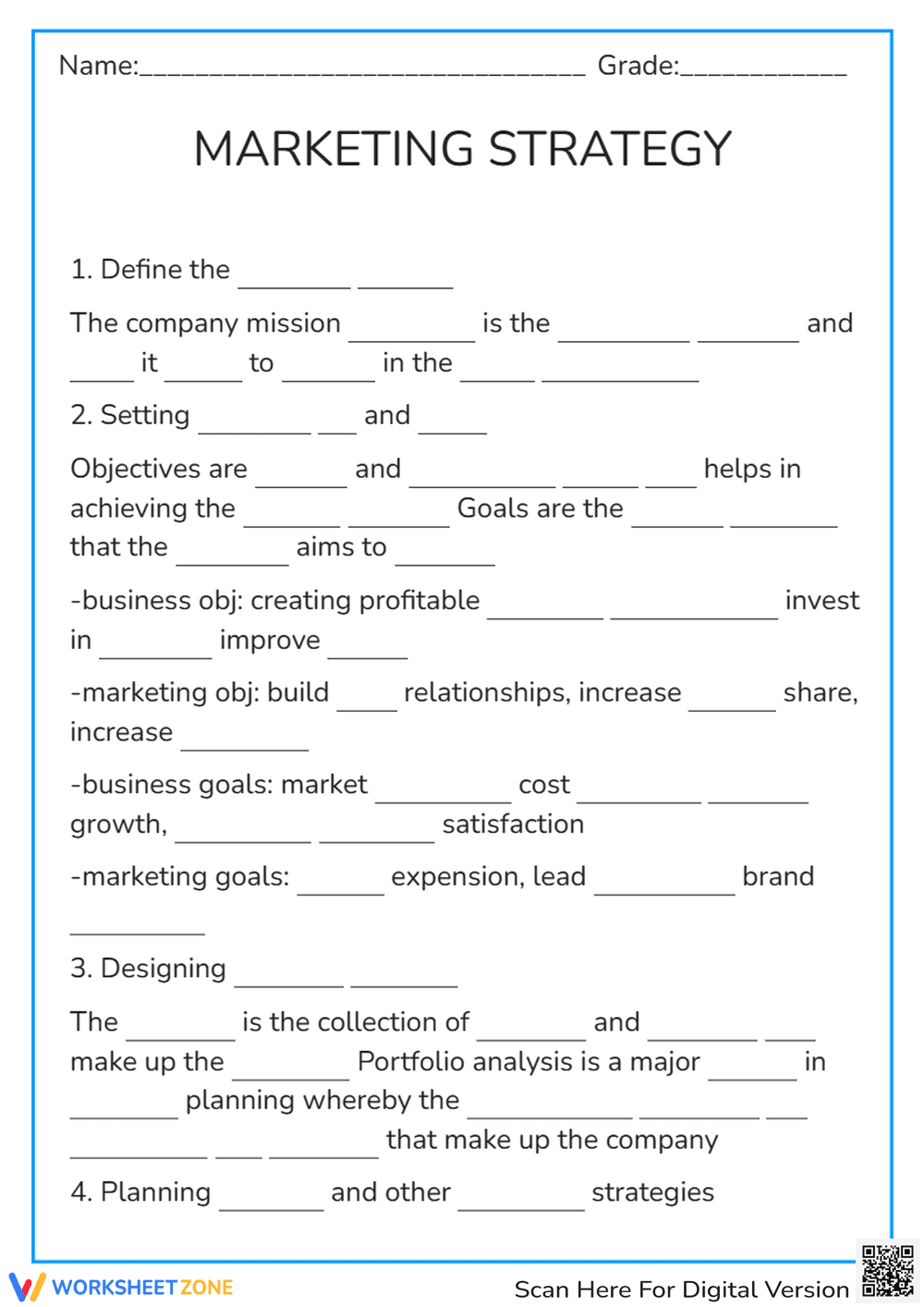
This Grade 11 economics and vocabulary worksheet reinforces core business concepts through a structured cloze activity. Students demonstrate mastery of marketing strategy components, including mission statements, business objectives, portfolio analysis, and functional planning. By completing these contextual definitions, learners solidify their understanding of domain-specific terminology essential for academic success.
At a Glance
- Grade: 11 · Subject: Economics & ELA
- Standard:
CCSS.ELA-LITERACY.L.11-12.6— Acquire and use domain-specific words- Skill Focus: Marketing strategy vocabulary
- Format: 2 pages · 35 blanks · No answer key · PDF
- Best For: Quick review or sub plans
- Time: 20–30 minutes
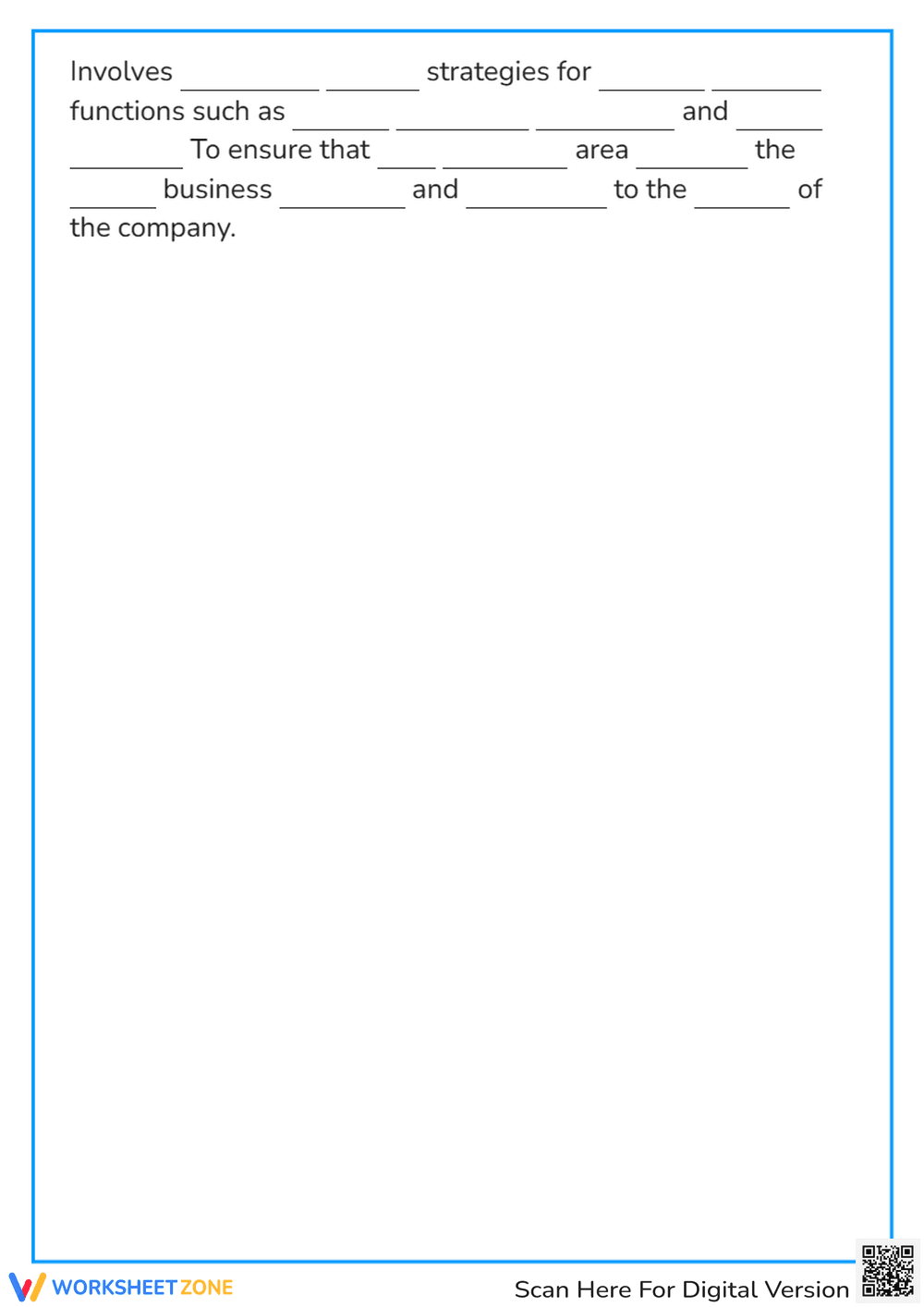
This two-page resource features four main sections focusing on the core stages of marketing strategy development. Students encounter fill-in-the-blank prompts covering mission statements, business objectives, marketing goals, portfolio analysis, and functional planning. The layout provides clear spacing for writing, helping students organize their thoughts as they recall key business terms and definitions.
Zero-Prep Workflow
This resource is designed for immediate classroom deployment with minimal teacher preparation. First, print the two-page document for your class, which takes less than two minutes. Next, distribute the sheets to students as an independent review activity or a partner challenge. Finally, review the completed definitions as a whole group to clarify any misconceptions. This structured layout makes it an ideal option for emergency sub plans or quick formative assessments.
Standards Alignment
This worksheet aligns directly with CCSS.ELA-LITERACY.L.11-12.6, which requires students to acquire and use accurately general academic and domain-specific words and phrases. By contextualizing terms like portfolio analysis and market growth, students build the specialized vocabulary needed for college and career readiness. Both standard codes can be copied directly into lesson plans, IEP goals, or district curriculum mapping tools.
How to Use It
Use this worksheet during the review phase of a marketing unit or as a formative assessment after direct instruction. Teachers can observe student progress by scanning the sheets during independent work to identify which terms cause the most confusion. Expect students to complete the activity within 20 to 30 minutes, depending on their prior knowledge of business concepts.
Who It's For
This resource is tailored for Grade 11 students studying economics, business management, or advanced English language arts. It supports diverse learners by providing contextual clues within the sentences, making it an excellent pairing resource for introductory business textbooks or lecture slides on corporate planning.
This vocabulary worksheet aligns with research by Fisher & Frey (2014) on the importance of scaffolded domain-specific vocabulary instruction in secondary education. By requiring students to complete contextual sentences, the activity reinforces the semantic networks necessary for long-term retention of complex business concepts. The design targets CCSS.ELA-LITERACY.L.11-12.6 by focusing on specialized terminology like portfolio analysis and marketing objectives. This active recall method helps students transition from passive recognition to active mastery of academic language. Educators can utilize this tool to measure vocabulary acquisition and identify areas needing direct instruction. The structured format ensures that students engage deeply with the text, promoting literacy in social studies and economics. This evidence-based approach supports diverse learners in mastering the complex vocabulary required for college and career readiness.


