


























1 / 2
0
Views
0
Downloads

0.0
0
Save
0 Likes
Share
Making Comparative Inferences Worksheet
0 Views
0 Downloads
Paste this activity's link or code into your existing LMS (Google Classroom, Canvas, Teams, Schoology, Moodle, etc.).
Students can open and work on the activity right away, with no student login required.
You'll still be able to track student progress and results from your teacher account.
Information
Description
What It Is:
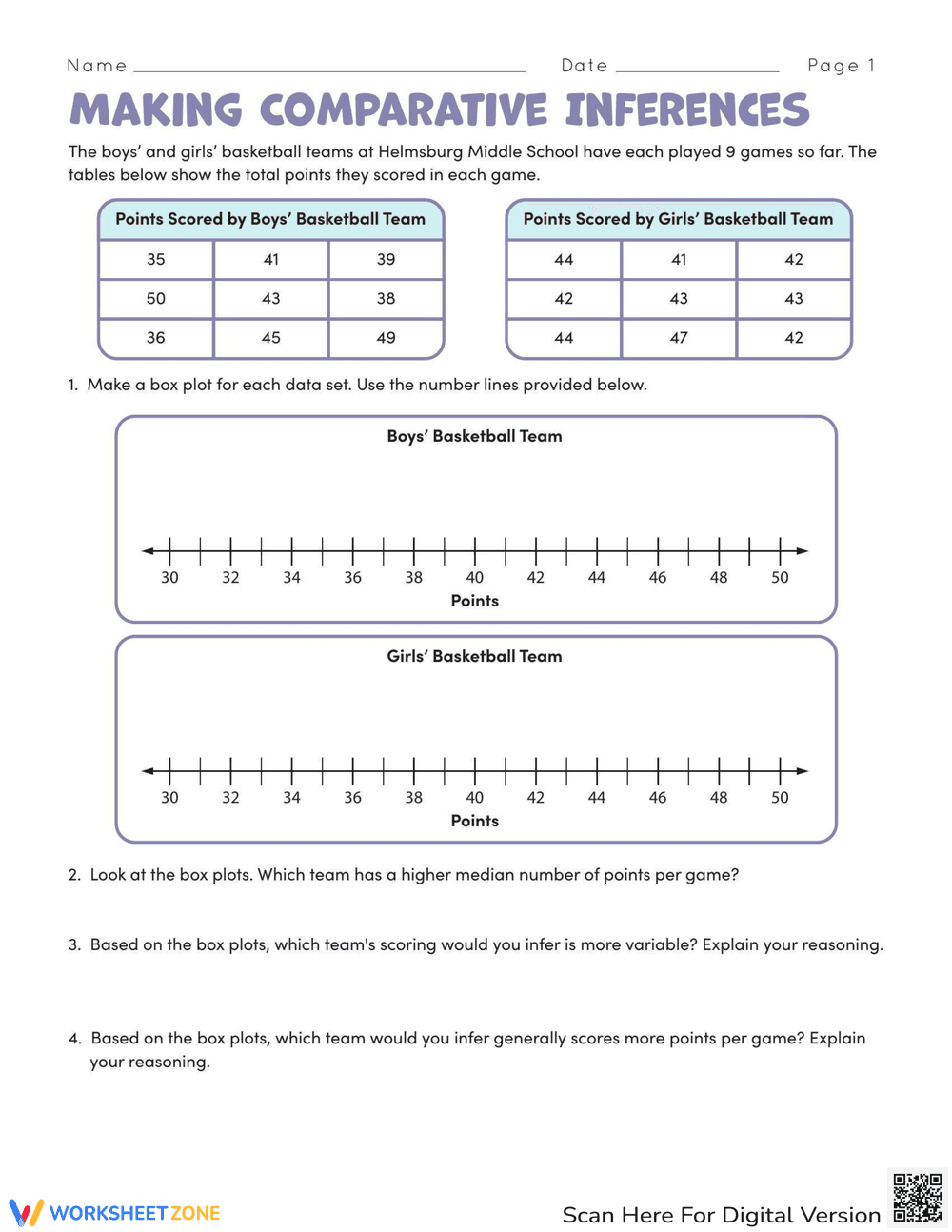
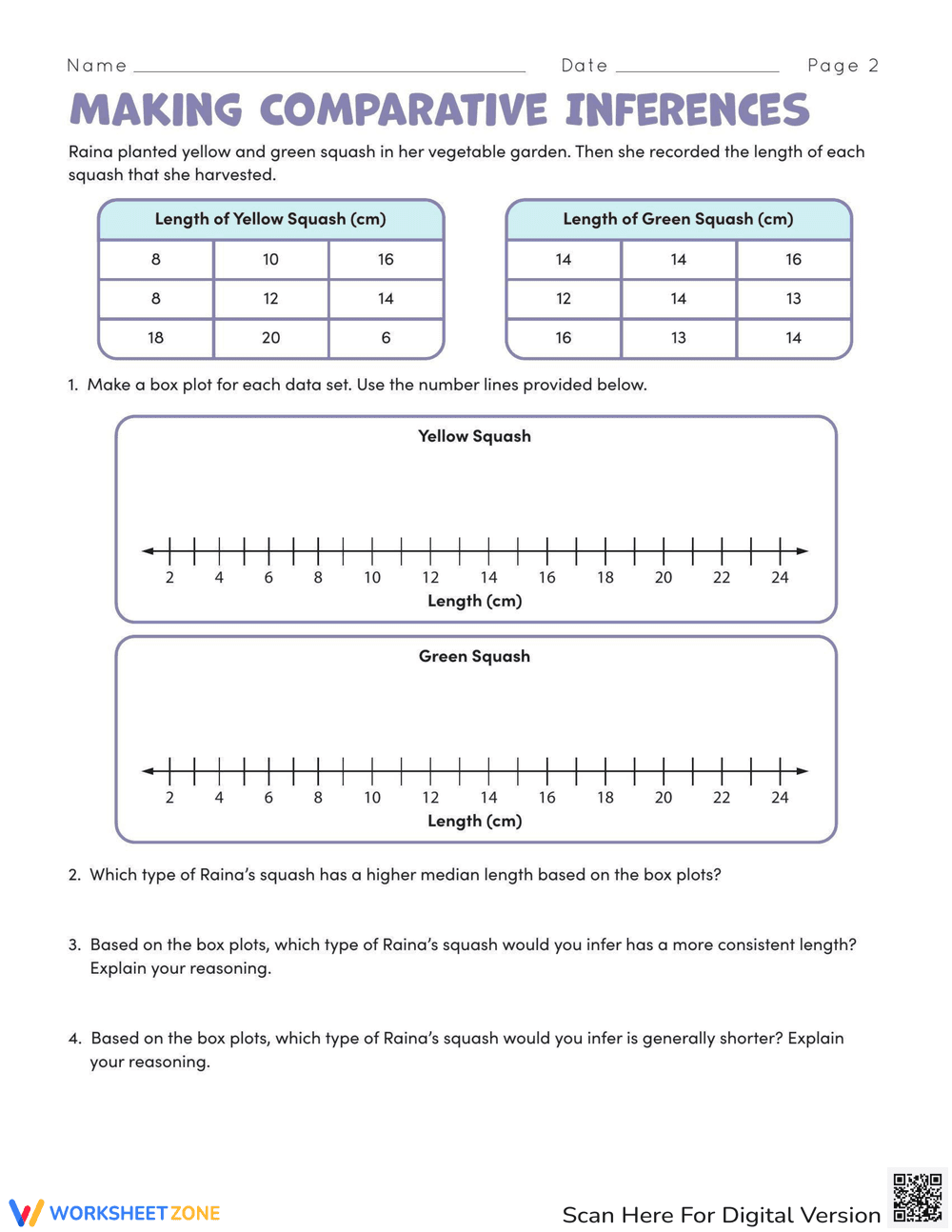
This is a math worksheet focusing on making comparative inferences using box plots. It provides two data sets representing points scored by boys' and girls' basketball teams. Students are asked to create box plots for each data set using provided number lines and then answer questions comparing the two data sets based on their box plots, including median and variability.
Grade Level Suitability:
This worksheet is suitable for grades 6-8. It requires students to understand box plots, median, variability, and comparative analysis, which are typically covered in middle school math curricula.
Why Use It:
This worksheet helps students develop skills in data representation, analysis, and comparison. It allows them to practice creating box plots, interpreting statistical measures like median and variability, and making inferences based on data. The real-world context of basketball scores makes the activity engaging.
How to Use It:
First, have students create box plots for each data set (boys' and girls' basketball scores) on the provided number lines. Then, guide them to answer the questions by comparing the box plots they created, focusing on median and the spread of the data to infer variability and overall performance. Encourage them to explain their reasoning.
Target Users:
This worksheet is ideal for middle school math students, particularly those learning about data analysis, box plots, and comparative statistics. It can be used for classroom practice, homework assignments, or as a review activity.
This is a math worksheet focusing on making comparative inferences using box plots. It provides two data sets representing points scored by boys' and girls' basketball teams. Students are asked to create box plots for each data set using provided number lines and then answer questions comparing the two data sets based on their box plots, including median and variability.
Grade Level Suitability:
This worksheet is suitable for grades 6-8. It requires students to understand box plots, median, variability, and comparative analysis, which are typically covered in middle school math curricula.
Why Use It:
This worksheet helps students develop skills in data representation, analysis, and comparison. It allows them to practice creating box plots, interpreting statistical measures like median and variability, and making inferences based on data. The real-world context of basketball scores makes the activity engaging.
How to Use It:
First, have students create box plots for each data set (boys' and girls' basketball scores) on the provided number lines. Then, guide them to answer the questions by comparing the box plots they created, focusing on median and the spread of the data to infer variability and overall performance. Encourage them to explain their reasoning.
Target Users:
This worksheet is ideal for middle school math students, particularly those learning about data analysis, box plots, and comparative statistics. It can be used for classroom practice, homework assignments, or as a review activity.


