


























Views
Downloads
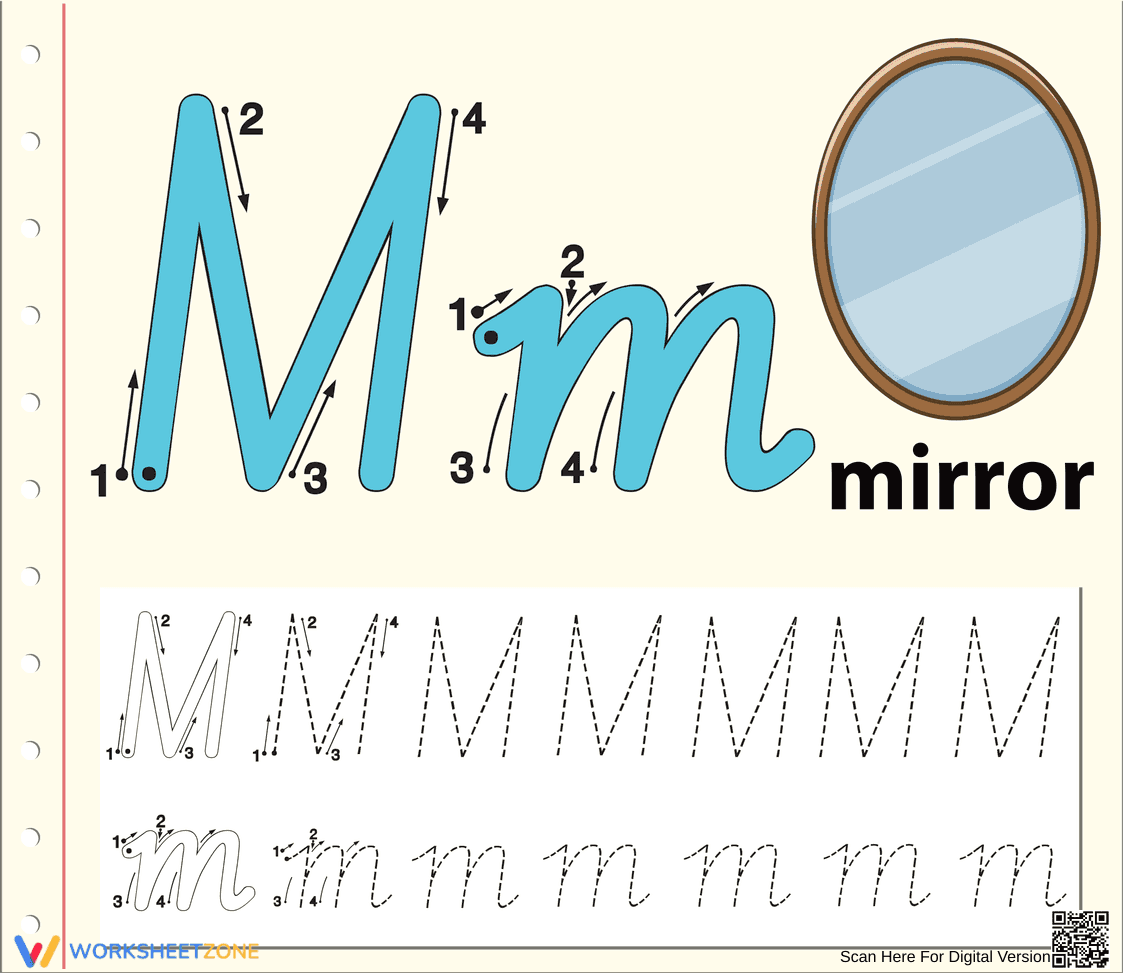

Cursive Letter M Tracing | Printable Grade 1 Worksheet
Paste this activity's link or code into your existing LMS (Google Classroom, Canvas, Teams, Schoology, Moodle, etc.).
Students can open and work on the activity right away, with no student login required.
You'll still be able to track student progress and results from your teacher account.
This single-page handwriting worksheet provides early learners with structured practice for forming the cursive letter M. By following numbered directional arrows and tracing dashed lines, students develop fine motor control and muscle memory, ensuring they can confidently write both uppercase and lowercase versions of the letter.
At a Glance
- Grade: 1 · Subject: English
- Standard:
CCSS.ELA-LITERACY.L.1.1.A— Form upper- and lowercase letters accurately- Skill Focus: Cursive Letter M Tracing
- Format: 1 page · 16 problems · No answer key needed · PDF
- Best For: Independent handwriting practice
- Time: 10–15 minutes
This resource features a clear, visual layout designed for young writers. The top section includes large, guided models of the uppercase and lowercase cursive letter M, complete with numbered directional arrows. Below, students will find two dedicated rows containing sixteen dashed letters for guided tracing practice, alongside a helpful "mirror" vocabulary illustration.
Zero-Prep Workflow
This print-and-go resource requires absolutely minimal teacher setup, making it an ideal addition to any emergency sub plan.
- Print (1 minute): Generate the PDF and print a class set immediately.
- Distribute (1 minute): Hand out the single page alongside standard pencils.
- Review (1 minute): Briefly model the directional arrows on the board before students begin.
Standards Alignment
This tracing activity aligns directly with CCSS.ELA-LITERACY.L.1.1.A, requiring students to print all upper- and lowercase letters. It also supports foundational fine motor skill development. Both standard codes can be copied directly into lesson plans, IEP goals, or district curriculum mapping tools.
How to Use It
Deploy this worksheet during morning work or as a focused literacy center activity. It serves as an excellent follow-up to whole-group direct instruction on cursive letter formation. As a formative assessment tip, observe students while they work to ensure they are starting their pencil strokes at the correct numbered points rather than drawing the letters backward. Expected completion time is 10 to 15 minutes.
Who It's For
This resource is designed for first-grade students transitioning into cursive writing, as well as kindergarteners needing advanced fine motor challenges. For differentiation, pair this worksheet with a textured sensory board or an anchor chart displaying the full cursive alphabet.
Developing automaticity in handwriting is a critical component of early literacy, directly impacting a student's ability to focus on higher-order composition skills. When students practice how to form upper- and lowercase letters accurately, as outlined in CCSS.ELA-LITERACY.L.1.1.A, they reduce the cognitive load required for basic transcription. According to Fisher & Frey (2014), providing explicit instruction combined with guided, repetitive practice is essential for moving foundational skills from working memory into long-term retention. This targeted cursive letter M worksheet offers the exact visual scaffolding—through numbered directional arrows and dashed tracing lines—needed to build that essential muscle memory. By integrating vocabulary like "mirror" alongside the tracing tasks, the material also reinforces letter-sound correspondence. Consistent use of such structured tracing activities ensures early learners develop the fluid, legible penmanship necessary for future academic success across all subject areas.


