


























Views
Downloads

Lowercase Letter Writing Printable | Grade K-1 Ready
Paste this activity's link or code into your existing LMS (Google Classroom, Canvas, Teams, Schoology, Moodle, etc.).
Students can open and work on the activity right away, with no student login required.
You'll still be able to track student progress and results from your teacher account.
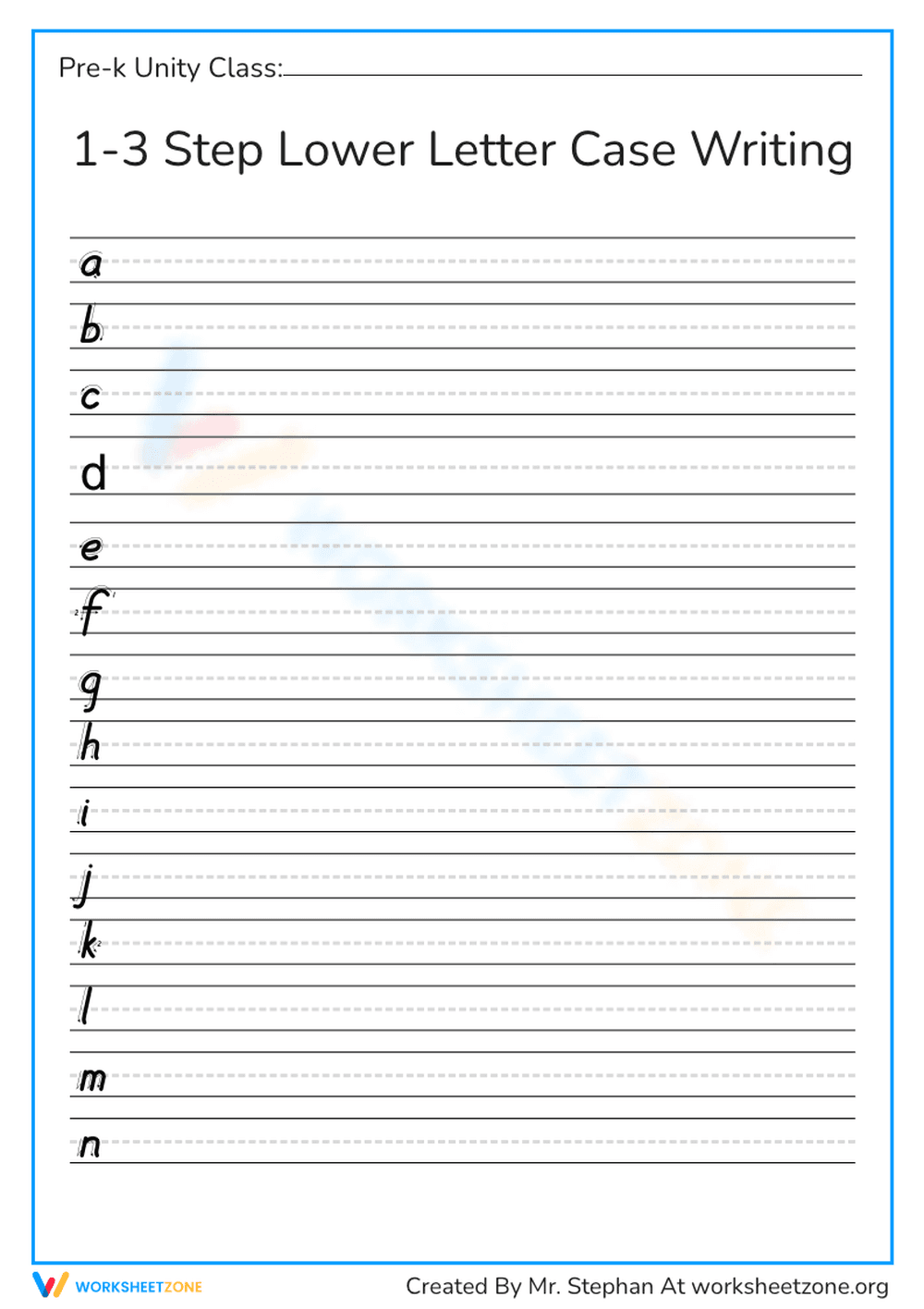
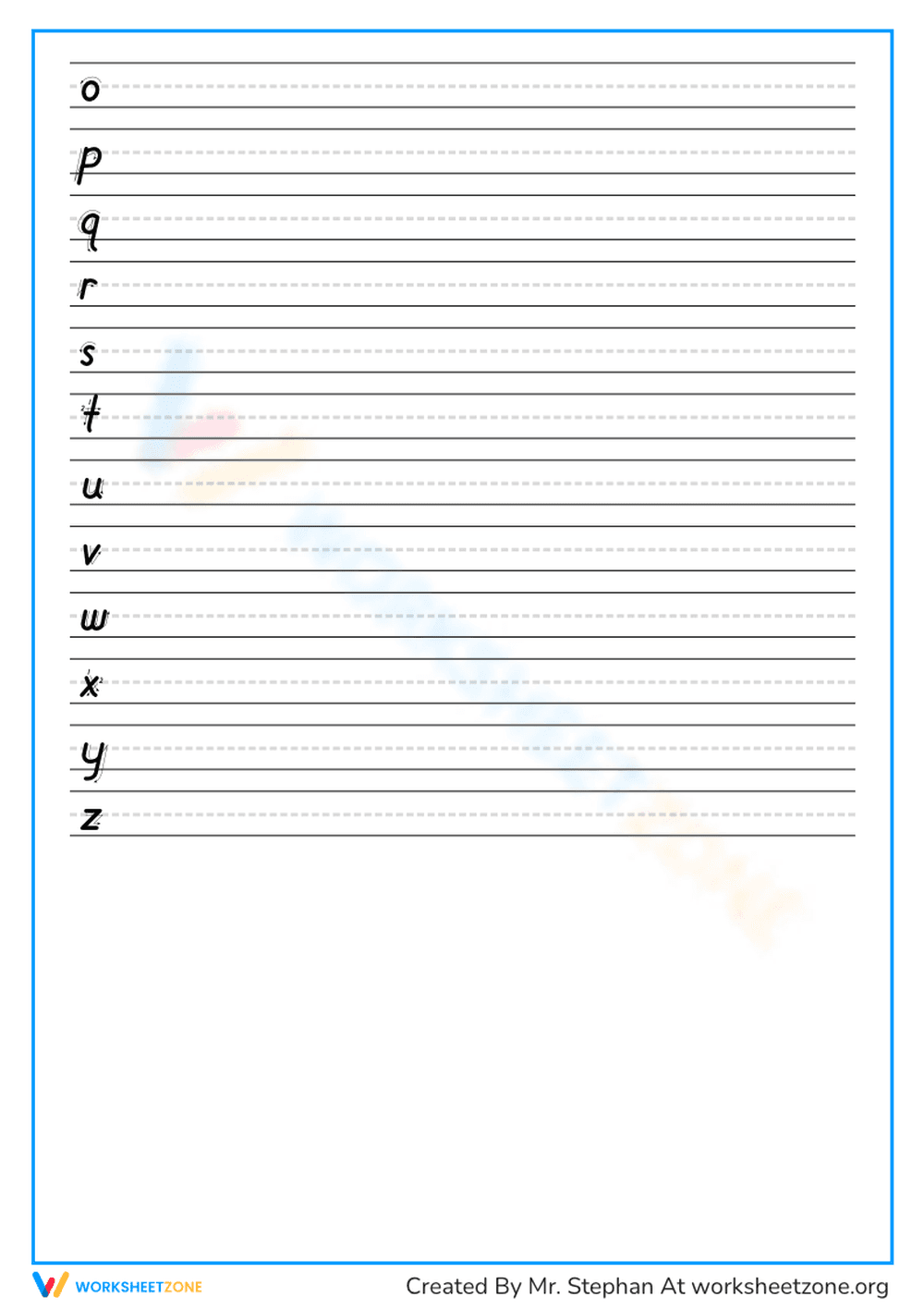
Mastering the physical mechanics of handwriting is a foundational literacy milestone. This lowercase letter writing worksheet provides students with a structured environment to practice letter formation from a through z. By focusing on consistent stroke order and spatial awareness, learners develop the muscle memory required for fluent, legible writing in later grades.
At a Glance
- Grade: Kindergarten · Subject: Handwriting
- Standard:
CCSS.ELA-LITERACY.L.K.1.A— Print many upper- and lowercase letters accurately and legibly- Skill Focus: Lowercase letter formation
- Format: 2 pages · 26 problems · No answer key needed · PDF
- Best For: Daily morning work or literacy centers
- Time: 15–20 minutes
What's Inside
This comprehensive two-page set covers the entire lowercase alphabet. Page one features letters a through n, while page two completes the sequence from o to z. Each letter is presented on standard primary ruled lines, featuring a solid top line, a dashed midline, and a solid baseline to guide proper height and descender placement.
Zero-Prep Workflow
This resource is designed for immediate classroom implementation with a total teacher prep time of under 2 minutes. First, print the two-page PDF (30 seconds). Second, distribute the sheets to students during your literacy block or as a quiet transition activity (30 seconds). Finally, review student work by circulating the room to provide real-time corrective feedback on grip and stroke direction (1 minute).
Standards Alignment
The primary focus of this resource is `CCSS.ELA-LITERACY.L.K.1.A`, which requires students to print many upper- and lowercase letters. By providing a dedicated space for every lowercase character, this worksheet ensures comprehensive coverage of the standard's lowercase component. This standard code can be copied directly into lesson plans, IEP goals, or district curriculum mapping tools to demonstrate alignment with national literacy expectations.
How to Use It
Use this worksheet as a formative assessment tool during the first weeks of Kindergarten to identify students who may need additional fine motor support. Alternatively, assign one page at a time during small-group literacy centers to monitor pencil grip and letter orientation. A completion time of 10 minutes per page is expected for most students, though those developing fine motor skills may benefit from shorter, more frequent sessions.
Who It's For
This resource is tailored for Pre-K, Kindergarten, and early Grade 1 students who are beginning their handwriting journey. It is particularly effective for English Language Learners (ELLs) who are familiarizing themselves with the Roman alphabet. Pair this worksheet with a tactile alphabet anchor chart or a sand-tray tracing activity to provide a multi-sensory learning experience that reinforces letter recognition alongside writing.
According to the RAND AIRS 2024 report, consistent and repetitive practice in letter formation is a critical predictor of future writing fluency and overall literacy success. This worksheet addresses the CCSS.ELA-LITERACY.L.K.1.A standard by providing 26 distinct opportunities for students to practice the plain-English skill of printing lowercase letters with correct orientation and proportion. Research from Fisher & Frey (2014) emphasizes that early mastery of handwriting allows cognitive resources to be redirected toward higher-level composition and expression as students progress through the elementary years. By utilizing structured primary lines and a complete A-Z sequence, this resource supports the gradual release of responsibility from guided tracing to independent production. Educators can rely on this tool to provide the high-frequency practice necessary for students to achieve the legibility benchmarks defined by national standards and NAEP writing frameworks.


